

You look at your bank account on a Tuesday morning and wonder where the last paycheck went.
It is easy to feel like everyone else has figured out personal finance while you are just trying to keep the lights on.
This is fixable, and it starts by ignoring the flashy advice and focusing on the quiet habits that actually move the needle over time.
I rebuilt my own finances from scratch after years of living paycheck to paycheck, and the secret wasn't making six figures—it was changing how I handled the dollars I already had.
You do not need to do everything on this list today, so pick two and start there.
Quick Tips Before You Start
Automate First
Set your savings transfers for the morning your paycheck hits.
Track Real Costs
Look at last month's actual spending instead of a guessed budget.
Cut Quietly
Cancel recurring subscriptions you haven't used in sixty days.
Pick Two
Choose only two habits from this list to implement this week.
1. Embracing Secondhand Wardrobe Basics

I used to walk past the thrift racks with a knot in my stomach because buying used felt like an admission of failure.
The math of the retail cycle means new clothes lose roughly eighty percent of their value the second you cut the tag off, which makes buying brand-new denim and wool coats an expensive habit.
If you switch to secondhand basics right now before the seasonal wardrobe changeover hits, you skip the retail markup entirely and keep about $300 in your checking account this month.
Open an online resale app today and search for one specific brand you already own so you know your exact sizing.
💡 Tip: Look for 100% natural fibers like wool and cotton when thrifting.
At a Glance
2. Auditing Subscriptions Every Quarter

People often assume they only spend about $30 a month on casual streaming apps and entertainment, but the actual total usually crosses $150 once digital subscriptions, cloud storage, and forgotten software trials are added up.
This illusion of the cheap monthly fee keeps recurring charges completely hidden in plain sight, draining checking accounts through tiny automatic deductions that never trigger a single fraud alert or warning.
Set a recurring calendar reminder every ninety days to pull up your recent bank statements and ruthlessly cancel any service you have not actively used at least twice in the last thirty days.
The money you recover from this audit can go straight into a high-yield savings account that pays a reasonable return, boosting your financial cushion without requiring any painful changes to your daily lifestyle.
I used to bleed $140 every month on software I forgot I downloaded, and finding that leak felt like getting an unexpected raise after months of feeling totally stuck.
⚠️ COMMON MISTAKE
The Subscription Trap
Never sign up for a free trial without setting an immediate cancellation reminder on your phone.
3. Cooking Bulk Staple Meals Weekly

Dedicate three hours every Sunday afternoon to cooking large, basic batches of lentils, rice, and roasted vegetables for the week ahead.
Eating out looks convenient in the moment, but spending $15 on lunch every workday drains over $300 a month before you even notice it leaving your checking account.
The trade-off is completely real and requires honesty.
Cooking bulk meals takes up part of your weekend, requires actual kitchen effort, and means you will be eating leftovers several days in a row.
It can feel genuinely boring if you do not mix up your seasonings or plan ahead.
The financial upside is massive because your grocery cost drops to around $50 a week for all your lunches combined, keeping your cash flow safely positive.
Do it anyway, because food is often the single easiest budget line to shrink without sacrificing your actual quality of life or making you miserable.
This week: buy a large bag of dry beans, two cups of rice, and root vegetables, then clear your Sunday kitchen counter to start.
Meal Prep Savings — At a Glance
🥗 Weekly Cost
$50
🍔 Takeout Cost
$200
💵 Monthly Net
$600 saved
The Rule
Cook twice a week in bulk to cover every workday lunch.
4. Driving Older Reliable Cars Longer

It feels embarrassing driving a car with a dented bumper when everyone in the office parking lot is leasing something shiny and new.
Car payments are the silent wealth killer for middle-income households, draining cash flow month after month into an asset that loses value the second you drive it off the lot.
I drove a 2008 sedan with dents on the bumper for four years after it was fully paid off, and watching my coworkers upgrade cars while I quietly stacked cash changed my perspective forever.
A reliable older car frees up $400 to $600 a month that would otherwise vanish into depreciation and high insurance premiums, shifting that money directly into your investment or savings accounts.
Keep the maintenance up-to-date and let the vehicle run well past the 150,000-mile mark, treating repair bills as a fraction of the cost of a new loan.
This week: calculate your total monthly car costs and earmark the difference into a separate account the moment your loan hits zero.
Car Maintenance Focus
5. Embracing Generic Brand Groceries

You might feel like buying the store-brand box of cereal means you are settling or failing to provide properly for your household.
Name-brand cereal and canned tomatoes cost 30 to 50 percent more for the exact same ingredients, but letting go of that loyalty is totally fine when grocery prices are squeezing your monthly cash flow.
Switching to store brands on staples like flour, oats, spices, and canned beans saves the average household around $80 a month without changing the taste of your dinners, so grab three generic staples on your very next trip to the store.
Frugal Wealth vs. Flashy Spending
Quiet Wealth Habits
- Automating savings on payday
- Driving reliable paid-off cars
- Cooking bulk meals at home
- Buying second-hand basics
Flashy Spending traps
- Leasing new cars every three years
- Daily takeout coffee and lunches
- Unmanaged subscription stacks
- Impulse midnight online shopping
6. Fixing Broken Items Before Replacing

Stop throwing out items the second something small breaks.
We live in a culture that pushes instant replacement for a loose chair leg or a stuck zipper, draining hundreds of dollars a year on things that could be salvaged in an afternoon. Grab a $10 basic repair kit from the hardware store and spend thirty minutes learning how to mend or glue the item yourself, preserving your hard-earned cash for things that actually matter.
Check your closets and garage today for one broken item and fix it before buying a replacement.
💡 PRO TIP
The Repair Mindset
Keep a basic tool kit and a sewing kit in your utility closet so minor fixes take minutes instead of dollars.
7. Automating Savings Transfers on Payday

Can you set your bank app to move money before you even see it?
End-of-month saving means you save whatever survived, and what survives is usually nothing. Payday saving means the amount is decided before the month gets a vote, completely changing your success rate without requiring any extra discipline.
Take four minutes in your banking app today to set up a recurring $50 or $100 transfer for the exact morning your paycheck lands, then leave it alone.
Cash Flow Transformation
8. Utilizing Public Libraries for Media

$480 a year vanishes quickly when you buy a new book every month, pay for audiobook subscriptions, and rent weekend movies.
That is real money that could be sitting quietly in an investment account instead of collecting dust on your physical or digital shelf.
We rely entirely on the local library system and apps like Libby to bypass those costs completely without giving up the media we enjoy.
This habit fits directly into the three-bucket cash flow system as a deliberate way to keep your flexible spending tight and manageable.
Bucket one covers your fixed bills, bucket two handles your debt minimums automatically, and bucket three manages your flexible spending.
When you utilize free library resources for books, audiobooks, and digital entertainment, bucket three stays remarkably small and easy to control.
The mechanism here is simple cash flow redirection, ensuring that unspent entertainment dollars flow straight into wealth-building funds instead.
This week: download your library app, log in with your card number, and borrow your next read for free before you buy anything.
9. Dropping Expensive Gym Memberships

Cancel the luxury boutique fitness studio membership that costs $120 a month right now.
You signed up during a burst of motivation, but paying for a high-end atmosphere you visit twice a week turns exercise into a monthly guilt trip.
Sound familiar?
Fitness comes from consistent movement, not an expensive monthly contract.
Switching to a basic community center gym for $25 a month or moving to bodyweight routines at home instantly frees up $95 every single month without sacrificing your health.
That is over $1,100 a year redirecting straight into your emergency cushion or debt payoff.
Check your banking app today, find that recurring charge, and hit cancel before you finish your coffee.
10. Consulting Professionals for Tax Strategy

I spent three exhausting hours staring at an unexpected $1,200 self-employment tax bill a few years ago because I tried to force a basic consumer filing program to handle freelance income it simply wasn't designed to understand.
When your financial life expands to include side hustles, freelance earnings, or active investments, guessing your way through standard software can quietly drain thousands of dollars from your accounts through missed write-offs, incorrect classifications, and completely avoidable filing penalties.
Software lacks human context.
A qualified certified public accountant or fee-only fiduciary reviews your actual numbers with a level of professional nuance that automated algorithms cannot match. They charge a service fee, but a skilled strategist routinely saves you far more than they cost.
You are not paying for an unnecessary luxury when you bring in outside help; you are protecting your hard-earned cash flow. This week, look up one independent professional and check their consultation rates before the next tax season starts.
11. Avoiding Impulse Online Shopping Carts

Why do we fill online carts at midnight when we are stressed?
The common mistake is checking out immediately instead of letting items sit in your digital cart for 72 hours, treating a cart as a holding pen rather than a shopping list.
Add a mandatory three-day cooling-off rule for any non-essential purchase over $30 to eliminate impulse buying completely, giving your brain time to separate genuine need from a late-night dopamine craving.
12. Starting with Tiny Automated Transfers

Even twenty-five dollars a month, automatically moved into a separate account or an investment fund, does more for your financial life than zero dollars a month you keep meaning to transfer.
Consistency beats amount every single time when you are building long-term habits from scratch, because waiting until you have a massive surplus means waiting forever.
The mechanism is simple behavioral design: when the transfer happens without your active participation, you stop relying on willpower, which always runs out by the middle of the month.
I started my own automated savings with ten dollars a paycheck because anything higher felt terrifying, and watching that tiny pile grow quietly in the background changed how I viewed my entire bank account.
Set up your tiny transfer today and plan to increase it by ten dollars every quarter as your budget adapts to the slight shift.
13. Cutting Energy Waste Around the House

Utility bills are treated like fixed rent that cannot be managed or negotiated.
That belief costs households hundreds of dollars every single year.
The common mistake is leaving thermostats running at high temperatures all day while nobody is home or ignoring drafty window frames that bleed conditioned air straight outside.
Houses do not need to stay at seventy-two degrees when the rooms are empty, and ignoring those empty hours burns cash on energy you never actually use.
your heating and cooling system works overtime to maintain a constant gradient against the outside weather, so reducing that difference even slightly cuts the runtime dramatically.
The fix requires a few straightforward adjustments rather than massive sacrifices.
Install a programmable thermostat, drop your winter heating by three degrees, wear a heavy wool sweater indoors, and seal exterior door frames with five-dollar weatherstripping from the hardware store.
These small adjustments drop your monthly electric and gas bill by fifteen to twenty percent without freezing your family out of comfort.
I used to leave the heat cranked high all winter because coming home to a cold house felt miserable, but watching forty dollars literally vent through the front door frame changed my mind fast.
It looks cheap to wear a sweater inside or lower the heat while you sleep, but keeping that cash in your account instead of sending it to the utility company builds real wealth over ten winters.
This week: walk around your exterior doors on a windy day, find the drafts, and spend ten minutes applying weatherstripping to seal the leaks.
14. Embracing DIY Home Maintenance
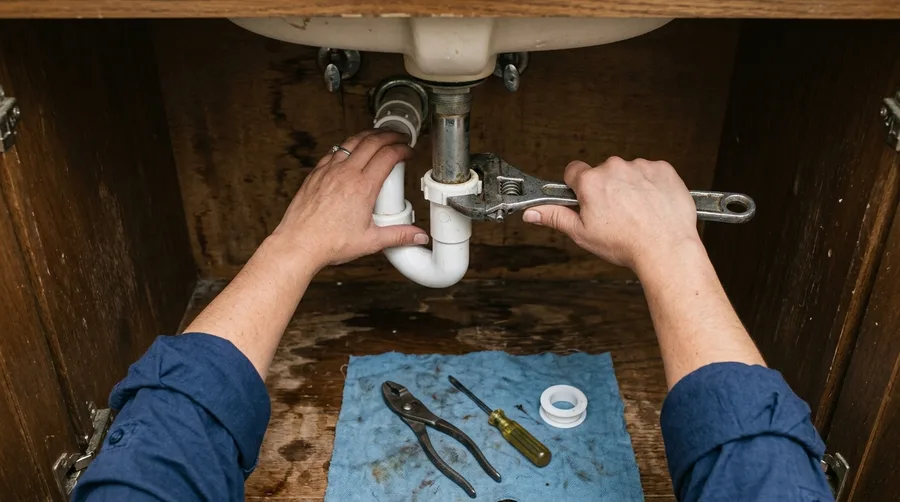
$150 is the standard service call fee just for someone to walk through your front door and tighten a loose pipe.
The trade-off is spending an annoying Saturday afternoon watching blurry tutorial videos and scraping your knuckles while trying to fix it yourself. It is frustrating, and you might have to make a second trip to the hardware store. Do it anyway, because dodging those service fees saves you hundreds of dollars a year.
Pick one small broken thing sitting around your house right now and commit to fixing it this weekend before calling for backup.
15. Hosting Potluck Dinners Instead of Dining Out

It hurts to look at a $120 restaurant bill on Sunday morning and realize you only went out because you felt awkward saying no to friends or ordering just water.
Friendship should never require a high credit limit.
You do not need to host an elaborate dinner party to see the people you love. Start with the smallest version possible, like inviting two close friends over for a casual Tuesday night taco bar where everyone brings a single topping or a bottle of wine. A restaurant night out for three easily runs $75 to $100, whereas sharing the load drops your personal cost closer to $15 while keeping the conversation around the kitchen table.
The mechanism is simple cash flow preservation paired with lowered social friction; splitting the grocery bill across multiple people keeps your weekly budget intact without forcing you to become a hermit, and people are usually relieved for the excuse to save money too.
Text a friend today and propose a low-key living room night for next weekend instead of another expensive venue.
16. Reviewing Insurance Policies Annually

It is entirely normal to feel a mild sense of dread at the mere thought of calling an insurance company, let alone comparing policies across providers.
Most of us set up our home or car coverage once, click auto-renew, and let the payments drain our accounts year after year while rates silently creep upward.
Insurance companies often rely on that exact inertia, banking on the fact that most people find the paperwork tedious enough to just absorb the higher bill.
The mechanism behind saving here is straightforward: loyalty discounts rarely outpace the rate increases that carriers apply to existing customers over time.
When your life changes-such as driving fewer miles to a new job or completing home updates-your risk profile changes too, but your insurer will not automatically adjust your rate to match.
Take one quiet afternoon every year to shop your policies across at least three different providers, raise your deductibles if you have an emergency fund to cover them, and strip away any redundant coverage you no longer need.
If this process still feels overwhelming or genuinely confusing, you do not have to untangle it alone.
Reach out to an independent insurance broker who can compare multiple carriers for you at once, usually without any upfront fee.
A single afternoon of reviewing these numbers can easily shave $500 a year off your fixed household expenses, turning administrative dread into actual cash flow.
17. Buying Quality Goods During Off-Seasons

Winter coats bought in January cost twice as much as winter coats bought in March.
The time-sensitive window to save 60 percent on durable goods is right when retailers clear seasonal inventory.
Plan your purchases ahead and buy off-season.
18. Scaling Back Social Media Scrolling

I deleted the Instagram app from my phone last Tuesday because I realized every single time I felt tired, I immediately opened it and found myself looking at an ad for a $45 linen shirt I definitely did not need.
The mechanism here is simple retail psychology: frictionless digital platforms turn boredom directly into impulse purchases within three seconds flat.
You are not weak for giving in to targeted ads that follow you across every screen.
It is completely okay to step back from social media entirely if your feed feels less like connection and more like an endless catalog designed to drain your checking account.
This week, delete two shopping apps off your phone and turn off every push notification from brands trying to sell you something you never asked for.
Frequently Asked Questions
Is it too late to start building wealth at 40?
It is never too late to start. Time in the market and consistent small habits matter more than your starting age, and catching up is entirely possible when you automate your savings.
How much should I have in my emergency fund?
Aim for one month of bare expenses first—around $2,000 to $3,500 for many households—then keep building toward three to six months as your budget allows.
Should I pay off debt or save first?
Build a small starter emergency fund first so minor repairs don't become new debt, then tackle high-interest debt aggressively while maintaining your savings habit.
Is it okay to pause my savings for a month?
Life happens, and sometimes unexpected expenses require pausing your extra transfers. Just make sure to restart them on your next paycheck so your momentum isn't lost.
Your Next Step
You do not need to overhaul your entire financial life by Friday afternoon.
Pick one habit from this list, set up the automation today, and let quiet consistency do the heavy lifting for your future.