

You stare at your bank balance on a Sunday night and wonder where the last thousand dollars went.
It feels like money simply evaporates the moment your paycheck lands, leaving you guessing until the next deposit saves you or sinks you further into anxiety.
Traditional budgeting apps promise clarity by syncing your accounts, but they often just show you the wreckage after it happens rather than stopping the spending while it is actually happening in your cart.
The digital cash envelope system changes the mechanic entirely by separating your money into virtual folders before you spend a single dollar, giving you hard boundaries that force intentional choices instead of post-purchase regret.
Quick Tips Before You Start
Choose Your Tool
Pick a dedicated budgeting app or a secondary checking account system with free sub-accounts.
Start With Three
Do not build twenty categories on day one; begin with groceries, gas, and dining out.
Automate Payday
Schedule your fund transfers to happen the exact morning your paycheck hits your bank.
Embrace Friction
Moving money between categories should require a conscious, deliberate choice.
1. Starting Small With Virtual Folders

You feel like you need a complete financial overhaul to make any real progress, and the sheer weight of that thought makes you close the tab before you even start.
You do not.
Even $25 a month moved into a dedicated virtual spending category does more work for your peace of mind than $0 that you keep meaning to organize next week. When you start with a single tiny category, you learn the rhythm of digital separation without feeling overwhelmed by a massive spreadsheet. Set aside $25 for your coffee and snack fund this week and watch how it alters your daily habits.
💡 Tip: Keep your very first digital envelope in the same bank app you already use to minimize friction.
Digital Envelope Jargon Decoded
2. Accepting The Honest Trade-Offs

Is digital envelope budgeting actually worth the extra administrative setup compared to passive tracking apps?
It comes with a real cost in terms of active management.
You have to manually assign transactions, check balances before swiping, and occasionally move money around when you miscalculate your grocery needs by $20 or $30.
This friction is not a flaw in the software or an accident of design; it is the entire point.
Passive tracking apps let you sleepwalk through your spending because they organize your financial mess after the fact without asking you to change your behavior in the checkout line.
Choosing the digital envelope method means trading mindless convenience for conscious control, which typically saves households around $300 a month once the habit sticks.
I spent my first month annoyed by the extra button taps while standing in the produce aisle.
The trade-off is spending three minutes checking your phone before dinner instead of wondering where your savings went at the end of the year, and that exchange changes everything about how your bank account looks.
This week: open your app and assign just one category manually before you buy anything else.
⚠️ COMMON MISTAKE
Creating Too Many Categories Too Fast
Do not build fifteen separate envelopes for every tiny expense on day one. You will abandon the system by week two out of sheer fatigue.
3. Reviewing Your Spending Cadence

Reviewing your digital envelopes once a week keeps the system alive without turning personal finance into a second job.
Set a recurring calendar reminder for Sunday morning to check two specific metrics: your remaining category balances and your upcoming recurring bills over the next seven days.
This quick five-minute look prevents end-of-month surprises and lets you adjust your spending velocity before you completely run out of funds.
You are not doing this to feel guilty about that extra $40 spent on takeout last Tuesday, but rather to calibrate your choices for the week ahead so your bills clear without stress.
Open your banking app today and schedule that weekly reminder right now so you do not have to rely on your memory.
Weekly Review Spec Sheet
⏱️ Time Required
5 Minutes
📅 Best Day
Sunday Morning
🔍 Key Metric
Velocity & Balance
🎯 Primary Goal
Early Course Correction
Pro Rule
Never skip more than two weekly checks or the system loses its predictive power.
4. Automating Your Payday Splits

Schedule your digital envelope transfers for the exact morning your paycheck lands in your account.
End-of-month saving means you save whatever survived, and what survives is usually nothing. Waiting until the bills are paid and the weekend happened leaves you looking at a zero balance and wondering where $400 went.
Payday allocation means the money is distributed before your brain gets a chance to spend it on convenience.
This simple timing shift produces vastly better results because it removes willpower from the equation entirely. When $150 moves automatically to your grocery folder at 6:00 a.m. on Friday, you simply build your weekend around what is left.
Take four minutes in your bank app today to set up those automatic recurring transfers, and let the system do the heavy lifting from now on.
Payday Setup — The Details
5. Knowing When to Seek Professional Guidance
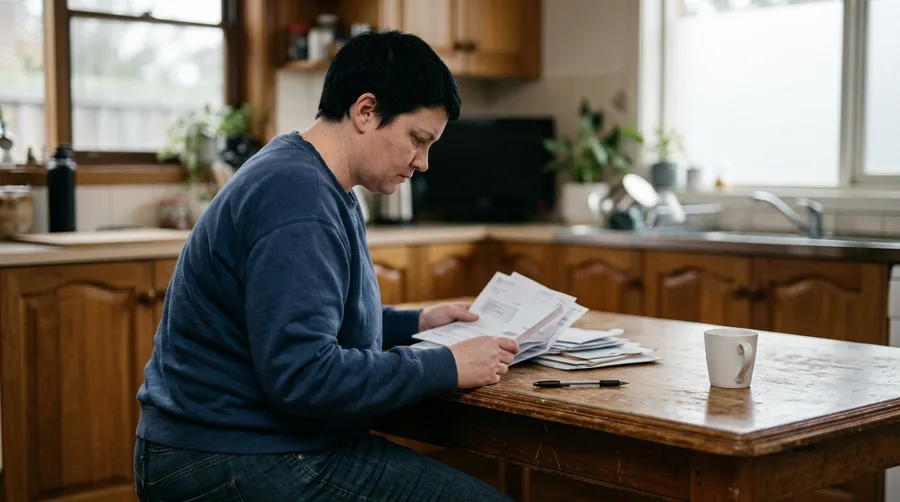
I sat at my kitchen table for three hours staring at bills that literally exceeded my paycheck by $340, trying to color-code my way out of math that simply did not work.
Software cannot solve an income gap, and no budgeting app replaces a real restructure when your fixed expenses consume more than 100 percent of your take-home pay.
Pull your actual numbers together this week and book an appointment with a nonprofit credit counselor or a fee-only fiduciary to build a real recovery plan.
💡 PRO TIP
The Fiduciary Difference
Always look for a fee-only fiduciary who has a legal obligation to put your financial interests ahead of their own commissions.
6. Mastering the Three-Bucket Framework

Many people believe budgeting requires tracking every single penny across dozens of hyper-specific spending categories.
That exhausting approach breaks down within a fortnight because nobody actually wants to log fifty individual receipts after a long workday.
The three-bucket framework simplifies everything by dividing your cash flow into fixed bills, debt minimums, and flexible living expenses. You assign clear percentages on payday, route the money instantly into three corresponding digital folders, and let your everyday spending live entirely inside bucket three so you never guess what is safe to spend.
When I finally switched to this system, my monthly tracking time dropped from three frustrating hours to roughly ten minutes, and the constant mental math finally stopped hanging over my weekends.
This week, open three separate folders in your banking app and assign your next paycheck split before you spend a single dollar from your main checking account.
The Three-Bucket Split
Our recommended baseline allocation for take-home pay
7. Avoiding Common Category Traps
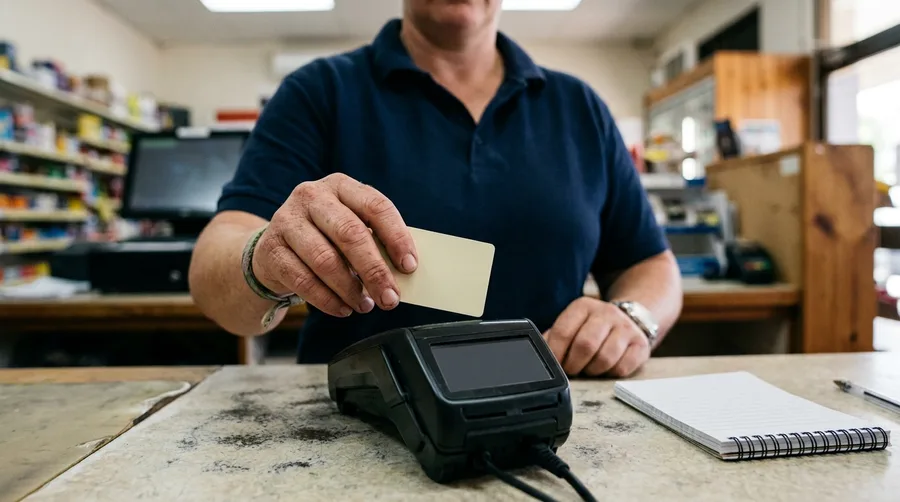
About 65 percent of beginners crash out of their first month because they build rigid digital folders that cannot handle real-world friction.
When your grocery folder runs dry on a Thursday, it is tempting to ditch the whole system out of pure frustration. The mechanism here is simple: pure rigidity creates brittleness, and brittleness snaps the moment an unexpected expense lands.
The fix is building a $30 buffer folder specifically for category bleed so a minor miscalculation never forces you to abandon your progress. Set it up today before your next pay cycle hits.
⚠️ COMMON MISTAKE
Borrowing From Your Future Self
Constantly raiding next month's envelope to cover this month's overspending defeats the purpose of the digital boundary.
8. Rebuilding My Finances From Scratch

It is entirely normal to feel like you are too far behind to ever catch up. I spent years living paycheck to paycheck while using three different budgeting apps that swore they would fix my habits.
Nothing changed until I stopped looking at confusing dashboards and started separating my actual cash into distinct digital folders with hard spending limits.
That single change saved me over $4,000 in my first year by turning mindless card swiping into a conscious choice. Open your mobile banking app today and create one separate folder for groceries with a fixed dollar limit.
9. Overcoming Scarcity Mindsets About Money

Do you feel like no matter how much you optimize your digital envelopes, you are always just one emergency away from total collapse?
Most of us carry that heavy feeling around long after our paychecks land, and it rarely comes from simple math.
This constant scarcity anxiety usually stems from years of financial unpredictability where every unexpected bill meant genuine stress instead of a solvable problem.
When every surprise feels like a personal failure, your brain naturally learns to avoid looking at your banking apps altogether.
The digital envelope system interrupts this exhausting avoidance loop by giving you clear, concrete visibility into your actual cash flow without demanding immediate perfection.
What I believe now is that a proper spending structure is not a cage designed to restrict your daily joy, but a sturdy fence built to keep your genuine priorities safe from chaos.
Take fifteen minutes this afternoon to open your banking app and name one specific money fear that has been keeping you awake at night.
Then, move ten dollars into a new buffer folder to start taking your power back one small choice at a time.
10. Automating Your Savings Transfers

Set up recurring automatic transfers for your core savings envelopes to take willpower completely out of the equation.
Willpower is a finite resource that drains rapidly when you rely on it to manually move cash every single payday, leaving you vulnerable to impulse purchases. By automating the process, you remove the daily decision fatigue that causes so many budgets to collapse by the middle of the month.
Schedule the transfer to trigger exactly forty-eight hours after your primary paycheck clears into your account.
This specific two-day window ensures that your mandatory fixed bills clear first without overdrafting, while preventing your checking account balance from tempting you to spend money that rightfully belongs in your future cushion. When the cash disappears before you have a chance to look at it, you simply adapt your daily spending to fit what is actually left over.
Log into your bank app today, set up a recurring $50 or $100 transfer for two days post-payday, and leave the system alone to do its quiet work.
11. Beating the Holiday Spending Deadline

Most people assume holiday debt is just an unavoidable part of winter because gifts cost too much money all at once.
That is a timing myth, not an expense problem, and it catches thousands of households off guard every single December.
Start a dedicated digital gift envelope right now in July and fund it with $25 a paycheck to completely prevent January credit card bills.
12. Scaling Back When Life Gets Heavy

When my dad was in the hospital for six weeks straight, my meticulously planned fourteen-category digital envelope system completely fell apart.
I was spending $400 a week on hospital parking and takeout because I simply did not have the cognitive bandwidth to cook or track anything else.
It is completely okay to scale back your digital envelope categories when life throws an unexpected curveball your way.
If you are dealing with burnout, health issues, or caregiving demands, drop your tracking down to just two essential buckets: fixed bills and food.
You do not have to maintain a complex tracking system to be successful at managing your money during a crisis.
Consistency always beats perfection in personal finance, and surviving a hard season without quitting your core system is a massive win.
13. Consulting Professionals for Complex Debt

When your total unsecured debt creeps past 40 percent of your gross income, standard budgeting tricks often stop working entirely.
At that stage, running your actual numbers past a certified credit counselor at a reputable nonprofit agency can save you thousands in interest charges.
They help you set up a debt management plan without the high fees charged by for-profit settlement companies, giving you a clear path forward.
14. Building Consistency With Tiny Starts

You look at your checking account and feel like you are simply too far behind for any small change to actually matter.
That heavy feeling is a trap that keeps you paralyzed, waiting for a massive financial turnaround that might take years to arrive. The mechanism behind a tiny start is purely behavioral: moving even a fraction of your cash automatically breaks the cycle of avoidance and proves to yourself that you are actually in control.
Aim for just $25 a month moved automatically into a separate digital savings folder where you cannot touch it easily.
It will not solve every single bill overnight, and anyone promising quick wealth is selling a myth. But consistency beats intensity every single time when you are rebuilding your habits from the ground up. Once that small amount becomes completely invisible to your daily spending, you can gently scale it up by another ten dollars.
Open your banking app today and schedule that first tiny transfer before you overthink it, because starting small is infinitely better than never starting at all.
15. Implementing Your Own Digital Envelope System

Many people believe that digital budgeting requires expensive software subscriptions and hours of daily data entry.
That belief keeps people stuck in financial anxiety.
The digital envelope system works because it mimics the tactile clarity of cash while utilizing the speed and security of modern banking apps.
By dividing your income into virtual folders on payday, you create hard boundaries that stop impulse spending before it starts.
Start with just three categories today: fixed bills, debt minimums, and flexible living expenses.
Automate the transfers, check your balances once a week on Sunday morning, and give yourself permission to start small.
You do not need to be a financial expert to get your money under control; you just need a system that forces intentional choices when it counts.
Frequently Asked Questions
Is it too late to start budgeting if I am already behind on bills?
It is never too late to gain visibility over your money. Start by listing your absolute fixed essentials and minimum debt payments, then build your digital envelopes around what remains from your next paycheck.
How much should I keep in my emergency digital envelope?
Aim for one month of bare-bones expenses first—roughly $2,000 to $3,500 for many households—before building toward a larger three-to-six-month cushion.
Should I pay off debt or fund my emergency savings first?
Build a small starter cushion of $500 first so minor car repairs do not instantly turn into new credit card debt, then attack high-interest balances aggressively.
Is it okay to pause my savings contributions during a tight month?
Yes. If your income dips or unexpected expenses arise, scale your digital envelopes down to the bare minimum essentials until your cash flow stabilizes.
Do I need a paid budgeting app to use digital envelopes?
Not at all. Many standard bank apps let you create free sub-accounts or savings vaults that work perfectly as digital envelopes without costing a monthly fee.
Your First Step Toward Better Money Control
You do not need a complicated spreadsheet or a restrictive lifestyle overhaul to change your financial trajectory.
Open your banking app today, set up one separate virtual folder for your flexible spending, and take control of your money before the month spends it for you.