

You look at the bottom of the crisper drawer and find a bag of slimy spinach. It happens every week.
That moldy produce represents cash you earned, taxed, and then carried straight to the garbage bin. According to USDA estimates, an average family throws out roughly one thousand five hundred dollars worth of groceries annually.
You are not careless. You are just busy, tired, and cooking without a system that matches your real life. We can fix that.
Here is how to stop the cycle without turning meal prep into a second job.
Quick Tips Before You Start
Shop the Back
Move older items forward in your fridge so nothing hides.
Freeze Fast
Freeze surplus bread and meat before they reach the expiration date.
Check Inventory
Look inside your pantry before writing a new grocery list.
1. Automate Your Weekly Grocery Restock Schedule

When I finally stopped wandering down every single grocery aisle hoping pure inspiration would strike, my receipt total dropped immediately.
Grocery stores are carefully engineered spaces designed to make you buy things you never planned for, relying on bright displays and strategic placement to turn empty minutes into impulse purchases.
The mechanism is simple behavioral economics: when you stick to a rigid, automated routine, you completely remove the mental fatigue of deciding what to buy.
Set a recurring calendar reminder for the exact same day each week to review your fridge inventory, taking five quiet minutes on Sunday morning to check what actually survived the week before you write a single item down.
This keeps your weekly spending tightly predictable around a realistic target of $120 instead of drifting upward, and it stops those duplicate purchases of salad dressings and condiments you already have buried in the back.
Take ten seconds right now to set up that automatic calendar ping on your phone and leave it alone.
It takes minimal effort and saves hours of expensive guesswork later.
💡 Tip: Keep your staple list on your phone notes app so you never buy extra eggs.
At a Glance
2. Consult a Professional for Complex Budget Overhauls

It is an exhausting feeling when you are staring at your receipts, wondering how a simple trip for milk and vegetables turned into a two-hundred-dollar crisis.
Sometimes food waste is just a symptom of a larger financial chaos where your entire household cash flow needs a complete rebuild.
When debt payments and grocery bills collide, you might need an outside perspective from a certified financial counselor to untangle your spending, and you can look for nonprofit credit counseling agencies in your area to get objective guidance on your numbers.
💡 Tip: Always verify that your counselor is accredited through the National Foundation for Credit Counseling.
⚠️ COMMON MISTAKE
Do Not Buy Bulk Produce Without a Plan
Buying three pounds of bell peppers because they are on sale saves nothing if two of them rot in the crisper.
3. Avoid Buying Bulk Quantities Without Meal Prep

Buying family-sized portions to save money per ounce only works if you actually eat the food before it spoils.
The math falls apart the moment half a bag of spinach or a bulk pack of chicken goes into the trash because you never planned out the week.
Calculate what you actually consume against what you discard, and you will often find that the discount per pound cost you more overall.
This week, skip the wholesale club run and buy only what fits into three specific dinners you have already mapped out.
Bulk Buying Reality Check
📉 Waste Rate
30% on bulk produce
💰 Real Savings
Zero if discarded
🛒 Better Choice
Buy single units
The Rule
Only buy bulk non-perishables like rice and oats.
4. Accept the Hidden Cost of Convenience Foods

It is completely okay if you rely on pre-chopped vegetables and bagged salad kits because your weeks are entirely overwhelming.
The hidden catch is that you are often paying twice as much for produce that spoils twice as fast due to rapid oxidation once the skin is broken.
You trade your limited evening time for convenience, but you also pay extra for water weight that adds nothing to your actual meals.
If you still choose to buy pre-washed greens, commit to eating them within forty-eight hours or skip them completely to protect your grocery cash.
Sometimes spending ten minutes with a chef knife on a Sunday afternoon saves enough cash over a month to fund a small emergency account.
Best For
5. Give Yourself Permission to Scale Back Meal Plans

Stop trying to cook seven complex scratch-made dinners every single week.
The internet loves to sell you an aesthetic lifestyle where every vegetable is fresh and every meal is meticulously prepped on Sunday, but real life rarely cooperates with that fantasy. When an ambitious meal plan inevitably collapses under the weight of a late workday or pure exhaustion, you do not just order one delivery pizza. You end up throwing away $40 of rotting spinach and bruised peppers while spending another $50 on takeout because the willpower battery is completely drained.
Plan for three home-cooked meals and two nights of leftovers instead of a packed seven-day schedule, which immediately cuts your cooking labor in half while protecting your food budget. The mechanism here is simple capacity management: matching your grocery goals to your actual energy levels prevents the fatigue that turns a fridge full of raw ingredients into kitchen waste.
Give yourself explicit permission to rely on frozen vegetables or a rotisserie chicken for the other nights when life gets heavy, because consistency beats perfection every single time.
This week: cross two meals off your plan before you even go to the store, and build in two designated leftover or easy assembly nights.
6. Start With a Tiny Twenty Dollar Grocery Buffer

Can a tiny twenty-dollar adjustment actually fix a grocery budget that feels totally out of control?
It sounds almost too small to matter when you are staring down hundreds in monthly waste, but twenty dollars redirected from the bin into a separate account builds real momentum over twelve months. Consistency beats perfection every single time.
Start this week by moving just one single twenty-dollar bill the day after your main shop, and let that small shift prove you can change the pattern without overhauling your entire life.
7. Build a Simple Three-Bucket Kitchen Storage System

Most people assume food storage is just about finding an empty spot on a shelf, which is why older items get buried behind fresh purchases and eventually turn to science projects.
divide your refrigerator into three distinct zones labeled for immediate use, weekly staples, and long-term ingredients.
Put items that expire today on the top shelf right at eye level where you cannot miss them.
Put condiments and sauces in the side doors where the temperature fluctuates, keeping perishable proteins safely in the colder interior zones.
This simple structural shift ensures you see what needs eating before it spoils, cutting down the roughly $1,500 that the average family loses to wasted food every year.
I rebuilt my own fridge layout this way after losing half a flat of strawberries in the crisper drawer and feeling entirely defeated by my own disorganization.
The trade-off is spending an annoying two minutes rearranging groceries when you unpack your bags instead of just shoving everything in at random.
Do it anyway because it stops the rot and keeps your hard-earned money in your wallet.
This week: take ten minutes to clear out your fridge and assign your three zones before your next grocery run.
8. Review Your Receipt Totals at the End of Every Month

Take exactly ten minutes on the final day of the month to lay out your grocery receipts next to your trash can.
Most of us guess where our money went, but the truth lives in the pattern of what we actually threw away.
Look closely at your spending across three specific categories: fresh produce, dairy products, and bakery items, because these are where up to 40% of household food loss quietly accumulates.
You are not doing this to feel bad about the $45 of spoiled spinach, but rather to make sure next month's list reflects your actual eating habits instead of your aspirational ones.
Adjust your next shopping trip down by that exact dollar amount so your grocery budget starts working for you instead of funding the local compost pile.
9. My Own Kitchen Inventory Mistake That Cost Me Hundreds

Fresh herbs feel like a small luxury until you calculate what they actually cost when they rot in the crisper drawer.
I used to buy fresh cilantro and basil every single time a recipe called for them, watching entire bunches turn to mush within five days because I never got around to using the rest.
That habit quietly drained about $180 a year from my grocery money before I started chopping them immediately and freezing the leftovers in olive oil for about $3 worth of trays.
This week: take five minutes after you get home from the store to prep and freeze what you will not use before Friday.
10. Overcome the Belief That Food Management Takes Too Much Time

Sound familiar? You feel like tracking groceries is a chore meant only for extreme couponers.
That belief keeps you losing money every single time you shop without a plan.
New belief: managing your kitchen takes five minutes and keeps cash in your pocket.
What I believe now: a simple list beats mental math every time.
11. Act Before Inflation and Grocery Price Spikes Hit Harder

Lock down your kitchen habits this month before another round of price hikes squeezes your weekly spending even further.
Food costs rise steadily every single year, which changes the math on what you throw away. When prices climb, every discarded pound of food hits your household budget twice as hard because you are replacing it at a higher rate.
The mechanism here is simple inflation compounding: losing $30 worth of produce used to sting, but that same basket costs closer to $45 now. That drift silently drains an extra $500 a year without any change in your actual eating habits.
I watched my own grocery bill creep up by $120 a month last year before I finally started tracking what actually went into the trash can.
Take fifteen minutes this weekend to audit your pantry and freeze whatever is nearing its date before the next price spike hits.
12. Execute the Sunday Night Stock Rotation Method

Pull every perishable item out of your refrigerator every Sunday at 6 PM.
Sort them into two distinct piles right on the counter: use tonight or freeze immediately before they turn.
Spend roughly thirty minutes turning those rescue items into a simple soup, frittata, or casserole for the coming week's lunches.
This concrete routine eliminates the nightly guesswork that usually leads to ordering takeout when you are tired.
I used to let produce rot quietly behind the milk jug until I started this exact weekly reset, saving around $40 a week.
Set a phone alarm for Sunday evening and try it once to see how much money stays in your account instead of the trash can.
13. Act Before Your Mid-Month Grocery Budget Runs Out
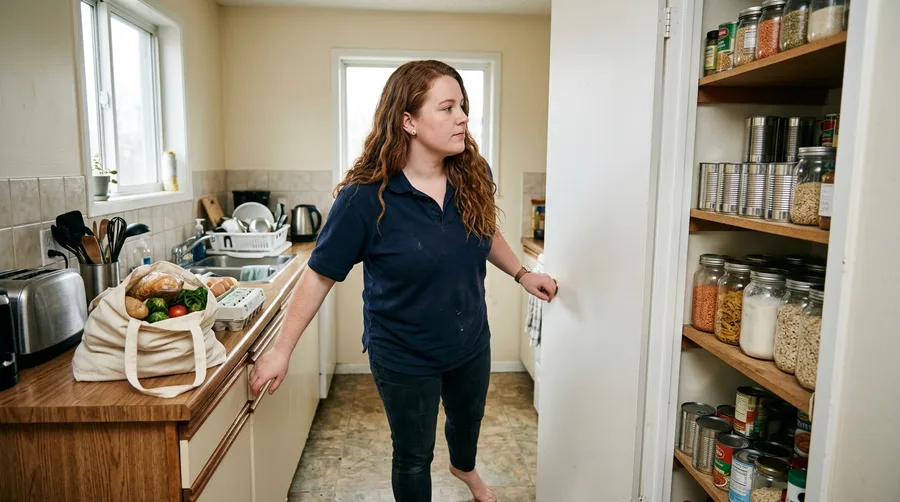
If you hit day fourteen and realize seventy percent of your monthly grocery allocation is already gone, stop scrolling delivery apps and open the crisper drawer.
Waiting until the account balance reads zero forces a panic run to the store or pushes the next week of meals onto a credit card charging twenty-one percent interest.
The mechanism here is simple cash flow defense: bridging the gap with the dried beans and frozen vegetables you already own prevents a temporary shortfall from turning into high-interest revolving debt.
Take fifteen minutes today to pull out every forgotten item in the back of the pantry and build three meals around them before spending another single dollar.
14. Consult Professional Resources When Food Debt Mounts

It is easy to let grocery overspending quietly pile up on a credit card until you are looking at a balance that feels completely overwhelming.
When the monthly food bill spills over into high-interest debt that you cannot comfortably clear from your regular paycheck, a basic kitchen budget is no longer enough on its own.
The mechanism behind revolving credit card debt is unforgiving: interest charges accrue daily, meaning a temporary grocery shortfall can easily turn into a long-term financial anchor if it sits at an APR of 20 percent or more.
You do not have to figure out how to dig out of that corner alone.
Speaking with a qualified, certified financial counselor helps you map out a realistic debt payoff strategy that works alongside your new kitchen habits instead of fighting against them.
Your overall financial health requires looking at both sides of the ledger, addressing what you spend at the store and how you manage the existing debt safely.
Find a reputable, nonprofit credit counseling service in your area and schedule an initial consultation sometime this month to review your specific numbers.
Getting professional input takes away the exhausting guesswork and gives you a clear path forward without shame.
15. Review Your Kitchen Waste Habits Quarterly

I used to wait an entire year to look at what I actually threw away, which meant I kept repeating the exact same expensive mistakes for twelve months straight.
Set a calendar reminder for every three months to evaluate your grocery waste habits so you can catch spending leaks before they drain $50 or $100 from your monthly cash flow.
Open your banking app this weekend, check if your grocery spending dropped by even $20 since the last review, and adjust your routine accordingly.
Frequently Asked Questions
How much money does the average family actually waste on food?
Data from agricultural estimates shows that households discard roughly fifteen hundred dollars worth of edible groceries every year. Much of this waste comes from produce and dairy spoiling before use.
What is the best way to start cutting food waste without meal prepping?
Start by checking your fridge inventory before every grocery trip and moving older items to the front shelf. This simple visibility fix stops duplicate purchases immediately.
Should I freeze fresh produce before it spoils?
Yes, freezing vegetables and fruits right before they turn bad saves them for future soups and smoothies. Always wash and chop them before putting them into freezer bags.
Is buying in bulk actually a waste of money?
Buying bulk non-perishables like rice and oats saves money, but bulk fresh produce often results in high waste unless you have a clear plan to consume or freeze it.
How often should I review my kitchen inventory?
Checking your fridge inventory once a week before writing your grocery list is enough to catch expiring items and prevent unnecessary spending.
Make It Stick Starting This Week
You do not need to overhaul your entire kitchen by tonight. Pick one habit from this list and test it on your next grocery run.
Keep your focus on small, consistent changes that protect your hard-earned money and give you more breathing room in your budget.