

You sit down to look at the bank account, and your chest tightens before you even open the app. Every conversation about spending seems to turn into an argument about respect, control, or who is working harder.
The Federal Reserve notes that financial friction is one of the leading reported strains on household stability, but the real issue is rarely the math. It is the silence that happens between paydays.
You do not need a complete personality overhaul or a six-hundred-page spreadsheet to fix this. You just need a predictable, low-stakes routine that gets you both on the same side of the table.
Quick Tips Before You Start
Keep It Caffeinated
Do your money check-in when you are well-rested, never right before bed or walking out the door.
Neutral Territory
Sit side-by-side at the kitchen table rather across from each other like opponents.
Set a Timer
Cap the conversation at twenty minutes so it never feels like an endless interrogation.
Open All Tabs
Look at the actual numbers together with zero judgment before you talk about changes.
1. Stop Waiting for a Financial Emergency

Most couples only talk about money when something is burning down, and waiting for an emergency guarantees you will argue when you are least equipped to handle it.
When every financial discussion happens under the panic of an overdraft fee, your nervous system treats the chat like a threat, which makes defensiveness inevitable.
Fix this by putting a recurring twenty-minute calendar invite on your shared phones for Sunday morning, because knowing another review is seven days away stops a single $75 overage from feeling like a crisis.
💡 Tip: Treat this meeting like a regular calendar appointment that neither of you can cancel casually.
⚠️ COMMON MISTAKE
The Emergency Talk Trap
Talking about spending only when the balance drops too low guarantees an emotional fight. Move the talk to a quiet, scheduled time when no one is defensive.
2. Uncover Your Early Money Stories

Why does a fifty dollar purchase feel like an absolute disaster to one of you while the other treats it as a minor detail?
When I finally sat down and asked my partner about his childhood, I learned his family treated every single dollar as a finite shield against total disaster.
My own family always treated money as something that simply comes and goes in waves, which meant we were never fighting about the actual grocery bill on the table.
We were actually fighting about two completely different core concepts, security versus freedom, without even realizing it for the first three years.
Spend five quiet minutes of your first money conversation naming what cash meant in the house where you grew up, because understanding that baseline script turns frustration into empathy before you ever look at a single receipt.
💡 Tip: Ask your partner what their earliest memory of money stress is.
3. Automate Your Fixed Expenses First

I spent the first three years of living together fighting over who forgot to schedule the water bill and whose turn it was to log in and check the account balance before payday.
Willpower is a terrible bill-paying strategy that wears down over time. If you manually log in to pay rent, utilities, and insurance every single month, you are burning cognitive energy on routine tasks that should happen completely without your permission or your active attention.
Set up automatic transfers for every fixed obligation to land on the morning after your paychecks clear. This leaves a clean, predictable remainder in your main account so you never accidentally spend the electric bill money on takeout, groceries, or weekend plans.
That simple timing shift changes everything about how a household handles monthly cash flow.
Takes about twenty minutes to set up across your banking apps, and it eliminates roughly half of your monthly friction instantly. You only have to build the routing once and let the underlying system carry the heavy lifting instead of relying on memory.
When the bills pay themselves, you and your partner stop auditing each other's day-to-day transaction history with suspicion or resentment. Trust replaces the constant background dread of checking whether a payment went through before the weekend hits or if an unexpected late fee is waiting in your inbox.
The trade-off is that you have to maintain a small buffer in checking so transfers never bounce, which takes a tiny bit of initial cash flow adjustment.
This week, pick your two largest fixed obligations and set them on autopilot.
💡 Tip: Always schedule auto-pays for the day after payday so the funds are guaranteed to be there.
Automation Setup — Thresholds & Buffers
🛡️ Checking buffer
$200 to $300 floor
⏱️ Timing gap
1 to 2 business days after pay
📊 Variable bills
Set to peak month average
⚠️ If a transfer fails
Pause, fund buffer, restart
Skip this if
Your income fluctuates weekly — use a manual percentage split instead.
4. Name the Unspoken Spending Threshold

Set an explicit dollar amount where a purchase requires a quick text or a mention during your weekly check-in.
One of the fastest ways to cause resentment in a relationship is discovering your partner bought something major without telling you, leaving you both wondering where the cash went.
For many households, that number sits right around $75 or $100.
Anything below that threshold is free autonomy to buy groceries, grab coffee, or replace worn items without asking for permission, while anything above it gets a quick heads-up.
This mechanism stops exhausting micro-monitoring while protecting you both from surprise expenses that break the month's cash flow, giving you peace of mind instead of constant suspicion.
💡 Tip: Choose a threshold that feels safe for both of you, even if it feels a bit small at first.
5. Build a Simple Three-Bucket System

$0 left over on the fifteenth of the month is usually a visibility problem, not a discipline failure.
Stop running your entire financial life out of a single checking account. Split your money into three clear destinations the second it lands: fixed bills, savings goals, and flexible spending money.
Keeping your grocery and entertainment cash separate from your rent money means you always know your true baseline. When the flexible bucket hits zero for the week, you stop spending until Friday.
💡 Tip: Keep your savings bucket at a completely different bank so you are less tempted to raid it.
🌱 GROWING TIP
The Weekly Spending Limit
Divide your flexible cash by four and withdraw it as weekly cash or keep it on a dedicated card. Once it is gone, the spending pauses until next week.
6. Start With the Tiny Monthly Floor

Everyone tells you that you need to save twenty percent of your income right out of the gate, or you are simply falling behind.
If you are living paycheck to paycheck with your partner, trying to hit those massive traditional benchmarks feels less like guidance and more like a daily reminder of what you cannot afford. It creates a quiet tension in the kitchen where nobody wants to mention the bank account balance because it always leads back to the same heavy feeling of inadequacy.
Throw out the unrealistic percentages and start with a tiny floor instead, such as setting aside $25 a month transferred automatically into a separate cushion. This small amount works because consistency beats massive volume every single time when you are rewriting your financial habits.
I tried forcing the big numbers early on and burned out within three weeks because our cash flow just could not support it. Dropping down to a micro-goal was the only way we stopped fighting and actually kept any money in reserve.
Open your banking app this afternoon and schedule that first tiny transfer.
💡 Tip: You can always increase the transfer by $10 every three months as your comfort grows.
Tiny Floor Strategy — The Rules Behind It
7. Consult a Professional When Emotions Take Over

Sometimes the money fight is actually a symptom of deep marital distress that twenty minutes at a kitchen table cannot fix.
If every discussion immediately spirals into screaming or stonewalling, stop trying to DIY your financial communication.
Bring in a fee-only financial counselor or a licensed therapist who specializes in financial intimacy for at least one session this month, because getting outside guidance is not an admission of defeat; it is a tactical pivot when you are stuck in a loop.
💡 Tip: Look specifically for a fee-only fiduciary or a certified financial therapist.
8. Accept the Trade-Offs of Joint Goals

Every financial goal demands that you give something else up.
Saving $500 a month for a house deposit means cutting back on restaurant meals, pausing vacations, or delaying a much-needed car upgrade for at least a year.
The mistake couples make is pretending the sacrifice is painless, as if sheer enthusiasm can replace the actual cash leaving your checking account every thirty days.
Name the trade-off out loud so you both know what you are choosing to bypass.
When you acknowledge that cutting back sucks, you stop resenting your partner for the budget and start seeing them as your teammate against the real constraints.
This week, sit down with a blank sheet of paper and write down the one major thing you are both agreeing to give up to fund your next shared goal.
💡 Tip: Write your primary shared goal on a sticky note and put it on the refrigerator.
💡 PRO TIP
Name the Sacrifice Together
Explicitly agree on what you are cutting this month so neither partner feels singled out or restricted unfairly.
9. Avoid the Hidden Debt Trap

Within 24 hours of opening a hidden statement, the anxiety usually outweighs whatever temporary relief the secret provided. Hiding a credit card balance or a discreet purchase feels like self-protection when money is tight, but it quietly builds a wall of paranoia between partners.
The mechanism behind this is simple emotional avoidance that backfires into a much larger crisis when interest compounds over months. Bring every stray balance out into the open during your next check-in.
No shame and no lecturing, just a factual inventory of what you owe so you can build a concrete payoff plan together this week.
💡 Tip: Make a pact that discovering secret debt leads to a conversation, not a blowout fight.
10. Build a Repeatable Weekly Money Routine

Money talks between partners usually derail because they turn into an unstructured venting session about every past mistake.
You can avoid that spiral entirely by structuring your weekly money check-in down to a strict 20-minute timer.
Spend the first five minutes celebrating any small financial win, like sticking to a grocery target or resisting an impulsive online cart.
Use the next ten minutes reviewing the last week of actual spending against your shared plan without assigning blame.
Dedicate the final five minutes to planning the upcoming week so both of you know exactly what bills are landing and what cash is available.
This rigid timing keeps big emotions contained, protects your weekend, and makes the habit sustainable week after week.
💡 Tip: Keep a dedicated notebook just for your weekly money meeting notes.
11. Review Your Subscriptions Quarterly
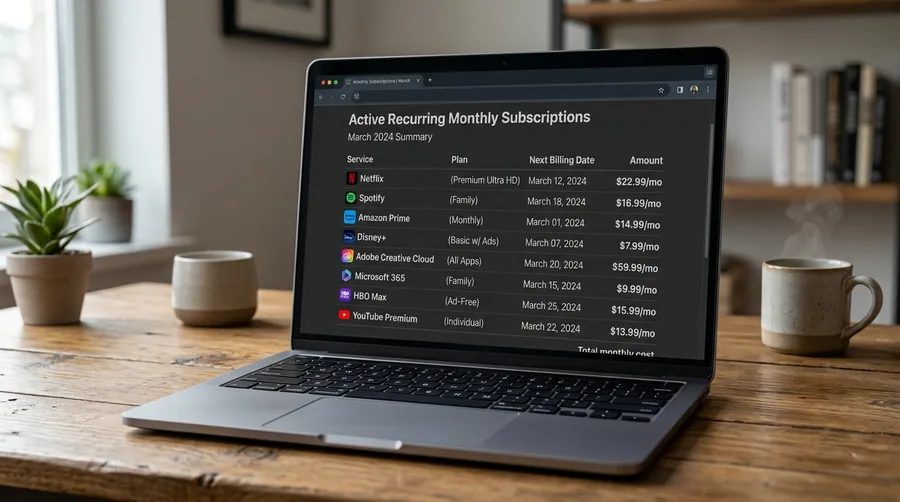
I found a fitness app I had not opened in two years still quietly charging me $14 a month. Subscriptions creep up on every household until you are paying for streaming services and digital tools you completely forgot existed.
Set a calendar reminder to review your bank statements every three months specifically to hunt down those zombie subscriptions. Canceling three forgotten $15 monthly charges instantly frees up nearly $500 a year for your actual goals, giving you quick and painless cash flow recovery that requires zero lifestyle sacrifice.
It takes ten minutes.
💡 Tip: Check your app store subscriptions list on your phone as well as your bank statements.
12. Give Each Other Absolute Spending Freedom

Strict joint budgeting fails because it treats adults like children who need an allowance.
Build a guilt-free personal spending allowance into your plan for each partner every month, no questions asked.
What your partner buys with their personal cash is entirely their business.
Protecting individual autonomy inside a shared financial life is what keeps resentment from building up over time.
You do not need to justify a hobby purchase or a coffee run if it comes out of your designated personal pocket.
💡 Tip: Keep these personal allowances in separate individual accounts if it helps maintain boundaries.
13. Track Net Worth Once a Quarter

Looking at your monthly checking account balance can feel discouraging when every extra dollar immediately goes toward paying down debt and the number barely moves.
Shift your perspective out to a quarterly net worth check instead by adding up all your assets, subtracting your liabilities, and watching the overall gap close every ninety days.
Seeing that long-term trend line move in the right direction proves your daily sacrifices are actually working, so open a simple spreadsheet right now and schedule your first review for the end of this quarter.
💡 Tip: Keep your net worth tracker simple in a basic spreadsheet that you both can access.
14. Agree on Your Debt Payoff Strategy
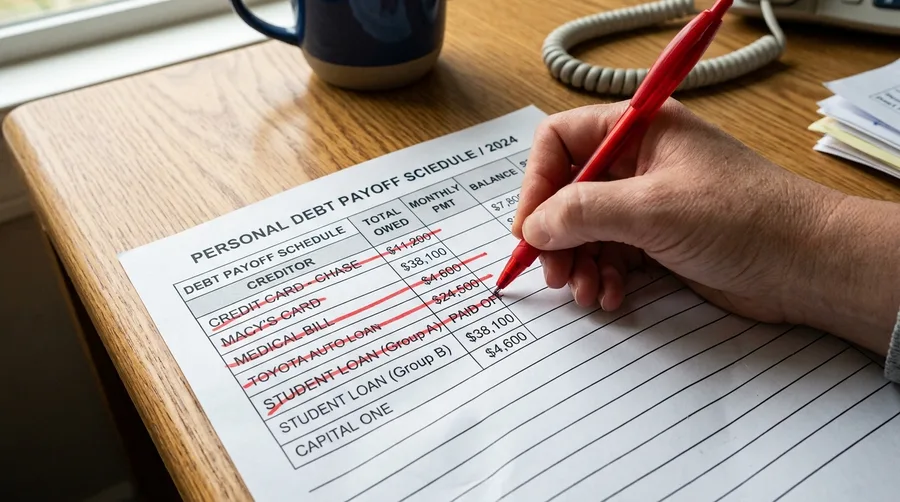
Pick either the snowball method or the avalanche method tonight and commit to it as a team for the next six months.
The choice usually comes down to a direct trade-off between math and momentum. Targeting the highest interest rate saves you money over time, but clearing a small $300 balance first gives you a psychological win that keeps you from quitting when the process feels slow.
The honest cost of picking the pure mathematical route is that it can take a year of hard work before you see a single account hit zero, which wears down your patience. The cost of the emotional route is paying a little extra in total interest just to keep your motivation alive.
Neither choice is wrong as long as you both agree on the path, because pulling in opposite directions guarantees you will stall out completely.
Sit down with your statements this week, write down the final choice on a shared piece of paper, and leave it on the fridge.
💡 Tip: Automate your extra debt payments the same day your regular bills get paid.
15. Celebrate Every Financial Milestone Together

When you hit a milestone, you need to mark it right away before the next bill arrives.
Most people only focus on what they are cutting out, which makes personal finance feel like a punishment.
If every time you talk about money it is about restrictions, you will both eventually stop talking about it altogether.
When you hit a milestone like paying off a credit card or fully funding your $2,000 emergency buffer, celebrate it this week.
Cook a nice meal at home or take a long walk to mark the moment without spending another $150 at a restaurant.
Connecting positive emotions to financial progress ensures you both stay motivated for the long haul.
Decide on your next milestone tonight and write it down where you can both see it.
💡 Tip: Decide on your celebration reward ahead of time so you have something concrete to look forward to.
Frequently Asked Questions
How long should our weekly money conversation take?
Cap your weekly money meeting at twenty minutes. Setting a strict timer keeps the conversation focused, productive, and prevents it from turning into an exhausting emotional debate.
What if my partner refuses to talk about money?
Avoidance usually stems from fear, shame, or past financial trauma. Start by lowering the stakes, sharing your own vulnerabilities first, and focusing on small, non-judgmental check-ins rather than a massive budget audit.
Should we combine all our bank accounts completely?
Many couples find success with a hybrid model where joint accounts handle shared bills and goals, while separate individual accounts fund guilt-free personal spending and complete autonomy.
How do we handle a major difference in our incomes?
Income disparity does not mean power disparity in a partnership. Calculate contributions as a percentage rather than a flat 50/50 split to ensure both partners retain equitable personal freedom.
When should we seek professional financial counseling?
If every money conversation immediately spirals into intense arguments, stonewalling, or hidden debt discoveries, bringing in a fee-only financial therapist can help you reset your communication patterns safely.
Start With This Twenty-Minute Habit
You do not need to fix your entire financial life by tomorrow morning, and you certainly do not need a complicated spreadsheet to stop fighting.
Put twenty minutes on your calendar for this week, make a cup of coffee, and start with curiosity instead of criticism. Your relationship and your bank account will thank you.