

Your savings balance keeps collapsing because one pile of cash cannot handle both planned annual bills and sudden life disasters. The system breaks when routine calendar expenses are forced to wear the label of an emergency.
You save diligently for months, only to watch an annual $1,200 car insurance premium or scheduled vehicle maintenance wipe the balance back to zero in a single afternoon.
That recurring reset is an architecture problem, not a discipline failure.
Routing predictable irregular costs into targeted sinking funds protects your true emergency cushion for catastrophic income loss, keeping your safety net permanently intact.
| Feature | Emergency Fund | Sinking Fund |
|---|---|---|
| Core Purpose | Catastrophic survival and sudden income disruption | Planned, predictable, non-monthly expenses |
| Target Size | 3 to 6 months of baseline expenses ($12,000–$24,000) | Exact bill cost divided by months until due |
| Balance Trajectory | Static, permanent, and untouched indefinitely | Rolling build-and-spend cycles that hit zero on purpose |
| Account Location | Isolated high-yield savings without an active debit card | Multiple labeled sub-accounts linked to checking |
| Trigger Events | Job loss, unexpected medical deductible, broken furnace | Tires, property tax, routine vet care, holiday gifts |
Emergency funds cover survival while sinking funds cover the calendar

An emergency fund exists strictly to absorb existential shocks like sudden job loss or an unpredicted medical crisis, while sinking funds accumulate dedicated cash for predictable, non-monthly calendar bills.
One protects survival; the other handles the calendar.
A sinking fund divides your known irregular costs into targeted savings buckets, building reserves over several months for events like annual vehicle registrations or routine veterinary dental cleanings. When you drain emergency cash to pay those scheduled obligations, your household remains trapped in artificial scarcity despite earning a reliable, consistent paycheck.
That drains your security for a routine bill.
Applying the predictability test prevents that quiet drain by categorizing every dollar before it leaves your hands. If an expense has a fixed due date or represents standard wear over time, it belongs in a dedicated forward bucket, keeping your survival reserves locked away until a true disruption actually threatens your baseline security.
That separation stops the constant erosion of your savings and keeps your emergency baseline completely intact from one season to the next.
The Core Numbers Behind Dual-Fund Architecture
Recommended baseline metrics for operating household cash reserves
Using emergency cash for predictable bills creates false financial panic

Your emergency fund keeps resetting to zero because routine operational overhead gets treated as an unpredictable crisis every time a non-monthly bill lands in the mailbox.
Watching your savings drop by $600 for replacement tires or holiday gifts triggers immediate financial panic, creating the false feeling that your budget is failing. In reality, tires degrade with every mile driven, and December arrives on the exact same date every single year.
Normal maintenance is never an emergency.
Paying maintenance bills out of an emergency buffer conceals what your household actually costs to run each month. Calling scheduled wear-and-tear bad luck excuses reactive spending habits, keeping you in an exhausting cycle where you feel perpetually behind even when your total income covers all your expenses.
Clarity replaces panic once you separate them.
When you recognize regular overhead as basic cost of living rather than a personal catastrophe, the constant panic disappears and your savings balance stays stable through every season.
⚠️ COMMON MISTAKE
The Replenishment Trap
Using emergency savings for predictable annual bills forces you into an exhausting cycle of rebuilding the same $1,000 safety cushion three to four times every year.
Routine maintenance and surprise breakdowns require different funding rules
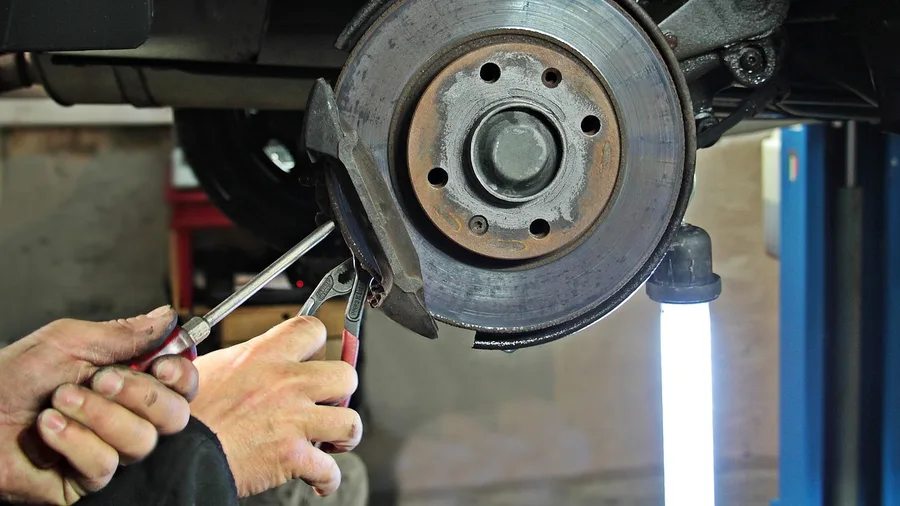
Gray-area repairs become straightforward once you fund predictable component wear through a sinking account and reserve emergency cash strictly for catastrophic, unplannable failures.
A $350 brake pad replacement represents expected mechanical wear that belongs in a vehicle sinking fund. A $4,000 blown transmission on a highway, however, qualifies as a true emergency expense once the repair bill exhausts whatever standard maintenance cash you have accumulated.
The same rule applies at home.
A scheduled annual HVAC inspection belongs in your home maintenance fund, while an unexpected burst pipe in midwinter draws from the core emergency reserve. The operating rule is simple: completely exhaust your assigned sinking sub-account first, and only pull the remaining deficit from your emergency balance if the expense threatens basic household functioning.
Small degradation is never a surprise breakdown.
Running every maintenance invoice through the predictability test keeps small mechanical upkeep funded ahead of time, ensuring larger unforeseen disasters never catch your household completely unprepared.
Expense Classification: Sinking vs Emergency
Sinking Fund Outflows
- Annual car registration and semi-annual insurance premiums
- Expected 40,000-mile tire replacement and scheduled brake service
- Semi-annual dental cleanings and routine prescription refills
- Quarterly property tax assessments and HOA annual dues
Emergency Fund Outflows
- Sudden household job loss or complete income disruption
- Unexpected emergency room visit deductible after an accident
- Catastrophic winter heating failure requiring full furnace replacement
- Uninhabitable home damage requiring immediate temporary shelter
Emergency funds stay static while sinking fund balances constantly fluctuate

An emergency reserve is meant to reach a fixed balance target and sit completely dormant, while sinking funds exist specifically to accumulate cash and then drain away on schedule.
For a household with baseline living expenses of $4,000 a month, a full emergency fund represents a static $12,000 to $24,000 cushion. You build that three-to-six-month safety net once, protect the principal, and leave the balance alone until a catastrophic life event occurs.
Sinking funds follow the opposite trajectory.
These rolling accounts accumulate steadily and drop to zero the moment a scheduled bill arrives. You calculate each contribution by dividing the total expected cost by the months remaining, meaning a $1,200 annual auto insurance premium requires a steady transfer of $100 across twelve pay cycles.
Emptying that sub-account is not failure.
Watching a targeted balance return to zero simply means your operational planning worked as designed, keeping your core safety cushion completely untouched when the insurance invoice cleared.
Cash Hierarchy of Financial Protection
Structure your cash reserves from foundation to targeted spending
Emergency reserves need friction while sinking funds need smooth accessibility

Emergency cash belongs in an isolated, separate financial institution, while sinking funds need to sit directly beside your primary checking account for immediate, frictionless access.
Stashing your emergency reserve in a standalone high-yield savings account without an active debit card creates helpful barriers. A typical one-to-three business day transfer delay provides a natural pause, preventing you from draining critical survival money on spontaneous retail purchases or ordinary weekend overspending when checking runs low.
Sinking funds require an open door.
These balances work best housed in labeled sub-accounts or targeted budgeting envelopes directly inside your primary banking setup. When a scheduled car repair or annual tax bill arrives, you can shift the exact dollar amount into checking instantly to pay the vendor without delay or administrative hassle.
Both accounts serve you through distinct physical boundaries.
Friction keeps your emergency balance safe from casual spending, while speed lets your sinking funds absorb routine calendar bills exactly when they come due.
Account Separation Rules
🧮 Funding Formula
Total Bill / Months Left ($1,200 / 12 = $100/mo)
⚖️ Shortfall Priority
Fund fixed costs (taxes) before flexible targets
🛡️ Overdraft Safeguard
Disable auto-sweep from external emergency funds
🔄 Rebalancing Trigger
Recalculate monthly target right after paying bill
Cross-Borrowing Rule
Never transfer money between different sinking buckets to cover everyday checking shortfalls; let flexible spending take the cut.
Prioritize sinking funds first if your emergency balance never stabilizes

Direct your spare cash toward imminent calendar expenses before attempting to stockpile a multi-month emergency cushion if your savings keep crashing to zero.
A standard $1,000 starter emergency fund will instantly disappear when a known $1,200 semi-annual property tax or insurance bill lands next month. Treating those scheduled bills as surprises forces you into a constant cycle of draining and rebuilding the same starter cash over and over.
You cannot save without plugging active leaks.
A practical split keeps a small, fixed starter buffer in place while sending the bulk of any extra cash toward upcoming sinking obligations. Once you pre-fund the realistic bills arriving over the next ninety days, your day-to-day cash flow stabilizes and stops siphoning off your savings.
Protection from predictable bills creates lasting breathing room.
With near-term liabilities fully covered by dedicated sub-accounts, you can redirect your monthly surplus toward constructing the full three-to-six-month emergency cushion without watching it get wiped out by the next seasonal invoice.
🪜 Sequencing Your Dual-Fund Build
Lock the Starter Account
Park baseline cash at a separate bank with no debit card attached so everyday spending cannot touch it.
Calculate Due-Date Rates
Divide expected total costs by months left before the bill (e.g., a $1,200 annual premium = $100 each month).
Route to Labeled Sub-Accounts
Set automatic transfers into primary checking envelopes for known targets like tires, taxes, or vet cleanings.
Build the 3-to-6-Month Reserve
Once 90-day sinking needs are automated, channel surplus to grow your isolated vault toward $12,000 to $24,000.
Cap your sinking funds at four core categories to prevent overwhelm

Four broad buckets are all you need to capture almost every predictable irregular expense without turning money management into a second job.
Grouping your obligations into vehicle maintenance and insurance, home or rental upkeep, out-of-pocket medical costs, and annual gifts or celebrations absorbs nearly every calendar bill. Splitting cash across fifteen micro-accounts for pet grooming, clothing, or quarterly haircuts leads straight to spreadsheet fatigue and abandoning the whole system by March.
Too many sub-accounts kills the habit.
Small, low-cost expenses under $50 belong in a standard $250 checking account cushion rather than specialized sinking funds, keeping daily cash flow simple while protecting larger reserves from constant micro-transfers.
Broad boundaries keep the predictability test straightforward when planning pay cycles. When an annual $140 veterinary dental visit or a $300 vehicle registration arrives, the cash sits ready in one of your four main pools, completely isolated from your survival emergency reserve and easily spent without second-guessing.
Common Dual-Fund Traps
Automate transfers on payday to keep both accounts distinct from checking

Routing fixed amounts into your sinking funds on payday removes willpower from the process and keeps predictable liabilities separated from your daily spending balance.
Setting up automated recurring transfers or splitting your direct deposit moves designated cash into sub-accounts the morning your paycheck lands. When a planned $600 auto insurance premium or $400 property tax bill hits, you transfer that exact invoice amount back into checking to pay the bill directly.
Your separate emergency fund remains completely untouched and quiet.
Schedule a quick twenty-minute review twice a year to update your monthly transfer amounts against rising prices, premium updates, or rate changes. If your annual car policy rises from $1,200 to $1,320, shifting your monthly transfer from $100 to $110 prevents a surprise shortfall six months down the line.
Automated routing creates a physical barrier between everyday operating money, scheduled calendar bills, and isolated survival cash, allowing your savings structure to run consistently without hours of weekly administrative effort.
Frequently Asked Questions
What happens if a sinking fund does not have enough cash when the bill arrives?
Pay whatever balance exists in the designated sinking sub-account first, then cover the remaining shortfall from your checking buffer or starter emergency reserve. Adjust your monthly contribution formula immediately afterward so the sub-account reaches the full target by the next billing cycle.
Should I keep my sinking funds in high-yield savings or regular checking?
Keep sinking funds in high-yield savings sub-accounts at your primary bank or budgeting platform to earn interest while retaining the ability to move cash into checking instantly. Emergency reserves, however, should stay isolated at a separate bank.
How do I calculate monthly contributions for irregular expenses that change in price?
Review what you spent on that category over the past twelve months, add a ten percent buffer to absorb inflation or rate increases, and divide that total by twelve. If your annual vehicle maintenance totaled $600 last year, set your target to $660 and save $55 each month.
Is it okay to borrow from one sinking fund to cover a shortfall in another?
Yes, reallocating cash between sinking sub-accounts is completely fine because both categories represent planned non-emergency overhead. Just make sure to increase contributions to the depleted sub-account in the following months to keep its target date on schedule.
How large should my everyday checking buffer be alongside these funds?
Maintain a permanent buffer of roughly $200 to $500 in your primary checking account above your normal monthly bills. This absorbs minor spending variances like small prescription refills or slight utility spikes without forcing you to initiate micro-transfers.
Executing Your Twelve-Month Bank Audit and Account Split
Pull twelve months of bank statements this week and highlight every non-monthly expense, from vehicle registrations to veterinary visits. Total the charges and divide by twelve to reveal your exact monthly sinking commitment.
Open two initial sub-accounts beside your checking account for the most urgent upcoming bills, then move your baseline emergency reserve into an isolated high-yield savings account without an active debit card.
When the next annual insurance bill lands, the cash will be waiting in its own bucket – leaving your core safety net untouched.
Audit Your Last Twelve Months of Expenses Today
Review your past year of bank statements right now to calculate your upcoming irregular bills and establish your first two dedicated sinking sub-accounts.