
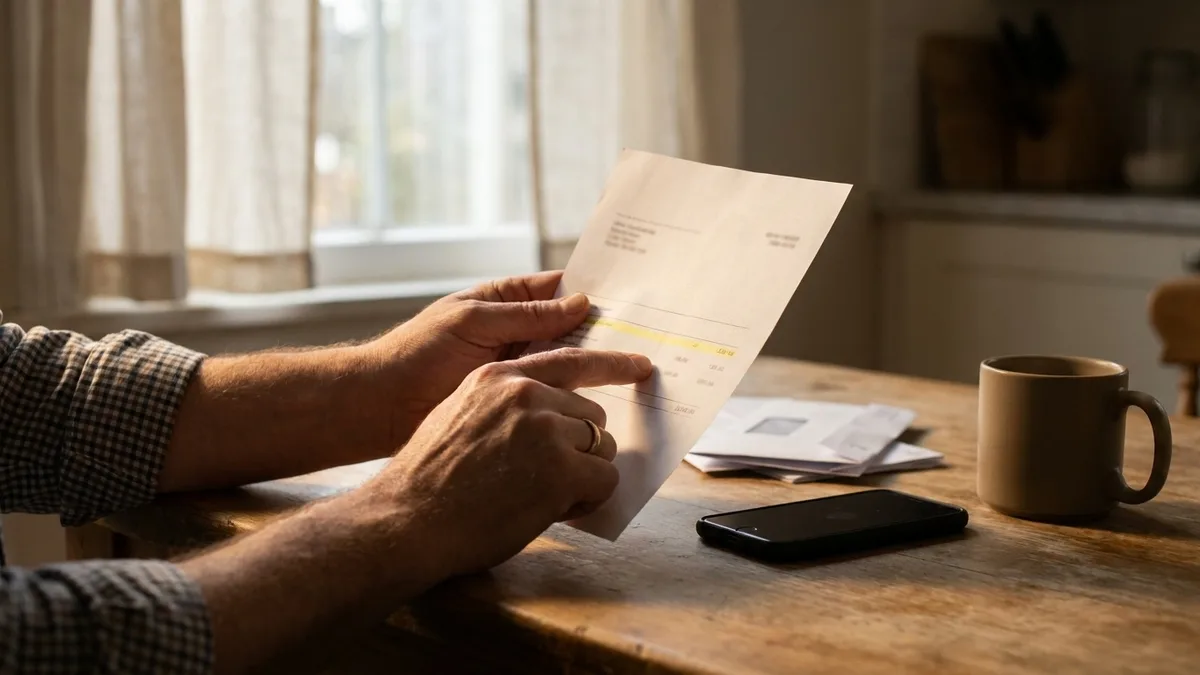
I let a streaming promo renew at full price for the better part of a year before I caught it, and the whole time the number was sitting right there on the statement.
Right now a charge reads $17.99 where your memory insists on $8.99, and you cannot name the service that made the switch. Nothing broke. The promo ran its stated term and expired on the exact date printed at signup, which makes the doubling the contract rather than an error worth disputing.
Nine subscription types do this on a schedule.
Each one flags the jump in a particular sentence of its renewal email and on a particular account page that lists the next charge before it is taken. By the end you can put a name to the culprit, find its renewal date, and make the one move that lands before the next bill.
That is the whole thesis: nine common subscription types are built to revert to roughly double the intro price on a fixed schedule, and each one gives itself away in one line of renewal wording plus one page showing the next charge – enough to identify it and act in time.
Quick Tips Before You Start
Search Your Inbox
Type 'promotional rate has ended' into your email search bar — it surfaces most renewal notices in seconds.
Check the App Store
If you signed up inside an app, the store holds the billing record, not the service's website.
Find the Next Charge Date
The account page shows the next billing amount and date — that number is the renewal price, not the last invoice.
Turn Off Auto-Renew at Signup
For any promo, disable auto-renew the same day — the intro months still run, but they can't roll into full price.
Media and entertainment
These are the renewals that usually announce themselves in your inbox — if you know which line to look for. The email is styled as a routine account notice, so it gets filed and never read. Your job is to find the one sentence that names the price change.
This group matters because the intro periods are short — three, six, or twelve months — and the full-price months pile up faster than you'd think. A $9.99 subscription that doubles costs you an extra $120 a year.
1. Streaming video that doubles after the first year

Cancel the auto-renew, then sign back up under the current promo if the account qualifies.
The reason this one catches honest people is that the twelve months feel like a win. You signed up at $8.99, the year passed, nothing seemed to change, and then the card reads $17.99 with no memory attached to it. The clock started at signup, not at the first show you watched, so the promo may have been running for weeks before you ever pressed play. Two facts make it feel like a mistake instead of a contract.
Twelve full-price months get charged before most people think to look. That's $17.99 a month for a year, which is $216, against the $108 you'd have paid at the intro rate. The service isn't hiding anything. It's just not calling.
The tell is one line in the renewal email: 'Your promotional rate has ended.' It tends to sit below the show artwork and above the unsubscribe link, styled like a routine account notice, which is exactly why it reads as housekeeping and gets skimmed.
Skip the email and go to account settings, then subscription, then next charge. That figure is the renewal amount, not what you last paid, and it's the number the card will get. Eligibility for a fresh promo is set by the service's own terms, so confirm the account qualifies before you cancel, not after. If the account doesn't qualify, you still have a decision to make, and it's better made with the $216 in front of you.
💡 Tip: Set a calendar reminder for 11 months after signup to check the next charge amount.
Do this vs. skip this when a subscription renews
Do this
- Check the next charge field on the account page
- Search your inbox for 'promotional rate has ended'
- Turn off auto-renew at signup for any promo
- Set a calendar reminder before the renewal date
Skip this
- Trusting the renewal email to state the new price
- Assuming the app store doesn't hold the billing record
- Waiting until the charge hits your card to act
- Cancelling without checking if a new promo qualifies
2. Music streaming that jumps from $9.99 to $19.99

Ninety days. That is the whole runway on a music promo that runs $9.99 a month and then bills $19.99 – shorter than a single season of anything worth listening to, which is why the full price can land while the signup still feels like something you did last month.
The year-long video deal at least gave you a clear anniversary to circle. A three-month window doesn't. By the time the fourth payment posts, the song you signed up to hear is still on repeat and the rate has already doubled underneath it without a single interruption in service.
Here is how it hides. The email that announces the switch is dressed as a receipt – the subject line reads like a payment confirmation, all "your payment was successful" – so it gets filed with the other receipts and never opened. The one line that says the price is climbing sits inside a message you were trained to skim past.
You are allowed to not fight this today. If the full $19.99 is more than the music is worth right now, the smaller version of the move is simply to stop the next charge and let the account go quiet for a month. No replacement service, no negotiation, no spreadsheet. Cancelling is a complete action on its own.
But check the right door first, because this is the part people miss. If you signed up inside the app, the service's own website will show almost nothing useful – the billing record, the upcoming charge date, and the cancel control all live in the app store's subscription list, under your phone's account settings. That is where the real number sits.
The holiday-promo trap catches a lot of people here. A $9.99 December deal is billing at $19.99 by March, and the receipt-style email is the only warning you get – which means a January you that felt clever has become a spring you that feels ambushed. It is not carelessness. It is a short fuse and quiet wording.
So scale it to what you can actually do this week. If $19.99 is fine, keep it and move on. If it is not, open the app store subscription list, find the next charge date, and turn off auto-renew before it fires. You do not have to decide the whole music budget tonight – just stop the one payment that is about to double.
3. Gaming subscription that doubles after three months

I remember the afternoon I turned off auto-renew before the first download finished – one toggle, three minutes of setup I never had to think about again.
That toggle is the whole entry, because the gaming subscription runs on the same three months and the same $9.99 changing to $19.99 as other short-window promos, but the billing store is the console itself. The console store may send no email at all, no receipt and no warning. The first evidence is a line on the card statement, already charged and already past.
So flip the order: turn off auto-renew on day one, and the three intro months still run at $9.99 – they just can't roll into $19.99. Over a year that's $60 for the intro quarter and then $120 if it runs on, for exactly the same access. Look in the console's subscription menu, account, subscriptions, not the game publisher's site, because the console holds the billing and the switch.
💡 Tip: On most consoles, you can turn off auto-renew the moment you start the trial without losing the intro months.
4. News subscription that doubles after six months
Call customer service to cancel, and decide the price you would actually keep before you dial. The renewal email carries one line, 'Your introductory offer has ended.', and it arrives styled as routine account housekeeping, which is why most people scroll past it while looking for something that sounds urgent. A rate that moves from $2 a week to $4 a week is the cleanest doubling on any subscription list: no tiers, no add-ons, no bundle discount to blur the before and after.
Do the annual math before you pick up the phone.
Six months at $2 a week runs about $52, then the same access costs $104 a year more, roughly $208 total, for identical delivery of the same pages. Weekly framing is the sleight of hand here, because $2 sounds like pocket change and $4 still sounds like pocket change, and neither number feels like a bill until you multiply it by 52.
The call itself is where a retention offer tends to appear, so walk in knowing your number. If the paper is worth $3 a week to you and the offer lands at $5, you have your answer before anyone starts talking. That single sentence in the email is the announcement, and it is the only one you get, so the move that counts is the one made in the days between the notice and the renewal date.
If you only skim this once, skim the subject line of that email and the weekly figure on your statement side by side. That comparison is the whole decision, and it takes about a minute.
💡 PRO TIP
The next charge field is your best friend
On any subscription account page, the 'next charge' or 'next billing amount' is the renewal price, not your last invoice. That one number tells you what you'll actually pay.
Productivity and storage
These renewals hide behind practical-sounding names and small monthly amounts. The dollar figure feels too low to bother with, which is exactly why they slip through. The search moves from your inbox to the account page.
A $2.99 storage plan that doubles to $5.99 is the same percentage jump as a $9.99 plan that doubles to $19.99. The math doesn't care that the number is smaller.
5. Cloud storage that doubles when the promo ends

The fear here is that something small slipped past you, and the honest answer is that it probably did, because a storage upgrade is the kind of charge nobody recounts from memory. A plan that runs $2.99 a month for 100GB for six months and then bills $5.99 for the identical 100GB is the smallest line on any statement and still doubles exactly like the biggest one. I once found two years of these stacked on a card, and the plan tier had never changed once.
The tell is an email with the subject line 'Your storage plan is changing.', and it is framed around running out of space rather than around the price going up, which is precisely the frame that gets a reader to click 'manage' instead of 'cancel'.
Open the plan page and read the next billing amount field, not the last invoice sitting in your email. That field is the number the card will be charged, and it is normally one scroll below the storage bar that pulled your eye in the first place.
6. Software suite that doubles after the first year

It is a strange kind of forgetfulness, because the software worked perfectly for a year and that is exactly why nobody looked at it again. A first-year rate of $9.99 a month runs for twelve months, then the same suite bills $19.99, and the discount was priced into year one and removed from year two with no second decision required from you.
The renewal notice is where the money hides, since it arrives as a 'your plan renews' email that reads like a receipt. It confirms the renewal without stating the new rate. That number lives on the billing page, one screen away from the message that told you nothing.
the service, the next charge date, the next charge amount. Add a fourth column for the intro price you remember paying, so the gap sits in your own handwriting. Set a phone reminder for two weeks before the earliest date in column two.
Once it exists, the sheet does the noticing for you, which is the point. It works because the annual clock is the thing that defeats memory: twelve quiet months is long enough to file a promo under 'cheap forever', and a line with a date on it cannot be filed away.
The one detail worth confirming on the billing page is the exact charge date, because a subscription bought in March does not always renew in March of the following year. That date is what the reminder is set against.
💡 Tip: If the billing page shows a next charge higher than what you're paying now, you have between now and the renewal date to act.
Subscription renewal terms, decoded
Health and lifestyle
These renewals show up once a year or once a box, so they're easy to forget between charges. The search moves to the app's manage-subscription page and the box confirmation email.
The pattern is the same: an intro price that doubles after a set number of months or boxes. The difference is the timing — you might not see a charge for months, which makes the doubling feel sudden when it arrives.
7. Fitness app that doubles your annual charge

If the card shows $59.99 where you remember $29.99, yes, and it did exactly what the signup page said it would. The intro ran $29.99 for a year; the next year bills at $59.99. Same app, same features, one charge a year instead of twelve small ones.
That annual rhythm is the trap. Twelve monthly charges give you twelve chances to notice a change; a single yearly one gives you one, and it lands quietly on a card you stopped checking because the app itself stopped being interesting around February. By the time the renewal email shows up, it is confirming a charge already taken, not warning you about one coming. The money has left the account before the message is read.
So the date to trust is not the signup anniversary rattling around in your head. It is the next renewal date on the 'manage subscription' page inside the app. Open it, read that date, and read the amount beside it. That pair of numbers is the whole forecast. A January signup renews the following January whether or not the app was opened since.
This is where it becomes a talk-to-someone situation, and the someone is you, looking at two numbers. Is the full price worth what you actually use? Be honest about the usage, not the intention. An app opened four times last year at $59.99 works out to about $15 a session; if that sounds wrong, the answer is already on the table.
The reason to sit with it rather than reflexively cancel: the yearly format is a reasonable deal if the app genuinely earns the money. The reason not to leave it on autopilot: nobody else is going to run that comparison for you. A fee-only financial planner is overkill for a $60 decision. A five-minute look at the manage subscription page is not.
If the answer is cancel, do it before the date on that page, not before the anniversary you remember. If the answer is keep, set a reminder for a week before the next renewal so the decision happens on purpose next time. Either way, write the date down. That is the entire move.
The charge will come once a year, which is both the problem and the gift. You only have to catch it once a year.
8. Meal kit that doubles per serving after four boxes

The common belief is that if the weekly total looks about the same, the price per serving must be about the same too. It isn't. The meal kit can double the rate per serving at the fourth box while the box still holds the same three recipes for two people. The number that moves is the one buried in the order summary, not the one you glance at on the confirmation screen.
The check takes one look at three things: the price per serving on the latest order summary, the 'Your discount has expired' line printed alongside it rather than flagged as an alert, and the next box's cutoff date. A 3-recipe box for two goes from about $30 to about $60 a week at that switch.
Once the discount is gone, skipping the next box has to happen before the order locks, not after it ships. The confirmation email is where the cutoff lives.
📦 The 7-day window before a box subscription doubles
Day 1: You get the email
'Your intro period is ending' arrives 7 days before the charge.
Day 2: Check the renewal price
The email or account page shows the new price — $39.99 instead of $19.99.
Day 3: Decide if it's worth it
Compare the full price to what you'd pay elsewhere for the same box.
Day 4: Cancel or skip
If not worth it, cancel before the renewal date — you have until day 7.
Day 5-6: Confirm cancellation
Check your account page to make sure the cancellation went through.
Day 7: Charge fires
If you did nothing, the full price hits your card. If you cancelled, you're clear.
9. Box subscription that doubles after the third box

A box subscription is the one on this list that tells you the price is about to rise before it rises, and it tells you exactly once. The intro runs $19.99 a month for three boxes, then the fourth bills at $39.99, double the rate for the same box. Seven days before that charge, a 'Your intro period is ending' email lands in the inbox.
Seven days is the whole decision window, and it is both the gift and the catch. Most of these renewals announce themselves after the money has moved, or not at all, so a warning that arrives ahead of the bill gives you something rarer than savings: a real choice while the card is still untouched. But seven days is also short enough to miss. If that email falls in a busy week, or the spam filter eats it, the fourth box ships at $39.99 and the window closes without a sound. The cost of the early notice is that you have to be watching for it.
So the honest move is to treat the renewal date as a fixed appointment rather than a maybe. Open the account page now, note the date of the fourth shipment, and decide in advance whether the full price is worth the box. If it is not, cancel before that date. If it is, do nothing and let it renew. Either way you have chosen instead of simply been billed.
The double-renewal pattern at a glance
⏱️ Intro period
3, 6, or 12 months
💵 Typical intro price
$2.99–$9.99/mo
📈 Typical renewal price
$5.99–$19.99/mo
📉 Average increase
Roughly double
📅 When to check
Before the renewal date
Key move
Find the next charge amount on the account page — that's the renewal price.
Frequently Asked Questions
How do I find out if my subscription is about to double?
Open the subscription's account page and look for the 'next charge' or 'next billing amount' field. That number is the renewal price, not your last invoice. Also search your inbox for 'promotional rate has ended' or 'introductory offer has ended' — those lines usually announce the switch.
What if the renewal email never arrived?
Some services, especially console stores and app stores, may not send a renewal email at all. In that case, the billing record lives in the store's subscription menu. Check there for the next charge date and amount.
Should I cancel or wait for a better offer?
If the full price isn't worth it to you, cancel. Some services offer a new promo when you call to cancel, but that's not guaranteed. Decide the price you're willing to pay before you dial, so you're not swayed in the moment.
Is it worth calling customer service to negotiate?
For news subscriptions and some streaming services, yes — the cancellation call is often where a new promo is offered. For app store subscriptions, the store controls the billing, so calling the service directly may not help. Check the store's subscription menu first.
How far in advance should I check my subscriptions?
Check at least a week before the renewal date. For box subscriptions, the warning email arrives 7 days before the charge — that's your window. For annual renewals, set a reminder for two weeks before the date shown on the account page.
The renewal date on your phone is the only number that matters today
none of the nine is a billing error. Each one reverts to a full price on a known date under wording the service handed you in advance, so the fight is with the calendar, not with support.
That $17.99 line now traces back to the $8.99 signup and the sentence that announced the change. No mystery, just a date you did not have in front of you.
So open the subscription list on your phone, find the nearest renewal date, and hold the next charge against the intro price you remember. Work in date order, not charge size – read the list once from top to bottom and each entry becomes a cancel, a skip, or a price worth paying.
The $8.99 you signed up for and the $17.99 on the statement are the same subscription, eleven months apart. This time you get to see the second number before it is taken.
Find your next renewal date now
Open your phone's subscription list and check the next charge amount. That one number tells you if you're about to pay double.
