

Opening a large medical bill feels like getting punched in the chest after a long week.
You stare at the numbers, wondering how a standard procedure costs as much as a used car, and the panic sets in immediately.
It is fixable, and you do not have to pay the initial balance.
I spent four hours on hold sorting through an emergency room visit that came with a four-figure surprise.
Take a breath, pick two steps from this list, and leave the rest for tomorrow.
Quick Tips Before You Start
Call Billing
Always talk to the billing department directly.
Get Itemized
Never pay without an itemized statement.
Check Aid
Ask for financial assistance policies.
Buy Time
Put bills on a temporary payment hold.
1. Request the Full Itemized Statement
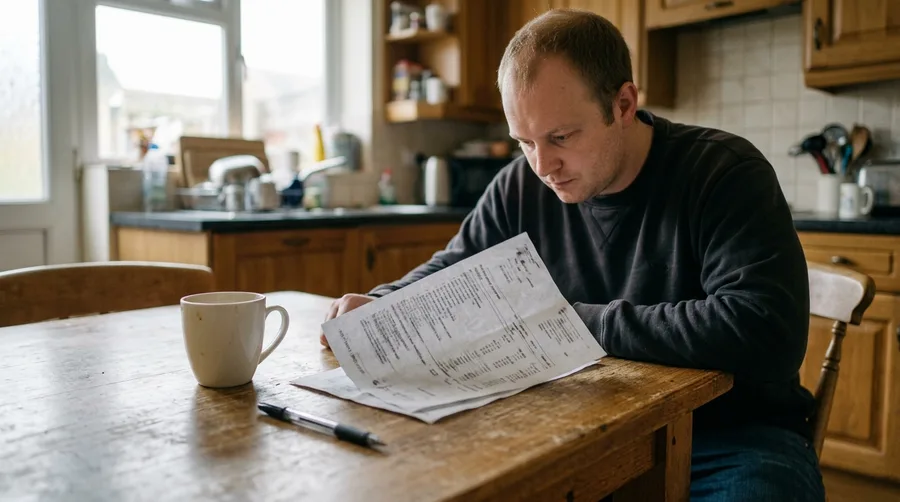
You might feel like staring at a massive medical bill means you just have to pay it, but that first piece of paper arriving in the mail is rarely the final word.
Call the billing department and demand a full itemized statement showing every single pill, bandage, and minute of room time, which exposes the errors that happen constantly on these forms while buying you roughly thirty days of breathing room.
When the numbers still look confusing or impossible to untangle on your own, talk to a patient advocate or a nonprofit credit counselor to review the charges against your actual income.
💡 PRO TIP
Always Request Itemized Records
An itemized bill gives you the line-by-line data needed to spot duplicate charges and inflated supply costs.
2. Track Down My Own Billing Errors

How many times do we just pay the hospital bill without actually checking if we even received what they are charging us for?
When my last emergency room statement arrived, it listed a $450 charge for a basic neck brace I never received, mostly because I had worn my own scarf.
Spotting that single line item saved me hundreds instantly, which taught me that billing departments make routine mistakes.
Grab a yellow highlighter right now and cross-reference every single line charge against your discharge papers before you pay a dime.
Billing Review Checklist
3. Review Every Charge Against Medicare Rates

Roughly 80 percent of hospital bills contain markup charges from a chargemaster that bear zero relation to what things actually cost.
Most people stare at these numbers and assume they are locked in stone, but that retail price is essentially a wishlist.
The mechanism here relies on government reimbursement baselines as your leverage, because Medicare rates represent what public insurers actually deem fair for a given service.
Look up standard regional pricing tools online using the specific five-digit procedure code found on your itemized statement to see what providers are typically paid.
Focus exclusively on the three largest charges on the page rather than getting bogged down in every $12 aspirin.
If they are billing you five times the standard rate for routine lab work, use that exact gap as your baseline when you call them back to renegotiate.
4. Leverage the Nonprofit Hospital Charity Care Rules

Most people assume charity care is only for individuals with zero income or those experiencing complete destitution.
That belief costs families thousands of dollars every single year because it stops them from asking before bills get sent to collections.
Under federal rules, nonprofit hospitals must offer financial assistance programs to middle-income earners making up to 300% or even 400% of the federal poverty guidelines, which often covers households pulling in $60,000 to $80,000 or more depending on family size.
If your household income falls below that hospital's specific threshold, the institution might be legally required to write off a major portion of the balance or even wipe the entire charge clean.
The window to apply before accounts head to collections is usually tight, so call the billing department today to request their specific Financial Assistance Policy application.
Hospital Financial Assistance — At a Glance
📊 Income Threshold
Up to 400% FPL
📝 Required Form
FAP Application
⏳ Processing Time
30 to 60 days
5. Build a Simple Three-Bucket Payment System

When multiple bills hit at the exact same time, your brain freezes up and you end up paying nothing or everything.
That overwhelm is completely normal, but it is also what keeps you stuck in a loop of financial panic.
You need a structure that takes the decision-making out of your hands entirely.
Separate your cash flow into three clear buckets: fixed bills, debt minimums, and flexible spending.
The mechanism here is simple containment. When your money is piled together in one checking account, every dollar looks available, even when rent and medical payments are looming.
Keep fixed bill money isolated in a separate account so you never accidentally spend your housing money on a doctor bill.
Move the money on payday morning so your medical payment plan comes out before you can even see discretionary cash.
This system stops lifestyle creep from eating your debt payoff money before it ever gets a chance to work.
If you fall short in any given month, fund the essentials first and let flexible spending take the hit.
Automate the transfer so you stop relying on willpower, because willpower runs out by Tuesday.
This week: open one separate account and move $50 into it just to test the pipes.
6. Start With Small Monthly Installment Plans

I stared at a $1,200 outpatient balance for three weeks because I thought I had to clear the whole thing or nothing at all.
Even $25 a month, paid automatically, keeps the account out of collections while you dispute the rest.
Hospitals want guaranteed cash flow, so they will often accept tiny monthly payments without adding interest.
Consistency beats a lump sum you cannot afford every single time.
Call the billing office today and set up the smallest recurring draft they will allow.
7. Overcome the Fear of Negotiating Bills

Pick up the phone and call the hospital billing office.
You have probably decided that you are just terrible at arguing with corporate entities and that you will instantly fold the second someone uses a legal-sounding term.
Sound familiar?
Hospital billing agents handle confused and frustrated patients all day long, and they do not view your call as a personal conflict.
Treat the whole interaction like a routine customer service call instead of an aggressive confrontation.
What I believe now is that the billing department fully expects negotiation and actually possesses internal discounting authority of up to 30% or more right at their desk.
This week: dial the number, take a deep breath, and ask if they can apply a standard courtesy adjustment to your remaining balance.
⚠️ COMMON MISTAKE
Never Offer the Full Balance Upfront
Offering to pay the entire amount immediately destroys your leverage to negotiate a lower settlement rate.
8. Scale Back Your Payments When Cash Gets Tight

It is entirely fine to pause your medical payments for a month when an unexpected expense hits your household.
Life does not wait for a payment plan to finish, and forcing yourself to cover a medical bill while skipping groceries is a math problem that only creates bigger trouble later.
Call the hospital billing office, state clearly that cash is tight this month, and request a temporary hardship hold to push your due date out by 30 days without penalty.
9. Execute the Lump Sum Settlement Offer

Most people assume hospital bills are carved in stone and must be paid in full down to the last cent.
That belief costs families thousands of dollars every single year because it stops them from making the one move that actually works.
Hospitals routinely write off unpaid debt as uncollectible losses on their taxes anyway.
When you offer to pay forty to fifty percent of the total adjusted balance right now as a lump sum settlement to close the account permanently, you completely change the math for them.
hospitals sell defaulted medical debt to third-party collection agencies for pennies on the dollar, often recovering less than ten cents for every dollar owed.
Offering an immediate cash payment gives the billing department a much better financial return right this month than handing your file over to a collection agency.
State your offer calmly over the phone, cite the exact percentage you can manage today, and simply wait for their counteroffer.
Get the final agreement in writing on official letterhead before you send a single dollar of your hard-earned money.
Hospitals would rather collect half today than chase a collection agency for pennies tomorrow.
— What billing advocates keep repeating
10. Understand the Trade-Offs of Settling Debt

You stare at the settlement offer, terrified that catching a break means walking right into a trap.
Settling a medical bill for 40 or 50 percent less than you owe can sometimes trigger tax reporting on forgiven debt over $600, meaning the IRS might treat that savings as taxable income.
It is a minor trade-off for wiping thousands off your balance and finally sleeping through the night.
Call the billing office this week to ask if they issue a 1099-C form for forgiven balances before you sign the agreement.
11. Avoid the Trap of Paying With High-Interest Cards

I put a $1,200 outpatient bill on my everyday rewards card three years ago because the billing representative on the phone made me feel like the debt needed to vanish by midnight.
That panic-driven swipe was a massive mistake.
When the billing agent pushes you to pay right now, the easiest move is pulling out a credit card to make the problem go away.
Do not do it.
Putting a hospital bill on a card carrying a 21% annual percentage rate turns a temporary, fixed medical expense into an aggressive, compounding revolving debt trap.
The underlying mechanism is brutal: hospital debt in many states has strict limitations, but once you transfer that balance to a credit card, you are suddenly paying interest on interest at commercial rates.
The hospital cannot legally charge you interest or send you to collections immediately if you are actively communicating and negotiating a legitimate installment plan.
Keep medical obligations completely separate from high-interest plastic at all costs.
If you already made this exact mistake, prioritize paying off that specific credit card balance before touching other lower-rate accounts.
This week: pull your statements, find any medical balance sitting on a revolving card, and call the issuer to see if a hardship rate is available.
12. Automate Your Dispute Follow-Up Calls

Set a recurring calendar reminder for every Tuesday morning at 9 AM to call the hospital billing office.
Willpower will not get you through twenty rounds of being put on hold, so stop relying on it and let a notification do the heavy lifting. When you treat the follow-up like a standard appointment instead of an emotional confrontation, the task shrinks from a daunting chore into a simple fifteen-minute phone call.
Open your calendar app right now and lock it in before you close this tab.
13. Scale Back Your Dispute Efforts Without Quitting

It is completely fine to focus on just one large bill instead of auditing every small pharmacy charge.
Staring at four different medical statements makes your chest tighten up because it feels like an endless administrative second job.
You do not have to fight every single line item on every piece of paper that arrives in your mailbox.
Pick the biggest number on your desk, handle that one, and let the minor bills sit on a basic payment plan until you catch your breath.
When a single emergency room visit carries a $3,500 balance, spending your limited energy disputing a $40 lab fee is just a fast track to burnout.
14. My Own Battle With Emergency Room Billing

$4,200 was the total sitting on my kitchen counter after spending six hours in triage for a minor fracture that turned out to be a simple hairline crack.
I called billing four separate times before reaching someone with discount authority who finally dropped it to $1,100 after looking at the internal hardship guidelines.
Do not accept the first statement as a final verdict, and pick up the phone this week to ask for the supervisor who can actually move the numbers.
15. Act Before the One-Year Collection Window Closes

Credit reporting agencies must wait one full year before placing unpaid medical debt on your credit history, giving you a crucial buffer to sort out the mess.
That twelve-month window is your best defense to negotiate, audit, and settle your balance before it damages your borrowing power or alters your interest rates on future loans.
Waiting until month thirteen hands all the leverage directly to collection agencies who will then call you relentlessly and push harder for a full payout.
I watched a $1,200 lab bill sit in limbo for months until a collection notice finally hit the mail right around day 365, turning a quiet dispute into an urgent crisis.
Start your first review this week by pulling your statements and making that initial call before the clock runs out on your grace period.
Negotiation Success Rate
Frequently Asked Questions
Can medical debt hurt my credit score?
Paid medical debt is removed from credit reports entirely. Unpaid medical debt under $500 or debt less than one year old does not appear on your credit report either.
What should I do if the hospital sends my bill to collections?
You can still negotiate with the collection agency. Offer a reduced lump sum settlement and make sure any agreement is put in writing before sending money.
Are payment plans interest-free?
Most hospital in-house payment plans do not charge interest, but always verify the terms with the billing representative before signing an agreement.
Can I negotiate after I have already started paying?
Yes. You can call the billing department at any time to discuss hardship policies, financial assistance, or a lump-sum settlement for the remaining balance.
Make Your First Phone Call Today
You do not need to fix every financial problem on your desk by tonight.
Pick up the phone, request your itemized statement, and take back control of your budget one step at a time.