

You clicked this because the side hustle advice online feels exhausting.
Every article screams about making five grand a month from a laptop while sitting on a beach, but your reality is a full-time job, tired bones, and an extra $300 a month that would stop your credit card balance from creeping upward.
Let us take a breath.
You do not need a scalable empire or an audience of millions to fix your cash flow.
Sometimes a modest, predictable stream of money that clears $200 or $400 a month quietly changes your entire financial baseline without destroying your weekends.
I spent two years testing small-scale gigs after my grocery bill jumped by 30% and my savings stalled out.
This guide walks through what actually works when you have ten hours a week and need cash that clears the table, not empty hype.
Quick Tips Before You Start
Protect Your Hours
Set a hard cap on your weekly time so a side gig never bleeds into your primary rest.
Separate the Funds
Open a dedicated checking account just for side income to track every dollar cleanly.
Track Net Not Gross
Always subtract software, mileage, or supply costs before counting what you earned.
Skip the Setup Traps
Never pay for expensive courses or coaching programs before making your first dollar.
1. Local Pet Sitting During Work Travel Weeks

You might assume professional boarding kennels have completely captured this market.
They have not, and many pet owners hate cages. Owners traveling for corporate conferences will pay $25 to $40 a night for someone to check on a cat or walk a dog twice daily in their own neighborhood, and it requires zero capital to start if you already live nearby.
When I started, I made $280 in one long weekend just feeding two golden retrievers twice a day. The mechanism is straightforward cash flow based on proximity and trust.
Before you take on clients, talk to a local vet tech or insurance agent about your state's liability rules if you plan to board animals in your own home. You also need to run these numbers against your local rental lease restrictions.
This week: check your lease terms and chat with someone who knows local pet ordinances before saying yes to your first gig.
💡 Tip: Keep a physical key lockbox on hand so you never have to coordinate awkward key handoffs.
Gig Snapshot
2. Weekend Farmers Market Setup Assistant

It is easy to assume that local weekend market stalls are strictly solo operations run by people who do not want any help.
I used to think that until I watched a honey vendor struggle alone on a Saturday morning while a long line backed up past the tomatoes.
Small local vendors will gladly pay $20 an hour cash for four hours on a Saturday morning to run cash boxes and box produce, clearing you about $150 a weekend for minimal stress.
💡 PRO TIP
Target High-Margin Local Vendors
Approach bakers and specialty craft makers first. They have higher per-item price points and are more likely to afford reliable part-time help.
3. Evening Neighborhood Bookkeeping Support

You look at other people's clean spreadsheets and wonder how they manage it while your own paperwork sits in a shoebox.
Sorting through faded, coffee-stained receipts from a local landscaper is deeply annoying, and the administrative tedium is genuinely frustrating.
The trade-off is real: you are dealing with other people's messy digital invoices, and misplacing a decimal point creates a real headache during tax season.
Despite the frustration, small local accounts routinely pay $300 a month for eight hours of total work using basic tools like Wave.
This week, reach out to one independent mechanic or contractor in your neighborhood and offer to organize their weekly receipts for $300 a month.
💡 Tip: Charge a flat monthly retainer rather than hourly rates once you figure out how long the work takes.
Bookkeeping Time vs. Return
Based on a standard $300 monthly retainer model.
4. Overcoming the Imposter Syndrome Barrier

Do you feel completely unqualified to charge for your time because you lack a formal certificate in the field?
That hesitation keeps thousands of capable people sitting on the sidelines while others get paid for basic competence, leaving an extra $300 a month on the table.
What I believe now is simple: competence for a $300 side gig is just being slightly more organized or available than the person hiring you, not having a master degree.
Take fifteen minutes today to list three everyday tasks friends ask you to help with, then pick one to offer locally.
Skill-to-Income Reality Check
🧩 Required Cert
None
⏱️ Time to First Gig
14 Days
🎯 Target Client
Local Sole Proprietor
💰 Average Pay
$25–$35/hr
The Core Shift
Reliability beats elite credentials every single time in the local service market.
5. Strategic Digital Decluttering and Organization

Most small business owners have 40,000 unread emails, chaotic desktop folders, and disorganized Google Drives.
The mechanism is simple digital triage: you step in, establish a coherent folder taxonomy, archive junk, and set up simple filter rules.
Charge a flat project rate of $250 for a ten-hour digital cleanup sprint.
Clients happily pay because finding invoices instantly saves them hours of frustration.
Create a simple checklist of before-and-after screenshots to show prospective clients your organizational structure.
This requires zero physical inventory and can be done entirely from your kitchen table after your kids go to sleep.
Spend one evening mapping out a standardized folder naming convention so you can execute future cleanups in half the time.
💡 Tip: Always export a full backup before touching a client's core cloud drive structure.
Digital Cleanup Workflow
6. The Twenty-Five Dollar Weekly Savings Floor

Twenty-five dollars a week builds a thirteen-hundred-dollar buffer by next year.
Consistency always beats ambition when your schedule is already packed and every single dollar feels spoken for before it even arrives in your account. Waiting until you somehow magically find room in your budget for a massive monthly deposit only keeps you stuck in the same frustrating cycle of starting and stopping.
Do not let anyone convince you that tiny amounts do not matter. They add up silently in the background while you focus on living your actual life and keeping up with everyday expenses.
Start with the floor instead and let small automated movements trick your brain into living on slightly less without feeling the pinch of a drastic lifestyle overhaul. You are not failing just because you cannot save hundreds right now; you are simply building a sustainable baseline that actually sticks.
Log into your banking app today, open a separate holding account away from your spending money, and set up that recurring transfer right now so you never have to rely on daily willpower.
Best Accounts for Your Side Cash
7. The Three-Bucket Income Distribution System

When extra money arrives haphazardly, it usually vanishes into takeout or random errands before you even realize it is gone.
I used this exact split when I was freelancing writing gigs on the side of a retail job, trying to make sense of unpredictable checks.
It turned chaotic $300 months into predictable progress toward my baseline financial stability by removing the daily argument with myself.
Set up a repeatable three-bucket system right in your banking app today: 50% goes straight to clearing high-interest debt, 30% feeds your small emergency cushion, and 20% stays in your checking account as permission money you can spend without guilt.
When funds land on a Tuesday, your automated rules route them before you even look at the screen, taking the emotional friction entirely out of the process.
💡 Tip: Name your secondary savings account something specific like 'Tax Cushion' to prevent accidental spending.
🗺️ Your First Month Roadmap
Week 1
Pick one local service and open a separate savings account.
Week 2
Reach out to three local contacts or neighbors to test your offer.
Week 3
Complete your first paid gig and track every dollar earned.
Week 4
Set up automated weekly splits for your earnings.
8. Quarterly Financial Review and Course Correction

Set a calendar reminder for every ninety days and sit down with your side income ledger.
You are looking at two specific numbers to see if the math still makes sense: total hours invested versus actual dollars cleared in your bank account.
If a two-hundred-dollar gig takes twelve hours of stressful labor, it pays less than minimum wage and has to go.
The goal is high hourly yield because your free time is finite and you cannot afford to burn out for pennies.
Take five minutes during this same check to look at your tax withholding percentages so April never brings a nasty surprise.
Raise your rates upward by ten percent for new clients every year to match your growing experience.
Keep the whole session under twenty minutes with a single cup of coffee so it feels like a routine check-in rather than an audit.
This quick audit keeps your side income working for you instead of turning into an exhausting second job.
💡 Tip: Set a calendar reminder for the first Saturday of every new quarter.
9. Why Automated Transfers Beat Monthly Willpower

Can you rely on sheer willpower to move side income straight into savings instead of letting it slip away into everyday spending?
History suggests you cannot, because your brain treats extra money sitting in a checking account like an open invitation to buy things you do not actually need.
Set up an automatic sweep rule with your bank today so that half of every side income deposit moves instantly into a separate account before you even see it.
This removes the daily mental negotiation entirely, letting consistency do the heavy lifting while you focus your energy on the rest of your week.
10. The Trap of Chasing Low-Yield Online Surveys

I spent three agonizing evenings clicking through boring consumer questionnaires on my phone, only to realize I had earned a grand total of $4 in gift cards after roughly four hours of total effort.
That is the classic side income trap of low-yield online surveys, where you burn precious mental energy for a payout that barely covers the cost of a cheap grocery store coffee.
The math makes no sense once you break it down, because trading four hours of rest for $4 means you are working for $1 an hour while draining your battery.
The fix is blunt and protects your sanity: if any side gig does not pay at least $15 an hour equivalent, close the browser tab immediately and walk away.
Your leftover time after a primary shift has immense value, so protect it fiercely this week by auditing your earnings before you commit another minute.
11. Capitalizing on Seasonal Neighborhood Cleanups

People assume you need specialized skills or a digital storefront to make extra money on the side.
Spring and autumn bring massive waves of yard debris, garage cleanouts, and gutter clearing across suburban neighborhoods, creating an immediate opening for physical local services.
Homeowners will readily pay $150 cash for a Saturday morning gutter sweep or leaf bagging session that takes you three hours.
The time-sensitive nature of seasonal chores creates high urgency, meaning people need help right now rather than next month.
Compound this by dropping flyers in twenty mailboxes on your street two weeks before peak autumn dropping season to secure your slots early.
It is undeniably physical work, but it pays immediate cash and builds local word-of-mouth reputation faster than any digital ad ever could.
💡 Tip: Bring your own heavy-duty contractor trash bags so the homeowner doesn't have to supply them.
12. Giving Yourself Permission to Scale Back

You are staring at your laptop on a Saturday morning, completely exhausted, wondering why you ever signed up for an extra gig when your main job already drains your battery.
Burning out to chase an extra $200 a month defeats the entire point of building a financial cushion because chronic exhaustion eventually hurts your primary income and well-being.
Drop down to just two weekend shifts a month instead of four, pocket $100, and give yourself the exact rest required to keep going without breaking down completely.
13. Reviewing Your Numbers Without Guilt

Thirty days pass faster than you think, and suddenly the month is over and you have to open the banking app.
Reviewing your income statement each month should feel like checking a map, not standing in front of a judge.
Look at what actually cleared, note where expenses crept up without your permission, and adjust your targets for the next thirty days.
If you only made $180 instead of your $400 side income goal because life happened and you were exhausted, celebrate the $180 because it is still money you did not have before.
Consistency survives on self-compassion, not rigid punishment.
This weekend: carve out twenty minutes with a notebook, look at the two numbers that matter most, and close the app without spiraling.
💡 Tip: Keep your monthly review under ten minutes using a single notebook page.
14. Establishing a Repeatable Local Service Blueprint
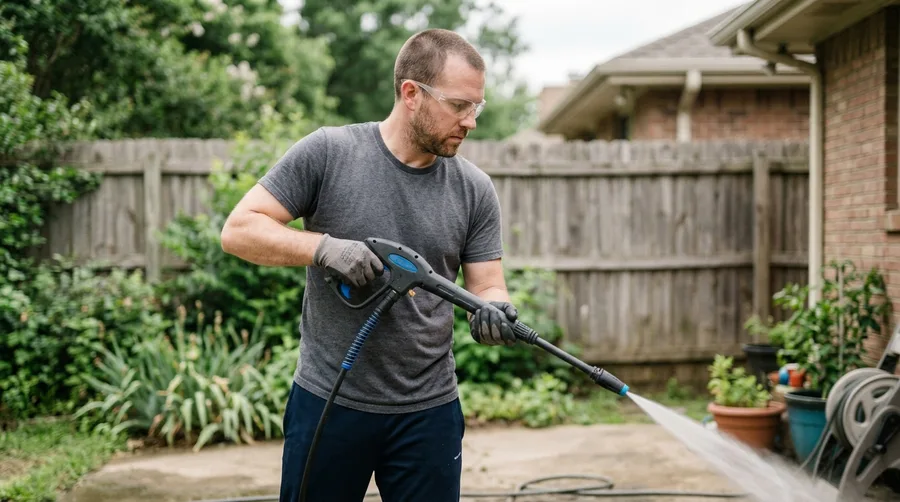
Turn random favor-asking into a steady micro-business with a repeatable local service blueprint.
Most side gigs fail because every new client requires starting from scratch with pricing, scheduling, and messy text threads that drag on for hours.
The mechanism is simple behavioral design: you remove every ounce of friction between a neighbor having an annoying household chore and getting it solved by dinner time.
Start by listing three routine tasks neighbors actively hate doing around their homes: power washing slippery back patios, hauling heavy recycling boxes to the curb, or assembling complex flat-pack furniture out of heavy cardboard boxes.
Draft a single, friendly text-friendly description with transparent flat rates so prospective clients can read your offer and book your time in under two minutes flat.
When you eliminate the back-and-forth negotiation, satisfied repeat customers will start texting you every single month without prompting, turning a one-off weekend favor into predictable cash flow.
This system keeps your overhead at absolute zero while generating reliable extra cash that covers your grocery bills cleanly.
Test one service offering for thirty days before adding a second to keep your operational complexity manageable, and keep your text template saved in your phone notes for instant replies.
💡 Tip: Always send a polite reminder text 24 hours before your scheduled gig.
15. The Honest Cost of Trading Your Free Time

Trading your evenings for an extra $200 a month sounds great until you realize you have zero nights left to just breathe.
The hidden cost of a side hustle is burnout disguised as hustle culture, where trading ten hours of weekend rest for $150 means you are essentially paying yourself $15 an hour to exhaust your body. I spent six months running myself into the ground doing weekend gigs before I realized my health and actual free time had a real price tag attached to them.
Before you take on any extra work this month, calculate your true net hourly return after factoring in supplies, transit time, and pure fatigue, and only commit if the math actually protects your sanity.
16. Avoiding Common Pricing Traps and Underearning

It feels deeply uncomfortable to name a price and ask a stranger to pay it, especially when you are just starting out.
Most beginners instinctively undercharge by half because apologizing for your time feels safer than risking a rejection.
That hesitation creates a quiet trap where you burn out twice as fast for a fraction of what the work is actually worth.
Fix this immediately by anchoring your rates to local service minimums, starting around $25 to $35 an hour, rather than guessing low based on fear.
When you charge a transparent, fair rate, you naturally attract clients who respect your boundaries and pay invoices on schedule.
Professional service deserves honest compensation, so drop the apologies and quote your number with confidence.
💡 Tip: Quote your flat rate with confidence and stop talking to let the client agree.
Frequently Asked Questions
Is it realistic to make $500 a month without working full-time hours?
Yes. By focusing on local hourly services like pet sitting or weekend market help, you can easily clear $300 to $500 working just four to six hours a week.
Do I need to register a formal business entity for a small side gig?
For most micro-gigs under $500 a month, operating as a sole proprietor with a separate checking account is sufficient, but check local regulations.
Should I pay off debt or save my side income first?
Build a small $500 emergency buffer first so surprise car repairs don't derail you, then direct subsequent side income straight toward high-interest debt.
What if my side gig schedule conflicts with my primary job?
Choose weekend or evening-only gigs like pet sitting or digital bookkeeping that fit completely outside your standard working hours.
How do I handle taxes on small side income amounts?
Set aside 25% of every payment into a dedicated tax holding account immediately so you are fully prepared when tax season arrives.
Your First Step This Week
You do not need to overhaul your entire life or launch a complicated business to take control of your financial baseline.
Pick one realistic move from this list, open a separate account today, and take the pressure off your next paycheck.