

The receipt sits on the counter, and the math does not close.
You feel that familiar drop in your stomach when the total climbs past where it was supposed to stop, and you realize you have ten days until payday with twelve dollars left in your account. It is easy to spiral into thinking you are just bad with money, but that is rarely the truth.
A tight grocery budget is an arithmetic problem, not a character flaw. When inflation outpaces your paycheck, feeding yourself takes strategy rather than wishful thinking.
I spent months eating plain pasta with butter because I did not know how to stock a pantry correctly, and that is why I rebuilt how I shop from the ground up. Here is the exact playbook to stretch sixty dollars across two full weeks without living on instant noodles.
Quick Tips Before You Start
Shop the Back
Store-brand dry goods sit on the bottom and top shelves where big brands do not pay for eye-level placement.
Weigh the Cost
Calculate the cost per ounce on bulk bags rather than looking at the total sticker price.
Freeze Early
Portion leftover cooked grains and broth into freezer bags before they spoil in the fridge.
1. Dry Brown Rice

When my grocery bill hit a wall two years ago, a five-pound bag of brown rice was the literal floor that kept me fed.
Rice provides cheap calories and a reliable base that absorbs the flavors of whatever seasoning you have on hand.
Buy a five-pound bag for around four dollars, and you get roughly twenty-five servings of complex carbohydrates that anchor your meals for days.
It takes about forty-five minutes to cook properly, which requires patience when you are hungry.
Do not skip the rinsing step to remove excess starch.
💡 Tip: Cook rice in vegetable broth instead of water for an instant flavor upgrade without spending extra money.
2. Dried Green Lentils
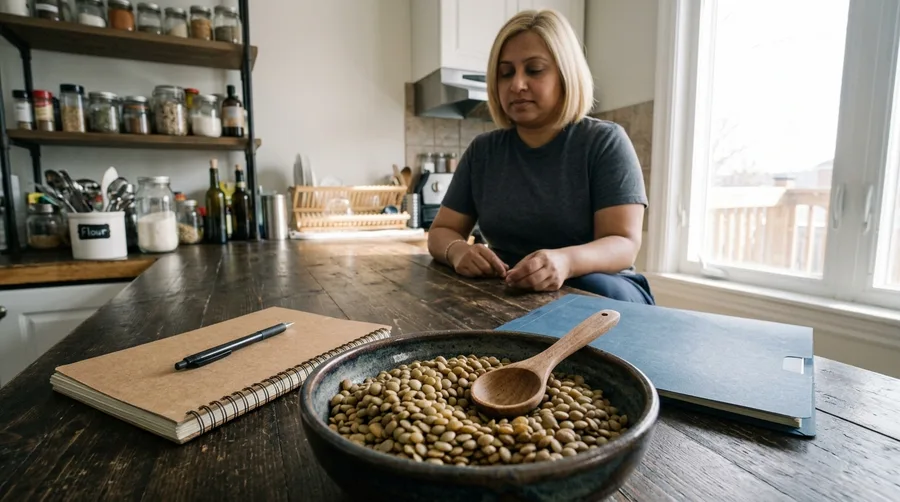
You might think dried lentils take too much time, or that they taste like cardboard if you do not know how to season them.
That is a myth that keeps people spending twelve dollars on takeout when their bank account is empty and the week still has four days left.
Lentils cook in twenty minutes without any overnight soaking, pack massive amounts of plant protein and fiber, and cost roughly two dollars for a one-pound bag.
The mechanism here is simple volume expansion: as they absorb water and broth, they multiply in bulk, turning a small amount of liquid and seasoning into a thick, filling base.
They stretch ground meat dishes by half when mixed in, effectively doubling your yield for a fraction of the cost.
If you only pick two staples off this list to buy first, make them rice and lentils because that combination covers complete proteins cheaply.
Give yourself absolute permission to buy the store brand and completely ignore the fancy organic packaging that costs twice as much for the exact same seed.
This week: drop one bag into your cart without overthinking the recipe, and let it sit in the pantry until you actually need it.
Staple Efficiency Matrix
3. Canned Crushed Tomatoes
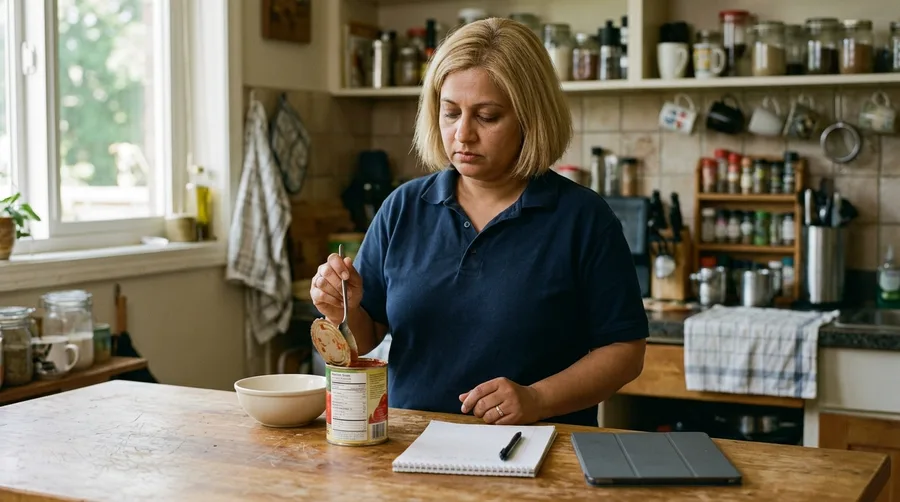
Ask a community budget counselor or a local food bank volunteer what holds a tight kitchen together, and they will point straight to the tomato aisle.
A twenty-eight-ounce can costs about one dollar and fifty cents, acting as the ultimate kitchen shortcut that transforms dry pasta, bulk rice, or plain lentils into a deeply rich sauce. Prepared jarred sauces easily cost three to four times that amount for a fraction of the volume, quietly draining your weekly food fund on packaging and convenience alone.
Open your store app or receipt today to compare those prices yourself.
4. Rolled Oats

I remember staring at a grocery receipt last spring that felt like an absolute typo, wondering how a half-full cart somehow cleared eighty dollars before tax.
Inflation quietly rewards the most boring foods in the aisle because they stay shielded from flashy packaging markups and volatile supply chain shifts.
A large canister of rolled oats costs around three dollars and provides up to thirty servings of steady breakfast or snack filler. The mechanism is simple financial durability: stocking shelf-stable grains protects your purchasing power right now against sudden grocery spikes while basic expenses climb.
Starting this month matters because locking in reliable staples cushions your cash flow before the next price jump hits store shelves. Eating them regularly also prevents the heavy mid-morning energy crash that usually leads to impulsive spending on expensive bakery items out of sheer morning desperation.
Drop one canister into your cart on your next grocery trip and commit to cooking a single batch tomorrow morning before your workday starts.
⚠️ COMMON MISTAKE
Don't Ignore Unit Pricing Labels
Never look only at the total sticker price on the shelf tag. Always check the small print at the bottom to compare the price per ounce or per gram.
5. Dry Black Beans
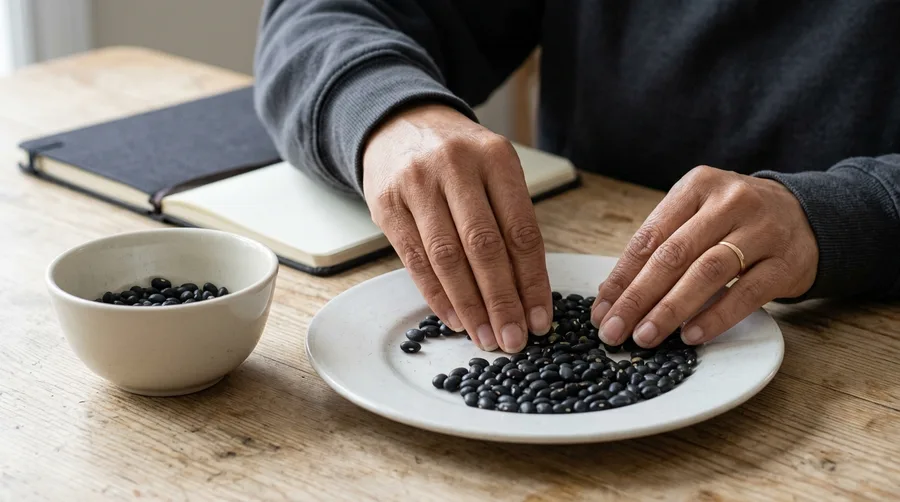
Three dollars a week vanishes into convenience when you drop canned black beans into the grocery cart on autopilot.
That small markup adds up to over $150 a year spent purely on water and steel cans. I used to do the exact same thing because the idea of soaking beans felt like a chore after a long workday. The mechanism is straightforward: you are paying a heavy premium for someone else to open the lid for you.
Pick up a two-pound bag of dry black beans for roughly three dollars instead, and cut your legume spending in half. Drop them in a pot this weekend while you are home.
6. Whole Wheat Pasta
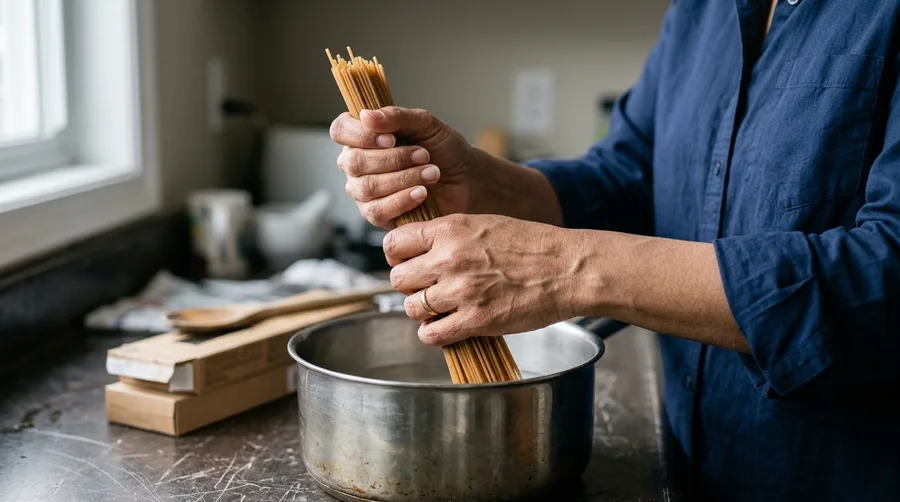
You might worry that stocking up on shelf-stable grains means resigning yourself to boring, flavorless meals for weeks on end, but that is simply not how this works.
Stock three boxes of whole wheat pasta at one dollar and twenty cents each right now.
Whole wheat pasta digests slower than refined white pasta, keeping you full longer with fewer calories.
Pair this with your canned tomatoes and garlic powder for a complete meal that costs less than fifty cents per plate.
This week: add those three boxes to your cart before you buy anything else.
7. Dried Pinto Beans
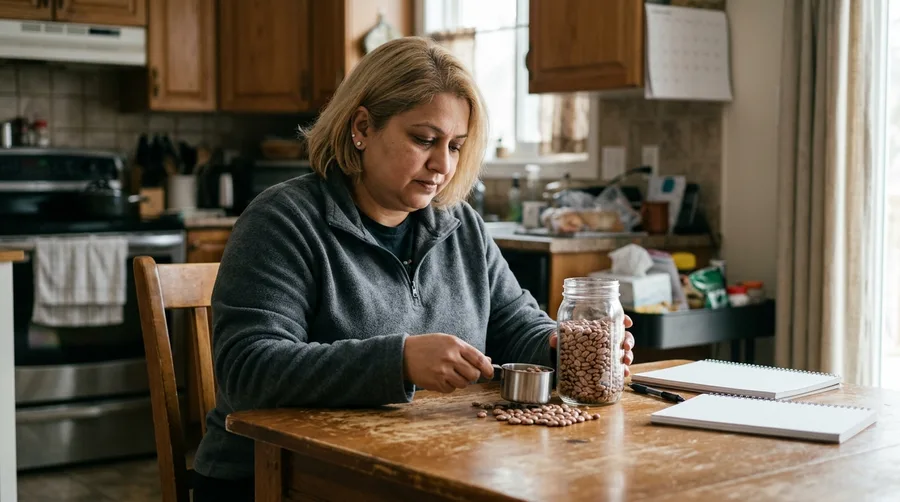
How often do you buy groceries without checking what is already sitting on your shelves?
Make it a habit to audit your dry goods once a month so you stop accidentally buying duplicate bags of staples like pinto beans. I used to waste around $15 every grocery trip picking up things I already owned just because they were buried in the back. A quick five-minute inventory stops the cycle and keeps your actual cash in your pocket.
Open your pantry door tonight and count what you already have before making a list.
8. Peanut Butter

When the pantry is looking thin and payday is still five days away, you stare at the shelves wondering how to stretch what is left without crying over another bowl of plain rice.
A large sixteen-ounce jar of store-brand peanut butter costs about two dollars and fifty cents and provides dense calories and protein when your meal plan completely falls apart.
Keep one jar hidden behind the baking supplies so it only gets used for real emergencies, and grab a spoonful whenever the afternoon energy crash hits hard.
Peanut Butter — The Numbers Behind It
🥄 Total Yield
14 servings per jar
🔥 Energy Density
~1,900 calories total
📦 Storage Rule
Store dark and cool; no fridge needed
Allergy Alternative
Swap for sunflower seed butter at a similar price point if allergies are an issue in your kitchen.
9. All Purpose Flour

I used to watch my entire grocery budget vanish on convenience foods before I finally learned how to anchor my spending to basic, reliable ingredients that actually stretch across the entire month without causing a financial panic.
Set an automatic grocery budget alert in your banking app the moment your paycheck hits so you never accidentally spend rent money on random convenience snacks. This simple digital boundary prevents the stressful end-of-month scenario where you have to choose between feeding your household and paying fixed utility bills.
A five-pound bag of flour costs about two dollars and fifty cents and opens up the immediate ability to bake bread, make flatbreads, and thicken homemade sauces for pennies a serving.
Willpower fails completely when you walk in the door exhausted after a long shift, but having raw staples waiting at home forces you to cook instead of opening a delivery app that quietly swallows three hours of your actual wages and ruins your weekly targets.
Skip the expensive artisanal labels.
Leave the fancy specialty pastry flours alone and stick to the standard bleached or unbleached kind for everyday cooking because the performance is practically identical for basic kitchen needs.
Set up your flour canister on the bottom shelf and leave your banking app open to track your remaining cash balance while you prep your meals. Taking these small physical and digital steps turns meal planning from an anxious guessing game into a predictable, manageable routine that saves you real money every single week.
You do not need a fancy kitchen setup or professional skills to make this work for your household starting today.
💡 Tip: Store flour in an airtight plastic container to keep pantry pests out and extend its shelf life.
10. Canned Chickpeas

A standard can of chickpeas costs about one dollar and ten cents and provides an incredible nutritional safety net when your grocery budget is stretched to its absolute limit and you need results immediately.
Opening them up for the third night in a row can make you feel like eating beans is a visible badge of personal failure or lingering poverty.
That guilt is just a scarcity mindset talking, trying to convince you that financial struggle defines your worth.
The physical mechanism here is sheer culinary adaptability, where basic fat, acid, and heavy seasoning transform an inexpensive legume into a crispy roasted snack, a smooth dip, or a rich curry base. You are not failing by cooking this way; you are using a foundational, high-protein ingredient to completely take back control of your weekly cash flow.
This week, grab three cans and commit to trying one new spice combination so you can see these pantry staples in a completely different light.
The Sixty Dollar Breakdown
Federal Reserve SHED 2024 Context
Source: Federal Reserve economic guidelines for tight household budgeting.
11. Canned Tuna Fish

Buy three cans of tuna this week and keep them in the back of the cupboard.
Protein is usually the most expensive part of a grocery cart, which is why a single can costing about $1.50 changes the math when your money runs low before payday.
I avoided canned fish for years because I thought it tasted like cardboard, until I realized mixing it with a spoonful of mayo and some vinegar made it actually edible.
Start small with just one or two cans if money is tight, because even a tiny protein backup keeps you out of the drive-thru lane when you are too tired to cook.
12. Canned Coconut Milk

People assume canned coconut milk is an expensive specialty item reserved only for rare weekend cooking projects or fancy entertaining.
At roughly $2 a can, it definitely feels like a mild luxury purchase when you are staring down a tight grocery budget and trying to buy strictly functional items. That upfront cost is real, and it is undeniably higher than using plain water or cheap vegetable broth. But the mechanical trade-off here is entirely about flavor density and satiety.
It delivers rich plant fats and a thick, velvety texture that instantly transforms cheap base ingredients like dried lentils, chickpeas, or rice into meals that taste like expensive restaurant takeout. Instead of tasting like deprivation, your dinner feels deeply comforting and satisfying.
When you are eating dry beans and grains on repeat, flavor fatigue is the exact moment people get miserable and blow their weekly savings on fast food delivery. Spending that extra couple of dollars replaces pricey dairy and heavy cream while protecting your long-term consistency.
Pick up just one can during your next grocery trip and stir it into your next batch of rice or lentil curry to see the difference yourself.
Coconut Milk — The Numbers & Rules
13. Chicken Bouillon Powder
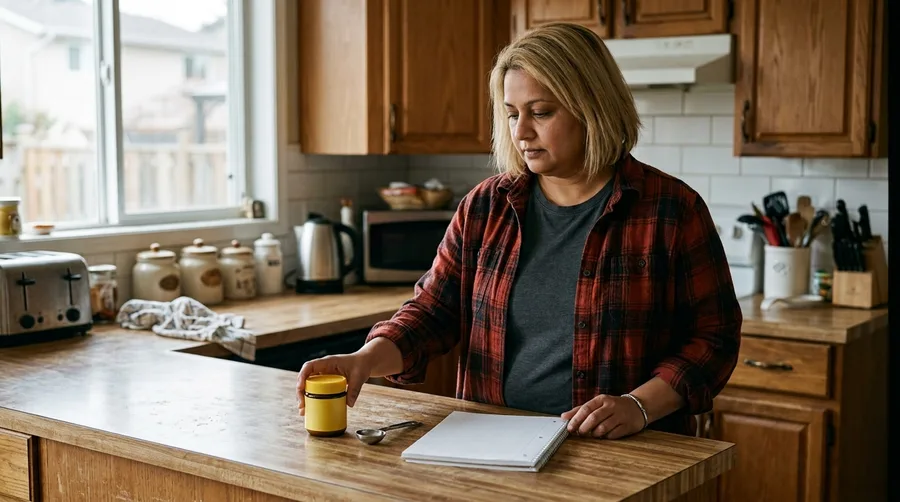
It feels frustrating to watch five dollars vanish on a single carton of pre-made broth when you are trying to keep the grocery bill under control.
Keep chicken bouillon powder in the pantry to automate your flavor profile without wasting money on water and cardboard packaging.
A small jar costs about two dollars and yields dozens of cups of savory broth whenever a recipe calls for liquid depth, freeing you from paying for shipping water.
This week: swap the carton for powder in your cart and put the extra three dollars toward your weekly buffer fund.
14. Distilled White Vinegar

Under $2.00 a gallon is what distilled white vinegar actually costs at the store.
Most households buy half a dozen specialized bottles for cleaning different surfaces, but that scattered approach quietly drains cash from the weekly grocery envelope without improving how clean the kitchen gets.
I used to have an entire cabinet jammed with window sprays, floor cleaners, and surface degreasers that added up to nearly $35 every couple of months.
Sorting your kitchen supplies into a simple three-bucket system changes that entirely: fixed staples, fresh produce, and emergency reserves.
Distilled white vinegar anchors the fixed staples bucket because it serves two distinct functions at once, acting as both the cooking acid required to balance heavy lentil pots and a powerful eco-friendly surface cleaner.
By using a single multi-use liquid for both food prep and household sanitation, you eliminate unnecessary aisle trips and keep your recurring expenses entirely predictable month after month.
Divide your remaining grocery money strictly after securing these foundational items so your budget never gets hijacked by specialty chemical sprays.
This week, clear out the half-empty specialty bottles under the sink, buy one single gallon jug, and keep it right where you can reach it.
15. iodized Table Salt

Can fifty cents genuinely change how you eat for two weeks?
It sounds dramatic until you stare down a pot of plain, unsalted boiled lentils and realize you cannot face another spoonful of them.
Salt is the cheapest flavor enhancer on the grocery shelf, and ignoring it in a tight budget is a mistake that ruins your food and breaks your morale.
The mechanism here is purely chemical: sodium unlocks flavor compounds in cheap staples like dry beans and rice that your tongue would otherwise entirely miss.
When I started watching every dollar, I tried to cut out every single condiment and extra, thinking plain food was the responsible path.
It is not. It is just miserable, and it makes you order takeout by day four because you cannot stand your own cooking.
Buy the standard fifty-cent cylindrical container of iodized table salt and let it do its job.
This week: check the back of your pantry for that half-used blue cylinder before you buy another thing.
16. Black Peppercorns
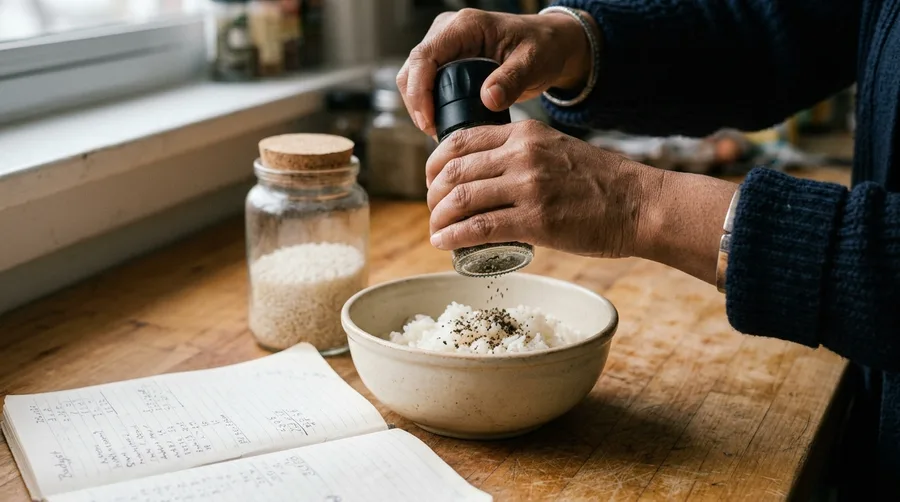
It is completely normal to feel like trying to season cheap meals is just another thing you will inevitably mess up.
When your food budget feels restrictive, consult a culinary professional or check basic spice guides to see how proper seasoning changes everything.
A refillable grinder of black pepper costs about two dollars and lasts for months, turning flat rice and beans into something you actually want to eat this week.
Grab one generic grinder on your next grocery run and use a few turns on your next pot of lentils.
17. Garlic Powder

Throwing away slimy cloves of fresh garlic that went bad on the counter always felt like literally tossing quarters straight into the kitchen trash can.
When I first started watching every single dollar of my grocery spending, that small waste frustrated me to no end because it chipped away at a tight budget.
Switching entirely to a two-dollar jar of garlic powder solved that pantry problem completely while keeping weeknight dinners flavorful and cheap.
The mechanism here is simple shelf-stable efficiency: you pay once, it lasts for months without spoiling, and you lose zero percentage to rot or moisture loss.
Grab a single container for under three dollars on your next trip and leave the fresh heads alone until your cash flow gives you room for produce waste.
18. Ground Cumin
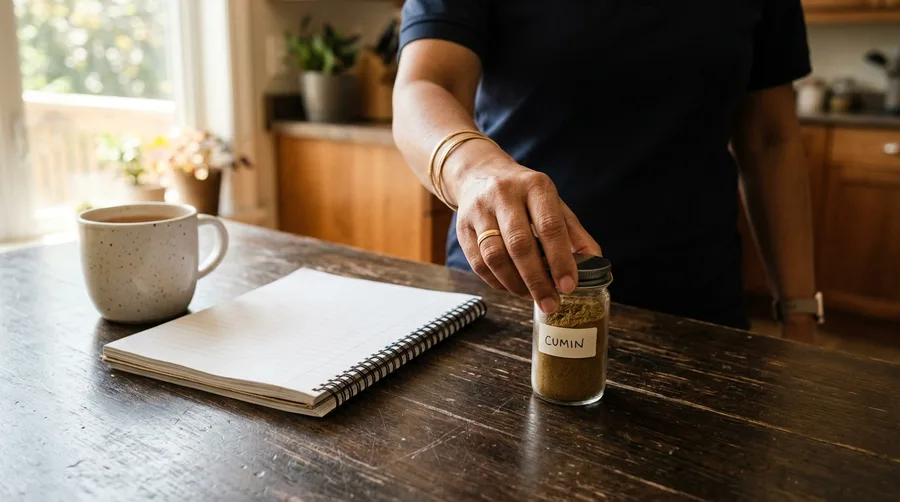
Two dollars is all it takes to rescue a bland pot of rice from feeling like punishment.
A standard jar of ground cumin gives you the backbone for both Mexican style black beans and Indian style dal without buying a dozen expensive ingredients.
Food fatigue is the hidden reason cheap meal plans fail after four days, because eating plain grains wears you down until you break down and spend $20 on delivery. Spend the $2 on this single spice this week, and let it do the heavy lifting of making cheap bulk staples taste like actual food.
19. Chili Powder Blend

You certainly do not need to cook elaborate, gourmet meals every single night of the week.
It is completely fine to scale back your kitchen ambitions when life gets overwhelming and your mental energy is completely gone. You are allowed to take easy shortcuts that keep your grocery spending low without forcing yourself to chop fresh vegetables for an hour after a hard shift.
Give yourself explicit permission to keep dinner entirely basic if that is what keeps you afloat this month.
A basic chili powder blend costs about two dollars and brings massive warmth and depth to simple lentil pots without requiring extra ingredients. Instead of buying fresh peppers, garlic, and five individual spice jars, one simple container handles the flavor profile so your food actually tastes satisfying.
I leaned heavily on cheap spice mixes when my food budget hit rock bottom, and they completely transformed basic pantry staples into something comforting.
Grab a jar today.
20. Dry Split Peas

Dried split peas cost about $1.50 a pound and take an hour to simmer into a pot of soup that feeds a family for two days.
The trade-off here is obvious and annoying: they take time and attention.
You cannot rush dried legumes on a Tuesday evening when you are already tired from work.
If you walk away and forget to stir them, they stick to the bottom of the pot and scorch, ruining the whole batch.
The mechanism behind this food is simple volume and efficiency, stretching basic pantry inventory into actual calories without touching the fresh produce budget.
I ruined my first pot by turning the heat up too high, and I stood in the kitchen smelling burned soup while wondering why I bothered.
Plan your split pea nights for evenings when you are already staying home and folding laundry or answering emails near the stove.
Pick up one bag this week, set aside sixty minutes on a Sunday afternoon, and let the pot do the heavy lifting for your upcoming weekday lunches.
21. Cornmeal
I spent three years throwing away grocery bags of spoiled vegetables because I treated meal planning like a rigid exam I kept failing.
You have likely decided you are just bad at this because your past attempts fell apart after three days of trying to cook every single night.
New belief: meal planning is a mechanical skill you practice, not an innate trait you were born with.
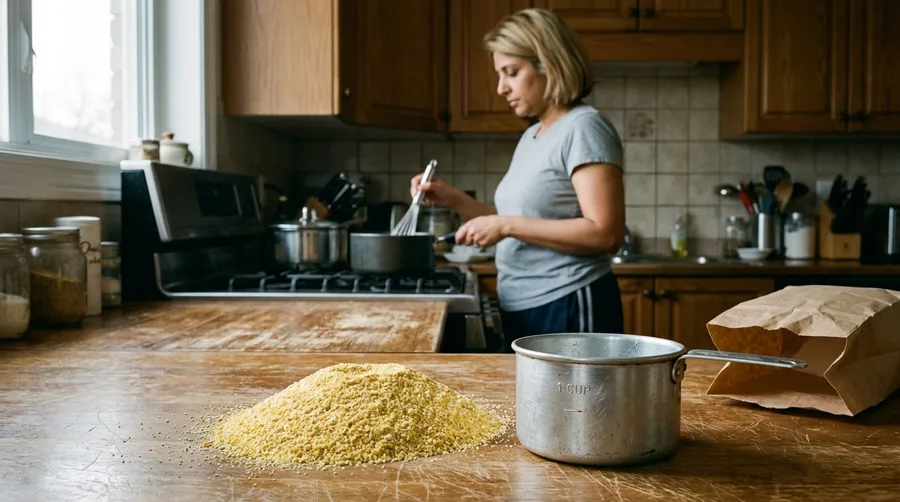
Keep a $2 bag of cornmeal in the pantry as your backup safety net for the nights the plan collapses, and whisk half a cup into boiling water for instant polenta instead of ordering takeout.
22. Canola Cooking Oil

Review your pantry inventory every Sunday evening before planning your meals for the coming week.
Check three things: your remaining grain stock, your spice levels, and your cash envelope balance.
A large bottle of canola oil costs about three dollars and provides the necessary fat to saute onions and prevent sticking.
Keeping track of this final staple ensures your entire sixty-dollar system runs smoothly without unexpected shortages.
Most weeks you will only use a few tablespoons from the bottle, which means a single purchase lasts across multiple grocery cycles.
I used to skip this weekly scan and always ran out of cooking fat by Thursday, forcing an expensive extra trip to the corner store.
Building this ten-minute habit transforms your kitchen management from a stressful daily guessing game into a predictable routine.
This Sunday, take ten minutes to inspect your shelves before writing down your meal plan.
Frequently Asked Questions
Is it actually possible to eat healthy on a sixty-dollar grocery budget?
Yes, by focusing on whole grains, dried legumes, and shelf-stable basics rather than pre-packaged convenience foods. The nutritional profile remains high when you supplement with seasonal fresh produce.
What if I do not have time to cook beans from dry?
Canned beans cost slightly more but save time. You can swap half your dried stock for canned varieties if your schedule demands it, adjusting your grain purchases to keep the total under sixty dollars.
Should I buy name-brand pantry staples?
Store brands offer identical nutritional value and quality for dry goods like rice, oats, and flour at a fraction of the cost. Save your brand-name splurges for items where flavor truly matters to you.
How do I keep from getting bored of eating the same staples?
Spices and vinegars are your primary tools for variety. Rotating between cumin, chili powder, and garlic powder can turn the exact same base of rice and beans into entirely different meals.
What should I do if my grocery total goes over sixty dollars at checkout?
Drop one of the non-essential luxury items like specialty oils or canned coconut milk immediately. Keep your focus strictly on the core proteins like lentils and rice.
Your First Week of Better Spending
You do not have to overhaul your entire kitchen by Friday afternoon.
Pick three items off this list, pick up your sixty-dollar bundle, and take control of your grocery budget one meal at a time.