

The neighbor mentions the payment like it was nothing, and the number on your own worksheet sits nowhere near it. Nothing about the two of you is different except which number got agreed to first. That gap has a cause, and it is not the car.
Walk onto the lot and you meet three numbers set by three different parties: $34,000 on the window of the compact SUV, a second sticker beside it reading $2,000, and a monthly payment written on a folded sheet of paper by the salesperson. Take them one at a time. The $1,200 destination charge is already inside the $34,000, the $2,000 addendum is a dealer line, and the $9,000 trade offer sits $2,000 under a competing online quote for the same vehicle.
The price being compared is not yet the price being paid. The only comparable figure is the out-the-door number in writing, and the only honest monthly figure includes depreciation, insurance, fuel and maintenance arriving after delivery.
By the end you can ask for an itemized out-the-door sheet, judge a loan by its APR and total finance charge against a preapproval, and hold a first-year budget for a car that drops from $34,000 to roughly $26,000 in twelve months. Every one of those lines is a number you can price first and sign later.
What Each Approach Costs You in Dollars
Negotiating the payment
- 72-month term on $21,000 financed at 8% runs roughly $3,700 more in interest than 60 months
- The $2,000 addendum adds about $40 a month to a 60-month loan
- $9,000 trade leaves $2,000 on the table versus the online quote
- Payment-first talk hides the total: the sheet never shows the sum
- No preapproval means the dealer's APR sets the ceiling
Negotiating the out-the-door price
- Out-the-door sheet must total MSRP plus tax, title, fees, minus trade
- 60 months at 6% versus 8% saves about $1,200 on $21,000 financed
- Addendum declined saves $2,000 off the top before interest
- $11,000 trade quote cuts $2,000 from the balance financed
- Preapproval caps the APR; dealer must match or beat it
The Sticker Price Leaves Out Thousands

The out-the-door figure is the one number every dealership has to fill in the same way, and the only one worth comparing across lots. It is the selling price, plus anything the dealer bolted onto the car, plus sales tax, title and registration, plus whatever documentation charge the store assigns, minus any rebate you qualify for and the equity in your trade.
On the compact SUV on the lot, the glass reads $34,000 and that already contains a $1,200 destination charge. Then comes the second sticker: a $2,000 addendum, which pushes the same vehicle to $36,000 before the state has taken a dime.
That gap is where advertised prices stop being comparable. A dealer who advertises a lower selling price 'plus destination' is quoting a different number from the one on the window – the $1,200 goes right back on when you total it up. Two ads, two shapes, no honest comparison.
Sales tax and registration come from your state and are simply collected by the store, so there is nothing there to negotiate. The documentation fee is a different animal – it is the dealer's own charge, it varies by store, and it belongs on the sheet when you weigh one offer against another.
So ask for the whole thing in writing, itemized, before you talk about anything. A salesperson who gives you a selling price over the phone has not given you a document – and a payment written on folded paper is not a price at all.
| Cost line | Where it shows up | What to compare | Question to ask |
|---|---|---|---|
| Selling price | Window sticker and first column of the quote | $34,000 MSRP vs. the dealer's asking price | Is destination inside this figure? |
| Dealer add-ons | Second sticker on the glass (addendum) | $2,000 package vs. $0 | Was any of this work already done? |
| Destination | Monroney sticker, inside MSRP | $1,200, identical at every store in the region | Is this manufacturer-set or dealer-set? |
| Trade-in | Separate line, often negotiated last | $9,000 dealer offer vs. $11,000 online quote | What will you pay for the new car without the trade? |
| Financing | Finance office, after the price is agreed | APR and total finance charge from two lenders | $30,000 over 60 months – what is the total cost of credit? |
| First-year depreciation | Nowhere on the dealer's sheet | $34,000 today vs. about $26,000 in 12 months | How long will the loan outrun the value? |
| Insurance | Your own insurer, rated on the VIN | $70 more per month than the old car's policy | Will the lender require full coverage? |
| Fuel and tires | Your driveway, every month | About $1,500 fuel and $800 tires per 12,000 miles | What do your actual miles look like? |
Dealer Add-Ons Inflate the Out-the-Door Price

The addendum is the dealer's sticker, not the factory's, and every line on it is open to a no. On the example SUV it lists paint protection, nitrogen in the tires, window tint and VIN etching – $2,000, printed on a second label clipped beside the manufacturer's Monroney.
the work is usually already done. The tint is on the glass, the paint sealant is on the hood, and the pitch becomes that you are simply paying for labor already performed. It is a real pressure, and it is worth naming out loud so you can plan for it.
It stays removable because a dealer applied it, not the manufacturer. Decline the package and the out-the-door number drops by $2,000, and the same $2,000 comes off the principal if you were about to finance it – which means you also stop paying interest on it for the entire term.
Walk the car before you agree to anything. Tint you can see through the glass, etching you can see on the windows – where the work is plainly not there, the line on the sticker has nothing behind it.
This is the cheapest line on the sheet to say no to. Say it once, early, and let the rest of the conversation be about the price of the car itself.
⚠️ COMMON MISTAKE
The add-on is already installed – that is not your problem
Work already done to the car is the dealer's inventory decision, not your obligation. Decline the addendum line in writing before you discuss financing; once it is inside the loan, you are paying interest on tint for five years.
Destination Is Not a Dealer Fee
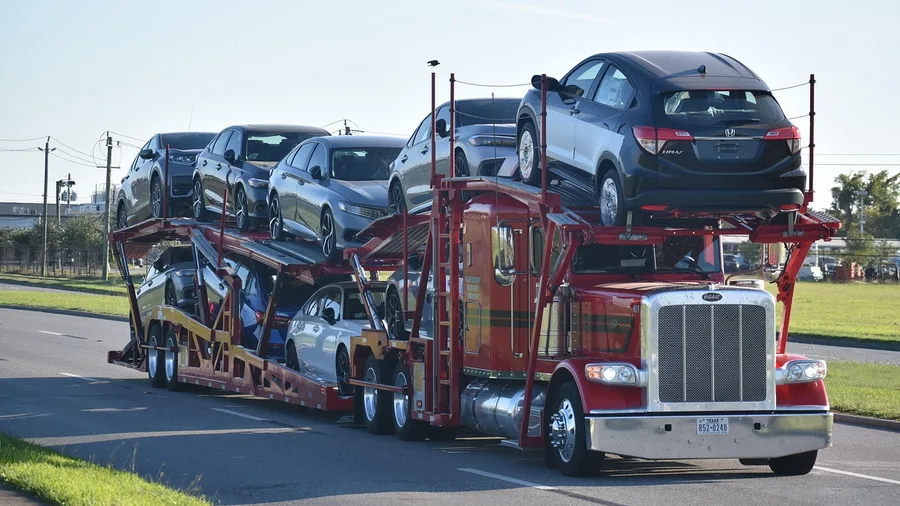
You do have to pay destination, but not as a separate fee – it is a manufacturer charge, and on the $34,000 SUV the $1,200 is already built into that number. It covers the rail and truck haul from the assembly plant to the dealership, and every store in the region shows the same $1,200 because each one pays the factory the same amount.
That is the reason it is not a bargaining line. The dealer is not keeping it as profit, and no salesperson at the store has the authority to knock it off the ticket. Spending an hour arguing about $1,200 is an hour not spent on the number that does move.
Dealer-added fees are the other species: documentation, prep, advertising, etching. Those are the store's own charges, set at the store, and they belong in the comparison when you line up two out-the-door sheets.
The genuine lever is the dealer's selling price for the car itself, above or below sticker. That is where the concession lives, and it is the number to push on once the fixed lines are set aside.
The Monroney sticker is also the reference document for the whole conversation – it names the trim and every option that make up the MSRP, so when a store defends the price, you can point to exactly what you are paying for.
Trade-In Offers Can Hide the Discount

Two people can price the same trade-in and come back with numbers $2,000 apart. The dealership's appraiser walks the lot, drives it, and writes $9,000 on a worksheet. An online car-buying service asks for photos and the VIN, then emails a written offer of $11,000 for the identical vehicle. That gap exists before the new car is even mentioned, and it usually disappears into the deal as if it never existed.
A higher trade number is not free money. It is the dealer's easiest concession because it feels like a gift. Add $1,000 to the trade and take $1,000 off the discount on the sticker, and the net is identical – but the buyer walks out feeling like they won something.
Settle the numbers one at a time, in writing: new-car price first, then trade value, then financing. Ask for each on its own sheet, signed or emailed, before the next one is discussed. The $11,000 offer is a document you can put on the desk; a verbal promise to match it is just air.
One catch most buyers miss: some states tax the purchase price minus the trade, others tax the full price. Whether the trade saves you sales tax depends on where you register the car. Check your state DMV or tax authority's rules – on a $34,000 purchase, that difference alone can decide whether trading in or selling privately wins.
Which Lines Are Actually Negotiable
How much room you have, from fixed by law to fully removable
- Sales tax and registration: Set by your state and only collected by the dealer. Not a negotiating line.
- Destination charge: Manufacturer-set at $1,200, identical everywhere in the region.
- Doc fee: The dealer's own charge. It varies from store to store, so compare it.
- Selling price of the car: The main lever. It moves above and below sticker and it is what the trade and payment get balanced against.
- $2,000 addendum package: Pure dealer line. Decline it and the out-the-door price drops by the full amount.
Position on the scale is negotiating room, not size of the charge.
The Monthly Payment Is a Sales Tool

The payment is the last number on the dealer's side of the table, and it is the one they most want you to say first. Once you name a monthly figure, they can back into it with term, rate, and add-ons until the math fits. The price stops being visible and becomes a variable.
Start with the real out-the-door figure. Say the SUV comes to $34,000 and you put $4,000 down: $30,000 is what gets financed over 60 months. The number to compare across lenders is not the payment – it is the APR and the total finance charge, the sum of every interest dollar you will pay over the life of the loan.
Stretching to 72 or 84 months lowers the monthly number and quietly raises the total. Same principal, more interest, payments continuing years after the warranty closes. And on a car dropping from $34,000 to about $26,000 in year one, long terms barely keep pace with depreciation. Negative equity – owing more than the car is worth – can follow you for years.
Agree the out-the-door price in writing before you say a monthly number out loud. Then go get a preapproval and let the payment conversation happen on your terms.
💡 PRO TIP
Never name your monthly budget in the showroom
Say "I am comparing the out-the-door price with two other dealers" and stop. The moment you name a payment, the term, the rate and the add-ons become tools for hitting your number rather than lines you are evaluating.
Dealer Financing Can Carry a Markup
The dealer can shop your loan to multiple lenders and be paid for arranging it – sometimes a flat fee, often a rate above the lender's buy rate with the spread kept as profit. That markup lives in the APR on the contract, which is why the same $30,000 over 60 months can cost two different amounts depending on who arranged it.
A preapproval from a bank or credit union, in hand before you sit in the finance office, turns the dealer's offer into a comparison instead of a decision. Ask both sources for the APR and the total finance charge – the finance charge is every dollar of interest across the whole loan, quoted in dollars, not a rate. That difference repeats across all 60 payments, so the only fair way to read two offers is side by side in total dollars.
Then watch the amount financed. Add-ons, extended warranties, gap coverage and prepaid maintenance folded into the principal get paid for with interest, and they vanish from view once the monthly payment is agreed. Read the amount financed against the out-the-door price you settled. If it is higher, ask what was added and what it costs in interest over the term.
Depreciation Is the Biggest First-Year Cost
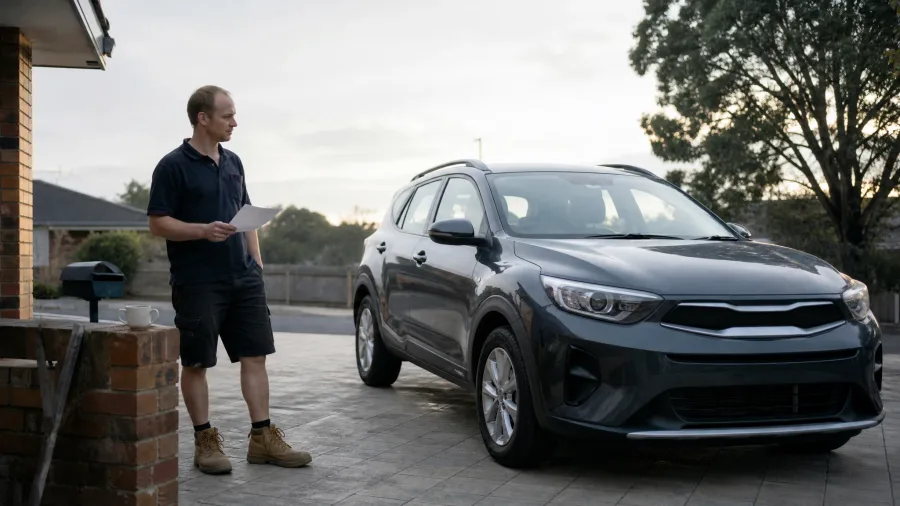
You settle the loan terms, sign, and drive off. The biggest bill of the whole purchase never shows up as a bill at all – it just quietly happens to the car while it sits in your driveway.
Twelve months after you pay $34,000, that same SUV is worth roughly $26,000. Nobody sends an invoice for the $8,000 that disappeared. There is no due date, no line on the dealer's sheet, no entry in your bank account – which is exactly why it slips past every buyer standing at the desk.
The loss lands in two places. When you eventually sell or trade, the next buyer hands over $26,000 and the gap is real money out of your pocket. And while you still owe on the loan, the balance is measured against that shrinking resale number, not against what you paid.
How long the loan runs decides how much of that $8,000 you carry. Stretch the term and the drop in value does not wait for the balance to catch up, so the amount you owe sits above what the car is worth for longer.
Shorter terms narrow that window, and an SUV whose steepest fall already happened cuts the exposure further: year one takes the largest bite, year two less, year three less again.
Put the about $26,000 figure beside your remaining loan balance and the insurance quote and you have the number that matters if the car is totaled or you have to sell early – whatever the gap is, you are on the hook for it.
That is why the buy decision and the loan length are one decision, not two. Before you sign, ask what the car will be worth in twelve months and what you will still owe on it.
The First Year, Line by Line
Depreciation is the only line here with no invoice. It is also the largest.
Insurance Jumps When the Car Is New

The car's value falls quietly, but your premium is the cost that arrives every month, and it climbs because the car is new.
Picture the quote: full coverage on the $34,000 SUV comes back at $70 more per month than the liability-only policy on your 10-year-old car. That is $840 a year, and it starts with the first payment, not after the first oil change.
There is a second reason it is not optional. If a lender is financing the car, you will most likely have to carry collision and other-than-collision coverage for the entire life of the loan. Drop to a cheaper policy and you have broken the loan terms, not saved money.
So where does $70 come from? Not from a model estimate you pull off a website. The premium is rated on the specific VIN, the trim, the options and the address where the car parks overnight. A generic figure for the same model is not the number anyone will bill you.
The moment to get the real one is before you sign, not after delivery. Call your insurer with the VIN and ask what the new policy will cost, then write that figure on the same sheet as the monthly loan payment. Add the two and you see what the car actually takes out of your account each month.
You are buying an ownership cost, not running an errand. Standing at the desk with that combined number is exactly where the true monthly figure becomes visible.
New-Car Maintenance Is Smaller, Not Zero

Insurance is set by the car, but most of the running cost is set by the miles you drive – and it starts the week you take delivery.
Plan on about $600 a year for scheduled service. That is less than a typical old car's repair bills, yet it comes due whether you drive 12,000 miles or 2,000. Here is what the first three years hold even on a new car: oil and filter changes, tire rotations, cabin and engine air filters, brake fluid, an alignment, wiper blades, and every inspection the warranty requires you to complete or risk losing coverage.
Then there is the one big bill. A set of tires runs about $800 at 40,000 miles – roughly year three at 12,000 miles a year. It tends to land just as the warranty is winding down, which is when the bills stop being the manufacturer's problem and start being yours.
The finance office has an answer ready for this: prepaid maintenance, bundled into the loan and paid off with interest across the term. Run the total price of the plan against $600 a year paid as the work is actually done, and against what the plan covers. If the plan price comes in under three years of service you would really buy, it may be worth it. Most of the time the math does not work.
Maintenance on a new car is smaller than it was on the old one. It is not zero, and the number belongs in the same monthly budget as the loan.
Fuel and Tires Follow Your Miles

Fuel is the one line on the sheet that moves with your odometer, which is why it is also the one you can pin down most precisely before you sign anything. Take the round numbers: 12,000 miles in a year, a 28 mpg combined rating, gas at $3.50 a gallon. That is a little over 400 gallons of fuel, and it lands you near $1,500 for the year.
The 28 mpg is a test-cycle figure, not a promise.
Real commuting is stop-and-go, the air conditioning runs in August, a roof rack costs you a couple of miles per gallon on the highway, and cold starts burn rich until the engine warms. Every one of those pulls the real number below the sticker, so treat the $1,500 as a floor – the least you will spend, not the most. Budget from there and a good month is a small win instead of a bad surprise.
Tires belong on the same odometer, not the calendar. A set of four runs about $800 and lasts roughly 40,000 miles, which at 12,000 miles a year is somewhere near every three years – sooner if you drive more, and the bill does not wait for a convenient month. Four hundred miles a week wears them faster than four hundred a month does.
the new car's payment gets compared against the old car's payment, as though the fuel bill changes when the keys do. Unless the 10-year-old car you are replacing is genuinely thirsty, the payment gets added to a fuel cost you were already carrying. The gas does not swap out – it stacks.
Your annual miles are the single input that matters most here. Get the real figure off your last few oil-change receipts or your insurance renewal, divide by the mpg you expect, multiply by what you actually pay at the pump, and you have the fuel line for the first-year budget. Run it once at 12,000 miles and once at 18,000. The difference tells you what the commute is really costing.
The Price and the Payment, Settled in Order

Settle every line in this article in one order, and the whole sheet becomes readable. Out-the-door price in writing first. Then the add-ons, declined or reduced. Then the trade-in valued on its own, against an outside quote. Then the loan compared on APR and total finance charge. Then the first year of bills budgeted before you drive off the lot.
The two questions you put to every number on the sheet never change. What does it include, and who set it. Manufacturer, state, lender or dealer. Destination at $1,200 inside the MSRP is a manufacturer number printed on the Monroney. Sales tax and registration are set by the state and only collected at the desk. The doc fee and the $2,000 addendum are the dealer's own lines, which is exactly why they are the ones that move.
Run the example through the order and the shape of it becomes obvious. The $2,000 addendum and the $2,000 gap between the $9,000 trade offer and the $11,000 outside quote are both four-figure decisions made in a single conversation. Both get decided before the monthly payment is ever mentioned.
Past the sheet, a few questions depend on numbers this article does not have. Whether a trade-in reduces your sales tax base runs state by state. What coverage you actually need, or how to treat a pension, depends on figures only you can see.
Run those against your own budget, or take them to a fee-only fiduciary or a CPA before you sign.
Frequently Asked Questions
Do I have to pay the destination charge?
Yes, and it is already inside the MSRP on the Monroney sticker. Destination is manufacturer-set, identical at every dealer in your region, and not profit the store can bargain away. Spend your negotiating energy on the selling price instead.
What is a doc fee and can I get it removed?
It is the dealer's own administrative charge, printed on the paperwork, and it varies from store to store. Some states cap it and some do not, so ask what the fee is before you visit and compare it as part of the out-the-door price. It is negotiable in the sense that another dealer's doc fee may be lower.
Is a longer loan always a bad idea?
It is not always wrong, but it is always more expensive on the same principal. A 72- or 84-month term lowers the payment and raises the total finance charge, and it keeps you paying years after the warranty closes. If you need the longer term to make the payment work, the car is probably too expensive for the budget.
Should I take the dealer's trade-in offer or sell privately?
Get an online quote first, because it is a document you can show. On the example here the gap was $2,000. Whether trading in saves you sales tax depends on your state, so check the DMV or tax authority's instructions before deciding – that difference can be the deciding factor.
How much should I budget for the first year of ownership?
On the example SUV: about $600 in scheduled maintenance, roughly $1,500 in fuel at 12,000 miles, and $840 more in insurance – around $2,940 before the loan payments. Add tires at about year three. Depreciation is the largest cost of all and it never appears as a bill.
Can I negotiate the interest rate?
The rate is set by the lender, but the dealer can be paid a spread above the lender's buy rate, so the offer in the finance office is not necessarily the best rate available. Arrive with a preapproval from a bank or credit union and compare APR and total finance charge side by side.
Which Number Decides Your Deal
If you can wait a month and hold a preapproval, get the out-the-door price in writing from three dealers, judge each loan against that preapproval, and sell the trade-in yourself to capture the $11,000 quote instead of the $9,000 offer. If your current car is unreliable and you must buy now, negotiate the out-the-door price, decline the $2,000 add-on package, and check a credit union's APR before you accept the dealer's financing.
Either way, first move is the same: request the out-the-door price in writing, line by line, before anyone says the word payment. That conversation is where the price stops being visible.
Then look back at the window. $34,000 on the glass, $2,000 beside it, $9,000 for the trade, and after delivery about $8,000 in depreciation, $840 in added insurance, $1,500 in fuel and $600 in maintenance. The sticker is where the conversation starts, not what the car costs.
Put the two questions to your next quote
Before you sign anything, ask of every number on the sheet: what does it include, and who set it. Start with the out-the-door price in writing, line by line.
