

The scuffed boots are the whole idea. A $450 pair, resoled twice at $90 each, worn ten years, comes to about $63 a year; a $120 pair replaced every 18 months runs about $80. The expensive option was the cheaper one, and nobody had to display anything to make that true.
The pull is the belief that wealthy shoppers either spend freely or pinch pennies. The boots say it is arithmetic, done before the card comes out.
It does not always land the same way. When use is rare, the style is trend-driven, or the fit is uncertain, the pricier item stops being the cheaper one and becomes a bet on a life you may not live.
From here, eight rules each get a break-even and an exception: boots, a car, a phone, a bike, a patio set, a club membership, a card fee, a ceiling.
What that leaves you with is a filter rather than a mystique. Each habit lowers the real cost of a purchase, and that cost is just this: price, plus repairs, minus resale, divided by years kept. When your use case fits, run it. When the exception is real, drop it.
Quick Tips Before You Start
Do the division first
Price plus repairs minus resale, divided by years kept. If you can't state the years, you don't have the answer yet.
Check completed sales
For anything with a resale market, look at what actually sold, not what people are asking.
Put the markdown on the calendar
Seasonal goods drop at season end. Write the date down before you need the item, not after.
Read the fee's credit list
An annual fee is only worth it against credits you already spend, at last year's actual totals.
Fix the ceiling outside
Set the number before you walk in. Inside the store, every price looks reasonable.
Buy for the long run
The first four rules all attack the same line of the calculation: the years. A cheaper item that dies in two years costs more per year than an expensive one that lasts ten, and the gap is usually bigger than people expect.
None of this requires wealth. It requires knowing how long you'll keep the thing before you pay for it, which is a question you can answer standing in the aisle.
| Purchase | Full-price way | With the rule | Cost over time |
|---|---|---|---|
| Boots | $120 pair replaced every 18 months | $450 pair, resoled twice at $90 | $63/yr vs $80/yr |
| Car | $38,000 new | $28,000 certified pre-owned at 3 years | $10,000 gap over 8 years |
| Phone | $1,100 replaced every 2 years | $450 handset kept 4 years | $112.50/yr vs $550/yr |
| Bike | $700 bike | $1,900 bike sold at $1,200 | $700 cost vs $500 cost |
| Patio set | $3,000 in May | $2,100 in late August | $900 saved, 10-week wait |
| Warehouse club | $65 fee, untracked | $65 fee, three repeat staples | Fee clears at $5.42/mo |
| Annual-fee card | $550 fee, credits unused | $550 fee, $600 credits spent | $50 net gain |
| Big purchase | $900 walk-in | $700 ceiling, 2 hours research | $200 gap blocked |
1. Cost per year beats the sticker price

It can feel like a trick when someone with real money walks past the $120 boots and pays $450 without blinking. The fear is that you are being played by a display of wealth, and that spending more is a rich person's luxury you cannot afford.
The reframe is arithmetic, not attitude. Cost per year is the price you pay plus the repairs you fund, divided by the years you actually keep the thing. A $450 pair of boots resoled twice at $90 each is $630 across ten years, which lands near $63 a year. The $120 pair replaced every 18 months runs closer to $80 a year, so the cheaper sticker loses by about $17 annually.
That math only holds when the boot is built to be rebuilt. A $90 resole has to exist near you, and the sole has to be stitched or screwed on rather than glued shut at the factory, because a cobbler cannot save what was never made to open.
the $450 pair is the worse buy if it sits in the closet, if it is a trend shape you will tire of, or if the fit is still uncertain. Cheap wins when you wear something a few times a year.
So put the two numbers side by side at the shelf, $63 a year against $80 a year, and skip the $450 against $120 comparison that stops most people. The break-even is years of wear, and the real question is whether you will still be wearing them in year four.
💡 Tip: Ask the seller whether the sole can be replaced. If the answer is vague, the item is disposable no matter what it costs.
What People Believe About Rich Shoppers
2. Let the first owner take the depreciation

I sat in a three-year-old sedan with 31,000 miles on it, holding the certified pre-owned folder, and did the thing I always do: I spread the numbers out on the passenger seat. Same model, same trim. New at the dealer up the road was $38,000; this one was $28,000, and I planned to drive it eight years either way.
That $10,000 gap is the whole point of letting someone else own the car first. It is not a discount on a lesser thing; it is the depreciation the first owner already ate, spread over the same eight-year window I was going to drive anyway. Divide it out and the used car costs me $1,250 less per year of ownership before I touch a single tank of gas.
The yearly-cost approach still leaves that first owner's drop sitting on the table, so the next move is to start the arithmetic from the three-year-old version of the same machine.
What I actually bought was the inspection, not the badge. Certified pre-owned means a checklist someone signed, and the value lives in the warranty document: which systems are named, how long the term runs, the mileage cap, the deductible, whether it transfers if I sell, and what is excluded. A gold sticker on the window tells you none of that.
So I read the exclusions twice and asked what the deductible was on a claim. Boring afternoon. Cheaper than a transmission.
New still wins in two cases, and I would not pretend otherwise. If you keep a car 12 years or more, the used premium you paid three years in gets thin against the extra years of service. And if the newest safety features matter to you, a three-year-old car may simply not have them.
The saving also shrinks if you flip the car in two years, because you paid the transaction costs and gave up the tail of the depreciation curve. Hold length is the break-even. Long hold or safety-first buyer is the exception.
pull the warranty PDF before you sit down with anyone, read the named systems and the mileage cap, and write the deductible on the same page as the price. If the coverage is vague, the $10,000 gap is not the deal it looks like.
💡 Tip: Request the warranty document by email before you visit the lot. Reading it at home is calmer than reading it at a desk.
The Basket These Rules Were Run On
Eight purchases, one cost-per-year calculation each
Illustrative examples. Your numbers will differ — the division is the point.
3. One repairable tool beats three disposable ones
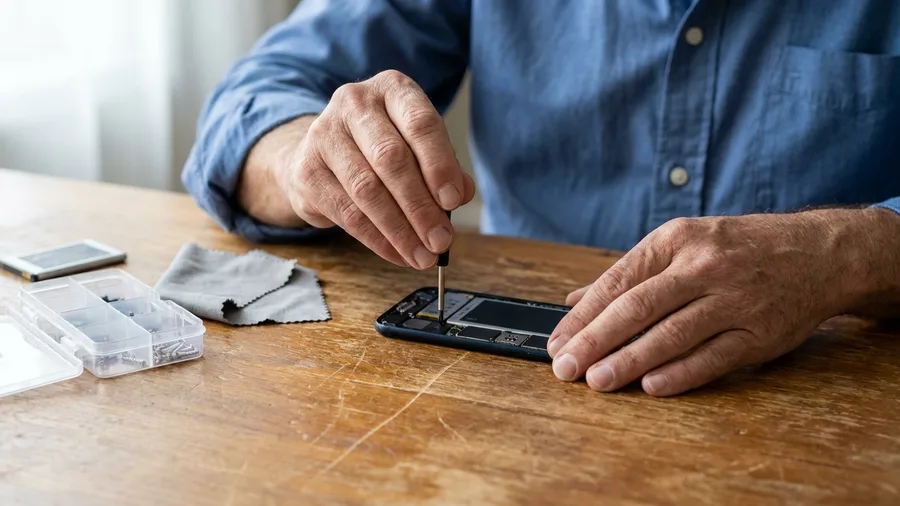
The pull toward the cheap one is real, because replacing something when it dies feels like freedom instead of a bill you already knew was coming. Watch what that costs on a phone. A $450 handset kept four years is $112.50 a year; a $1,100 handset swapped every two years is $550 a year, and the expensive one is the disposable one now.
Depreciation hands value to the next owner, and repairability keeps value in your hands, which is why the mid-priced device with parts on the shelf beats the cheap thing you replace. The catch is that you have to check four facts before you buy: what a battery replacement costs, whether parts are in stock, whether there is a service network near you, and how long the software gets updates. If the battery is sealed and the parts are gone in two years, the yearly cost flips against you and the cheap phone was the honest buy.
One exception earns its keep. If the device makes you money, a better camera or a faster chip can pay for itself in work output, and the per-year math stops binding. For everyone else, the shelf comparison is $112.50 a year against $550 a year, and the break-even is battery and parts support.
💡 Tip: Before buying any device, search the model plus "battery replacement price." If results are forum threads instead of a service page, walk away.
🧮 Run the Math in Four Steps
State the years
Write down how long you expect to keep the item before you look at the price.
Add repairs
Estimate two resoles, one battery replacement, or whatever the maintenance schedule actually costs.
Subtract resale
Check completed sales for the model and note what a buyer really paid.
Divide
Price plus repairs minus resale, divided by years kept. Compare that number, not the sticker.
Set the ceiling
Fix the most you'll pay before you walk in, then give the comparison two hours.
4. Buy what the next buyer will want

A higher price is not a cost until you know what comes back when you sell. The real number is price paid minus resale value, and on a bike that gap is where the whole argument lives: $1,900 new resells near $1,200 after three years, so the bike cost $700 to own, while a $700 bike resells near $200 and cost $500. Read those two figures side by side. The $1,200 premium over the cheaper bike shrinks to $200 of extra cost across three years, and the rider had the better frame the whole time.
The number that counts is a completed sale, not an asking price. Asking prices are hopes posted by hopeful sellers.
Bikes, cars, tools, and instruments hold value because buyers keep wanting them used; phones, fast fashion, and seasonal decor do not. This rule ties up cash upfront, $1,900 out instead of $700, and resale is never promised. Confirm a real market before paying up, and skip it when the money cannot sit tied up that long.
Never pay the sticker
The last four rules are about the other half of the calculation — the price you actually hand over. A long-lived item bought at the wrong moment still costs too much.
This is where patience, timing, and a fixed number do the work that discipline is supposed to do.
5. Wait for the markdown, not the season

$3,000 in May. $2,100 in late August. Same patio set, same cushions, ten weeks apart, and $900 back in the account. The item never got cheaper to make or worse to own; the calendar moved, and the shopper who waited collected the difference.
This is the part that looks like luck from the outside. It is a schedule. Retail marks seasonal goods down at season end, clears last year's model when the new one lands, and dumps holiday stock the week after the holidays. Nobody has to predict anything, because the markdowns run on roughly the same rhythm every year.
The way people get this wrong is buying in season and then feeling foolish in September, and that feeling is not useful. The fix is mechanical: before a seasonal purchase, ask what this item costs two months from now, and if the answer is meaningfully less and the need is not urgent, put a date on the calendar and wait for it.
Waiting has a price, and it is availability. The size or the color you wanted may sell out, and if the old one broke this week, waiting is not on the table. So the break-even is about ten weeks of patience plus the specific size and color still being in stock at the end of it. Buy now when you need it now.
💡 Tip: Walk the seasonal aisle in the last week of August and the first week of January. That's when the markdown stickers go on.
⚠️ COMMON MISTAKE
The ceiling you set after you arrive
A budget chosen inside the store isn't a budget, it's a permission slip. Decide the number in the car, out loud, and write it on your phone before you walk through the door.
6. Bulk-buy only what you will finish

Start with a list of five staples you actually finish and check whether the club beats your store on those. Skip the membership entirely this year if you cannot name five, and if $65 feels like a lot right now, it is: on a $900 monthly grocery bill, trimming about $120 a month works only on items that leave the house eaten. A markdown is one timed discount on one item; bulk is a recurring discount on a basket, and it pays only when the household finishes what it brings home.
Ask yourself the small question that settles it. Does one repeat staple save more than $5.42 a month, which is $65 spread over 12 months? If yes, the fee is covered by a single line on the receipt, and a handful of such staples covers it several times over.
💡 Tip: Make a list of exactly three staples you finish every month before you renew. If the list can't reach $5.42 in monthly savings, don't renew.
7. Pay a fee only for credits you already spend

Only credits the household was going to spend anyway, without the card. Run the same test the club fee gets: the fee has to be covered by money already leaving the account, not by money the card talks you into spending.
A $550 annual fee against $600 of credits the household already uses comes out $50 ahead across the year. A no-fee card that adds nothing leaves the $550 sitting in the account instead, and $50 is a thin enough margin that the honest first step is the smallest one: open last year's statements and list every credit actually redeemed, one line each, with the dollar amount beside it. Do that before reading the benefits page, because an annual money review beats a page written to sound like money you are leaving on the table.
If that list adds up to less than $550, the fee is a loss before points or status enter the picture. The trap is spending $60 extra to trigger a $50 credit, which turns a $50 net gain into a $10 net loss, and it is easy to do when the credit has a deadline attached.
The credits count only if they are already in the budget. Below $550 of existing spend, the no-fee card is not the consolation prize, it is the better arithmetic. The exception is the card whose credits require new spending to unlock, and that is where the fee quietly becomes a subscription to shopping.
Annual Fee: Worth It or Not
Fee is worth it
- Credits you already used last year total more than the fee
- The card's airport or hotel credit matches travel you book anyway
- You keep the same spend level after the card arrives
- You'd keep the card three years or more
Fee is a loss
- Last year's credits total below the annual fee
- You'd need to add spend to unlock a credit
- The statement credit category doesn't match your life
- You're carrying a balance while chasing rewards
8. Set the ceiling before you walk in
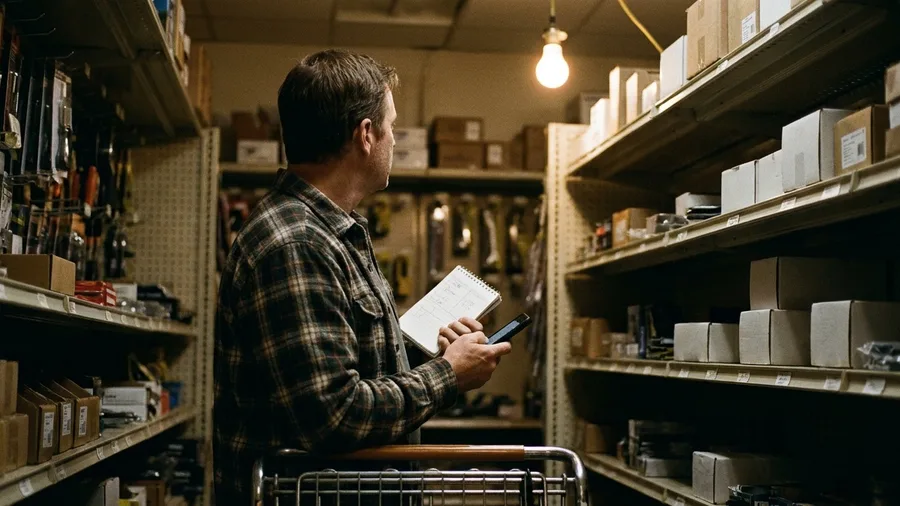
Name the number before you leave the house. Before a $900 buy, fix a $700 ceiling and let two hours of comparison happen inside it – the counter, the cart, the browser tab all bounded by one figure you wrote down while calm.
The last $200 is the part the ceiling is built to refuse. That gap is upgrade money, not need money, and it is easiest to spend standing at the register with a salesperson waiting. The line to say out loud at the counter: 'Not over $700 today; the markdown or the used one later.'
If the right thing really does cost more than $700, wait for a markdown cycle or buy it used – the ceiling is not permission to buy the wrong $700 item. The break-even is the number that actually gets the job done, and the exception is the purchase that truly needs more – wait, buy used, don't drift to $900. The ceiling caps what a fee can do to a budget the same way it caps a one-time buy: a known number, set before the spending starts.
💡 Tip: Write the ceiling on your phone lock screen before you go in. You'll see it every time you check the time.
Frequently Asked Questions
Do millionaires really wear the same boots for a decade?
The ones who care about cost per year do. A $450 pair resoled twice over ten years lands near $63 a year, and that beats a $120 pair replaced every 18 months at about $80 a year. The habit isn't frugality for its own sake — it's noticing that the expensive item was cheaper and buying accordingly.
Is buying used actually better, or just a story people tell?
It depends entirely on how long you keep the thing. A $28,000 certified pre-owned car held eight years captures the $10,000 depreciation someone else paid. Held three years, the saving mostly evaporates. Read the warranty document line by line — the coverage terms matter more than the certification badge.
How much should I spend before I bother doing this math?
Roughly anything over a few hundred dollars earns the two hours. Below $100, the time costs more than the saving. Above $500, the cost-per-year calculation usually finds at least a few hundred dollars one way or the other, which is a real afternoon's wage.
Should I carry a balance to catch a markdown?
No. A card balance at roughly 20% APR erases a 30% markdown within about eighteen months if you're paying it down slowly. If the markdown requires borrowing, the markdown isn't real. Wait until you have the cash, or buy used.
What if the item I need is broken and I need it this week?
Then the timing rules don't apply and you should buy the best durable option available now. Replacing a dead refrigerator is not a shopping strategy problem — paying full price for need-this-week is correct, and the cost-per-year rule still applies to which refrigerator you pick.
Where do I start if all eight rules sound like too much?
Start with cost per year and the ceiling. Those two cover most purchases over a few hundred dollars. The rest — resale, markdown timing, fee credits — matter for specific categories and can wait a paycheck or three.
Run the Boot Math on One Purchase
Run it on the next thing over a few hundred dollars before you pay. Price plus expected repairs, divided by years kept, and run the alternative the same way, because the boots only win once both sides get the same sum. Then honor the exceptions. If something is broken this week, availability beats a markdown. If you would carry a card balance to chase a markdown or a credit, interest and new spending turn a $50 gain into a loss.
The boots come back to the same place: $630 across ten years, about $63 a year, against $80 for the cheap pair. Arithmetic, not display. Pick the rule that fits the purchase in front of you and set the ceiling.
Do the division on one purchase today
Pick something you're about to buy over $200 and run price plus repairs minus resale, divided by years kept. Set the ceiling before you open the tab.
