

The statement lands, and the number under the card balance is $84.16 – small enough that nothing about the week felt reckless, which is the part that stings.
Now the math: $4,800 of take-home pay comes in, $250 goes out as fun money, and the month still ends at zero. No single blowout to point at. Just seven habits that each buy a feeling – of investing, of winning, of finally upgrading, of belonging – while the cost sits three lines down where you never connect it.
None of this is a willpower problem, and none of it needs a ban. Every habit below comes with a realistic swap that keeps most of the joy and shuts off the leak, and you get to pick which one to deal with first.
By the end you can act on the whole thing in about ten minutes: list every recurring charge and payment plan, cancel one, and send that exact amount to a $1,000 starter fund. That is the shape of the fix. Keep the feeling, cap the cost, and let the difference start stacking up instead of draining away.
Quick Tips Before You Start
Read the last 30 charges
Open your card app and read the last 30 charges in one sitting, out loud.
Wait before gear
Put a 30-day hold on any new hobby purchase over $100 before you check out.
List every payment plan
Write down every buy-now-pay-later plan and its due date next to your card bill.
Automate before payday spends
Set transfers for the morning your paycheck lands, not the last day of the month.
Pick one target first
Choose a single $1,000 starter fund as the destination for whatever you cut.
Spending That Feels Like Investing
Two habits in this group share a costume: they dress up as building something. One buys an identity, the other buys a piece of the action.
Both feel like the opposite of waste. That is exactly why the receipt never gets questioned, and why both are worth naming before you touch your budget.
1. Hobby gear is not an investment

Wait 30 days and buy used before you pay full price for anything a new hobby seems to require. That is the whole move, and it costs you nothing but a month of patience.
The trap is that the gear feels like an investment in yourself. A $300 camera accessory, or the home-gym setup for the fitness kick you started three weeks ago, sits in your hand like proof you are becoming someone. Then the hobby fades, you list it, and it sells for about $120 within a year. That is a $180 loss you never see on any statement, plus the closet shelf it occupies and the upkeep it quietly demands.
The test that separates a tool from an identity purchase comes down to two questions. Does it earn income, or does it replace an expense you are already paying? Gear you use every week has already justified its cost. Gear you bought to feel like the kind of person who owns it has not. Rent the lens for a weekend first, or buy the used version from someone whose own enthusiasm faded, and let a month pass before you commit to new.
If you still want it after 30 days, buy it and enjoy it. The wait plus the used market is not punishment; it is how you tell actual use apart from the feeling of a new identity.
💡 Tip: Search the exact item on a resale app before buying new. If it is listed at a third of retail within driving distance, buy that one and skip the shrink wrap.
2. Hot-stock FOMO is not a plan

Give yourself permission to keep a small speculation budget and nothing more. If a ticker in a group chat makes your thumb twitch, the honest move is not to swear off investing forever. It is to decide, before you buy, how much money you are allowed to lose and what you will do after the purchase. That is the whole plan. Without it, you are not investing; you are reacting.
What usually happens: the price jumps 40% over three weeks, everyone in the chat is up, you buy at the top, it drops 15% and you sell. That round trip can cost you even before the price falls, because the platform fee comes out on the way in and again on the way out, and if the gain happened in a taxable account, the tax is owed whether you won or lost the trade. Quiet costs, mostly invisible until they are gone.
Put your retirement and long-term money on autopilot into a diversified low-cost fund that tracks the whole market, so your future does not depend on a message thread. Then, if you want a speculation slice, cap it at a small amount of money you can afford to see go to zero, and leave it alone apart from one check-in per quarter.
If your budget cannot stretch to that slice right now, that is not a failure. The equivalent of the permission slip is a paper list: write down the three tickers you almost bought this month and what you paid attention to, without putting a dollar in. It scratches the itch, costs nothing, and by the time the next group chat flares up, you will know whether your instinct was a plan or a reflex.
What the Exciting Money Moves Actually Cost
Round illustrative figures for a $4,800 monthly take-home household.
Credit and Lifestyle Upgrades
This is where raises arrive and vanish, and where paying for things gets sliced into pieces small enough to stop feeling like paying.
Neither habit is a discipline failure. Both are mechanics designed to make spending feel lighter than it is, and both respond well to one structural fix each.
3. Every raise gets absorbed by upgrades

$1,200 a year is about $100 a month before tax, and most of us split it the same way without ever deciding to: $50 toward savings, $50 toward spending. That default split is not wrong. It is just invisible, which means the spending half tends to win the whole raise.
Here is what happens. The raise lands and within a few weeks rent nudges up, the car payment feels more affordable, the phone plan gets an upgrade, and restaurants absorb the rest. By the second paycheck the new number feels like the old number. The savings rate stays exactly where it was, even though you are earning more.
The fix has a real cost, and it is worth naming. You automate half of every raise into savings before you ever see it, which means that first month you will notice the money is missing. The $50 from the example goes out on payday, automatically, and the spending half gets to grow exactly as you planned. It feels like a pay cut for a paycheck or two. Then it doesn't.
What you give up is the feeling of the raise. What you buy is a savings rate that actually moves with your income, which over a decade of raises is the difference between a flat number and a cushion that grows every year you work.
Planned upgrades are fine. If a raise is the moment you finally move to a better apartment, budget for it on purpose and enjoy it. The problem is not the upgrade. The problem is the default, where the money gets absorbed without a decision.
Set up the transfer the week the raise hits your account. Route half of the new amount into savings on payday before your spending ever adjusts to the higher number. The other half is yours to spend, or not, as you choose. Start with whatever the raise actually is, even if that is $20 a month into savings.
💡 PRO TIP
Split the raise before it lands
Set the savings transfer for the same morning your raise hits, and set it at half the new monthly amount. The other half is yours to spend without guilt.
4. Buy-now-pay-later hides the full price
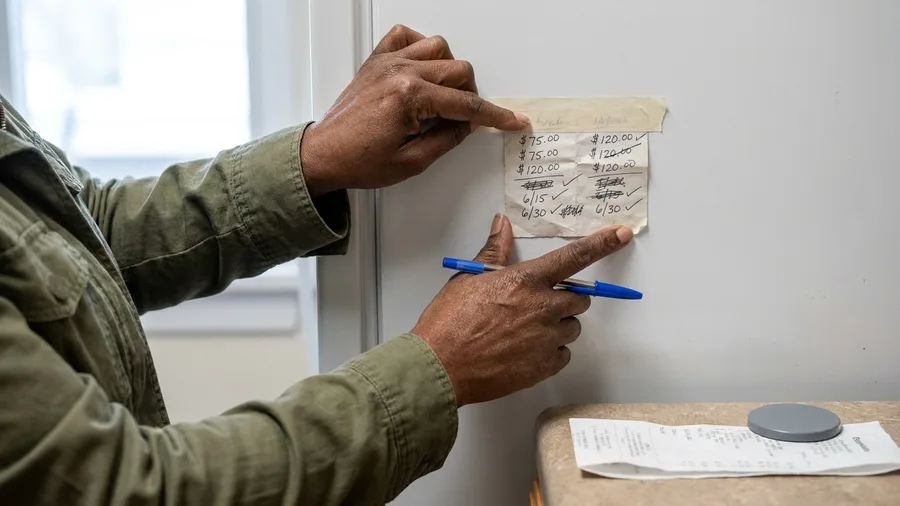
A $240 jacket split into four $60 payments reads as barely a purchase at all, which is exactly why the next upgrade slides onto a plan too. If a raise quietly fills with new fixed costs, installments make the filling easier to miss – each one small enough to shrug at, and none of them showing up as a single line on the statement. The smaller-feeling price is the whole trick.
Four payments also mean four dates to remember. Stack two or three of these plans and the total due gets genuinely hard to track, and the late fee on the one you forgot can run $10 to $35 – more than any one of the payments it punished. Check the plan's late-fee terms before you choose it, not after.
The fix costs nothing. List every plan next to your card and recurring charges so the full amount sits in one visible spot. The method works fine for a planned purchase with autopay on and the whole sum already budgeted – the problem is plans you didn't plan.
💡 Tip: Set autopay on every plan you keep. A missed $60 installment can cost more than the interest you were avoiding.
Cash-or-Full-Balance: Which Card Habit You Are Running
The habit that pays
- You pay the statement balance in full, every month, without checking
- Rewards land on purchases you already planned
- Your total due this month fits in one visible number
- A $12 reward stays a reward because nothing extra got bought
The habit that costs
- You carry a balance into the next statement
- A $75 impulse buy erases a $12 reward
- You are tracking rewards but not the total due
- You spend $900 on the card because the points feel like a game
5. Rewards cards reward the wrong spending

I watched a $12 cashback reward on $900 of monthly card spending disappear behind one $75 impulse buy – and the purchase felt like a win right up until the math landed. Cashback turns ordinary spending into a scoreboard, and a scoreboard invites just one more swipe.
Here's where your own numbers decide it. Pull your last three statements. If you paid the balance in full every month and spent only what was already planned, the rewards are real money and disciplined users can profit from them. If you carried a balance even once, the interest at a typical card APR will outrun $12 in a hurry, and the game stops being worth playing – skip it.
The rule is simple: rewards on planned purchases only, statement balance paid in full, every time. Anything else and the feeling of winning is the quiet cost.
Social Pressure and the Start You Keep Delaying
The last two habits do not look like money at all. One looks like patience, and the other looks like having friends.
They close the list because they explain why the first five keep happening: no buffer makes every surprise a crisis, and a full calendar makes every quiet night in feel like a loss.
6. Waiting for a big enough start

You are not behind because you cannot save $500 a month. You are behind because the buffer never got started at all, and that is a fixable thing.
The habit that keeps people stuck is waiting for a clean start – a bonus, a raise, a month where nothing goes wrong. That month does not come. Meanwhile the car needs a $600 repair, it goes on a card, and now a small leak has turned into debt plus interest at 20-something percent. The wait feels like patience. It is really the buffer never arriving.
Pick a number and make it small. The $1,000 starter fund is the first stopgap, not a finish line – enough to absorb a tire, a copay, a broken phone without reaching for credit. You do not need $1,000 today. You need the first automatic transfer.
Set it weekly, because weekly suits a paycheck that does not arrive the same size every time. Five dollars a week is $260 in a year. Ten is $520. If a big month comes, drop in $50 and skip the guilt when a lean week forces you back to $5.
Automate it the day after payday, to a separate account you do not see when you check your spending. The mechanism is boring and that is the point: money you never see in the checking account does not get spent. Willpower loses to a transfer that already left. Set the amount low enough that you will not cancel it in week three – $5 you keep beats $50 you stop.
There is a trade-off worth naming. Five dollars a week will not build $1,000 fast. At that rate it takes most of a year, and some of those weeks will feel pointless. What it buys is the habit and the first hundred dollars, and a hundred dollars of buffer is the difference between a bad week and a card balance.
Start this week. Open the account, set the transfer for $5, and let it run before you decide whether it is working. The month you skip is the month the repair lands.
💡 Tip: Open the account at a different bank from your checking. The friction of a two-day transfer is what keeps the fund from becoming spending money.
🛟 Build the $1,000 Starter Fund in Four Steps
Open a separate account
Pick a savings account at a bank you do not use for daily spending.
Set a weekly transfer
Schedule $10 to $25 every week for the morning after payday.
Name the account
Label it Car Repair or Emergency so withdrawals feel like a decision.
Leave it alone
Do not check the balance weekly; check it once a month and nothing more.
Cap it at $1,000
Once it hits $1,000, redirect the transfer to the next goal instead of growing it.

When the cushion is thin, every invitation starts to feel like a risk you can't quite afford, and saying no feels worse than spending. Belonging is real, and it costs real money. One $80 dinner-and-drinks night, one $200 weekend trip, one $35 gift fund for the group, and that single month lands at $315. Your fun money is $250. FOMO quietly turns into fixed costs: the dinners, the trips, the gifts, the group subscriptions you keep to avoid being the one who dropped out.
The move isn't to cut friends. It's to automate the choice so willpower isn't on the hook every time a group chat lights up. Set one transfer of $250 to a separate social account on payday, and that is the whole month, no negotiating at the table. Then decide the swaps in advance: host at home, a coffee walk, a potluck, a gift cap everyone agrees to, and one event per month you actually pick. When the account hits zero, the answer is a script you already have ready.
Leave the account alone once it's funded, and don't top it up mid-month. The point is that community is worth paying for, and choosing the spend protects it better than a yes you resent later.
💡 Tip: Community is worth paying for — the fix is choosing the spend in advance, not cutting the people.
The Same $4,800 Paycheck, Two Different Months
Frequently Asked Questions
Is buying gear for a new hobby ever worth it?
Yes, when the gear earns income or replaces an expense you were already paying. A lens you shoot paid work with, or a treadmill that cancels a $60 gym membership, justifies itself. The 30-day wait plus a quick resale search is enough to tell the two cases apart.
How much of my investments should I put in something speculative?
A common ceiling is 5% of what you have invested, held separately from retirement money, and only money you can genuinely lose. Everything long-term goes into a diversified fund automatically. If the speculative slice keeps growing because you keep adding to it, the cap is not working.
Should I save my raise or pay down debt first?
It depends on the interest rate and on whether you have any buffer at all. With no emergency fund, a small buffer first — $500 to $1,000 — stops new debt from forming. Past that, the math usually favors clearing anything above roughly 7% interest first. Run your own numbers before deciding.
Is buy-now-pay-later bad if I pay on time?
It is not the fees that get most people; it is the stacking. Four plans at $60 each feel like $60, not $240, and the total due stops being visible. If you use it, put every plan on one list with due dates and check the late-fee terms before you commit.
Are rewards cards worth it if I pay in full every month?
If you pay the statement balance in full, every month, without fail, rewards are a small discount on spending you were doing anyway. $900 of spending earning $12 back is typical. The moment you carry a balance, interest at around 20% APR wipes out years of that reward.
How do I start saving when there is nothing left over?
Break the target down until it fits the smallest week you have. A $1,000 starter fund is $10 a week for about two years, and the weekly rhythm suits irregular income better than a monthly transfer. Automate it for the morning after payday so the decision is already made.
Sort Yourself Into One Target This Week
The verdict is plain: none of the seven is one big blowout. Each buys a feeling and leaks cash in small amounts, so the fix is never a ban – it is a swap that keeps the feeling and puts a ceiling on the cost.
Find your own leak and act on that group. Gear and absorbed raises get a 30-day wait on anything over $100, then an automatic transfer of the difference on payday morning. Buy-now-pay-later and rewards habits get the ten-minute reset: move to cash, or commit to paying the statement balance in full. Social spending gets a monthly fun budget and the $35 gift fund set before the next invitation arrives, with a couple of ready lines for the ones you say no to.
Then do the single first action today. Finding recurring costs you can cut without changing your lifestyle gives that first transfer somewhere to come from. Open your banking app, list every recurring charge and payment plan – the $15 app, the $45 streaming bundle, the $60 gym, about $120 a month in total – cancel one, and redirect that exact amount to the $1,000 starter fund.
That is what changes next month. Same $4,800 coming in, same $250 of fun money, same small moves on a Tuesday night – except this time one of them lands in a buffer instead of a statement you would rather not read.
Cancel one charge, redirect the amount
Open your banking app now, find one recurring charge you do not use, cancel it, and send that exact amount to your starter fund.
