
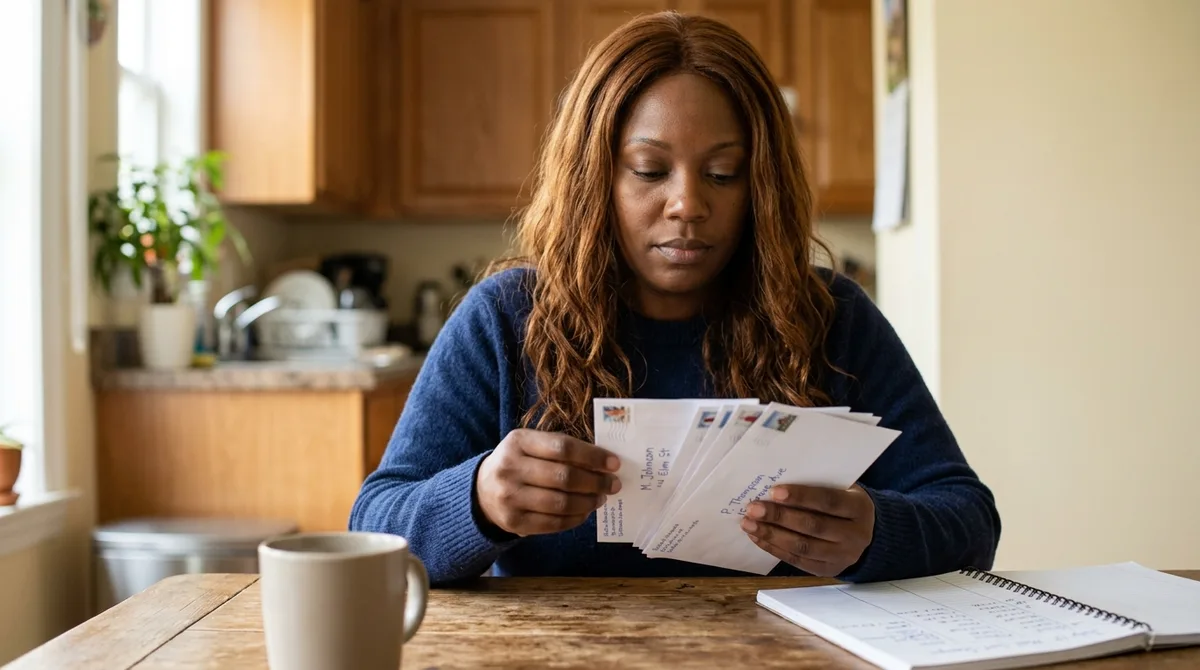
You stare at the bank account balance and wonder how the grocery bill ate half the paycheck before the month even cleared its throat. The internet tells you to cut out daily lattes, but your budget doesn't have a latte line. It has rent, insurance, and the minimum payment on a car loan.
Living on one income is not a moral failing. It is a math and logistics problem, plain and simple.
When I dropped from two incomes to one, I spent the first three months feeling like I was failing an exam I hadn't studied for. Then I stopped treating our budget like a punishment and started treating it like a supply chain. Here is the actual operating manual for making one paycheck cover the ground two used to.
Quick Tips Before You Start
Audit Fixed Bills First
Ignore the grocery budget until you have called your internet and insurance providers to negotiate lower rates.
Shift Payday Dates
Call your utility companies and push your billing due dates to align directly with the day your single paycheck hits.
Build a Buffer
Keep $500 in a checking account cushion before you put a single extra dollar toward debt principal.
Track for Two Weeks
Write down every single purchase on your phone for fourteen days to see where the invisible leaks actually live.
1. Automate the Transfer Before You See the Balance

You look at the balance on payday and think you have money to spend.
That is the trap. The moment the deposit clears, your brain registers a temporary abundance that disappears by Tuesday afternoon, leaving you wondering where the week went.
The fix requires removing human memory from the equation entirely by setting up an automatic transfer for savings and debt payments to occur the exact morning your paycheck lands.
The money moves before you can negotiate with it, meaning you learn to live on what remains in the primary checking account rather than trying to save what is left over at the end of the month.
It takes about four minutes in your banking app to set up a recurring $50 or $100 transfer for every payday, and doing it once means you never have to rely on willpower again.
The Single-Income Shift: Before vs. After Systems
The Old Panic Loop
- Waiting until end of month to see what is left
- Using credit cards as an invisible emergency fund
- Buying groceries without a meal plan or list
- Feeling constant guilt over every casual purchase
The Logistics System
- Automating savings transfers on payday morning
- Keeping a $500 checking buffer for minor bumps
- Shopping with a strict ten-meal grocery rotation
- Measuring purchases in hours worked rather than guilt
2. Accept the Immediate Social Friction

People will invite you out, and saying no gets uncomfortable.
The hidden cost of dropping to one income is the awkward conversation where you explain that you are skipping dinner out because the math doesn't work this week. It feels embarrassing the first five times.
Then you realize nobody cares as much as your anxiety thinks they do.
💡 PRO TIP
The Golden Rule of Single-Income Logistics
Never budget based on overtime or bonuses. Build your entire baseline life around the lowest predictable paycheck you bring home.
3. Build a Three-Bucket Cash Flow System

How do you separate your rent money from your grocery money without opening six different banks and drowning in monthly fees?
When everything sits in a single checking account, every purchase looks like available cash, which creates mental math errors that lead straight to overdraft fees and late notices.
The fix is a three-bucket cash flow system that splits your money into fixed survival bills, debt obligations, and flexible living expenses, using virtual sub-accounts or simple envelope categories.
Fixed bills like rent and utilities get funded first on payday, debt minimums are automated second, and whatever remains in the third bucket becomes your flexible spending for the month.
This structure prevents you from accidentally spending your electric bill money on takeout, and you can start today by carving out just $50 into a separate category to see how the separation changes your choices.
Money Terms Decoded for Real Life
4. Why I Had to Rewrite Our Grocery Strategy

Stop walking down supermarket aisles without a map and buying random ingredients that never quite turn into a dinner.
I used to wander through the grocery store every few days, dropping $150 on impulse items and specialty sauces while wondering why the pantry was full of expensive condiments and nothing to eat.
When our household income dropped by half, that casual shopping habit nearly broke us in month two because I was paying for convenience disguised as variety.
The mechanism here is simple cash flow control: when you stop buying individual ingredients for one-off recipes, you eliminate the food waste tax that quietly drains your checking account every single week.
I finally sat down with a piece of lined paper and mapped out ten repeat dinners that relied on overlapping staples like dry beans, chicken thighs, and canned tomatoes.
We stopped buying pre-chopped vegetables and overpriced convenience items, and the grocery bill dropped by $300 a month overnight.
It felt restrictive for about two weeks, and then it became our normal routine rather than a punishment.
Now I shop from a strict list on my phone and I do not walk down aisles that do not serve our weekly rotation.
That single change freed up enough cash to cover our utility bills without touching savings, proving that a lower grocery budget is just logistics rather than a moral failure.
This week: open the notes app on your phone, list five dinners you actually made last month, and build your entire shopping list from only those overlapping ingredients.
The Weekly Grocery Reset — At a Glance
🛒 Shopping Frequency
Once a week
💵 Average Target
$125 for two adults
📋 List Adherence
95% strict adherence
🚫 Aisles Avoided
Snacks and specialty
The Core Rule
If it isn't on the list written Saturday morning, it doesn't go in the cart.
5. Start Small With Your Emergency Fund

You have probably heard the common advice that you need six full months of living expenses saved before you can even breathe.
If you are living on one tight income, hearing that intimidating number feels like being told to climb a mountain in flip-flops, and it often paralyzes you into saving nothing at all.
Forget six months for now and aim for a $500 cash buffer first, because even moving $25 into a separate savings account every single paycheck builds real momentum and stops the cycle of relying on high-interest credit cards for minor surprises.
Transforming Your Financial Stress
6. Shift Your Identity Away From Consumerism

You are not failing simply because your car is ten years old or your couch has a small stain on the arm.
We absorb the constant cultural message that our worth is tied to upgrade cycles, new clothes, and constant consumption. Living on one income forces you to break that conditioning whether you want to or not, turning what feels like a restriction into a hard look at what actually keeps you upright.
The reframe is simple: every time you resist buying something unnecessary, you are buying your household peace of mind and breathing room instead of more clutter to manage.
Your clothes do not define your competence, and your grocery cart does not reflect your character.
I spent years feeling defensive about driving a twelve-year-old sedan until I realized the $350 car payment I did not have was buying me the flexibility to sleep at night. This week, pick one purchase you usually make out of habit or social friction and let it go, redirecting that exact $40 straight into your cash cushion.
⚠️ COMMON MISTAKE
The Comparison Trap on Social Media
Remember that feeds highlight milestones, not balance sheets. Many people funding glamorous lives online are carrying invisible debt loads that would keep you awake at night.
7. Permission to Scale Back Your Expectations

Dropping down to a single income feels like failing a test you spent years studying for.
You stare at the lifestyle you built and wonder how to shrink it without breaking your family's spirit, as if every cut is proof that you could not hack it.
The truth is simpler and less dramatic: you do not have to maintain every single standard of living you had when two paychecks were rolling in, because the math has fundamentally changed.
Some things simply have to go, and giving yourself explicit permission to let them drop is the actual secret to mental survival during a tight season.
Cancel the lawn service that costs $150 a month, pause three streaming subscriptions to save $45, and drop down to basic internet to shave another $30 off the bill.
You can always add them back later when income shifts and breathing room returns, but right now your only job is protecting the gap between what comes in and what goes out.
This week: pick two fixed expenses to cancel and send the cancellation emails before Friday night.
Subscriptions to Cut First
8. Avoid the Credit Card Float Trap
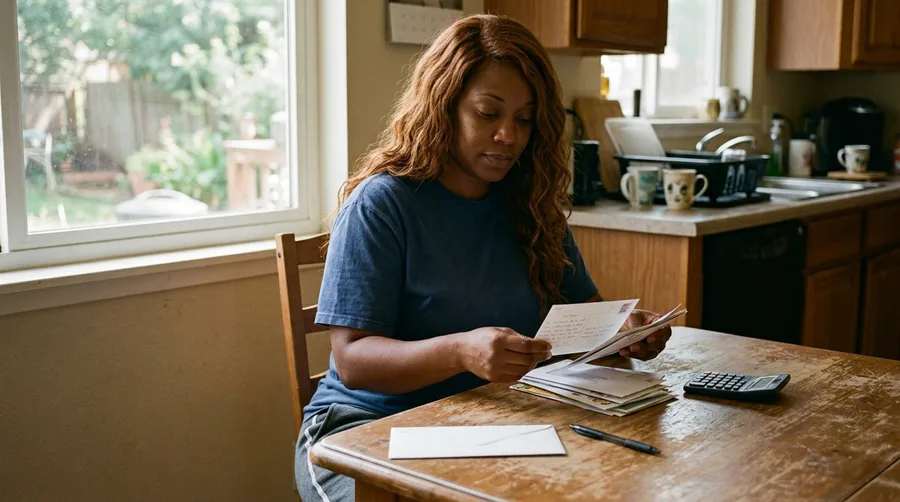
Over 40% of households use credit cards to bridge the gap between paychecks, and that habit turns a cash flow squeeze into a permanent treadmill.
That is the float, and it means you are constantly spending next month's money just to survive this one.
When you charge groceries because your checking account is empty, you guarantee that your next income drop will be even steeper because of interest charges.
Break the cycle by pausing all non-essential spending for exactly two weeks to let your actual checking balance catch up to your billing cycle.
9. Review Your Numbers Once a Month

You do not need a complicated spreadsheet you update every single evening to stay on top of your money.
The myth is that financial tracking requires daily discipline, but thirty minutes once a month is all it actually takes to catch problems before they compound into debt.
On the first of the month, sit down with your statements and check three concrete things: did you cover rent, did the total debt number go down or up by even $50, and did you add anything to savings? If those three answers move in the right direction, you are winning the logistics game.
10. Calculate Your Real Hourly Cost of Living

I sat in my parked car staring at a receipt for a $55 convenience dinner I had bought just because I was too tired to boil pasta, and for the first time, I didn't see the dollar sign at all.
I saw two and a half hours of my life that I wasn't getting back.
When your household runs on a single income, currency stops being a theoretical ledger and starts feeling like traded time, which changes your entire perspective on small spending.
take the net hourly take-home pay of your household and divide the price tag by that exact figure to find your real labor cost.
If your net take-home comes out to roughly $18 an hour after taxes and deductions, that $60 takeout order isn't sixty dollars.
It is three hours and twenty minutes of actual human labor sitting in a plastic container.
This exercise is not designed to make you feel guilty for being tired or to punish yourself with deprivation, because nobody can hustle through burnout forever.
It is simply about stripping away the marketing fog so that a convenience purchase becomes a conscious trade instead of an automatic swipe.
Time is the one asset a tight budget cannot manufacture more of, and protecting your peace means guarding the hours traded for every single expense.
The next time you feel the magnetic pull of an unnecessary online cart, do the division before you hit checkout and let the real math make the decision for you.
11. Why Timing Your Bills Matters Right Now

Are your utility bills due on the twelfth when your paycheck lands on the fifteenth?
That three-day gap creates unnecessary overdraft risk and anxiety, costing you roughly $35 a pop in bank fees when a $1,200 rent check slips through a dry account.
Call every single billing department on Monday morning and request a billing date change to align directly with your pay schedule so you stop paying for a calendar mismatch you can fix in ten minutes.
12. Know When to Consult a Professional

Sometimes the math simply breaks down under the weight of real life.
If you are putting basic groceries on a credit card month after month because your single income cannot cover the baseline, no budgeting trick or spreadsheet adjustment will fix the underlying deficit.
That is the exact moment to step away from do-it-yourself finance and talk to a nonprofit credit counseling agency or a fee-only fiduciary.
Getting objective eyes on your situation prevents a manageable cash flow gap from turning into a full-scale legal or financial crisis, and it costs nothing for an initial consultation with a reputable nonprofit.
This week, if your debt payments consume more than 40 percent of your take-home pay, find a certified counselor through the National Foundation for Credit Counseling and book a single phone call to look at your actual numbers together.
13. Accept That Seasons of Tightness End

It feels completely permanent when you are right in the thick of a tight financial season.
When every single dollar is accounted for three paychecks in advance, your brain starts treating temporary math like a life sentence. That tightness is not your new permanent baseline, even though your nervous system insists it is.
The mechanism behind this is simple cash flow evolution: debts finish paying off, kids grow past the expensive infant or childcare years, and career steps happen over a 36-month window. This season is a distinct chapter, not a forever condition.
What I believe now: tightness is a logistical phase you manage, not a reflection of your worth.
This week: write down one fixed expense that is guaranteed to drop or disappear within the next twelve months so you can see the light at the end of the tunnel.
14. Build a Repeatable Weekly Financial Rhythm

Lock in a predictable weekly financial rhythm instead of relying on last-minute willpower to keep your single-income household afloat.
Financial stability on one income is built on boring, predictable routines rather than heroic moments of self-control.
When every single week follows the exact same operational cadence, the mental load drops dramatically because you are no longer guessing.
check all account balances on Friday morning, review grocery spending on Sunday before planning the next shop, and transfer your target savings amount the exact morning pay hits.
You stop wondering where the money went because you checked it before it had a chance to wander off, catching tiny leaks before they turn into overdrawn accounts.
Share this exact rhythm with your partner so everyone operates from the same playbook, eliminating the friction of one person holding all the mental math.
Consistency beats perfection every single time when you are managing household cash flow, especially when an unexpected bill threatens to derail your week.
Stick to this rhythm for one full month and watch your underlying financial anxiety drop in half as predictability takes over.
15. Automate the Audit and Leave Room to Breathe

It is exhausting to check your online banking every single morning like a guard dog watching a fence.
You built these automated transfers and spending buckets so you could finally stop white-knuckling your way through every purchase.
When the system handles the heavy lifting, your only job is to step back and let the logistics do their work without your constant interference.
Give yourself a realistic discretionary allowance of $50 or $75 a month that you can spend completely guilt-free on whatever small comfort keeps you sane.
This tiny buffer ensures you do not feel trapped in a financial straightjacket while the larger savings and debt payments run quietly in the background.
Frequently Asked Questions
How do I build an emergency fund when living on one tight income?
Start small with a $500 cash buffer rather than aiming for six months right away. Automate even $25 per paycheck into a separate bank account so it builds without requiring daily willpower.
Should I pay off debt or save money first?
Build a small $500 baseline buffer first so minor car repairs or medical bills don't immediately go onto high-interest credit cards. Once that cushion exists, direct extra funds toward your highest-interest debt.
Is it okay to pause retirement contributions temporarily?
As a short-term emergency measure to stabilize your cash flow and stop using credit cards for survival, pausing non-matched contributions can make sense. Restart them as soon as your baseline budget is secure.
Be direct and honest without over-explaining. Simply state that your household is focusing on financial logistics right now and suggest low-cost or free alternatives like walking or cooking at home together.
Make It Stick
Living on one income stops feeling like a sacrifice the moment you stop treating it as a test of character and start treating it as an engineering challenge.
You do not need to fix everything by Friday. Pick one move from this list—automate your savings transfer or align your bill due dates—and let that single system start working for you today.