

According to Federal Reserve survey data, roughly four in ten American adults cannot cover a sudden $400 emergency strictly with cash on hand.
That vulnerability is rarely a discipline problem. When your emergency cushion sits directly alongside daily spending cash on a single banking dashboard, your brain registers every available dollar as fuel for immediate spending.
Willpower consistently loses against one-click checkouts and instant mobile transfers.
Establishing deliberate friction through multi-day clearing delays, separate routing numbers, or physical branch barriers protects your savings simply by making impulse withdrawals inconvenient.
Quick Tips Before You Start
Check Insurance
Confirm every institution carries standard FDIC or NCUA deposit coverage up to $250,000.
Honor Settlement Lags
Rely on standard 1-to-3 business day ACH clearing windows as your primary psychological buffer.
Cut Digital Ties
Refuse mobile app installations and debit cards on dedicated reserve accounts to prevent instant access.
Keep Clear Records
Log every external account in a secure password manager so assets never become unclaimed property.
1. An App-Free Online Bank Account

Many people assume keeping all your money under a single banking login simplifies life. In practice, seeing emergency cash sitting directly below your daily checking balance makes it feel available for immediate spending.
Setting up a standalone high-yield savings account at a completely separate bank puts that money out of sight while maintaining standard FDIC or NCUA protection up to $250,000. Skip downloading their mobile app and delete saved passwords from your browser. Standard ACH transfers take 1 to 3 business days, killing same-day retail urges.
If you balance irregular freelance income or quarterly business taxes, check with a certified tax professional to calculate the exact reserve amount before locking the rest away.
💡 Tip: Speak with a fee-only planner if you need personalized guidance on matching emergency fund sizes to your household cash flow.
| Savings Mechanism | Access Barrier | Typical Withdrawal Lag | Best For |
|---|---|---|---|
| App-Free Online Bank | No mobile app, manual login | 1 to 3 business days | Emergency core fund |
| Distant Credit Union | No debit card, remote branch | 2 to 3 business days | Payroll diversion cushion |
| Retail CD Ladder | Forfeiture of 90-180 days interest | Immediate (with penalty) | Medium-term planned expenses |
| Series I Savings Bonds | Mandatory 12-month lock | Untouchable for 365 days | Inflation-protected deep reserves |
| Standalone HSA Pocket | 20% tax penalty on non-medical | 3 to 5 business days | Long-term healthcare cushion |
| Notice Savings Account | Mandatory formal advance notice | 30 to 90 calendar days | Large planned future purchases |
| Brokerage Cash Sweep | No checkwriting, settlement lag | 2 to 4 business days | Secondary emergency cushion |
| Roth IRA Cash Buffer | Retirement contribution rules | 1 to 3 business days | Last-resort capital preservation |
| Micro-Savings Lockbox | Automated small-dollar siphoning | 2 to 4 business days | Incidental spare-change buffer |
| State 529 College Plan | 10% penalty plus tax recapture | 3 to 5 business days | Dedicated education reserves |
| Bank Safe Deposit Box | Physical branch hours and keys | Requires in-person visit | Analog documents and paper bonds |
2. Payroll-Split Sub-Accounts at a Distant Credit Union

Splitting off money before you see it can feel risky if your paycheck already feels tight. You do not need to redirect hundreds of dollars right away; even shaving off $25 a pay period builds the habit.
Most employer payroll portals allow direct deposit routing across 3 or 4 separate account numbers. Point a small percentage straight to an out-of-the-way credit union with no shared branch network, and explicitly decline the debit card. Without instant card access or a nearby branch, pulling cash requires a deliberate phone call or a long drive.
Dial the percentage back whenever a tight month demands it.
Built-In Friction Thresholds
Standard operational rules governing fund delays and penalties
3. Short-Term Certificate of Deposit Ladders

I once put $3,600 into three staggered certificates of deposit just to stop myself from raiding an upcoming property tax fund for a shiny new laptop that caught my eye online.
Attaching an explicit cost to access stopped the urge immediately.
Certificates of deposit require committing your money to fixed holding terms ranging from three months to several years. Standard federal protection through FDIC or NCUA insurance shields balances up to $250,000 per depositor at each bank, meaning your principal stays fully protected while remaining legally out of reach for daily spending.
A ladder creates regular access points over time.
Splitting your savings across 3-, 6-, and 12-month maturities builds a rotating schedule where one bucket opens every ninety days. You maintain planned access for known bills like car maintenance, while the remaining balance stays locked away so you cannot spend it on a whim.
Raiding that locked balance comes with real financial friction.
Liquidating a retail certificate before its maturity date triggers an early withdrawal penalty, typically costing between 90 and 180 days of interest. Forfeiting $40 to $75 in earned interest creates an instant financial loss on an impulsive purchase, giving your sensible side enough time to reconsider.
That clear penalty establishes a firm psychological boundary for medium-term obligations like semi-annual property taxes or home repairs. It keeps your dedicated reserves safe from routine spending urges until the actual due date arrives.
🪜 Execution Steps: The Ongoing Ladder Cycle
Set 7-Day Calendar Alerts
Schedule reminders a week before each maturity date to track the bank's brief penalty-free decision window.
Direct Monthly Interest Outward
Elect automatic interest transfers to an external checking account so earnings stay liquid without cracking the certificate.
Roll Matured Tranches into 1-Year Terms
Reinvest each expiring piece into a fresh 12-month certificate to maintain peak yields across the entire rotation.
Execute or Auto-Relock
Withdraw needed cash during the 10-day grace period; otherwise, let the balance roll forward untouched.
4. A Direct TreasuryDirect Account for Series I Bonds

Exactly 365 days is the non-negotiable holding window when you purchase Series I savings bonds directly from the federal government through TreasuryDirect, making early liquidation impossible.
A common misstep is treating these assets like standard certificates of deposit, assuming an early penalty fee can unlock the cash during an unexpected spending crunch. That assumption breaks down immediately: federal regulations completely bar redemptions during the first full year, making your deposit legally untouchable for twelve continuous months.
You simply cannot raid this balance early.
Cashing out between years one and five carries a modest forfeiture equal to the previous three months of interest earnings, while preserving your full original principal and the guaranteed inflation adjustments backed directly by the U.S. government.
Beyond the legal lock, the TreasuryDirect portal provides its own technological friction. Logging into the federal site requires typing passwords through an awkward virtual keypad, clearing multi-step security codes, and dealing with strict session timeouts that frustrate casual browsing, ensuring your savings sit undisturbed far away from instant transfers.
💡 Tip: Never deposit rent or immediate grocery funds into Series I bonds; the 12-month lock has zero legal exceptions.
💡 PRO TIP
The Decoy Account Strategy
Keep a nominal balance of $100 in your primary checking account's linked savings pocket as a visual decoy, while routing the bulk of your real reserves to an unlinked institution.
5. A Standalone Health Savings Account Investment Pocket

Pairing a qualified high-deductible health plan with a standalone Health Savings Account provides that dual barrier.
Unlike regular deposit accounts, an HSA delivers triple tax advantages: pre-tax deposits, tax-free growth, and tax-free medical withdrawals. Raiding these funds for non-medical lifestyle spending before age 65 triggers full ordinary income taxes alongside a mandatory 20 percent federal penalty, creating an immediate mathematical deterrent against impulsive retail splurges.
That tax hit stops casual spending cold.
A resilient strategy involves paying routine medical bills with standard take-home pay while cataloging and digitizing each receipt, establishing a growing paper trail that allows you to claim tax-free reimbursements years later.
Run an annual check-in every January to inspect three specific figures: your invested asset balance, your logged medical receipts, and your cash cushion for current-year deductibles. Funneling the unspent surplus into broad market index options inside the HSA establishes a heavy operational barrier that prevents you from treating medical reserves as discretionary pocket money.
6. A Notice Savings Account With Fixed Delays

Open a dedicated notice savings account and establish a recurring monthly transfer of $150 to lock away surplus cash behind a mandatory 30, 60, or 90-day notification requirement.
Unlike a certificate of deposit that allows you to immediately cash out by forfeiting interest, a notice account provides no early-withdrawal bypass button. When you request a redemption, the institution begins a hard 60-day countdown before releasing the funds, completely severing the link between an impulsive weekend spending trigger and immediate account liquidity.
Your money continues earning full variable interest throughout the waiting window, rewarding your patience while keeping the entire balance safely out of instant reach.
Notice Accounts — At a Glance
⏳ Waiting Window
30, 60, or 90 Days
🛑 Instant Access
Not Permitted
📈 Interest Earned
Accrues During Notice
🎯 Best For
Planned Annual Expenses
Core Rule
Notice accounts eliminate same-day withdrawals by enforcing a contractual delay on every outgoing transfer.
7. A Brokerage Cash Sweep Without Checkwriting Privileges

Open an uninvested taxable brokerage account specifically to use its cash sweep program. This arrangement sweeps idle cash into partner banks for interest and deposit protection without requiring you to buy or trade a single stock.
Reject every transaction tool during setup.
Explicitly decline the debit card and checkwriting options when submitting the paperwork. Leaving this account completely unlinked from peer-to-peer services like Venmo, Zelle, and PayPal permanently severs the retail payment rails that feed spontaneous spending. The money remains fully yours, but no card reader, online cart, or mobile wallet can tap it.
Tapping the balance requires you to manually sell your money market position and initiate an outbound electronic transfer back to the checking account you use for everyday bills.
Standard ACH transfers take 1 to 3 business days to clear, creating an operational lag that stops impulse buys cold. That deliberate clearance delay provides the exact psychological breathing room needed to separate a genuine emergency from an emotional impulse, all while the balance stays safely out of sight.
8. A Dedicated Roth IRA Emergency Buffer

Touching money earmarked for your future carries a heavy mental hurdle that ordinary bank accounts simply cannot replicate. Setting up an automatic transfer directly into a Roth IRA locks in that psychological weight.
You can hold a dedicated cash allocation inside the account to act as a quiet backstop of last resort. Direct contributions can be withdrawn at any time without income taxes or early withdrawal penalties, but any removed funds permanently forfeit their annual contribution limit space, creating a major barrier against casual spending.
Leave the principal parked until a true crisis hits.
💡 Tip: Consult a CPA or tax professional to ensure you correctly track your cumulative basis of Roth IRA contributions.
The Outbound Transfer Cooling Pipeline
9. An Automated Micro-Savings Lockbox App

Building a cash reserve does not require large lump sums or dramatic spending cuts. Setting aside small spare change provides an approachable starting point when your budget feels tight.
Tiny deposits accumulate without breaking your monthly cashflow.
Dedicated micro-savings apps quietly siphon spare change by rounding up debit card transactions to the nearest dollar or executing scheduled recurring transfers of just $1 to $5. Siphoning off these small amounts steadily lowers the balance displayed on your primary checking dashboard, reducing the temptation to spend available cash on small daily extras.
Most of these platforms let you establish intentional friction, such as mandatory forty-eight-hour cooling-off periods or small fees for expedited transfers, keeping the accumulated cash insulated from quick impulse buys.
Check the fee schedule before picking a provider, because monthly subscription fees of $3 to $5 can quickly consume the interest earnings on a modest balance. Sticking to low-cost or fee-free tools protects your small, automated deposits so your savings cushion steadily expands.
Everyday Spending Account vs Deliberate Savings Hideout
Everyday Checking Account
- Instant debit card access at retail checkout
- Connected directly to peer-to-peer payment apps
- Balance visible on primary phone home screen
- Zero withdrawal cooling-off delay
Dedicated Savings Hideout
- No physical debit card or checkbook issued
- Unlinked from digital wallets and online payment tools
- Requires manual browser login and two-factor checks
- Enforces a 1-to-3 business day transfer delay
10. A Designated State 529 College Savings Plan

Watching money intended for a child's college fund or your own mid-career retraining sit in a standard checking account creates constant friction, especially when casual everyday spending slowly chips away at the total.
A designated state 529 education plan provides a structured, multi-tier bucket that separates long-term educational funds from your everyday cash flow. Earnings on your contributions compound completely tax-free over time, and withdrawals remain exempt from federal and state income taxes when spent on qualified expenses like tuition, trade school programs, and required course materials.
Raiding the education balance for personal lifestyle spending triggers heavy penalties.
If you liquidate earnings for non-qualified purchases, the federal government treats that profit as ordinary income and slaps on a mandatory 10 percent penalty. If your state granted an income tax deduction on your original contributions, state tax authorities will claw back that deduction in full, turning an impulse withdrawal into an administrative headache.
You can operate this system like an automated personal escrow by directing a recurring $75 or $150 payroll split into the plan every pay period, bypassing your primary checking account entirely.
You never have to worry about the money being completely trapped if educational plans change. The tax code permits changing the designated beneficiary to another eligible family member, or transferring up to lifetime statutory maximums into a beneficiary Roth IRA, keeping your accumulated savings productive without handing cash back to discretionary spending.
Facing mandatory tax penalties, state deduction clawbacks, and the social accountability of emptying a dedicated education bucket creates a durable defense against impulse spending.
The friction preserves your money until classes actually begin.
11. A Safe Deposit Box for Cash and Paper Savings Bonds
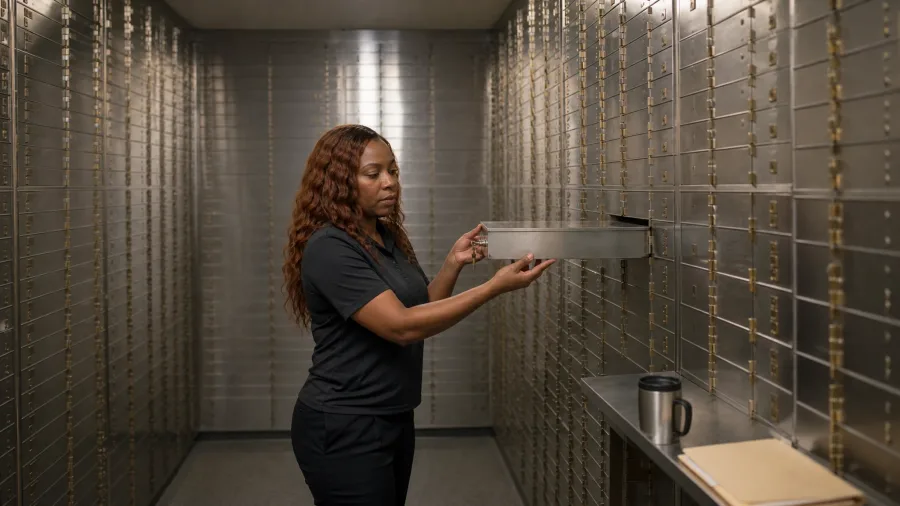
Rent a safe deposit box at a brick-and-mortar bank branch to move tangible financial reserves entirely off your digital screen.
Accessing a vault requires dual-key verification and in-person visits during limited branch hours, which eliminates midnight online shopping and impulse weekend withdrawals. The primary trade-off is insurance: loose cash inside a deposit box is not covered by FDIC or NCUA protection. Storing paper Series I or EE savings bonds maintains the offline barrier without leaving unbacked paper currency exposed.
Paying a modest $40 to $80 annual box fee creates a physical boundary that no smartphone app or instant transfer can override.
Frequently Asked Questions
Is hiding savings from myself legal?
Yes, absolutely. Hiding savings from yourself simply means using legitimate banking features, separate accounts, and intentional transfer delays to curb impulsive personal spending. All of these accounts are fully legal and remain under your direct ownership.
How much cash should I keep in an out-of-sight account?
Aim for three to six months of bare living expenses in your core emergency reserves. For most households, starting with a first milestone of $1,000 to $2,500 in an unlinked high-yield account provides a solid buffer against common unexpected repairs.
Will I lose access to my money during a true emergency?
Standard ACH transfers take one to three business days to clear into your spending account. For urgent same-day emergencies, you can put the charge on a credit card and initiate the savings transfer immediately to pay off the balance before interest accrues.
What happens if I forget about an external account?
State abandoned property laws require banks to turn over dormant accounts after three to five years of zero activity. Prevent this by logging every account in a secure password manager and keeping annual calendar check-ins.
Are high-yield savings accounts at online banks safe?
Yes, as long as the institution is backed by FDIC or NCUA deposit insurance. Standard federal insurance covers up to $250,000 per depositor per ownership category at each chartered financial institution.
Structuring Your Personal Two-Account Friction Strategy
Do not attempt to open all eleven structures at once. Splitting balances across a dozen institutions creates administrative clutter that weakens your financial control rather than strengthening it.
Instead, build a simple two-tier architecture: choose one moderate-friction vehicle, such as an app-free online account with a multi-day transfer delay for emergency cash, and one high-friction setup, like a twelve-month Series I bond or CD ladder, for longer-term goals.
Introducing deliberate institutional barriers between your paycheck and your impulse spending ensures your initial cash cushion stays safely in place until a genuine need arises.
Audit Your Account Friction Today
Review your banking setup and unlink your secondary savings balance from your primary checking mobile app to stop impulse transfers.