

You are staring at your bank statement again.
The money keeps disappearing, and you know you need a hard reset to break the cycle.
A no-spend month stops the bleeding by taking away the micro-decisions that drain your checking account. It strips your outgoings down to rent, groceries, and bills, forcing you to see exactly where your cash was leaking.
This is how you set it up to actually work.
Quick Tips Before You Start
Pick a Normal Month
Avoid December or your vacation month.
Hide the Plastic
Remove cards from your phone wallet.
Set a Goal
Know exactly where saved money goes.
Write the Rules
Keep your allowed list visible.
1. Define Your Essentials List in Writing
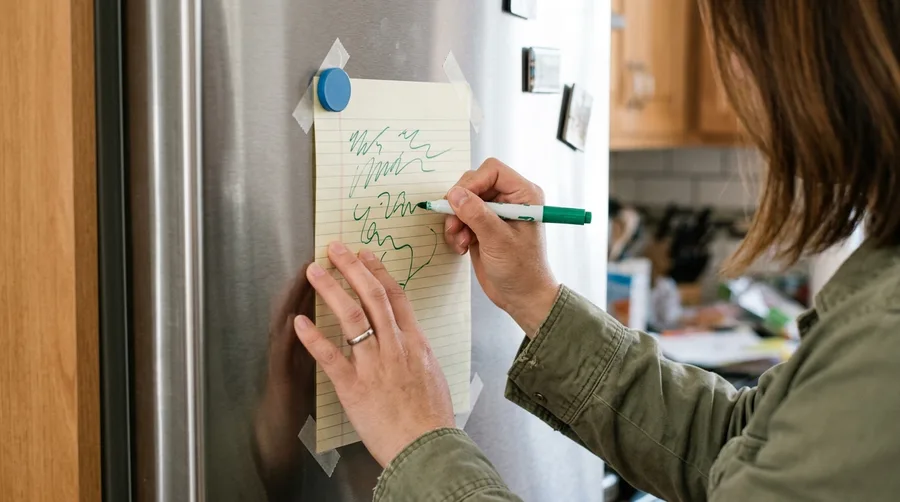
Write your allowed spending categories down on a physical piece of paper before the month begins.
The Traffic Light Method gives you a clear framework so you are not guessing when you walk into a grocery store.
Green means essential bills, basic groceries, and gas to get to work.
Yellow covers one specific pre-approved exception you decided on beforehand, like a birthday dinner or a necessary household repair.
Red is everything else, from takeout coffee to random web orders at midnight.
If it is not green, you do not buy it.
Writing it down takes the decision out of your hands when you are tired on a Thursday evening and vulnerable to convenience.
I kept my list taped to the side of the fridge for the entire thirty days of my first attempt.
It removed the internal negotiation completely, because the rule was already decided while I had a clear head and a full bank account.
Set the rules while you feel strong.
The Traffic Light Framework
2. Expect the Second-Week Slump

Right around day nine, the whole experiment starts to feel less like an empowering choice and much more like a direct punishment.
The initial novelty completely wears off, and you lose that quick dopamine hit that comes from tapping your card for an iced coffee or a random Tuesday shirt. You are definitely keeping $75 or $100 in your account instead of spending it, but the trade-off is heavy: you feel restricted, and your brain misses the easy comfort.
Expect to feel severely deprived for a couple of days right in the middle of the stretch. That mental friction is not a sign you are failing the month; it is simply the exact moment the old habit fights back against the new boundary.
Plan a completely free distraction for that specific weekend before it arrives, like a long trail hike or a movie marathon using streaming services and pantry snacks you already own.
Put it on your calendar today.
📅 The 4 Weeks of a No Spend Month
Week 1: Motivation
You feel in control and excited by the immediate savings.
Week 2: The Slump
Willpower drops as the reality of missing conveniences sets in.
Week 3: Adaptation
You stop thinking about shopping and start finding free alternatives.
Week 4: The Finish Line
Your bank balance is noticeably higher and new habits solidify.
3. Pick a Specific Exception Category

My first attempt failed completely because I tried to ban everything at once, as if living on plain rice for thirty days was a test of moral strength.
It is okay to pick one specific, heavily capped exception category to keep yourself sane, and we call this practical boundary a safety valve. Giving yourself a twenty-dollar weekly allowance for local coffee keeps the restriction from feeling like a punishment, and sticking to it strictly ensures the rest of the challenge actually survives.
This week: choose your single exception category, assign it a firm weekly dollar cap, and write it on a sticky note attached to your debit card.
💡 Tip: Keep your exception allowance in physical cash so you literally cannot overspend it.
4. Delete Saved Cards from Your Browser

You are not failing because you lack self-control when an ad pops up at midnight.
The easiest way to stop spending online is to add genuine friction to your checkout process so that impulse buys require actual effort instead of a single tap.
Sit down at your computer or phone right now and delete every single saved credit card, autofill profile, and quick-pay option linked to your browser within the next fifteen minutes.
Make yourself type the sixteen digits and the expiration date manually every single time you want to buy something non-essential.
Having to walk to your wallet in the other room gives your rational brain exactly enough time to break the trance and cancel a bored purchase, which saves you around $40 to $100 on average every time it works.
Friction vs. Frictionless
Frictionless (Avoid)
- Double-click to pay
- Saved card numbers in browser
- Shopping apps on home screen
- Targeted ad emails in inbox
High Friction (Do This)
- Manual entry for all card details
- Cards left in another room
- Shopping apps deleted
- Retailer emails unsubscribed
5. Avoid Overstocking the Pantry Early

Are you just shifting the spending to the day before?
The most common trap is dropping $300 at the grocery store on the thirty-first so you do not have to buy anything during the challenge, which entirely defeats the point of the exercise by front-loading the exact expense you are trying to pause.
Shop for your normal weekly groceries with a baseline budget of $75 or whatever your usual is, and let the month force you to eat through the random cans and freezer meals you already own instead of hiding from them.
⚠️ COMMON MISTAKE
The Stockpile Trap
Hoarding supplies before day one means you are still spending the money, just changing the date on the receipt.
6. Check Your Calendar for Predictable Landmines

Review your shared calendar with your partner tonight before you declare the month officially started.
A zero-spend month falls apart instantly if you forgot about a birthday dinner, a school field trip fee, or an oil change that is already scheduled for the third week. Sit down with anyone you share finances with and map out these unavoidable costs right now.
The mechanism here is purely about friction and expectations: when an unbudgeted $80 birthday dinner hits unexpectedly halfway through your challenge, it triggers that sudden failure panic where you throw your hands up and spend $300 on takeout because the rule is already broken.
Some months are just genuinely bad timing, and forcing a rigid challenge over a weekend with three family birthdays or an annual insurance payment is a recipe for guilt rather than progress.
If the calendar is packed with mandatory events, simply delay the challenge until a quieter month, or agree on an exact cash limit of $40 or $50 for those specific unavoidable days so the experiment stays intact.
Categories You Never Cut
7. Separate Boredom from Genuine Needs

Shopping is not a hobby.
The lie we tell ourselves is that browsing a retail aisle or scrolling a flash sale for forty minutes is just harmless entertainment. In reality, it is a psychological habit built to soothe anxiety, escape a slow afternoon, or manage work stress, and it almost always ends with a transaction.
New belief: retail therapy is actually emotional regulation dressed up as commerce.
When you feel the sudden pull to open a shopping app or wander down a digital aisle, pause and name what is actually happening. Identify if you are genuinely in need of an item, or if you are simply tired, lonely, or avoiding a difficult task.
The next time the urge hits, close the browser tab and set a timer for fifteen minutes. Walk away from the screen, drink a glass of water, or step outside for a quick walk to let the spike pass.
The Vocabulary of Overspending
8. Move Unspent Money Immediately

Twenty dollars is often the difference between a month that works and one that unravels.
Most people skip this step because they think saving only counts if it happens in large, impressive chunks that require a calculator and a spreadsheet.
The mechanical secret of a successful month is that small, immediate transfers beat massive, delayed intentions every single time.
When you talk yourself out of a forty-dollar takeout order, you have not actually saved forty dollars until that money is physically moved out of your checking account.
Leave it sitting right where it is, and your brain treats it as available wallpaper, meaning it will inevitably be absorbed by some random grocery run or impulse purchase by Friday afternoon.
Log into your banking app the exact second you make a choice not to spend, and move that twenty or five or ten dollars straight into a separate savings account or toward a credit card balance.
Even a tiny five-dollar transfer creates a visible, satisfying tally of your daily wins that adds up faster than you might think.
Watching that separate balance grow by small, consistent increments throughout the month flips the entire psychology of the challenge, turning a feeling of passive deprivation into a feeling of active, measurable progress.
This week, do your first transfer for whatever small amount you just protected, and let that single tiny habit start doing the heavy lifting.
9. Review Your Progress Every Sunday

You are waiting for the exact moment you mess up, and when it happens, it feels like proof that the whole experiment failed.
Open your banking app for ten minutes every Sunday evening and look at the actual transactions without letting shame make the decisions for you.
If you cracked and spent $14 on takeout on Thursday, name the leak, forgive the slip, and let Wednesday be a fresh start instead of throwing away the remaining three weeks.
10. Find the Free Version of Your Routine

What are you going to do with your Saturday mornings when wandering the aisles is off the table? I used to spend my weekends browsing through plant nurseries and hardware stores, a habit that consistently cost me at least $50 a pop just for walking out the door.
Stopping the spending without replacing the rhythm leaves a gap that triggers the urge to quit entirely. I had to actively rebuild my routine so my weekends still felt like a break instead of a restriction.
Swap the shopping trips for the public library, local state parks, or hosting a casual potluck breakfast where everyone brings whatever ingredients are already sitting in their pantry. Pick one free alternative today and put it on your calendar for this coming weekend.
💡 Tip: Cancel your usual coffee dates and suggest a walk in the park instead.
11. Pause the Subscriptions You Forget About

You do not have to cancel your entire digital life forever just because you are having one tight month.
This is a time-sensitive window to stop automatic billing before the next renewal cycle locks you into another thirty days of charges you did not actively choose to make.
Take ten minutes right now to log into your account settings and hit pause on streaming services, beauty boxes, or fitness app memberships. Most platforms let you freeze your account for thirty days without losing your saved watchlists or incurring any penalty. I put off freezing a $15 fitness app for months because navigating the dark patterns on their cancellation page felt too frustrating, which is precisely how companies rely on friction to keep your card on file.
Stop those automatic drafts today before the next cycle clears your balance. You might realize by the end of the month that you never actually missed the service, turning a temporary freeze into a permanent $40 or $50 monthly win for your budget.
12. Automate Your Grocery List Replenishment

I stopped walking into grocery stores entirely after realizing that every single trip cost me at least forty dollars in snacks I never planned to buy.
Set up an online pickup order for your basic staples to completely eliminate the temptation of end-cap displays and snack aisles.
Paying a three dollar pickup fee will consistently save you thirty dollars in unplanned impulse buys because you only click what is on your actual list.
Take ten minutes right now to build a recurring template for your weekly essentials in your local store app.
13. Talk to Your Household First

A fifty-dollar disagreement about groceries can quietly turn into days of heavy resentment when one person is trying to cut back and the other just wants to pick up takeout.
If you share a checking account or split household bills, you absolutely must agree on the rules with your partner before day one of any challenge.
A restriction like this alters how you socialize, eat, and manage daily stress, which impacts everyone under the roof.
Have the awkward money conversation over coffee this weekend instead of letting it blow up over a Tuesday night receipt.
If you need help mediating how aggressive the cuts should be without making it personal, sit down with a nonprofit credit counselor or use a shared budgeting app to look at the numbers objectively together.
14. Redirect the Mental Energy

Redirect the mental energy that used to go into shopping toward sorting out the physical and digital clutter you have been ignoring for months.
During my second attempt at a zero spend month, the biggest shock was not the dollar amount I saved, but how much mental energy finally returned to my brain.
I stopped constantly researching products, reading reviews, and tracking package shipping updates for things I barely needed in the first place.
Your attention is an incredibly valuable resource that gets quietly drained every single time you browse a retail site or add an item to a cart.
When you take purchasing off the table completely for thirty days, you suddenly have hours of unexpected mental bandwidth left over on a Saturday morning.
Use those unexpectedly quiet weekend afternoons to fix broken household items, organize your financial paperwork, or finally list old clothes for sale on local marketplaces to bring in an extra $150.
The exercise becomes a thorough reset for your physical living space as well as your checking account.
Let the quiet boredom of not shopping become productive by redirecting that exact focus toward the things you already own.
15. End on a Planned, Allowed Purchase

The biggest myth of a challenge month is that you immediately need to start a second one on day thirty-one.
You are not training for a financial marathon where the prize is never enjoying your money again, and treating it like one guarantees a massive spending binge by next week. Plan one modest, allowed purchase for the final day-like a forty-dollar dinner out or an item you skipped all month-to release the pressure valve safely.
Pick that reward today, write it down, and let it serve as your actual finish line.
Frequently Asked Questions
Should I pause my 401(k) during a no-spend month?
No. The goal is to cut discretionary spending, not to sabotage your future. Keep your investments and debt payments automated exactly as they are.
Does paying off debt count as spending?
Debt payoff is the exact opposite of the spending you are trying to cut. Extra debt payments are often the best place to put the money you save during this challenge.
What if an emergency happens?
You pay for it. A flat tire or a medical bill is essential. The challenge is meant to stop you from buying unnecessary items, not to stop you from taking care of real emergencies.
Can I use gift cards?
Yes, using up old gift cards is a great way to handle the urge to shop without actually draining your bank account. Just make sure you do not spend over the card balance.
How long should a no-spend period actually last?
Thirty days is the standard because it gives you enough time to break habits without causing permanent burnout. You can also try a no-spend weekend if a full month feels too aggressive.
What I Would Do First
Delete the shopping apps from your phone tonight.
You do not need to have a perfect plan or a flawless budget to start seeing results. Removing the quickest, easiest ways to spend your money will instantly buy you enough time to make better choices tomorrow morning.