

You sit at the kitchen table with an unopened statement, staring at a minimum payment that barely touches the principal. Someone online tells you that the real problem is your income and that you just need to earn more.
That advice sounds helpful until you realize it treats a cash-flow structure as a motivation issue. Earning more helps, but without a system, extra money usually just flows straight into extra spending.
It is fixable, and you do not need a second side hustle to start making real progress. Let's look at what actually works when you are tired of running in place.
Quick Tips Before You Start
Track One Month
Look at where every dollar went last month without judging your purchases.
Pause Subscriptions
Cancel recurring charges you forgot about before touching major bills.
Separate Accounts
Keep bill money in a completely different bank to stop accidental spending.
1. Consult a Professional for Complex Debt

Book an appointment with a fee-only fiduciary or a nonprofit credit counselor before making massive structural moves with your debt.
Your numbers are entirely individual, and generic internet advice can occasionally trigger unexpected tax penalties or legal fees that cost hundreds of dollars you do not need to lose. I once tried to untangle a messy consolidation on my own and missed a fee structure that cost me dearly. A qualified professional helps you run your specific balance sheet against actual reality instead of guessing.
This week, search the National Foundation for Credit Counseling to find a certified helper.
💡 Tip: Look for non-profit agencies accredited by the National Foundation for Credit Counseling.
⚠️ COMMON MISTAKE
Treating Income Like a Magic Fix
Assuming a higher salary will automatically solve debt ignores lifestyle creep. Without a tracking system, expenses simply rise to meet earnings.
2. Recognize the Scarcity Mindset Loop

About 60 percent of households struggle to cover unexpected expenses, leaving millions trapped in chronic financial stress.
When every single month feels like an active emergency, your brain shifts entirely into survival mode.
You stop looking at long-term strategies because you are completely focused on surviving the next billing cycle.
This constant, grinding pressure makes you uniquely vulnerable to high-interest payday loans and expensive quick-fix promises.
You are not failing because you are inherently bad with money, but because you are reacting to chronic scarcity.
Break the loop by acknowledging the heavy mental load first, because your nervous system needs to calm down before the math can work.
Only then can you start looking at the actual numbers objectively without feeling like every dollar spent is a personal moral failure.
New belief: My financial history does not dictate my next payment, and I am allowed to take this one step at a time.
Jargon Decoder
3. Automate Fixed Transfers on Payday

You are probably exhausted from trying to force yourself to save every month using sheer discipline alone, and it is completely normal that this approach keeps failing you.
The secret is removing willpower from the equation entirely by letting technology handle the heavy lifting for you.
Set your banking app to move your fixed bills and savings the exact morning your paycheck lands, usually within minutes of the deposit clearing.
End-of-month saving means you save whatever survived, which is usually nothing after daily expenses eat up the remainder.
Payday saving ensures your true priorities get funded first, guaranteeing that at least $50 or $100 goes toward your security before daily temptations have a chance to drain the account.
Payday Automation — At a Glance
⏱️ Setup Time
5 minutes
🔄 Frequency
Every payday
🎯 Target
Fixed bills first
Pro Rule
Never rely on manual transfers for core obligations.
4. Stop Chasing False Economy Shortcuts

I spent three months avoiding takeout and agonizing over a $4 iced coffee before realizing I was still falling behind every single payday.
The common mistake is treating minor daily habits as the root cause of a tight budget while ignoring the heavy fixed expenses that actually drive the deficit.
Cutting out $5 treats feels productive because it demands immediate sacrifice, but saving $100 a month on coffee does very little when a $400 car payment or a 22% credit card interest rate is quietly draining hundreds more in the background.
The mechanism here is scale, plain and simple: minor discretionary cuts cannot outrun major structural costs.
Shift your focus away from the coffee shop this week and call your insurance provider or look closely at your loan terms instead, because changing one large recurring bill moves the needle in a way tiny sacrifices never will.
💡 PRO TIP
Focus on the Big Three
Housing, transportation, and food make up over 70 percent of most household budgets. Optimizing these beats cutting minor habits every single time.
5. Accept the Trade-Offs of Debt Repayment

It hurts to watch friends book a weekend trip while every spare dollar you earn quietly vanishes into a credit card balance.
The math is unforgiving, but the social cost is what actually wears you down. When you redirect $300 a month from dining out to principal debt repayment, you are buying back your future freedom with your current social life, trading temporary fun to stop throwing away 21% annual interest.
Pick one optional expense to cancel this week, and remind yourself that the sacrifice is temporary.
6. Build Systems That Withstand Bad Weeks

Rigid financial plans break the moment real life interrupts them.
When I first tried tracking every single penny, I quit after twelve days because one unexpected $150 car repair completely derailed my spreadsheet and made me feel like the whole effort was useless.
The underlying mechanism here is psychological resilience through flexibility rather than mathematical perfection.
When a budget has zero tolerance for friction, a single bad week turns into complete abandonment of the system.
Build a structural buffer into your plan so an ordinary surprise expense does not destroy your progress, and set up your weekly accounts so a missed target on Tuesday just rolls over instead of sinking the entire month.
Debt Strategy Traffic Lights
- Automating bill transfers — Do this immediately to protect your cash flow.
- Cutting all minor groceries — Too restrictive; leads to burnout quickly.
- Ignoring high-interest balances — Guarantees compound interest will keep you stuck.
7. Set a Clear Weekly Spending Floor

People think strict monthly budgeting fails because they lack discipline, but the real issue is that a whole month is simply too long to track mental math.
Fix this by giving yourself a strict weekly cash limit for variable expenses, moving $100 into a separate checking account for groceries and gas every Monday morning.
When that specific money runs out, variable spending stops entirely until the following week, which protects you from ruining your progress by the tenth of the month.
8. Use the Three-Bucket Cash Flow Method

How do you actually stop seeing your entire paycheck as free money the exact second it hits your primary bank account and vanishes without feeling completely deprived?
Divide your incoming cash instantly into three distinct accounts before you even glance at your mobile banking balance. Bucket one securely holds your fixed bills like rent and utilities, while bucket two automatically handles your monthly debt minimums and your growing starter cash cushion without any extra effort.
That physical boundary changes everything.
Bucket three becomes your flexible spending cash for groceries and daily life, ensuring you never accidentally spend the cash your landlord is waiting for. I used to keep everything in one checking account and guess my balance, which is a fast track to overdraft fees and severe midnight panic attacks.
Open two separate accounts this week and route your fixed expenses there on payday to start fresh with a clean slate instead of playing endless stressful mental gymnastics with your grocery money.
Bucket Strategy Best For
9. Embrace the Power of Small Starts

You might look at twenty-five dollars a month and feel like it is too small to matter when you are facing thousands in debt.
Consistency beats amount every single time.
Even $25 a month transferred automatically does more than $0 saved while waiting for a raise, because it builds the reflex before the scale.
Open your app today and set up a tiny recurring transfer for the day after payday.
10. Scale Back Without Quitting Your Plan

Perfectionism ruins more budgets than overspending ever will.
We have all been there, staring at a month where the car battery died or the grocery bill ran fifty dollars higher than expected, feeling like the whole financial plan just shattered.
When you planned to save $500 this month but an unexpected vet bill took $300, the urge to throw your hands up and abandon the budget entirely is almost overwhelming.
Do not throw out the remaining $200 in frustration.
Scale your targets down for a difficult month without abandoning the system entirely.
The mechanism here is purely psychological, but it governs the math: when people treat budgeting as an all-or-nothing game, a single stumble makes them quit for six months, losing thousands of dollars in potential consistency.
Progress is non-linear, and surviving a tough month with a small win still counts.
You do not need to do everything by Friday to stay on track.
Give yourself permission to lower the bar temporarily so you can maintain momentum over the long term.
Open your app right now, adjust this month's transfer target down to a realistic $50 or $100 instead of zero, and keep the machinery running.
The Mindset Shift
11. Address High-Interest Balances This Month

I stared at a $4,200 balance on a card with a 22 percent rate three years ago and pretended it would magically shrink on its own.
It did not shrink because credit card APRs sitting around 20 percent mean interest accrues daily, quietly eating up your payments before the principal even notices. Waiting until next year to tackle those high-interest balances costs you real money every single week you delay.
Prioritize directing every dollar of spare cash toward that highest-rate balance right now. Open your banking app today and route an extra $25 toward it before you spend a dime anywhere else.
12. Review Your Spending Quarterly
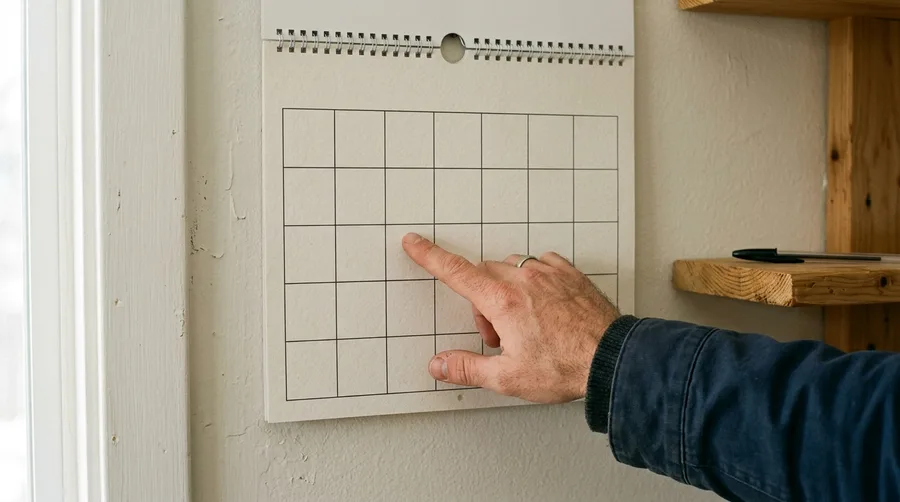
When was the last time you actually checked where your money went over the last ninety days?
Subscription creep happens quietly, adding $15 here and $10 there until you are losing $60 a month to services you barely touch. I missed a streaming price hike for four months straight before I finally caught it on a casual scan. Set a recurring calendar reminder every three months to audit just two things: your automated transfers and your rising utility baselines.
Open your phone right now and drop that ninety-day check-in on your calendar before you close this tab.
13. Accept the Emotional Cost of Change

Expect to feel annoyed by your new limits during the first two weeks.
Changing how you handle money feels uncomfortable because it forces you to look at past habits, and that confrontation carries a very real emotional weight that nobody warns you about when you start a budget.
The friction you are feeling right now is part of the process, not a sign that you are failing at this or that you picked the wrong system.
I spent the first fourteen days of my own strict spending reset mad at my kitchen table for costing me my usual takeout routine, and that irritation is simply the cost of breaking a pattern that has run your life for three years.
This week, write down the exact annoyance you feel when you say no to a purchase instead of hiding from it, and keep going.
14. Avoid Relying Solely on Willpower

Within 30 minutes of walking through the front door after a genuinely exhausting workday, your internal reserve of mental energy is completely depleted.
Stop blaming your character.
The most common mistake is trying to resist late-night online shopping while your web browser happily autofills your saved credit card details in a single click. Willpower behaves like a muscle that has been carrying heavy loads all day, and expecting it to win a contest against frictionless convenience every single evening is a guarantee of failure.
I spent months beating myself up over midnight cart checkouts before I finally understood that my environment was actively working against my financial goals instead of supporting them.
Build real structural friction into your daily routine by permanently deleting every saved payment profile across your devices today, forcing yourself to physically get up, walk to another room, and retrieve your actual wallet whenever you are tempted to spend.
That brief delay of thirty seconds is often all it takes for the emotional impulse to fade away entirely.
15. Lock in Automated Savings Before Year End

You are waiting for the magical month when everything aligns and you finally have extra cash to save.
That month does not exist.
Waiting for the right moment keeps you stuck in the same cycle year after year because life always finds a way to absorb whatever you earn.
When you wait until the end of the month to see what is left over, you are relying entirely on willpower and hoping the grocery bill or utility hike was kind to you.
Starting this month leverages compounding and builds protective habits before holiday spending peaks.
The mechanism is simple behavioral design: when money moves automatically the second it lands, you never have to make the painful decision to save it yourself.
Take four minutes today to log into your bank app and set up a recurring transfer of twenty-five or fifty dollars for the morning after your next payday.
The exact amount matters far less than establishing the mechanism and proving to yourself that your baseline can survive the adjustment.
You do not need to earn a six-figure salary to start keeping more of what you make.
Build the system, protect your baseline, and let consistency do the heavy lifting while you focus on living your actual life.
Frequently Asked Questions
Should I pay off debt or save first?
Build a small starter buffer of $500 to handle minor surprises, then aggressively tackle high-interest debt so interest stops compounding against you.
How much should I have in my emergency fund?
Aim for one month of bare expenses first, then gradually work toward three to six months depending on your job stability.
Is it okay to pause my retirement contributions?
Pausing voluntary contributions temporarily to clear high-interest toxic debt can make sense, but try to keep employer matches if possible.
What if my income is too low to save anything?
When income barely covers basics, focus entirely on cash flow tracking and reducing fixed bills rather than feeling guilty about saving.
Start With This One Move
If you take one action from this list today, open a separate account at a different bank and set up a tiny automated transfer for your next payday.
You do not need to fix your entire financial life by Friday. Build one reliable system, let it run in the background, and give yourself permission to move forward at a sustainable pace.