

Standing in the kitchen at 6 p.m. with an empty pantry and a family of five waiting for dinner is a special kind of stress. You stare at the receipt from last week and wonder how three bags of basic items cost more than a tank of gas.
It is fixable, but it requires throwing out everything you think you know about feeding a large household.
Quick Tips Before You Start
Shop the Back
Ignore eye-level store displays completely.
Buy Bulk Staples
Focus on 20-pound bags of rice and dry beans.
Strict Inventory
Know every single item sitting in your freezer.
Cook From Scratch
Pre-made convenience foods destroy tight budgets.
1. Accepting the Real Cost of Food

Stop blaming yourself for the grocery total every single time you walk out of the store.
You have decided that your spending is simply out of control, and right now you feel entirely stuck under the weight of it. Let go of the guilt immediately. Prices climbed across the board, and your daily habits did not cause inflation.
a tight budget is not a punishment. It is simply a clear, protective boundary for your money.
Set your absolute hard ceiling at $400 for the entire month and treat it as a non-negotiable limit. This means looking at every single cart item with absolute clarity instead of guessing at the register.
My own grocery bill jumped by nearly $150 a month before I finally drew a hard line in the sand and built a realistic baseline. Open your banking app today, find last month's exact food total, and write down the $400 ceiling as your new target.
💡 Tip: Write your monthly limit on a sticky note and place it right on your wallet.
Monthly Target at a Glance
2. Automating Your Cash Allocation

It is completely normal to feel like your grocery money disappears into a black hole every single month.
You are not failing at math, and you are not bad with money.
You simply have no structural boundaries keeping your funds separated from the rest of your household chaos.
End-of-month overspending happens because we treat grocery money as a general slush fund for random household items.
When the food cash leaks into toilet paper, school supplies, and coffee runs, you are left scrambling by week three.
You do not have to guess how much money is left if you remove the guesswork before the month even starts.
Pull your grocery cash out on payday and put it into physical envelopes, or separate it into a dedicated digital sub-account with a separate debit card.
When the food envelope is empty, you eat what is already in the pantry instead of swiping a credit card.
It sounds harsh, but this single boundary protects you from accidental overspending better than any complicated spreadsheet ever could.
I spent three years watching my grocery budget blow up before I finally admitted that willpower alone was not going to cut it.
Take four minutes right now to set up this transfer rule in your banking app and lock it down.
💡 PRO TIP
Separate Your Grocery Funds
Never mix food money with utility or gas money. Once the grocery cash is gone, creativity in the kitchen begins.
3. Shopping Before Prices Spike
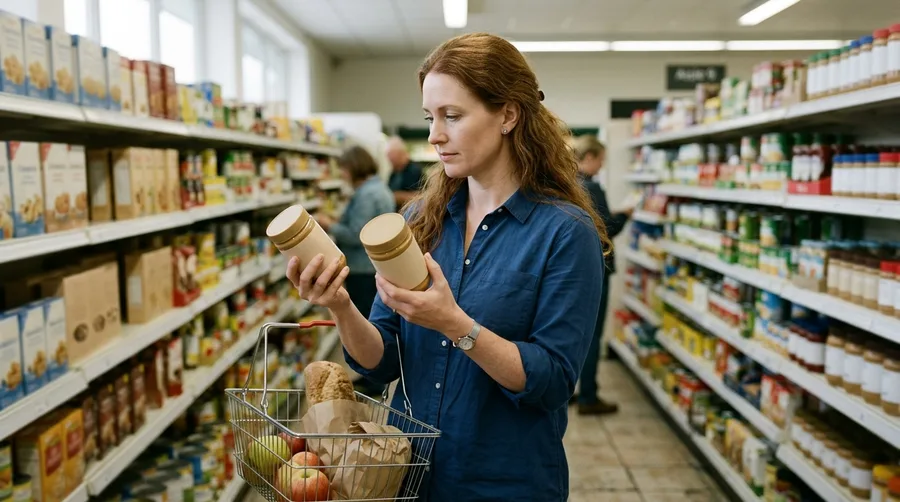
Nearly 30 percent of household groceries end up in the trash, which quietly drains about $120 straight out of a tight $400 monthly allowance.
The mechanism is simple timing: grocery stores run markdown cycles on specific mornings to clear shelf space before fresh deliveries arrive, giving you the exact same food at half the price if you are there when the tags drop.
Go on a Tuesday morning at 8 a.m. instead of a crowded Saturday afternoon, look for the yellow clearance stickers on meat and fresh produce, and buy only what fits into your meal plan for the next three days.
4. The Real Trade-Offs of Cheap Eating

Do you actually want to spend two hours chopping vegetables every single night just to save fifty dollars?
Eating on a $400 monthly budget for five people means giving up convenience entirely, and that friction is the real cost nobody mentions.
Pre-shredded cheese, bagged salads, and canned soups carry a massive markup of roughly 40 to 60 percent compared to buying the raw ingredients whole.
You are trading your time for your money, and if your schedule is already stretched thin by a commute or caregiving, that labor is not actually free.
If you hate cooking from scratch every single day, this budget will feel miserable within forty-eight hours and you will abandon it.
Be honest with yourself about your schedule before committing to this path, and pick just two convenience items to keep buying so you do not burn out.
The Math of Feeding Five
Federal Reserve and household baseline estimates
5. Stopping Impulse Snack Purchases

Walking down the center aisles of the supermarket without a strict list is financial suicide for a tight food budget.
The cart fills up with $5 bags of chips and $4 specialty crackers before you even notice the total climbing.
Put the name-brand snacks back and swap them for bulk oats or popcorn kernels that cost around $2 a pound and last for weeks.
💡 Tip: Never enter a grocery store hungry or tired.
6. Building the Three-Bucket Pantry

Staring into an empty fridge at six in the evening is enough to make anyone order takeout they cannot actually afford.
Most people fail at cheap meal planning because they look at that emptiness and panic into buying groceries without a structure.
divide your food strategy into three distinct pillars consisting of bulk base grains, frozen vegetables, and flexible proteins.
Bucket one holds your rice, dry beans, lentils, and oats bought in massive twenty-pound sacks that cost roughly $15 to $20 total and last for months.
Bucket two holds bags of frozen broccoli, peas, and corn that never spoil in the back of the drawer and cost a fraction of fresh out-of-season produce.
Bucket three holds whatever meat or plant protein is on deep clearance at the store, portioned out into meal-sized bags and frozen immediately upon coming home.
When you build meals this way, dinner stops being a daily emotional hurdle and becomes a simple matter of combining components rather than inventing recipes from scratch.
This system takes away the mental fatigue of figuring out what to eat while keeping your weekly grocery total hovering right around the $100 mark.
This week: open your pantry, throw out the mystery expired cans, and pick just one bulk grain to stock up on before your next shopping trip.
Three-Bucket Pantry — The Numbers & Limits
7. Scaling Back Without Giving Up

I spent my first grocery reset trying to banish every single box of brand-name cereal and specialty coffee from the cart, and by Tuesday night, I had quit the whole experiment out of sheer exhaustion.
Perfectionism destroys a food budget faster than an unexpected $50 car repair bill ever could.
The mechanism here is behavioral fatigue rather than math, because when you try to change everything at once, your brain treats the restriction as an emergency and triggers a binge.
You do not have to cut out every single comfort food on your very first paycheck.
Keep one small luxury worth about $5 or $6, like your favorite coffee beans or the kids' specific morning cereal, and trim the generic categories instead.
Give yourself permission to ease into this target over the course of two or three paychecks rather than demanding a flawless $400 transition overnight.
This week: pick just one item to keep as your non-negotiable comfort while you scale back the rest by roughly 20%.
8. My First Month Eating on Four Hundred
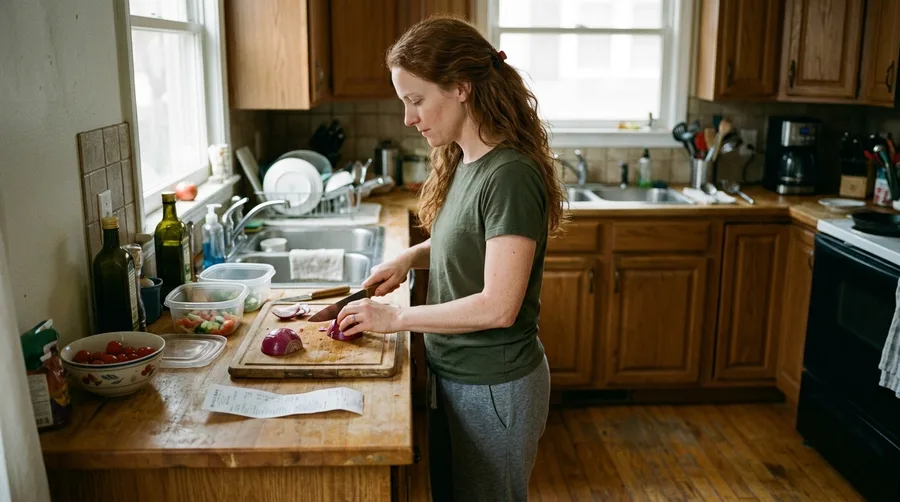
People think eating cheap means stripping all the joy and flavor right out of your kitchen.
When I first tried feeding our household on $400 a month, I bought ten pounds of lentils and we all revolted by day four. I had tried to make everything entirely from scratch without any flavor variety, and our grocery spending looked low only because nobody actually wanted to eat dinner. It took me three solid weeks of trial and error to realize that sauces and spices are non-negotiable items, not luxury expenses.
Give yourself permission to spend a few dollars on hot sauce and olive oil so you actually survive week one.
9. Starting Small With Pantry Staples

Looking at a bare kitchen shelf makes you feel like you are already failing before the week even begins.
You do not need a massive grocery overhaul to make a difference. Even spending an extra $25 a month on dry staples like rice, beans, and oats gradually builds a reliable buffer. Consistency matters infinitely more than radical overnight changes because small, steady additions compound into real security.
I used to think I had to buy everything at once to do it right, which just led to quitting by Tuesday. Start with just one shelf of basics this weekend and let it be enough.
10. Knowing When to Seek Advice

I spent three months trying to clip coupons out of a magazine to fix a grocery budget that was mathematically impossible on my hourly wage before I finally admitted the math was not the problem.
If your food budget is tight because your overall income simply cannot cover basic shelter and nutrition, a grocery hack will not solve the root problem.
Take a step back and look at your entire financial picture to see where the real pressure lies, especially when your rent takes up more than half your take-home pay.
Sometimes you need to connect with a local community food resource or a nonprofit credit counselor to get breathing room, and there is zero shame in utilizing assistance programs designed to help families bridge the gap.
Run your numbers against your local cost of living this weekend, and if the gap is larger than $200 a month, reach out to one local resource to find out what programs you qualify for.
⚠️ COMMON MISTAKE
Mistaking Income for Discipline
Never blame your willpower when your income is simply too low to absorb basic inflation. Know when to look for external assistance.
11. Reviewing Your Weekly Receipt Data
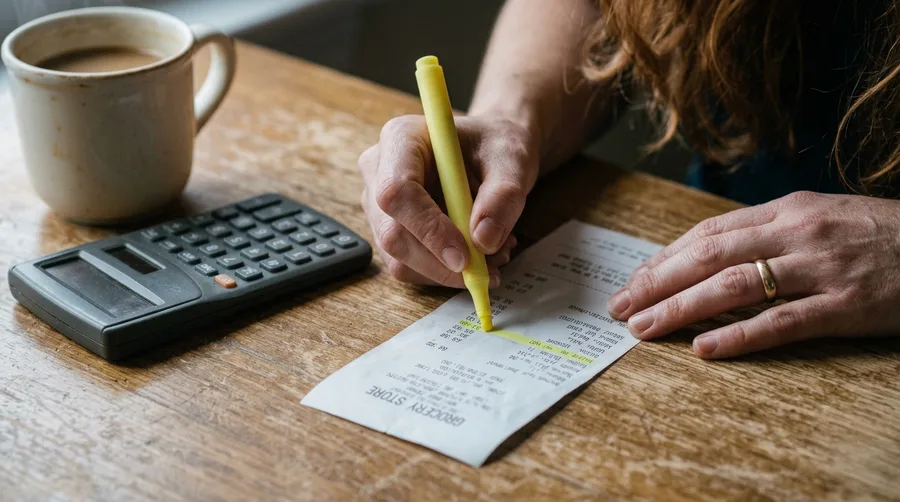
Reviewing your receipts sounds like a chore that invites guilt, but it is actually the easiest way to stop guessing where your money went.
Spend ten minutes every Sunday night looking at just two numbers: what got thrown in the trash and what cost the most.
Adjust next week's list by dropping one expensive item and one wasted ingredient, and watch your total drop by $20 to $30 without cutting your actual meals.
12. Batch Cooking Base Meals on Sunday
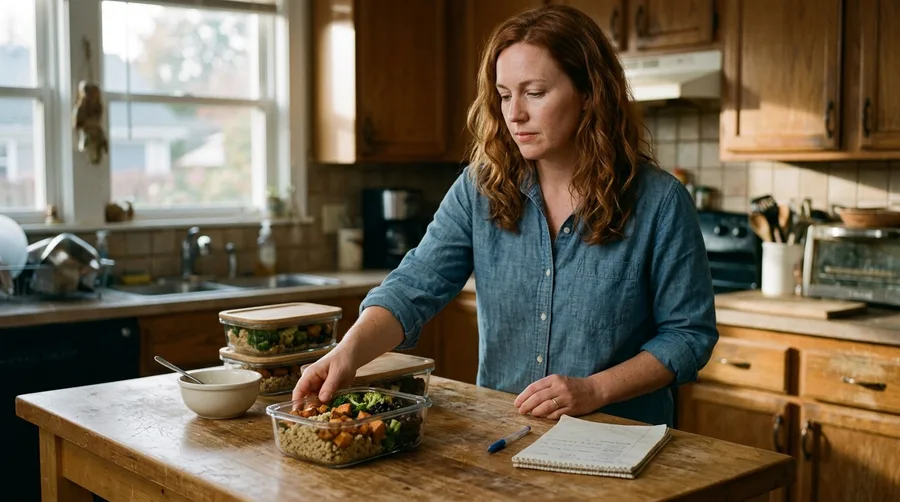
Spend two hours every Sunday cooking a massive base pot of beans, rice, or roasted root vegetables to cover the week ahead.
Having cooked ingredients ready in the refrigerator stops the temptation to order $40 takeout on busy Tuesday nights when everyone is tired and the cupboards look bare.
Allocate $30 of your weekly grocery budget specifically toward versatile base ingredients that stretch across multiple dinners without feeling repetitive.
By Sunday evening, your kitchen should smell like roasted garlic and prepped grains while your future self thanks you for the quiet structure.
This single habit prevents the emergency grocery spending that derails a monthly plan, and you can set a calendar reminder right now for your weekly prep window.
Sunday Prep Flow
13. The Honest Cost of Eating Cheaply
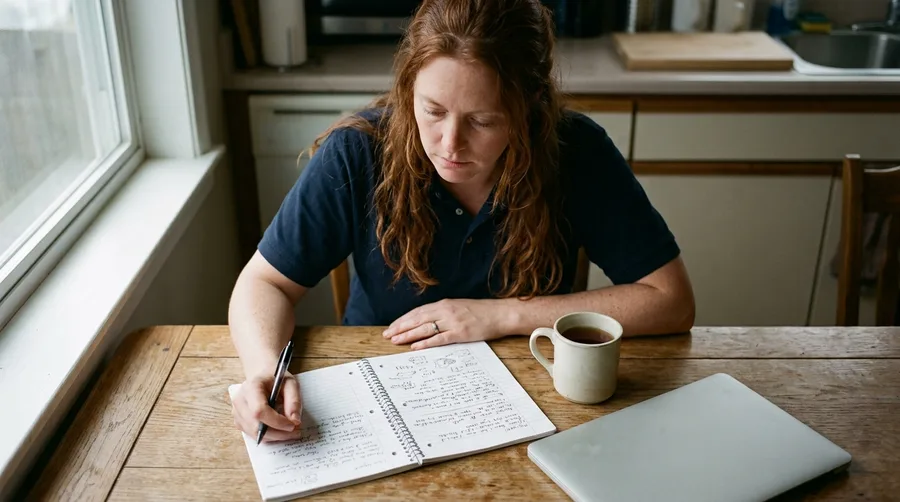
Why does saving money on food sometimes feel like a second job you never applied for?
It is because eating on a strict budget requires a massive amount of mental energy that you simply might not always have left over after a grueling workday.
You will eventually get tired of eating rice and beans four nights a week.
You will also miss grabbing spontaneous takeout with your coworkers on busy Friday afternoons when everyone else is heading out the door.
The financial savings are completely real, but the emotional cost of food fatigue is a genuine hurdle that you have to actively plan for instead of pretending it does not exist.
If you try to strip your grocery spending down to the bare absolute bone without any cushion whatsoever, you will burn out and completely abandon the entire system by month two.
Build a tiny reward directly into your monthly plan, such as a modest fifteen dollar treat fund, so you do not feel completely deprived while trying to get your household finances under control.
A truly sustainable budget always leaves room for being human, even when the numbers are tight and every single dollar feels like it needs to account for itself.
This week: set aside twenty dollars specifically for a guilt-free food comfort item so you can stick to the rest of the plan without breaking.
14. Avoiding Expired Produce Waste
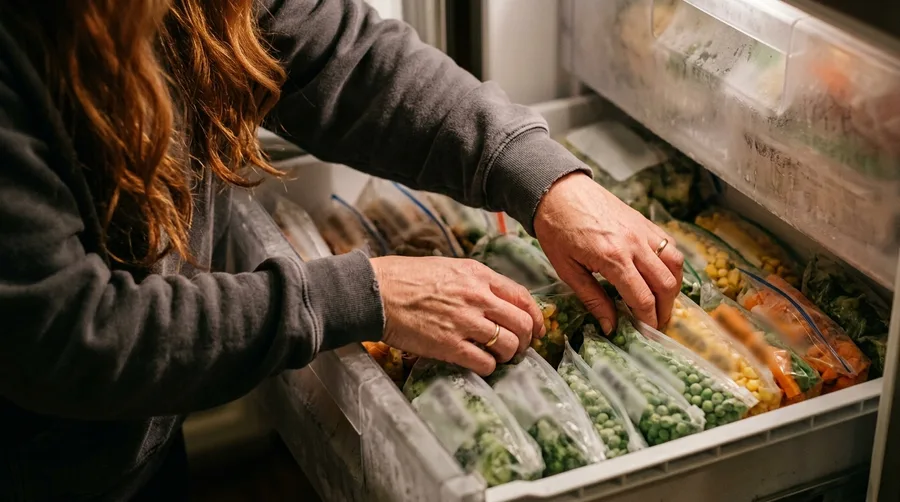
$40 a week goes straight into the bottom of the crisper drawer to turn into slime.
The mistake is buying fresh greens with good intentions instead of buying what actually survives a busy Tuesday night. Frozen spinach and bagged carrots do not spoil by Thursday morning, which means you stop paying for food you end up scraping into the trash.
Keep fresh produce strictly to the three or four things your household will realistically finish in forty-eight hours.
15. Locking in Your Monthly Routine
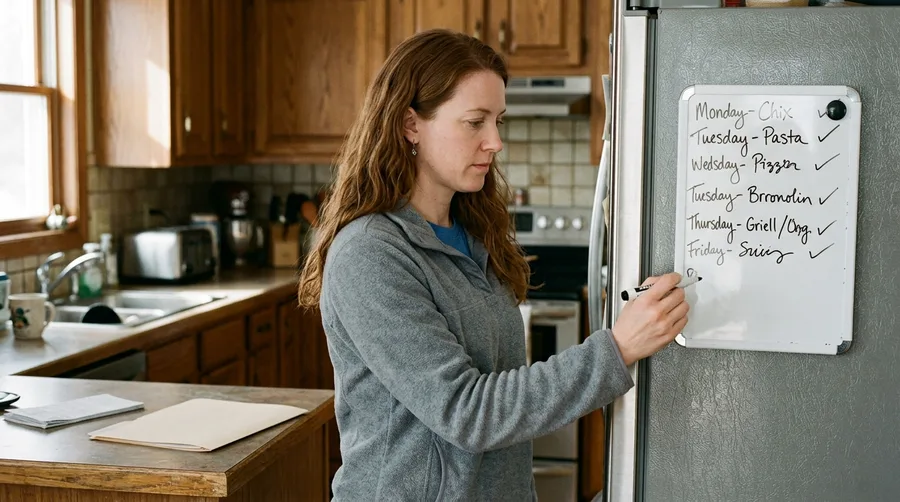
People assume a strict grocery budget runs on automatic pilot once you write down the numbers on a piece of paper. That myth is usually why budgets fail by the second week.
Take your crumpled grocery receipts every single Sunday evening at eight o'clock, log the exact total spent, and compare it against your $400 monthly target. This gives you a clear weekly checkpoint of roughly $100 per week so you never get surprised at month-end.
I used to hide my receipts in the kitchen drawer because looking at the grocery totals felt like getting graded on how well I managed my family. Treat it as neutral information instead of a judgment.
Refine your upcoming meal plan based strictly on what your family actually ate rather than the ambitious, expensive meals you hoped they would happily eat.
Consistency turns a painful restriction into a normal, effortless household rhythm over about three or four months. Open your notes app right now and create a grocery log folder.
Frequently Asked Questions
Is a $400 monthly grocery budget realistic for five people?
It is entirely possible if you focus heavily on bulk staples, eliminate food waste, and cook almost every meal from scratch. It requires discipline and planning, but thousands of families manage it successfully.
What should I do if I run out of grocery money by week three?
Open your pantry and use the backup supplies you stored during week one. Do not panic or run to the store; lean on dry beans, rice, and frozen goods until your next payday.
Do I need to use coupons to keep my grocery bill this low?
No. Traditional couponing usually encourages buying processed name-brand items you do not need. Buying generic bulk staples saves far more money than clipping paper coupons ever will.
How do I handle dietary restrictions on a tight budget?
Focus on naturally compliant whole foods like potatoes, rice, beans, and frozen vegetables rather than expensive specialty gluten-free or dairy-free processed substitute products.
Should I buy fresh or frozen produce when money is tight?
Frozen produce is usually cheaper, picked at peak ripeness, and has zero waste because you only thaw what you need. Save fresh purchases for hardy items like onions and carrots.
Your First Week of Better Food Spending
You do not have to overhaul your entire kitchen by tonight or figure out every meal for the next thirty days before you go to sleep.
Pick just one change from this list — set up your grocery envelope or buy your first bulk bag of rice — and let the rest wait for your next paycheck.