

You sit down on Sunday with a blank spreadsheet, full of good intentions, ready to map out twenty-one meals for the week.
By Wednesday night, takeout boxes litter the counter, half the fresh spinach has turned into green sludge at the bottom of the crisper drawer, and you feel like you just threw seventy dollars straight into the trash.
It is not a willpower failure. Your system is simply backwards.
I spent years buying ingredients for recipes I lacked the energy to cook after a long workday, repeating the expensive cycle of grocery guilt until I flipped the entire process on its head.
Quick Tips Before You Start
Shop the Pantry First
Check what you already own before looking at weekly store flyers.
Keep Prep Brief
Spend no more than twenty minutes prepping ingredients after returning home.
Track the Waste
Notice which items consistently end up in the trash and stop buying them.
Set a Hard Cap
Withdraw a fixed cash amount for groceries to prevent impulse spending.
1. Start With What You Actually Have

Most people build a grocery list based on an aspirational fantasy version of themselves who loves chopping raw kale on a Tuesday night.
You stare at the blank planner feeling slightly guilty about last week's expired spinach, but the guilt is not helping your bank account.
buying duplicates of items already hidden in your cupboards means you are essentially paying twice for the exact same food while the original stock spoils.
open your pantry, pull out the three random cans of black beans and the half-bag of pasta, and force yourself to build your next three dinners exclusively around those forgotten ingredients.
Aim to cut your next grocery bill by at least 25 percent just by utilizing items already sitting in your kitchen, which usually translates to saving $40 to $70 on a standard cart.
You are not failing at personal finance; you are simply buying groceries twice because your system lacks visibility.
Do this tonight before you even think about opening a delivery app.
💡 PRO TIP
The Pantry Inventory Rule
Never write a grocery list without first touching every item currently sitting on your bottom shelf.
2. Embrace The Lazy Frozen Baseline
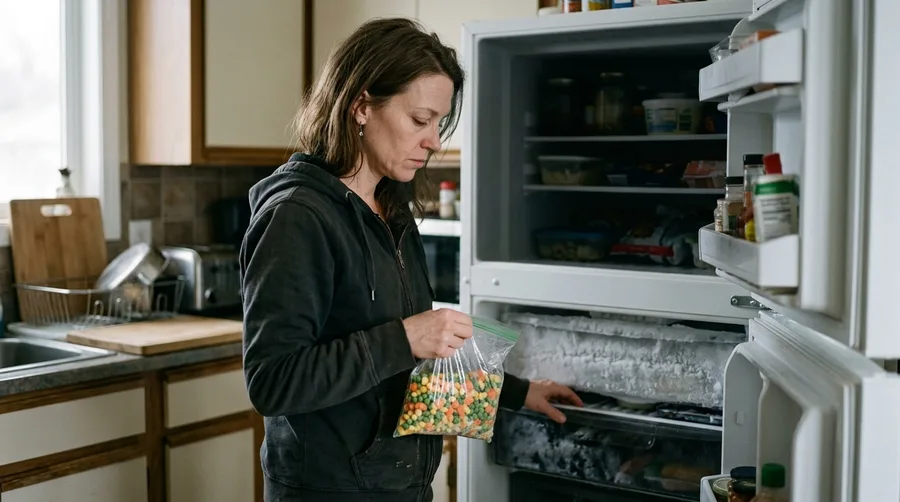
You stare at the crisper drawer feeling that familiar ache of money literally turning to mush because you intended to cook every single night.
I used to buy fresh broccoli every single week with the absolute conviction that this time would be different, but it always rotted, I felt guilty, and I threw $4.00 right into the trash.
Buying frozen florets changed everything because they cost about $2.00 a bag, require zero washing or chopping, and never spoil before you can cook them.
Switching half your fresh produce to frozen versions cuts food waste down to nearly zero, so pick up just two frozen bags on your next trip and leave the fragile greens behind.
The Real Cost of Grocery Waste
Based on average household loss patterns
3. Automate Your Grocery Budget Transfer

You have heard that you just need more discipline to stay out of grocery debt. Willpower is a terrible financial strategy when you are standing in aisle four after a long shift feeling tired and genuinely hungry.
Set up an automatic transfer of your grocery allowance into a separate debit card account every single payday, locking it away from your main bills money. The mechanism is simple: once that specific card hits a zero balance, you stop shopping for the week and eat what is actually in the pantry. It takes about five minutes in your banking app today, and it removes the math entirely.
Grocery Transfer Rules — How to Handle the Exceptions
4. Build Around Sales Cycles Not Cravings

Four weeks is the exact window grocery stores use to rotate their loss leaders and cycle their biggest markdowns.
If boneless chicken breast sits at $5.99 a pound today, buying it now means you are paying peak convenience pricing for protein.
According to consumer price data tracked by the Bureau of Labor Statistics, specific food categories shift in predictable discounts throughout any given year rather than staying static.
Waiting for the rotation when that same meat drops to $2.99 a pound changes the math entirely without requiring you to coupon-clip or spend your weekends driving to three different discount grocers.
I spent years fighting this cycle because I wanted tacos on Tuesday regardless of what pork shoulder cost, and every single grocery trip quietly bled my checking account dry.
The mechanism is simple supply pacing: supermarkets rely on your craving inertia to keep margins high, while sales cycles rely on inventory turnover that you can exploit if you let the store's schedule dictate your menu instead of your mood.
Planning your weekly meals backward from the front-page circular discounts saves an average household hundreds of dollars over twelve months.
This week, open the store app before you write a single meal idea down, look at what protein is fifty percent off, and build your entire dinner rotation around that one anchored item.
Grocery Sale Cycle — The Numbers Behind It
🍗 Markdown Threshold
40% to 50% off regular shelf tags
🥦 Freezer Storage Window
Up to 4 months for bulk protein
🥫 Skip This If
You have strict dietary restrictions
The Rule
If the anchor protein isn't on the front-page circular, swap the meal entirely.
5. Drop The Culinary Perfectionism Trap

I spent three hours making a complicated scratch-made lasagna one Tuesday night, stared down at the $42 grocery receipt in absolute horror, and still ended up ordering a $25 delivery pizza two days later simply because I was too exhausted to cook again.
Perfectionism keeps you broke.
You have somehow convinced yourself that home cooking needs to look like a glossy food magazine photo shoot every single night, meaning that scrambling basic eggs or heating a can of tomatoes feels like a domestic failure instead of a financial win.
Real personal finance is not about gourmet culinary mastery or impressive presentation; it is simply about keeping your weekly food spending aligned with your actual income rather than your Pinterest board fantasies.
Give yourself explicit permission to eat the exact same boring turkey wrap or rice bowl five days in a row without a shred of shame. This week, pick one ultra-simple meal that takes under ten minutes and commit to it.
⚠️ COMMON MISTAKE
The Variety Trap
Trying to cook seven entirely unique dinners every week guarantees burnout and high delivery bills.
6. Stop Buying Single Use Ingredients

Leave the single-use ingredients on the grocery store shelf.
Recipes that demand a single tablespoon of imported truffle oil, a specific jar of lemongrass paste, or one exotic sauce can easily add $15 to $20 to your weekly bill for items that never get touched again.
The mechanism here is simple pantry math: if an item only appears once in your kitchen cart, it is a budget leak disguised as cooking inspiration.
I once spent $8 on a specialty glaze for a recipe I made exactly once, and half of it sat in the back of the fridge until it grew a science project.
Commit to buying versatile components that stretch across at least three different meals during the week, such as a large bag of onions or a bulk block of cheddar.
Check every new recipe this week before you shop, cross off any one-off specialty items, and substitute pantry staples you already own.
7. Consult Professionals When Debt Mounts

Are your grocery bills actually the main problem, or are high-interest debt payments quietly eating your entire paycheck before you even look at a grocery store receipt?
It is a cash flow trap.
Sometimes the math simply breaks down because high-interest debt is taking up too much oxygen in your monthly accounts. If minimum credit card payments are consuming more than 30 percent of your take-home pay, no amount of smart coupon clipping or strict pantry clean-outs is going to fix the underlying leak in your finances.
I spent several frustrating months trying to intensely budget my way out of a balance that grew much faster than I could pay it down, entirely unaware the math was completely rigged against me.
Consider speaking with a certified nonprofit credit counselor through the National Foundation for Credit Counseling to review your overall debt structure. They do not judge your past choices; they look at what is coming in, what is going out, and what options actually exist for restructuring those payments.
A structured debt management plan can often lower your interest rates significantly and combine your various minimum payments into one predictable monthly amount without damaging your credit score.
Your grocery spending is tied directly to your cash flow health, and getting professional guidance on high-interest balances finally gives your weekly food budget room to breathe. When the debt pressure eases, you stop operating from a state of constant panic every single time you walk into a grocery store.
Book a conversation this week.
8. Start With The Twenty Five Dollar Floor

Shrink your savings target down if putting hundreds of dollars a month toward food sounds overwhelming.
Consistency beats intensity every single time when you are building a new financial habit from scratch.
Even $25 a month kept out of the delivery apps and put toward basic pantry staples does more than $0 saved while you wait for motivation.
I spent years waiting to magically find $300 a month to save, and all that waiting did was keep my balance completely flat.
When I finally dropped the bar to a tiny amount, the psychological friction of starting just vanished.
This week: move $25 into a separate envelope or account before you spend a dime on takeout.
9. Scale Back Without Quitting Entirely

Cut your delivery orders from four times a week down to two, and pocket the difference.
Restricting yourself too harshly guarantees an expensive binge later.
I learned this the hard way after a miserable month of eating plain rice, which ended with a ridiculous $120 takeout order out of pure exhaustion.
Aim to save about $50 a week by trimming just half the excess rather than quitting cold turkey.
10. Understand The True Cost Of Convenience

Pre-chopped vegetables and bagged salad kits cost roughly triple the price of whole produce.
The trade-off is clear: you are paying extra money to save ten minutes of knife work.
When work runs late and your energy hits zero on a Tuesday night, that markup feels entirely justified.
If you have the energy on a Sunday afternoon, chopping your own onions keeps that markup in your own checking account.
This week, buy one whole head of broccoli instead of the florets and see if the extra three minutes actually breaks your evening.
11. Use The Three Bucket Cash Flow Split

I used to keep all my money in one checking account and just hope the math worked out, which is how I accidentally spent my electric bill on takeout back in 2021.
Organize your food and living money into a simple three-bucket system: fixed bills, debt minimums, and flexible spending, keeping your grocery money strictly inside that third bucket so it never accidentally merges with your rent payment.
This repeatable structure prevents end-of-the-month panic, and you can set it up this week by opening two extra savings accounts at your current bank to house those first two categories.
12. Review Your Receipts Once A Month

You are probably avoiding looking at your bank statement because you are afraid of what you will find there.
Stop tracking every single dollar you spend every day, as that daily tracking cycle just breeds exhaustion and quiet guilt. Instead, pull up your banking app once a month and look for only two specific numbers: your total grocery spend and your total restaurant delivery total.
Awareness without punishment is all it takes to shift your habits for the next cycle, so open your app this weekend and check just those two lines.
13. Release The Shame Of Past Food Waste

Have you ever stared at a sad bag of slimy spinach at the very bottom of your crisper drawer and felt like your entire household financial life is quietly falling apart right in front of you?
You feel like you throw away half your groceries.
That heavy belief keeps you from tracking your spending because looking at the numbers feels like staring at your own failures. What I believe now: food waste is just data about your schedule, not a moral failing. When you buy ingredients for five ambitious dinners during a stressful sixty-hour work week, the math was already broken before you left the store.
Industry trackers estimate that the average household loses roughly $1,500 a year on unused food, turning a minor meal-planning oversight into a massive cash drain that silently bleeds your checking account dry month after month.
This week, take five quiet minutes before your next store run to count what actually survived from last week, and deliberately buy two fewer perishable items than your ambitious recipe book demands.
14. Check Your Pantry Before Every Store Run

It is completely normal to feel a mild sense of dread when opening a packed cupboard.
You might worry about what is hiding in the dark corners or how much money expired silently behind the flour.
Take a deep breath because nobody has a completely pristine inventory at all times, and this habit does not require perfection to save you cash.
Make it a strict rule to check your shelves and the back of your fridge before building your next shopping list.
Look for items nearing their use-by dates and build your first two dinners entirely around those ingredients.
This simple check-in prevents duplicate purchases of expensive staples like olive oil, specialty spices, and canned goods that quietly inflate a $120 grocery run by $20 or $30 every single week.
I used to buy a fresh bottle of cumin every time I made chili simply because I could not see the two hidden behind the pasta sauce.
Open your pantry doors today, pull out three items you forgot were there, and write them down on a scrap paper before you touch your phone's shopping app.
15. Build Your Own Repeatable Meal Formula

Everyone thinks a successful household budget requires spending your entire Sunday afternoon meal-prepping seven different gourmet dishes in matching glass containers.
That is a fast track to kitchen burnout.
A complex weekly menu fails because life happens, energy runs low by Wednesday night, and expensive takeout wins. A simple repeatable structure beats an ambitious meal plan every single time.
Here is the exact formula I finally adopted to keep my weekly food spending locked in around $85 without losing my mind or eating cardboard.
Assign simple themes to your week to eliminate the heavy mental weight of deciding what to make from scratch, using reliable anchors like taco Tuesday, stir-fry Thursday, and leftover cleanout Friday. Then, build your grocery cart around a fixed ratio: three anchor proteins, two versatile vegetables, and one bulk grain that effortlessly stretches to cover both lunch and dinner for days.
It might feel a little repetitive at first glance, but that predictability is actually the engine of the whole system. By removing the daily decision fatigue of figuring out dinner from scratch, your grocery spending stabilizes naturally because you stop buying random specialty ingredients that inevitably rot in the crisper drawer.
This system runs quietly in the background.
Grab a notepad today, write down three repeating themes, and map your next cart to that simple ratio before you open a single recipe app.
Frequently Asked Questions
How much should I spend on groceries each month?
It depends heavily on your local cost of living and household size. A good baseline is starting with your previous three months of spending and cutting 10% through pantry inventory.
Should I pay off debt or save money for food first?
Always secure a basic $500 emergency food cushion first so unexpected expenses do not force you straight back onto credit cards for groceries.
Is it okay to pause my meal planning when life gets busy?
Yes. When life gets chaotic, fall back on the frozen staples and simple three-ingredient meals rather than abandoning the system entirely.
How do I stop buying items I do not need at the supermarket?
Shop with a physical list, eat a snack before entering the store, and use a separate debit card loaded only with your budgeted grocery cash.
Your First Week of Better Spending
You do not need to overhaul your entire kitchen by Friday morning.
Pick just one change from this list—open your pantry tonight, check your stock, and let that be enough for this paycheck.