

A clean record should hold the price. That is the belief, and the renewal notice is where it gets tested.
a two-car household, both drivers claim-free for five years, same address, same 2019 sedan and 2016 hatchback, $100k/$300k liability limits, $500 deductibles on collision and on the other-than-collision coverage, bundled with renters. Last term's 12-month premium was $1,340. The renewal arrived five weeks before March 1 quoting $1,610 for identical coverage. No new driver, no move, no loan, no lapse, no tickets, no claims.
You did not do anything wrong. You got repriced. The number is a stack of inputs – repair costs, policy details, the insurer's own rates, your territory – and a clean record only speaks to one of them.
By the end you will be able to lay last year's declarations beside the renewal, spot which line moved, restore a discount, ask in writing which filed rate or territory change applies, check the state filing, and get two re-quotes. If you only have an afternoon, start with #8 and #9.
Five Things to Pin Down Before You Call
Rank the line items by dollars
Write the dollar change beside each coverage line on the comparison page. One number usually accounts for $150 to $200 of the $270; fix that first.
Know the three answers to ask for
"Which filed rate change applies to my territory?", "Is my policy being rewritten?", "Did a discount drop?" Accept nothing vaguer than a box name.
Test the deductible lever first
Moving $500 to $1,000 on collision and comprehensive typically saves 10-15% of those lines. Get the figure quoted before you decide.
Compare totals, not stickers
A $1,455 quote with a $1,000 deductible is not cheaper if you file one claim. Match deductibles, then compare premiums.
The deadline is the signature, not the date
A replacement quote binds when you sign it, so two re-quotes inside five weeks is enough. Do not let the March 1 date rush a bad number.
What a claim costs now
Before you look at your own policy details, understand that the price of a claim has moved under everyone. The parts and labor that go into a fender-bender are more expensive than they were five years ago, and insurers price that severity into every policy they write.
This is the first place to look because it affects lines you can actually see on your declarations page. If your collision and comprehensive lines went up while your liability line stayed flat, you are looking at repair costs, not your driving record.
1. Repair bills rose, so claims cost more

A higher renewal is not an accusation. If your record is clean and the notice still climbed, the likeliest place to look is the repair itself, not the driver.
Picture the 2019 sedan backed into in a lot: the shop quotes $2,150 to replace and repaint the rear bumper cover and recalibrate two sensors, then keeps the car eight days at $52 a day for the rental. Paint matching, sensors and rental days all ride inside the claim, so the insurer builds that severity into the physical-damage half of every policy it writes, including yours.
Your record cannot offset a bill set by parts and labor. Lay last year's declarations beside the renewal: if the collision and physical-damage lines moved, repair cost is the candidate, and your insurer can tell you which line carried the change.
| What moved | Line on your policy | In your hands? |
|---|---|---|
| Repair costs (bumper, sensors, rental days) | Collision and comprehensive | Only through deductible and shopping |
| Used-car replacement values | Collision and comprehensive | Only through deductible and shopping |
| Injury settlements | Liability | No — market-wide cost |
| A discount dropped off | Discount lines | Yes — call and restore it |
| Credit-based insurance score | Policy detail / rating tier | Sometimes — check state rules |
| New driver or car in household | Driver and vehicle schedule | Yes — verify who is listed |
| Commute or side gig | Rating class / mileage | Yes — correct the stated use |
| Insurer filed a rate change | Whole policy | Yes — switch insurers |
| Territory re-rated | Territory code | No — but shopping can escape it |
| Area claims (hail, theft, uninsured) | Comprehensive | Only through deductible |
2. Total-loss payouts follow used-car prices
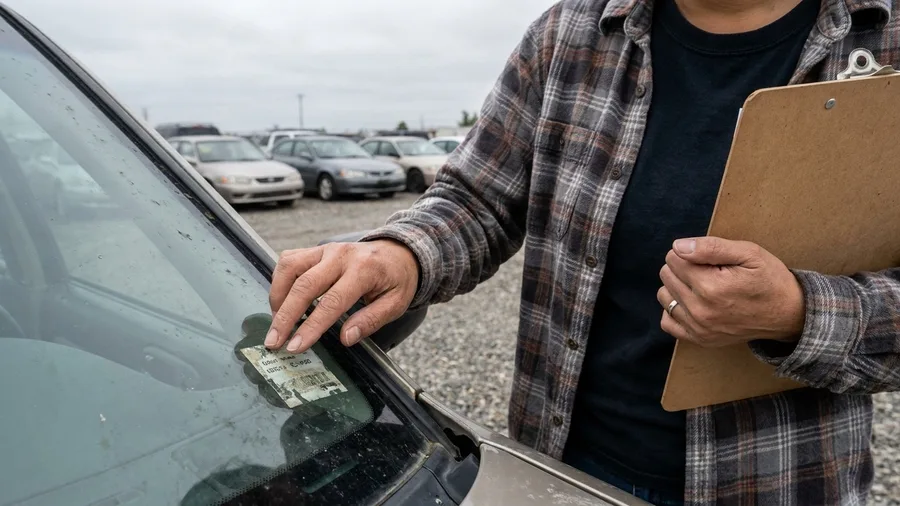
The belief is that your car's value matters only after a crash. Wrong: the value matters because a total loss pays replacement cost, and that arithmetic sits in your premium today.
Run it on the 78,000-mile sedan. The insurer values it at $14,800, while a comparable 2021 replacement is listed at $19,400. If that car is written off, the check follows the replacement market, not what you think the car is worth. High used-car values keep those rates high for every car like yours, with no crash required from you.
That is why checking this before renewal matters. Rates reprice when the used market moves, and last year's line may no longer reflect today's replacement cost. The exposure lives in the physical-damage lines, not the liability line.
3. Injury claims got more expensive to settle

Start with the plain move: split the premium before you blame a line. A renewal is not one number. It is liability, collision, damage from theft or weather, and fees stacked together, and only some of those parts track other people's claims. Only liability tracks injuries.
Here is the mistake people make. They see a $270 increase on a clean record and assume the insurer ignored five claim-free years. What they skip is the split. If the increase sits in the physical-damage lines, the cause is repair cost and replacement value. If it sits in liability, the cause is the price of injury claims.
Those climb faster than parts. Medical care, settlements and lawsuits after a crash have gotten more expensive, and liability is where insurers pass that along. It has nothing to do with your driving and everything to do with what a serious injury now costs to resolve.
The example policy carries $100k/$300k liability. If that line is unchanged from last term, the $270 is not an injury-settlement story and you should look at the repair lines instead.
Ask the insurer to break the premium into its parts, then compare the liability line last term against the renewal. That one comparison tells you which half of the bill moved.
The fix is a phone call or an email, not a guess. Get the split in writing so the numbers sit in front of you side by side.
If liability is flat and the other lines moved, look elsewhere. If liability moved, this is your answer, and it is not your record.
⚠️ COMMON MISTAKE
The line you skip is the one that moved
Most people compare the total premium and stop there. The increase lives on one specific line — liability, collision, comprehensive, or a discount line — and finding it takes ten minutes with both declarations pages side by side.
What changes on your own policy
The first theme was about the market. This one is about the paperwork sitting in front of you.
Discounts can fall off, credit scores can shift, household members can get added, and commute changes can re-rate the car. These are policy-detail causes, and they are the ones you can actually see on the page if you know where to look.
4. A discount quietly fell off at renewal
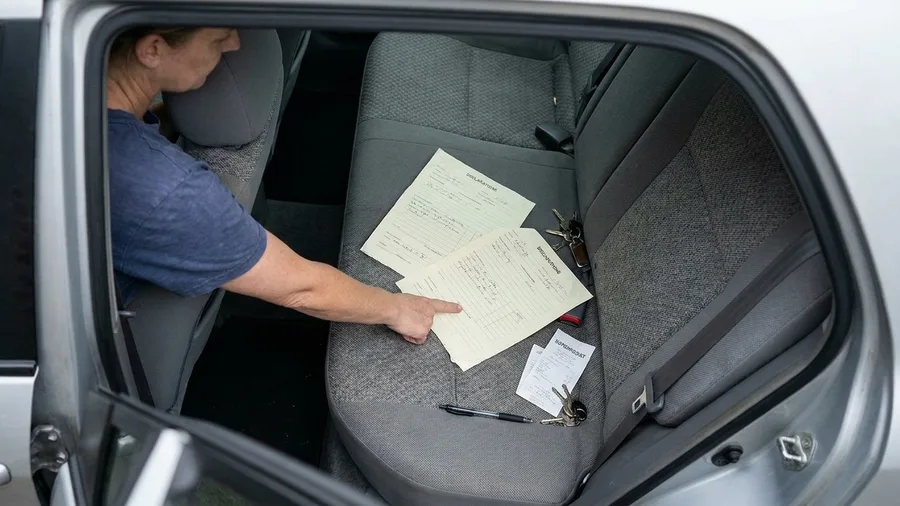
Four credits sit on the declarations page: paid-in-full, autopay, paperless, multi-policy. Any of the four can fall off silently. A debit card expires in March, the autopay draft bounces once, a billing date slides two days because the renewal lands on a weekend, and the discount line just isn't on the new page.
The reason is boring and mechanical. Those credits attach to how the bill gets paid, not to how the car gets driven, so a change in the billing setup resets them without a letter. Paid-in-full means you pay the whole 12 months up front instead of monthly; if the renewal defaults to installments, that credit is gone before you notice the payment plan changed.
The structure to copy is a two-column match, and it takes twenty minutes. Put last year's declarations beside the renewal and read down the discount lines in the same order on both pages. Every line that appears on one page and not the other is a question for the phone, and a restored credit is a direct offset against the renewal, not an argument about the market.
When the four credits survive on both pages, as they do on this example's renewal, the $270 came from somewhere else and the discount hunt is over. That's the fastest possible finding in the whole exercise, so spend the twenty minutes first.
Call the insurer with one sentence ready: which discounts applied last term, which apply now, and what's required to restore any that dropped. Confirm it before the March 1 date. Once a discount is reinstated, leave the billing setup alone until the next renewal, because every change to it is another chance for a credit to fall off.
💡 Tip: Put both years' declarations pages side by side and scan the discount section line by line. If a discount that was there last term is gone this term, that is your first call.
What each credit is worth, and the tell
💳 Paid-in-full
Bill shows 12 installments instead of one charge; worth roughly 5-10% of premium
🔄 Autopay
No draft posted in the first billing cycle after renewal
📱 Paperless
A paper declarations page arrived in the mail; the credit can follow it back on
🏠 Multi-policy
Renters policy shows a separate renewal date, or the bundle line is missing
Do this first
On this example all four survived, so restoring them returns $0. If yours all match too, stop here and look at coverage limits and territory instead.
5. Your credit-based insurance score moved

I once spent a Saturday sure my insurance had jumped because I'd pulled my credit score to apply for a store card in the same month. That was half right and half wrong: the store card didn't matter. A single late payment on a utility bill did.
Here's the part that catches people. Where the state allows it, insurers price your policy partly on a credit-based insurance score, which is a separate number from the credit score you watch. It weighs things like payment history, new accounts and how much of your available credit you're using, and a maxed card or a loan opened in the fall can move it without a single ticket or claim.
The reframe: this isn't a scoreboard on your character. It's one more line the insurer prices on, and it's a policy detail like any other. Where a state restricts or bans the practice, this cause drops off entirely, so check the state insurance department's website first; that one check tells you whether the cause is even available where you live.
Then put the question in writing to the insurer: which score factors moved, and on what date. You're asking for the timing, not a lecture. If the answer points at something you can fix, fixing it before the renewal date is the lever; if the state restricts the practice, cross this off and look at the other lines.
6. Another driver or car joined the household

Pull the declarations page and read the listed drivers and vehicles against the faces and keys actually in your household; a roommate who got licensed, a partner who moved in with a car, or a second vehicle bought mid-term all re-rate the policy. The whole policy reprices, not just the added driver. Household changes ripple through your file the same way, and closing an old credit card shows how account history quietly reshapes a score.
A teen added in month seven does not show up as half a year of cost. The insurer rates the risk as if that driver were on the policy from day one, so the full annual increase lands on the renewal notice in a single figure. Get a quote before adding anyone; after the addition, the number is already in the book.
This example household had nobody new and no extra car, so its $270 is not a listed-driver change. Check anyway at every renewal, because a mid-term addition can sit invisible until the paperwork catches up months later.
💡 Tip: Get a quote before adding anyone to the policy, not after. Compare the declarations page for listed drivers and vehicles against who is actually in the household and parking there tonight.
The household changes that re-rate a policy
7. Your commute or side gig re-rated the car

It can, and the change is slow enough that you never see it happen. Mileage and commute sit on the application as rating factors. The example's policy carries a 12-mile commute. Push that to 25 and the car is being priced for twice the road time.
So the declarations page carries two numbers worth finding this week: the stated daily commute and the annual mileage estimate. Set them against the year you actually drove. If both match, cross this cause off and the $270 is sitting somewhere else. I changed my mind on this one after watching a friend's renewal climb with no ticket on it, and the only thing that had moved was a mileage figure nobody had updated since the car was bought.
The bigger exposure isn't the price. If the car is running food or passengers for pay, that use is generally outside a personal auto policy, and an insurer can decline a claim that happens during it. Rideshare and delivery usually want a commercial policy or an endorsement added to the existing one. The gap only shows up on the day something goes wrong.
The fix is unglamorous and takes one afternoon. Cover letters, delivery confirmations and any low-mileage enrollment go to the insurer together, in writing, so a mis-stated annual mileage gets corrected and the discount, if one applies, lands on paper. Correct the record now, before a claim is the thing that tests it.
What you can fix vs. what you can only escape
Fix on your policy
- Restore a discount that fell off
- Correct a listed driver or vehicle
- Fix the stated commute and mileage
- Challenge a credit-based score factor
- Raise the deductible on collision and comprehensive
Fix only by switching
- A filed rate change applied to your class
- A territory re-rating
- Area claims raising the comprehensive pool
- Market-wide repair severity
- Used-car replacement values
What changed around you
The last theme is the hardest to accept: some of this has nothing to do with you at all. The insurer repriced its book, your territory was re-scored, or claims in your area got more expensive.
These are the causes that make a clean record feel irrelevant — because on these lines, it is. But they are also the causes with the clearest escape route: shopping the policy.
8. The insurer repriced its whole book
It's a lousy feeling: five clean years, and the number still moved. The instinct is that somebody at the company picked your name. Usually they picked every name in your class. If the household and the commute are clean, the remaining causes sit outside your driveway, and the first one is what the insurer charges its whole book.
Carriers file new rates with state regulators, then apply them to every renewal that fits the class. A spotless record does not exempt you from a filed increase, because the record was never the input that changed. So take willpower out of it. Put an annual calendar reminder for 45 days before your renewal date, and on that day send one short written request: which filed rate change applies to this policy, and what is its effective date.
Leave the rest alone until the answer comes back in writing. Then look up that filing yourself on your state insurance department's site, tied to that date, rather than trusting a number from a phone call. If it matches, the clean move is quoting two competitors on identical coverage; the example's $1,610 renewal drew $1,455 and $1,720.
💡 Tip: Bring both quotes to the call. The $1,455 quote against the $1,610 renewal is the entire argument, and it takes thirty seconds to make.
A $1,455 quote for identical coverage is not a nice idea — it is the price your current insurer has to beat, and forty calls a day prove it.
— What the renewal letter will not tell you
9. Your territory was re-rated, not your driving
Open the declarations page and find the territory code next to the garaging address. That short code is where your ZIP is priced for theft, vandalism, congestion, weather and local repair costs. Rates can be filed across a whole class and still land differently by ZIP, because the same insurer prices the same driver on where the car sleeps, not only on what kind of book the insurer is repricing.
Read the code against your actual address first. A move of a few miles can cross into a new territory, and a re-scoring can change the code while nobody moves at all. If you have not moved, this is the line that surprises people: the territory is not the address, it is a pricing bucket the address falls into, and the bucket gets redefined from time to time.
Now open the state insurance department's filing for your insurer. Look for the section on territorial changes, and read the effective dates attached to each. That date tells you whether the change hit this renewal or an earlier one. Filings are public, plain to read once you find the territory tables, and they do not require a phone call.
Do this before the March 1 date, not after. A filing that took effect in January and gets applied at your next renewal is the kind of thing that looks like a personal increase and is not one.
If the address and the territory code match what they were last term but the premium still moved, ask the insurer which territory applies to the policy and when it was last re-scored. Ask in writing, tie the question to this renewal, and keep the reply. You are not asking for a favor, you are asking for the rating basis behind a number you were quoted.
If the answer is that the territory was re-scored, that is a market fact about the ZIP, not about the driver, and it goes in the pile of causes you cannot control. What you control is the response before the renewal date: the re-quotes, the deductible choice, the discount check.
You do not need to call anyone today. One careful read of the declarations code and one look at the state filing settles the territory question, and either answer narrows where the dollars actually moved.
🗓️ The order to run the checks before your renewal date
Lay both declarations pages side by side
Match every line: liability, collision, comprehensive, fees, discounts, drivers, vehicles, territory.
Restore any discount that fell off
One phone call, and the credit applies before the renewal date.
Ask in writing which filed rate change applies
Request it tied to this renewal, with the effective date.
Check the filing with your state insurance department
Confirm the rate change and any territory re-scoring for your ZIP code.
Get two re-quotes on identical coverage
Same limits, same deductibles, same drivers. The $1,455 quote is the benchmark.
10. Claims in your area got more expensive

The belief is that your own record is the only thing that prices your policy, so a neighbor's hailstorm or a stolen truck down the street can't show up on your notice. It can, and it does.
Where you live sets a territory, and the claims that come out of that territory feed the pool you are priced into. Hail, storms, theft and drivers with no coverage all draw on the same money, and the part of your premium that pays for weather damage and stolen cars is calculated across the whole area, not by who filed. So a run of bad storms can lift that line on a policy with a five-year clean record, no tickets, no claim, no move. None of those claims are yours. You still pay a share of them.
The lever you actually hold here is the deductible. The example policy carries $500 on both the collision side and the weather-and-theft side, and moving those to $1,000 typically cuts the premium on those lines by a double-digit percentage. Here is the honest cost: at claim time you now cover the first $1,000 instead of the first $500, so a $2,150 bumper repair goes from $1,650 out of your pocket to $1,150 of premium savings offset against a much worse day. It only pays if you keep the cash set aside and don't file small claims.
It also only applies if those lines are the ones that moved. Lay the renewal beside last term's declarations page: if the weather-and-theft line is flat and the liability line climbed, area claims are not your story and dropping your deductible coverage won't touch it. The increase is sitting elsewhere.
If the weather-and-theft line did rise, the deductible change is a real offset worth asking about before the renewal date, and the cash cushion is the part of the trade you fund afterward.
Frequently Asked Questions
Can my insurance go up with no tickets, no claims and no changes?
Yes, and it happens more often than people realize. Filed rate changes, territory re-scoring and market-wide repair costs apply to every renewal in a class. Your clean record protects your rate within your class; it does not exempt you from a market-wide increase.
How do I find out which line on my policy actually moved?
Put last term's declarations page and the renewal side by side and compare every line: liability, collision, comprehensive, fees, discounts, drivers, vehicles, territory. The line with the largest jump is your answer. If no line moved and the total still went up, you are looking at a filed rate change or territory re-scoring.
Will switching insurers actually save me money?
Sometimes, yes, and the example makes the case: identical coverage drew quotes of $1,455 and $1,720 against the $1,610 renewal. Get two re-quotes on identical coverage before the renewal date. If neither comes in lower, you now have proof your current price is competitive — and that is worth knowing too.
It depends on what you could pay out of pocket at a claim. Going from a $500 to a $1,000 deductible lowers the premium, but it doubles your out-of-pocket if you file a claim. If you have the cash cushion, the trade usually makes sense on collision and comprehensive. If you do not, keep the lower deductible and shop the policy instead.
Can my credit really affect my car insurance?
In many states, yes. Insurers use a credit-based insurance score, which can move when a late payment, new loan or high card balance appears. Some states restrict or ban the practice, so check with your state insurance department first. If it is allowed where you live, you can ask in writing which factors moved.
The $270 question your renewal letter will not answer
Here is the order. Put last year's declarations page next to the renewal and match it line by line. Restore any discount that fell off. Then ask the insurer in writing which filed rate change or territory change applies to this renewal and on what effective date. Check that filing with your state insurance department, and get two re-quotes on identical coverage before March 1. The example's $1,610 against a $1,455 quote is the whole argument.
Where the answer points decides your move. If the increase matches a filed rate change, switching insurers is your lever. If it traces to a household or mileage change, fixing the policy details is the lever. If it is the collision and other-than-collision lines only, raising the deductible is the lever you control.
That $1,610 renewal with a clean record is not a verdict on your driving. It is a sum of lines, and at least one of them can be moved before the renewal date.
Find the line before the renewal date
Pull out last term's declarations page tonight and scan the discount section. Then check your state insurance department's filing before you call.