

You sit at the kitchen table, look at a card you haven't touched in three years, and feel an urge to tidy up your financial life once and for all. Closing it down feels clean, sensible, and adult. Then your FICO score drops twenty points next month, and you wonder what went wrong.
It is a quiet trap that catches people who are genuinely trying to do the right thing with their money. You are not bad at this; the scoring system simply rewards longevity in ways that feel entirely counterintuitive.
Here is what actually happens when you snip that plastic, why the math punishes a clean slate, and how to protect your credit history without keeping every card active forever.
Quick Tips Before You Start
Keep Them Open
Leave your oldest accounts open with zero balance to preserve your average credit age.
Lock the Cards
Freeze the physical cards in an app instead of cancelling them to stop fraud.
Set a Reminder
Put a tiny recurring subscription on old cards so the issuer never closes them for inactivity.
Watch Utilization
Keep total credit utilization under 30 percent across all open revolving lines.
1. The Small Start Approach

You stare at three different cards in your wallet and feel a knot in your stomach because you have no idea which one to touch first.
It feels like you need to overhaul your entire financial life this very weekend or risk ruining your credit score forever.
Take a breath.
Even $25 a month paid toward your balance automatically does more than $0 a month you keep meaning to move.
Consistency beats perfection every single time.
The mechanism here is simple cash flow momentum combined with behavioral relief, removing the paralysis of trying to solve everything at once.
When I first started tackling my own balances, I tried throwing $500 at them on months I felt motivated, completely wiped out my cash cushion, and ended up swiping the card right back open three weeks later.
Switching to a tiny, boring $25 automatic transfer every single payday stopped the cycle because it lowered the friction to zero and let my account breathe.
This week, log into your banking app and set up one automatic transfer for an amount so small it feels almost silly, and let it quietly run in the background while you figure out the rest.
💡 PRO TIP
Start With Your Oldest Account
Never close your oldest revolving account. That single piece of plastic is holding up the entire average age of your credit history.
2. The Annual Credit Check

I pulled my own credit report three years ago and found an old store card I forgot existed sitting there with a tiny zombie fee.
Check your reports once a year using the official government-mandated site to see what lenders actually look at, because surprises on paper always cost more later.
Look for two specific things before you close the tab: incorrect late payments dragging down your history and open accounts you thought were dead that might still be bleeding tiny amounts.
What to Look For
3. The Permission to Pause

You do not have to fix your entire credit profile by Friday afternoon.
The pressure to optimize every single account at once is usually what makes people quit before the first month is even over. Credit health moves on a timeline measured in years, not weekends, so trying to overhaul everything simultaneously just burns you out.
Give yourself permission to tackle just one account this month and leave the rest alone until your next paycheck clears. Pick a single task-like checking one statement or setting up one alert for $50-and call it a successful week.
4. The Three Bucket System
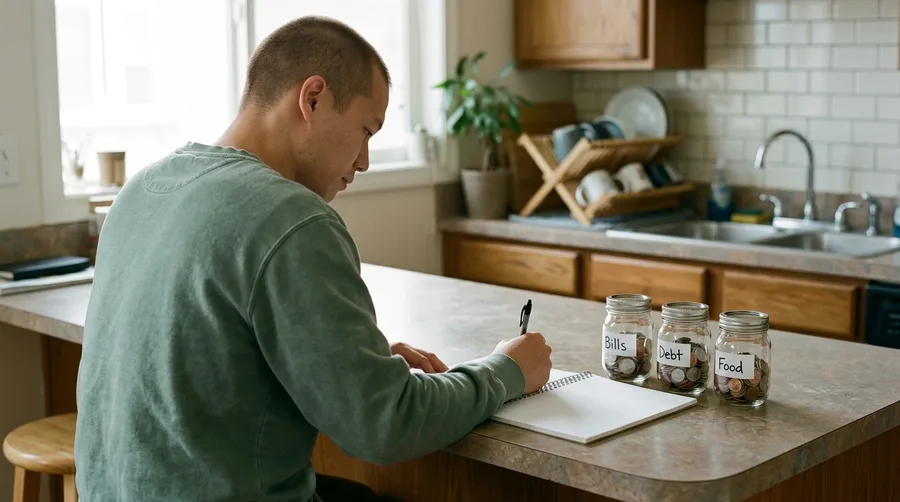
It is completely normal to feel exhausted trying to track every single bill and credit payment entirely in your head. You are not disorganized just because mental math starts failing you halfway through the month, and missing a due date does not make you a failure.
We use a simple repeatable structure called the three bucket method to separate your cash flow so you stop leaking money by accident. When your money has a specific job before the month even starts, the constant low-level panic finally quiets down.
Bucket one holds your fixed bills like rent, insurance, and utilities, ensuring housing and power are always protected. Bucket two handles your scheduled debt minimums automatically. Bucket three covers flexible spending like groceries and personal items, capping your discretionary cash at a hard limit.
I spent years mixing it all into one checking account and wondering why my credit card balance kept creeping upward without a clear reason.
Open your banking app today and spend twenty minutes setting up these three distinct sub-accounts or separate savings buckets. Move your next paycheck through them immediately, starting with a baseline of $100 just to test the flow.
Monthly Cash Flow Split
5. The Day I Closed My Oldest Card

I thought I was being financially disciplined when I called up my bank and cancelled the very first credit card I opened back in college.
It had a modest $2,000 limit and I literally had not used it in two years, so closing it felt like sweeping a dusty room to finally get things tidy.
Within thirty days, my FICO score dropped eighteen points because my overall available credit shrank overnight and my average account age plummeted.
That is the hidden trap of the scoring algorithm.
It does not care that you felt proud of yourself for tying up loose ends or clearing out your mental clutter.
It only reads the hard math of your credit utilization ratio and your historical timeline.
That single phone call taught me a hard lesson about how credit scoring rewards sheer longevity over tidiness every single time.
Keep the old plastic alive with a tiny recurring subscription on auto-pay instead of throwing it away.
⚠️ COMMON MISTAKE
Closing Your Oldest Account
Trimming your wallet by closing your oldest card instantly shortens your average credit history and spikes your utilization ratio.
6. The Annual Fee Trap

$95 a year disappears silently onto a statement for a rewards card you stopped swiping.
Most people assume cancelling the card fixes the leak, but shutting down an account can actually shorten your credit history and drop your score. The smarter move is calling the issuer to downgrade the plastic to a no-fee version, which keeps the account open and preserves your credit age.
This week, check your statements for any yearly charges, pick up the phone, and ask for a downgrade before the next billing cycle hits.
7. Is It Actually Worth Keeping?

Is it actually worth keeping that piece of plastic in your drawer, or should you just cut it up right now?
You have decided you are just bad with credit cards, so you want them all gone from your life completely.
Sound familiar?
That intense feeling of wanting a clean financial slate is completely natural when past debt or monthly clutter starts stressing you out beyond belief.
The truth is that closing an account feels like an emotional victory even when the underlying math suggests you should leave it alone.
New belief: your credit score is a utilitarian tool, not a report card on your personal morality or daily discipline.
Treating accounts as mathematical levers rather than emotional baggage changes how you manage them forever, shifting your focus from guilt to strategy.
This shift matters because the average credit card APR sits around 20% to 21% according to the Federal Reserve G.19 release, meaning the cost of carrying a balance is severe, but an open account with a $0 balance costs you nothing to hold.
When you close an account with a $5,000 limit, you instantly shrink your total available credit, which can spike your credit utilization ratio if you carry any other balances.
I learned this the hard way after closing my second-oldest card out of pure frustration, only to watch my score drop by 35 points the very next month because my available credit suddenly plummeted.
The trade-off is real: keeping a card open means you have to log in occasionally to prevent the issuer from closing it due to inactivity, which takes about two minutes of annoying administrative effort every six months.
This week: pull up your oldest open account, check that the balance is at zero, set a calendar reminder to make a tiny $5 purchase on it in four months, and leave the account open to protect your average credit age.
Credit Myth vs Reality
8. The Credit Utilization Trade-Off

Keep the zero-balance card open instead of cutting it up, even if you never use it again.
The mechanism behind this is credit utilization, which is simply the ratio of your current debt to your total available credit limit.
If you carry a $1,000 balance across $10,000 of total limits, your utilization is 10 percent.
Close a $5,000 card, and that same $1,000 balance suddenly sits against $5,000 of limit, pushing your utilization to 20 percent and dropping your score.
The trade-off is real: you get a tidier wallet and fewer accounts to monitor, but you pay for it with temporarily lower borrowing power.
This week: log into your portal, lock the old card digitally so it cannot be charged, and throw it in a drawer where you will forget about it.
9. Automate a Tiny Subscription

I completely panicked when my bank sent a warning letter threatening to shut down my oldest credit account because I had not used it in over a year.
Issuers close dormant cards to save on overhead, which secretly shrinks your overall credit history length and drops your score. The simple fix is routing a tiny three dollar monthly streaming subscription to that exact card instead of your main debit card.
Log in today and turn on autopay for the full statement balance so it clears every single month without requiring another thought from you.
10. The Autopilot Setup
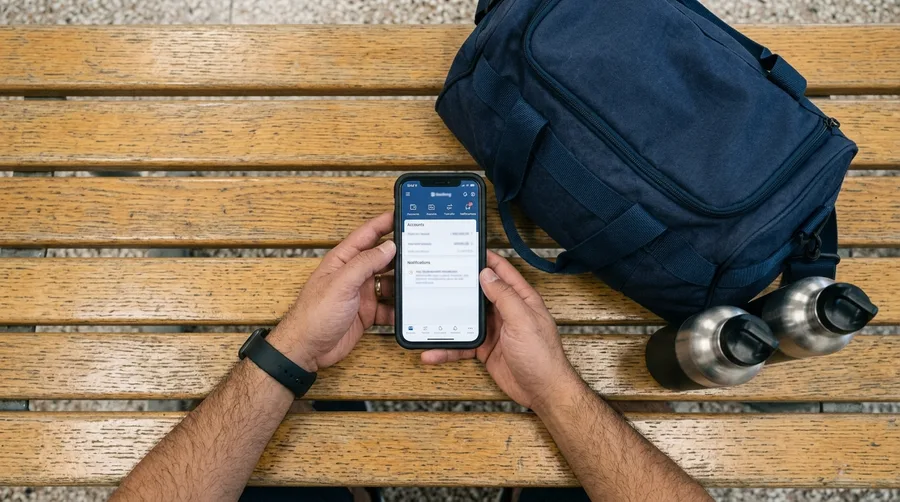
Take the willpower entirely out of managing your revolving accounts by setting up system-level alerts.
Most of us try to track spending through sheer daily discipline, checking banking apps every evening and hoping we catch mistakes before they hurt. That method always burns you out eventually because human attention drops off.
Configure your banking app to text you whenever a charge over $1 hits any of your open accounts.
This takes about four minutes in your phone and ensures rogue charges or forgotten subscriptions never surprise you on statement day.
I set these up three years ago after a gym membership kept billing me months after I cancelled, and catching it instantly saved me from another round of calls to customer service.
📈 Credit Health Roadmap
Audit Accounts
List every open credit card and check its age and annual fee.
Lock Not Close
Freeze unused physical cards in your banking app instead of cancelling.
Automate Pay
Attach a tiny monthly recurring bill to keep old accounts active.
Monitor Score
Check your credit score quarterly to watch your utilization stabilize.
11. The 30-Day Expiration Window

If you already closed that card last week and watched your score drop immediately, stop panicking and step away from the screen.
Issuers almost never agree to reopen a shut account, but that sudden penalty is rarely permanent. The negative impact usually begins to stabilize within roughly 30 days, or one full billing cycle, as your total credit utilization ratio adjusts to the lower available limit.
Take a breath, leave your remaining cards completely untouched for the next four weeks, and check your account dashboard next month instead of trying to undo what is already done.
12. When to Talk to a Professional

You might think asking for professional help means you have completely failed at managing your own money.
That belief keeps thousands of people guessing in isolation while interest charges quietly compound behind the scenes every single day.
If you are staring down thousands of dollars in high-interest debt spread across multiple closed and open accounts, general rules simply stop working.
Talk to a nonprofit credit counsellor or a fee-only financial planner who can look at your specific debt-to-income ratio without a single drop of judgment.
Your exact financial numbers are completely unique, and getting personalized guidance from an expert beats guessing every single time.
Closing vs Keeping Old Cards
Closing the Card
- Lowers total available credit limit
- Spikes credit utilization ratio
- Shortens average account age over time
- Triggers potential FICO score drops
Keeping It Open
- Preserves long credit history length
- Keeps overall utilization ratio low
- Costs nothing with zero annual fees
- Requires only a tiny automated charge
13. The Hidden Cost of Credit Age

Keep that decade-old piece of plastic active instead of cutting it up, even if it lives entirely forgotten in the back of a drawer.
Scoring models look closely at the average age of all your revolving accounts combined to gauge your overall financial stability.
When you shut down a ten-year-old account, you remove its heavy anchor from your history entirely.
Your remaining active cards might only be two years old, dragging your average age down instantly and making your profile look much younger to automated systems.
Lenders view a shorter history as higher risk, which can quietly bump up your interest rates down the road even if you pay your bills on time every month.
The trade-off here is deeply annoying: you have to look at a card you no longer use every time you log into your banking portal, enduring the mild clutter for the sake of your score.
Protecting that age is worth ignoring the temptation to tidy up your digital dashboard.
Let the old accounts sit quietly in the background while you focus your actual energy on your current financial goals.
14. Reviewing Your Debt-to-Income Ratio

Forty-three percent is the line where most traditional lenders start getting nervous about extending new credit.
That percentage is your debt-to-income ratio, which compares every scheduled monthly debt payment against your total gross monthly income before taxes come out.
If your ratio sits above that threshold, closing a card or worrying about credit card age misses the bigger picture because lenders see your income stretched too thin to absorb another monthly obligation safely.
When your numbers land in that zone, your best move is pausing credit score tweaks entirely and focusing strictly on paying down balances to free up monthly cash flow.
If running those personal numbers reveals a debt load that feels tangled or impossible to untangle alone, that is the exact moment to sit down with a nonprofit credit counsellor who can look at your actual income and map out a realistic path forward.
15. The Simple Three Bucket System

Build a repeatable system for your cash flow using three distinct categories.
Keep fixed bills, debt payments, and spending money in separate mental or actual buckets.
This structure protects your credit health effortlessly.
Frequently Asked Questions
Will closing a credit card hurt my score forever?
No. While closing an account can cause an immediate drop in your FICO score due to changes in credit utilization and average account age, the impact lessens over time as your remaining accounts age and your balances stay low.
How long do closed accounts stay on my credit report?
Closed accounts in good standing typically remain on your credit report for up to ten years from the date of closure, continuing to contribute to your credit history until they fall off.
Should I ever close a credit card?
Yes. If a card carries a high annual fee that outweighs the rewards, or if you lack the self-control to keep a zero balance, closing it or downgrading it to a no-fee card can make sense despite the temporary score dip.
How can I keep an unused credit card active without using it?
Set up a small recurring subscription like a streaming service or gym membership on the card, and turn on automatic full-payment drafting through your bank app so it clears every month.
What is a good credit utilization ratio to maintain?
Aim to keep your total credit utilization below 30 percent across all open revolving lines, though keeping it below 10 percent yields the best possible score impact.
Your Next Step
You do not need to clean out your wallet or shut down your financial history to feel like you are making progress. Leave your old accounts open, automate a tiny monthly charge to keep them alive, and let time work in your favor.
Take five minutes today to check your oldest account and make sure it stays right where it belongs.