

Two tire quotes sit open on your phone and the car needs rubber this week, so the $320 set is already halfway into your cart. The $560 set does not even get a second look.
That is the belief this whole article is built around: cheaper wins on the spot, and about the sticker, it is not wrong. But the sticker is the smallest number on the receipt. The $79 printer runs roughly $619 over two years against about $194 for the $179 tank model, and that $320 tire set can end up $175 more than the $560 set across 60,000 miles.
Every bargain below is a down payment. Ink, batteries, filters, boots replaced every eight months, repairs on a car whose history nobody wrote down – the bill just arrives later, in smaller pieces, so it never feels like the price.
Run a three-year total instead: sticker, plus refills, batteries, filters and likely repairs. Then you will know which of these six to upgrade first and which cheap version is still the right buy for light or short-term use.
Quick Tips Before You Start
Ask for the consumable price
Before you pay, find the cost of the cartridge, filter, belt or battery that goes in it.
Divide by years, not months
Take the total cost of ownership and divide by the years you will actually keep the thing.
Price one repair
Look up what the most common failure costs to fix. If it approaches the purchase price, walk.
Ask for service records
On anything used, documented maintenance is worth more than a lower asking price.
Count the replacement cycle
If the cheap version dies before the good one wears out, you buy it twice.
1. Bargain Tires Wear Out Before the Savings Do

Run the miles, not the invoice, and the answer usually surprises people.
A $320 set of all-seasons is rated around 35,000 miles. The $560 set goes about 60,000. That $240 you pocket at the counter is real money on the day, and for some drivers it stays saved.
The catch is what happens at mile 50,000. The good set is still bolted on, worn but legal, with roughly 10,000 miles left. The cheap set came off 15,000 miles ago and got replaced. Nobody budgets for that second set because in their head they already paid for tires.
Do the whole distance. At 60,000 miles the bargain path means two $320 sets and a $95 alignment you didn't plan on, so $735 leaves your account instead of $560. What felt like saving $240 turned into losing $175.
Here's the mechanism in one line: the cheap tire isn't dramatically worse mile for mile. It just runs out before the better one does, and the replacement lands a year or two after the purchase, when the original saving has already been spent somewhere else.
Measured as cost per month of tread, the $560 set wins for anyone keeping the car past 35,000 miles. Below that, the math flips.
So the deciding number isn't on either quote. It's how many miles you expect to drive before you sell or trade the car. A driver who trades at 30,000 never buys the second set, never needs the extra alignment, and keeps the full $240. If leasing or trading early is your plan, the $320 set is the right buy and there's nothing to feel bad about.
If the two numbers are close and it changes whether you keep the car another two years, that's worth ten minutes with a mechanic or a fee-only financial planner before you decide. Two quotes and a mileage estimate, and this one is settled.
💡 Tip: Ask for the treadwear warranty number on both tires. A warranty that covers 60,000 miles tells you what the manufacturer expects the tread to do.
| Purchase | Upfront Price | Main Hidden Cost | Two- to Three-Year Cost Comparison |
|---|---|---|---|
| All-season tires | $320 set | Wears out around 35,000 miles; extra alignment | $735 for two cheap sets vs $560 for one set that lasts 60,000 miles |
| Printer | $79 inkjet | $45 cartridges good for 200 pages | About $619 in ink and hardware vs about $194 for a $179 tank model |
| Cordless drill | $39 with one battery | Replacement battery $49; motor fails around 14 months | $88 for a tool that quits past a year vs $129 kit lasting four years |
| Fast-fashion boots | $35 pair | Replaced every 8 months | About $158 over three years vs $120 for a resolable pair |
| Vacuum | $79 model | $30 filter every 6 months, $12 belt twice a year | About $205 for 18 months vs $249 for five years |
| Used car | $5,500 car | $2,400 in first-year repairs | About $9,000 over two years vs about $8,200 for a $7,500 car with records |
2. Cheap Printer Ink Costs More per Page
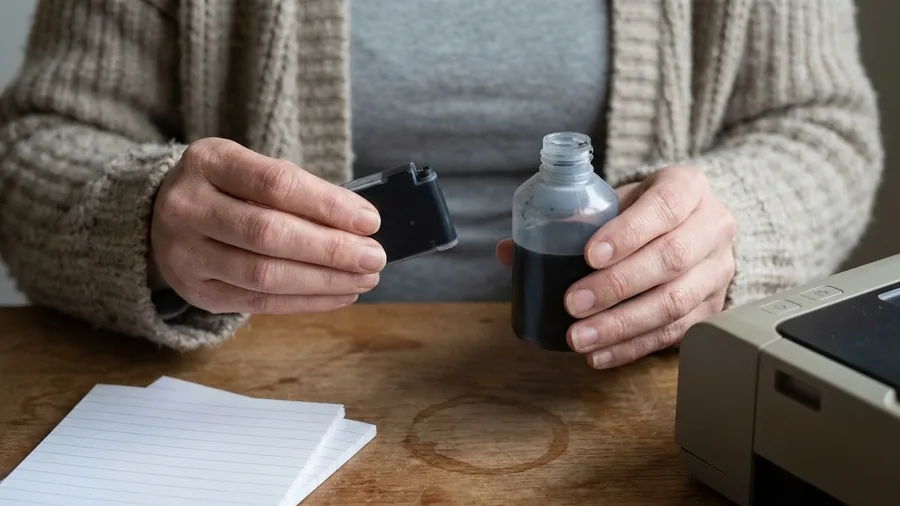
There is a particular sting in watching a printer you bought for $79 eat $45 every time it blinks at you, especially when the warning light shows up two weeks after you printed a school form.
I ran the numbers on mine once out of frustration. At 100 pages a month, a cartridge rated for about 200 pages is gone roughly every two months. Six a year, $45 each, and that's $540 in ink across two years, tucked into a machine that fit under my arm.
The tank model I eventually bought cost $179 and uses a $15 bottle rated around 6,000 pages. Two years at my pace is about 2,400 pages, so the bottle that came in the box carried the whole stretch. Two-year totals: about $619 for the cheap route against about $194 for the tank.
That's a $425 difference on a $100 price gap, and here's the part that actually stings: every bit of it was knowable in the store aisle, before either box was opened. Ink is the product. The printer is packaging that happens to cost money.
If you print fewer than 10 pages a month, the math forgives you. Two years is about 240 pages, one cartridge or two, and the $79 machine plus a spare lands at or under the tank model's price. Buy cheap, print rarely, skip the guilt.
💡 PRO TIP
Screenshot the consumable price
Before you pay for anything with a filter, cartridge, belt or battery, find that part's price and lifespan and photograph it. It is the single number that flips most of these decisions.
3. Discount Drill Batteries Cost More Than the Tool

$49 for a replacement battery wouldn't be worth a second look, except for one detail: the drill it goes into cost $39. The spare part runs ten dollars more than the whole tool.
That's the quiet trap in discount power tools. The battery is an accessory with its own price, arriving mid-project when the old one stops holding a charge, and it's priced as if it were the product. Put one in and you've spent $88 on a drill that still only has a single battery. Buy a second and you're at $137, past the price of the better kit.
The motor in these things tends to quit around 14 months, which is roughly the lifespan of the battery that shipped with it. So a replacement battery can easily outlive the tool it was bought for, which is the least useful kind of durability.
A $129 kit with two batteries runs about four years. That's $129 with no battery purchase in between, against $88 for a tool that gives up just past its first birthday. The gap is smaller than the ink one, but the short life is what makes it annoying.
The small-start version: if you need a drill for one weekend of shelves and a deck board, buy the $39 one and accept the risk. About $90 spent, one job done. Just don't pretend it's a long-term tool, and don't buy it the battery until the day the job actually needs two.
⚠️ COMMON MISTAKE
The cheapest box is rarely the whole purchase
Budget for the consumable before you budget for the machine. Cartridges, filters, belts, batteries and blades are where the low sticker price gets paid back — often within a year.
4. Fast-Fashion Boots Get Replaced Twice as Often

If you have ever watched a zipper give out on a pair of boots you bought in October, you already know the worry: that the cheap pair is a false economy and you should have known better. You should not have. The honest version of this one is smaller than the printer math, and the three-year check is how you see that for yourself.
A $35 pair worn out every eight months is about four and a half pairs across three years, roughly $158. A $120 resolable pair runs the whole three years and then gets a new sole instead of a bin. That is about $4.40 a month against about $3.30, so the cheap route costs maybe $38 more and sends 4.5 pairs through the closet on the way. At month six, look at the heel and the sole seam: if the sole is detaching or the tread is smooth under your thumb, you know your replacement rate and can multiply it out.
Which is the point. Some of these bargains are only modestly worse, and the check tells you which are worth the argument. If you buy boots for one season's look and you are done with them by spring, $35 is the right call and the $120 pair is the waste.
5. A $79 Vacuum Carries a Yearly Filter Bill

Some cheap things wear out on a schedule you can see coming – a seam splits, a sole goes thin – and the only cost is the next pair. A vacuum is different. A $79 model bills you every six months to keep running, and then it quits anyway. Call it $84 a year in upkeep before anything actually breaks: $30 for a filter twice over and $12 for a belt twice over. You pay that bill on a machine you are only renting from the motor that is slowly dying.
Eighteen months in, the motor gives up. By that point the machine has eaten about $126 in filters and belts and returned none of it. Run the whole thing to failure and you are out roughly $205 for a year and a half of cleaning, against $249 for a machine with a washable filter that runs about five years – no filter line, no belts – which is about three of the cheap ones over the same span. The earlier you swap, the fewer of those $84 years you pay for.
The exception is real: a renter with mostly bare floors and a couple of small rooms never pushes the motor hard, doesn't need a five-year machine, and can absorb $84 a year against a short lease.
🧮 The Three-Year Cost Check, In Order
Write down the sticker price
Start with the number on the tag and nothing else.
Find the consumable
Look up the price and lifespan of the cartridge, filter, belt, battery or blade it needs.
Multiply the cycle
Divide three years by the replacement interval to see how many refills or units you will actually buy.
Add one likely repair
Price the most common failure for that model and assume it happens once.
Divide by the years you will keep it
Short-term owners get a smaller total, and that is a legitimate number, not a cop-out.
Buy the option with the lower three-year number for the years you will actually own it.
6. $5,500 Used Car Can Hide $2,400 in Repairs

Ask for the service records before you ask for a test drive. Everything else on this list has a cost you can read off a shelf – cartridges, batteries, filters, soles. A used car's hidden cost lives in the maintenance the last owner skipped, and that only shows up after the title changes hands.
Picture two cars on the same lot that both start and idle clean. A $5,500 one looks the cheaper deal until the first year costs $2,400 in repairs and the second costs $1,100 – $3,500 in work on a car that looked $2,000 cheaper on the sticker. A $7,500 one with the maintenance history in a folder needs about $300 the first year and $400 the second, $700 across two years.
Add it up. Roughly $9,000 for the cheap car against about $8,200 for the better one, which means $2,000 more upfront buys $2,800 less in repairs and leaves you about $800 ahead. Those repairs are not bad luck. They are the work the previous owner put off, landing on your card.
The correction is a question you can ask before paying: which car can show me the records, not which one is cheapest today. And the answer is not the same for everyone. If you turn wrenches yourself and can source parts, most of that $3,500 turns into parts cost – the gap is real but a lot of it is labor, and labor is what a mechanic does not pay for.
Second question, equally plain: can I float the extra on the lot?
When the cheap version is fine, and when it is not
Cheap still wins
- You will sell, move or replace it inside the cheap version's lifespan
- Your use is light — under 10 printed pages a month, one drill project a year
- The consumable is cheap and you checked the price before buying
- It is short-term or temporary by design, like a lease-length vacuum
Pay more upfront
- You will own it past the cheap model's failure point
- The consumable costs more than the item itself, as with $49 batteries
- Replacement means repeating the whole purchase, not swapping one part
- The cheaper unit hides deferred maintenance you cannot inspect
Frequently Asked Questions
Is it always worth paying more upfront?
No. The cheap version wins whenever you will own it for less time than the cheap version lasts — a car you sell at 30,000 miles, a printer used ten pages a month, a vacuum for a one-year lease. Run the three-year number on the years you will actually keep it, then decide.
How do I find the running cost before I buy?
Look up the model's replacement part — cartridge yield in pages, filter interval, battery price — on the product page or the box. Multiply by how many you will need over three years, add one likely repair, and compare that total against the better model's total. The numbers are almost always published; you just have to look before you pay.
Should I pay off debt or save first if money is tight?
Do both, in this order: cover the small emergencies first with a starter fund of around $500, keep paying every minimum on time, then send anything extra at the highest interest rate. The exact split depends on your balances and rates, so run it against your own budget or take it to a nonprofit credit counselor — the arithmetic matters more than the slogan.
Is a used car with high miles always a bad buy?
Not at all. A well-documented high-mileage car often beats a low-mileage one with no records, because the expensive work has already been done and paid for. Ask for receipts on the timing belt, brakes and fluid services, and pay for a pre-purchase inspection. No records means price the car as if the maintenance is due.
Does this mean I should never buy anything cheap?
It means check the cost that follows the price. Some cheap buys are genuinely fine — fast-fashion boots for one season, a drill for a single project, a printer for ten pages a month. The check just tells you which of those bargains will still be a bargain in three years.
What if I cannot afford the better version right now?
Then wait, borrow, or buy used at the better tier instead of new at the cheap tier. A $129 drill kit bought in three months beats a $39 drill plus a $49 battery this week. In the meantime, put the consumable cost into your monthly budget so the refill is a planned line item, not a surprise.
The tag is the first number, not the last one
The check works on any box or key tag. Sticker price, plus three years of refills, batteries, filters and belts, plus one likely repair. Set that total beside the durable option's three-year total, and the gap between them is what the bargain actually cost you.
Upgrade the printer first. At 100 pages a month the $100 price gap turns into about $425 over two years – the largest and most certain gap here, and one you can see before you pay rather than find out later. The used car is the second stretch if the money exists, since $2,000 more on the lot bought $2,800 less in repairs. Every other cheap version stays correct for the right buyer: $320 tires if you trade before 35,000 miles, the $79 inkjet under 10 pages a month, the $39 drill for one weekend job, the $35 boots for one season, the $79 vacuum for a short bare-floor lease.
So back to those two tire quotes. The sticker is a down payment, not the price. The rest leaves later, in cartridges and batteries and filters and boots and repairs, and the three-year total is the only number that was ever true. Run it on the next thing you reach for.
Run the check on the next thing you buy
Before you pay, find the price and lifespan of its consumable and add one likely repair. That total, divided by the years you will keep it, is the real price.