

Retirement plans built on the assumption that spending falls to 70 or 80 percent of pre-retirement income have a specific failure mode: they run out of money while the person is still very much alive and still very much spending.
That assumption is not invented – it comes from real patterns. The mortgage may be paid off. The commute disappears. The work wardrobe stops. Payroll taxes drop. For those line items, the math is right. For at least ten specific cost categories, it moves in exactly the wrong direction – some gradually over years, some suddenly on a single Tuesday when an HVAC system fails or a health diagnosis changes everything.
Each of those ten categories has a real cost range, a reason it rises, and a number you can put in a budget today. That is the difference between a retirement projection and a retirement plan.
Work through what follows line by line. Mark the ones that look underestimated in your current projection, and bring those specific gaps – not a general worry, but a list with dollar ranges attached – to your financial planner.
Quick Tips Before You Start
Pull Your Current Projection
Open your retirement budget estimate before reading — you will want to mark which lines look wrong as you go.
Use Ranges, Not Single Figures
Every cost category here comes with a low and a high. Budget toward the middle of the range, not the bottom.
Check Medicare.gov First
Current Medicare premiums and coverage gaps change annually — always verify before building a healthcare budget line.
Plan by Decade
Spending shape changes: health costs front-load in the transition years, travel peaks in the first decade, and care costs accelerate later.
Count Zero Lines Too
A missing line is not a zero — it is an underestimate. Long-term care and home modifications are the two most common zeros in retirement budgets.
Health
Healthcare is the biggest financial unknown in retirement, and the one where optimistic assumptions do the most damage.
Employer coverage quietly subsidizes a large share of working-year medical costs — premiums, network rates, and the administrative convenience of payroll deductions all end on the same day the job does. The entries below cover what that transition actually costs, and what comes after it.
1. Out-of-Pocket Medical Costs Jump at Retirement

Sixty-two is when a lot of people first do the math on what health coverage actually costs without an employer paying the larger share – and the number is a shock.
Think of employer health benefits as a compensation item that gets quietly cancelled on your last day of work. The premium your employer absorbed, the negotiated rates your network provided, the automatic payroll deduction that made it invisible – all of it stops simultaneously. What replaces it, at least until Medicare begins at 65, is a marketplace or COBRA plan priced at the full actuarial rate for your age. For someone in their early sixties, that can mean $800 to $1,500 a month in premiums alone, making the pre-Medicare window one of the most expensive healthcare years many retirees will ever face.
Medicare changes the math but does not solve it. Part A handles hospital stays; Part B handles physician and outpatient services. Neither touches dental, vision, or hearing – three categories that tend to generate real costs precisely as age increases. Medigap or Medicare Advantage plans fill portions of those gaps, but they come with their own monthly premiums, adding a budget line that simply did not exist during working years. Current premium figures are at Medicare.gov and are worth checking annually, because they shift.
The honest trade-off is this: covering these gaps costs real money every month, and there is no version of retirement healthcare that does not. The alternative – carrying minimal supplemental coverage to hold premiums down – can mean large out-of-pocket exposure when a procedure or chronic condition arrives in the late seventies, which is typically when costs accelerate again regardless of coverage level.
💡 Tip: COBRA coverage can extend employer insurance for up to 18 months after leaving a job, but you pay the full premium — often $600–$1,500 per month for a single person. Price it against marketplace alternatives before assuming COBRA is the cheapest bridge.
2. Long-Term Care Is the Bill Most Plans Skip

The most clarifying conversation about long-term care happens when someone watches a family member need it – and realizes the bill landed with almost no warning and no plan to cover it. That experience is common enough that it functions as a system: pay nothing toward the risk for decades, then absorb a catastrophic cost in a compressed window.
Medicare covers skilled nursing care only for a limited period following a qualifying hospital stay. What it does not cover is indefinite custodial care – the kind of help someone needs when they can no longer manage daily activities on their own. That is precisely the care most people actually require. A home health aide runs roughly $25,000 to $60,000 per year depending on hours and region; a semi-private nursing facility room runs roughly $80,000 to $110,000 per year. Two or three years of either figure can dismantle a retirement portfolio that looked solid.
Most retirement budgets contain no line for either number.
A better structure treats long-term care as its own budget category with three components: an insurance vehicle, a reserve, and a trigger plan. Long-term care insurance purchased in one's fifties typically costs less and clears underwriting more easily than the same policy bought later, when chronic conditions may block eligibility entirely. Hybrid life-insurance products with long-term care riders offer a second path. The reserve fills the gap between what insurance covers and what care actually costs. The trigger plan is simply a written decision in advance about which care option – home aide, assisted living, facility – matches the household's preferences and finances, so the choice is not made under pressure. A licensed insurance agent or fee-only financial planner can produce current policy quotes; no single number is right without a personalized look at the household's health history and account balances.
The Care Cost Gap Most Plans Leave Open
Illustrative annual ranges — not guarantees; actual costs vary by region, hours, and care level
Home
Owning a paid-off home is a genuine retirement asset — but it is also a physical object that ages alongside its occupants, and the timing of its biggest repair bills is not random.
The three entries below cover the costs that cluster in the same decade most people retire: higher daily utility use, major system replacements, and the modifications a home needs when the people living in it need more from it.
3. Being Home All Day Raises Utility Bills

Pull up last year's utility bills and add $50 to $150 per month. That is the adjustment range for a household where both people are now home all day instead of out for 8 to 10 hours – and it requires no behavior change at all, just occupancy.
Heating and cooling absorb the biggest share, because those systems now run through the hours that used to be quiet. Electricity, water, and broadband all follow, since streaming, video calls, and online activity fill the time that commuting and office hours once occupied. The annual total – $600 to $1,800 – is not a budget-breaker on its own, but it is real money that most retirement projections quietly leave out. A smart thermostat and any senior discount your utility company offers are worth setting up and then leaving alone; they will trim the number without requiring ongoing attention. They will not bring it back to what it was when the house sat empty half the day.
4. Major Home Repairs Cluster in Your Sixties
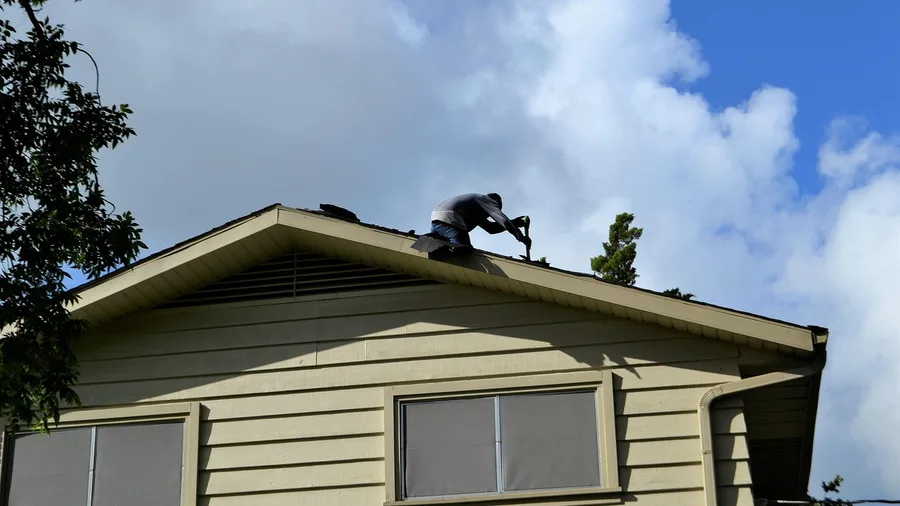
Paying off the mortgage feels like the finish line on housing costs. It is not.
The house itself has been running a quiet countdown. A roof installed when the owners were forty-five has a twenty-to-twenty-five-year lifespan. The furnace that heated the family through school years and first jobs is aging out on roughly the same schedule. So is the water heater, the central air unit, the kitchen appliances. None of this is misfortune – it is simply the math of when things wear out, and it tends to land squarely in a person's sixties and seventies – often arriving alongside a rising property tax bill that most homeowners never think to appeal.
The cost when two of those systems fail in the same year is not small. A roof runs $8,000 to $20,000. An HVAC replacement runs $5,000 to $12,000. A year that demands both is a $13,000 to $32,000 hit that the retirement income plan has to absorb – and unlike a working homeowner who might nurse a struggling furnace through one more winter, a retiree who is home all day in January cannot treat heat as optional.
The answer is a dedicated repair reserve: a separate line item, funded each year, sitting apart from general savings so a single bad winter does not reorganize the entire retirement budget. Aim to absorb a $10,000 to $15,000 event without touching the core income plan. Price it in before retirement begins, not after the first estimate arrives.
💡 Tip: A common rule of thumb: set aside 1–2% of your home's current value per year for maintenance and repairs. On a $400,000 home, that is $4,000–$8,000 annually — a real budget line, not an emergency fund.
⚠️ COMMON MISTAKE
Treating Home Equity as a Repair Fund
Many retirees plan to tap home equity if a big repair bill arrives. That works once — but it converts a paid-off asset into a loan, and a second large repair a few years later leaves fewer options. A dedicated annual reserve avoids this trap entirely.
5. Aging-in-Place Modifications Cost More Than Expected
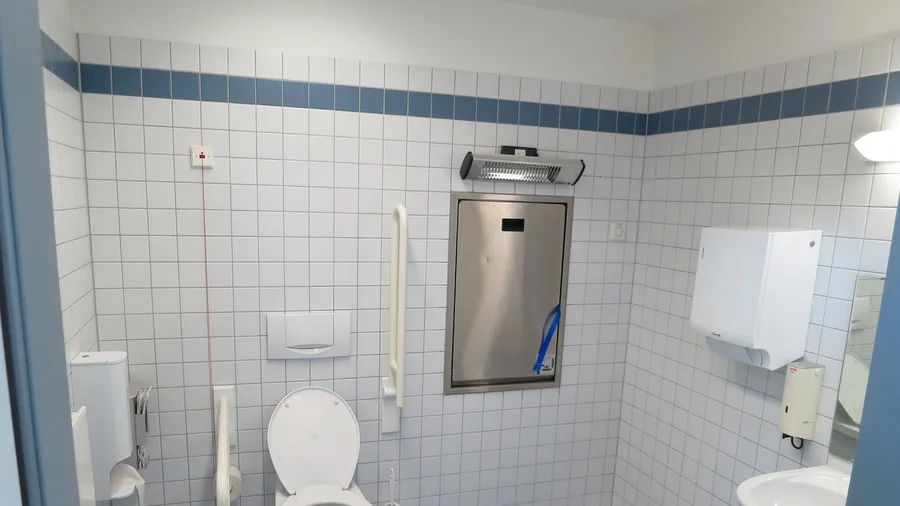
Most people sense these costs are coming – they just assume they have more time than they do.
The modifications that make a home genuinely safe to age in are not optional luxuries. They are the difference between staying in the house and leaving it. Grab bars in a shower or by a toilet run $200 to $500 installed – modest on their own. A walk-in shower conversion, which removes the step-over threshold that becomes a real hazard with balance changes, runs $3,000 to $10,000. A stair lift, if the bedroom is on a second floor, runs another $3,000 to $8,000. These costs tend to arrive together, in the early to mid seventies, and they appear as zero on almost every retirement budget written by someone who is still sixty.
a near-miss in the bathroom – no injury, just a grab for the wall that found nothing – and suddenly a conversation about grab bars becomes a contractor estimate for the shower, the hall bathroom, and the back steps, all at once. The total came to just over $6,500. Not catastrophic, but it was money that had not been planned for.
Medicare does not cover a single dollar of this. Neither does standard health insurance.
That is the part that catches people off guard – there is no reimbursement path for most retirees, no claim to file, no flex account that covers a stair lift. It is a cash expense, full stop.
The practical advantage of planning these modifications before something forces your hand is real on two fronts. Scheduled work, with time to get multiple bids and choose materials, consistently costs less than rushed work ordered on a Friday after a fall. And decisions made without pain or fear driving them tend to be better decisions – you choose what the house actually needs rather than whatever the first contractor recommends under pressure.
Pricing out the modifications your home will likely need – even a rough estimate, room by room – and putting that number into the budget now is the move. It does not have to be all at once. A grab bar installation this year, a shower conversion penciled in for two years out, is a plan. A zero on the budget line is not.
Aging-in-Place Modifications — What to Budget, Room by Room
🚿 Bathroom (full package: bars + shower conversion)
$3,200–$10,500
🪜 Staircase (stair lift + landing safety rail)
$3,500–$9,000
🚪 Entry and hallways (grab bars, threshold ramps)
$400–$1,500
🏠 Realistic all-at-once total (two or three areas)
$5,000–$15,000
🏥 Flex account or HSA reimbursable?
Rarely — verify before assuming
How to phase it
Budget grab bars this year (~$500), pencil in the shower conversion within two years, and price the stair lift only if the bedroom is upstairs — that sequence spreads $8,000–$15,000 across several budget cycles instead of landing it all at once.
Time
Time is the retirement dividend everyone looks forward to — and it comes with a price tag that most projections underestimate.
The entries below cover travel, dining, and hobbies: three categories where the shift from a working schedule to a fully open one changes the math more than most people expect when they are still building the plan.
6. Travel Spending Rises When Every Week Is Free

Retirement is when travel finally becomes possible – and that is exactly why the budget number is bigger than most people expect.
During working years, the constraint was never desire. It was time. Two or three weeks of paid leave meant two trips at most, and one of those was usually visiting family. Retirement removes that ceiling entirely. The first decade or so – when energy and health are both strong – is when two, three, even four trips a year stops being a fantasy and becomes a straightforward Tuesday decision. That shift in frequency is what changes the math. A couple who budgets for travel as an occasional treat will spend like a couple who travels regularly, because that is what they will actually do.
A realistic annual figure for an active couple taking two to four trips is $5,000 to $15,000. Build in travel insurance too – premiums rise with age in a way that younger travelers never notice, and skipping it on a $6,000 trip at seventy is a different calculation than skipping it at forty.
If that range feels large, start the travel line in your budget at $4,000 and track what you actually spend the first year. Even a conservative starting number, adjusted as real spending comes in, is more useful than the zero that currently sits there.
Travel does ease off in later retirement. But the healthcare costs that tend to rise in that same period typically absorb whatever room opens up in the budget – the spending does not disappear, it moves to a different category.
7. Restaurant Spending Fills the Gap Work Used to Fill

The assumption going in is usually something like: work lunches are expensive, and those disappear – so food spending should drop. What actually happens is that the structure disappears, and spending expands to fill the space it left behind.
Coffee shop mornings, weekday lunches with friends, social dinners that now happen on Tuesdays because Tuesdays are open – these are not indulgences. They are doing the work that a job used to do for free: providing routine, company, and a reason to leave the house. Active retiree households commonly spend $400 to $900 per month on restaurants and cafes, and most retirement budgets have a number that is half that.
The practical fix is simply honest accounting – the kind of cash flow audit that puts the real expected number in the budget, not the number that sounds responsible. A plan that assumes you will spend $300 a month and you spend $650 will produce a small, recurring shortfall every single month, compounding quietly for years.
💡 PRO TIP
Price the Full-Retirement Version of Each Hobby
When building a leisure budget, price each planned hobby at the frequency you will actually do it in retirement — four or five times a week, not once or twice a month. The gap between those two numbers is where most leisure budgets fall apart in year two.
8. Hobbies Scale to Fill 40 Hours a Week

The hobby itself does not change. The time available to do it does, and that is what changes the cost. A golfer who played twice a month during working years – maybe 24 rounds a year – now has the schedule to play three times a week. That is the same person with the same hobby running up a club membership of $2,000 to $8,000 per year before a single green fee, a replaced club, or a weekend trip to another course enters the picture.
The same dynamic shows up at smaller scales. Art or cooking classes that ran $500 to $2,500 per year at weekend frequency become a near-weekly commitment at retirement frequency. Gardening supplies run $500 to $1,500 per year when the garden goes from a weekend project to a daily one. Neither number is alarming on its own.
The compounding problem is that a single hobby rarely fills 40 hours a week, so retirees typically add a second or third pursuit. Two or three hobbies running at full retirement frequency can easily total $5,000 to $12,000 per year – a number that surprises people who priced each hobby individually at its old, part-time rate.
The correction is specific: price out the full active version of each planned hobby before retirement begins. What does it cost to do it four or five times a week? That is the honest budget line – not what it cost on a Saturday.
The Time-Cost of Retirement Leisure
Money
The final two expenses are not about what retirement costs you to live — they are about what it costs you to give, and what the government requires you to withdraw.
Both are easy to underestimate because they depend on circumstances that do not exist yet when the plan is built: grandchildren who have not arrived, and account balances whose mandatory withdrawal rules change with tax law. Both require an explicit budget line.
9. Gifts and Family Support Grow With Every Grandchild

$2,000 to $6,000 per year is where annual gift and family-support spending commonly lands once grandchildren arrive – and that number grows with every addition to the family.
That range also tends to undercount the real figure. It typically excludes contributions to a 529 college savings account, flights and hotel stays to be present for birthdays and milestones, and the one-off financial help that goes to adult children navigating job changes, housing costs, or medical bills. The desire to give grows as the family grows, and it rarely moderates on its own. A plan that leaves this line blank will be wrong in the same direction, by a predictable amount, every year.
Setting an explicit annual giving number early – before the first grandchild arrives, if timing allows – turns generosity from a recurring budget surprise into a deliberate line item. Pick a number, put it in the plan, and adjust it as family size changes. That is the whole move.
Gifts and Giving: Planned vs. Unplanned
With a Giving Budget
- 529 contributions capped annually before the account is opened, not after tuition letters arrive
- One-off family help has a per-request ceiling — say, $1,000 — so a single ask does not reshape the year
- Milestone travel (births, graduations) is a named sub-line, not a surprise withdrawal
- Giving line grows deliberately — add $500 per grandchild, review each January
- Total giving as a share of annual income stays visible and bounded
Without a Giving Budget
- Each grandchild adds roughly $500–$1,500 in new annual spending with no corresponding plan adjustment
- 529 deposits are sized by guilt, not by what the retirement plan can absorb
- Milestone travel gets charged to savings because there was no other bucket ready
- A single adult-child emergency — job loss, medical bill — can run $2,000–$5,000 with no ceiling in place
- Giving total is unknown until the year-end statement, at which point nothing can be recovered
10. Required Minimum Distributions Can Keep Your Tax Rate High

Taxes feel like a cost that should shrink in retirement – no more paycheck, lower income, lower bracket. That assumption holds for some people. For others, especially those who spent decades building up a traditional 401(k) or IRA, the IRS has a different plan.
Once you reach a certain age, those accounts stop being optional. The government requires you to pull a calculated amount out every single year, whether you need the cash or not. The triggering age and the exact formula have both changed in recent years and may change again – IRS.gov carries the current rules and is worth checking before you model anything.
The problem is what those withdrawals do to the rest of your income. Stack a required distribution on top of Social Security, a pension, and any investment dividends, and your combined income for the year can land in a bracket that looks a lot like your working years – sometimes higher. The lower-tax retirement you planned for simply does not show up.
Social Security adds a particular wrinkle. Once combined income crosses certain thresholds, up to 85 percent of your benefit becomes taxable. The current thresholds are posted at SSA.gov and belong in any pre-retirement income model – they are not large numbers, and a moderate required distribution can push a household past them without anyone noticing until the tax return arrives.
This is a cost category that rewards checking in before it starts, not after the first large withdrawal has already set a pattern. The years between stopping work and the date distributions become mandatory are often the best window to act – income tends to be lower, and converting some traditional account funds to a Roth during that window can reduce the size of future required withdrawals. A fee-only CPA or tax professional can model the trade-off against your specific balances; the math depends on numbers only you have.
The annual check-in here has three things worth looking at: the projected required withdrawal amount for the coming year, whether that amount combined with your other income sources crosses the Social Security taxation threshold, and whether any remaining window for Roth conversions still makes sense given current versus expected future rates. None of this is complicated once you know the numbers. It just has to be looked at on purpose – retirement tax bills do not send a warning before they arrive.
💡 Tip: A qualified charitable distribution (QCD) allows retirees 70.5 or older to donate directly from an IRA to a qualifying charity — the amount counts toward the RMD but is excluded from taxable income. Check IRS.gov for current annual limits.
📅 How Retirement Spending Shifts by Decade
Transition Year (Pre-65)
Bridge health coverage — COBRA or marketplace — is often the most expensive single coverage year; build it as a one-time spike in the budget.
Early Retirement (65–70)
Travel and leisure peak; Medicare begins but Medigap or Advantage premiums add a new monthly line; home repair reserves need to be active.
Mid-Retirement (70–75)
RMDs begin, potentially raising taxable income; aging-in-place modifications commonly start; gift and family support spending grows with grandchildren.
Later Retirement (75–80)
Travel slows but healthcare costs accelerate; specialist visits, prescriptions, and procedure frequency increase meaningfully.
Advanced Retirement (80+)
Long-term care costs become the dominant variable; home health or facility care can absorb $25,000–$110,000 per year depending on need level.
Frequently Asked Questions
Will my overall spending really be higher in retirement than during my working years?
Not necessarily in total — but in more categories than most people expect. Some working costs do fall: commuting, work clothes, some meals. What replaces them is healthcare, more time at home, more leisure activity, and the early-retirement travel and dining that often catch people off guard. A realistic plan models both sides of that shift rather than assuming the falling costs dominate.
Won't Medicare cover most of my medical costs once I turn 65?
Medicare covers a significant share of inpatient and outpatient care, but it has meaningful gaps: no routine dental, vision, or hearing coverage, plus annual deductibles and coinsurance that add up. A Medigap or Medicare Advantage plan fills some of those gaps but adds its own monthly premium. The full picture — current premium costs and coverage details — is at Medicare.gov, and the numbers adjust each year.
Doesn't Medicare pay for a nursing home if I need one long-term?
Medicare covers skilled nursing care for a limited window after a qualifying hospital stay. It does not pay for ongoing custodial care — the help with daily activities that most people actually need long-term. That cost is out-of-pocket without a separate long-term care insurance policy or a hybrid life-insurance product that includes long-term care benefits. A fee-only financial planner or licensed insurance agent can help you evaluate options while they are still available to you medically.
Is it too late to buy long-term care insurance in my sixties?
It is not too late, but it is more expensive and more uncertain than buying in your fifties — premiums are higher, and chronic conditions that develop with age can limit or eliminate eligibility. If you are in your early-to-mid sixties and in reasonable health, get quotes now rather than waiting. If standalone policies are out of reach or unavailable, ask about hybrid life-insurance products with long-term care riders, which have different underwriting and a death benefit if the care benefit is never used.
Can Roth conversions actually reduce my tax bill in retirement?
For some retirees, converting traditional IRA or 401(k) money to Roth in the years before RMDs begin reduces future mandatory withdrawals and the taxable income that comes with them. Whether it makes sense for your situation depends on your current tax bracket, your projected RMD amounts, and your state tax rules — this is one of the cases where a fee-only CPA or tax planner earns their fee. The strategy works by paying tax now at a known rate rather than later at an unknown one.
Should I plan for travel costs to decline in retirement?
Plan for high travel costs in the first 10 to 15 years of active retirement, then model a decline in the later years. The practical issue is that healthcare costs tend to rise in the same years that travel costs fall, so the total spending figure does not drop as much as the travel line alone would suggest. Budget the early years generously for leisure, and the later years generously for care — not an average of both.
Repricing Your Plan Against the Ten Real Lines
Pull out your current retirement budget projection and run it against these ten categories one at a time. Mark each line as accurately budgeted, underestimated, or set at zero. The zeros are the most important marks on the page – a zero is not a plan to spend nothing there, it is a plan to be surprised. Long-term care and aging-in-place modifications are the two lines most often sitting at zero. Home repair reserves and the real cost of active leisure are the two most often underestimated.
The assumption that spending falls in retirement was built on something true – the commute ends, the work clothes stop, the payroll deductions disappear. But it stopped there, and every category in this list is what it missed.
A plan priced against the real numbers is not pessimistic. It is simply the one that does not run out of money before the things that matter most do. Start with the line that looks most wrong in your current projection, put a range on it, and go from there.
Find the Gaps in Your Current Projection
Scroll back through the ten categories and note which ones are missing from your current plan. That short list is the most productive thing you can bring to your next planning conversation.