

You tell yourself you don't buy anything extravagant. Then payday comes, the account is still thin, and nothing you bought explains it. The $12 bank fee, the $3.50 water, the $32 delivery order are all ordinary. That's the problem.
The leak isn't what you buy. It's which version you buy. Financing, fees, single servings, rent-to-own terms set by someone else: the same item has two prices.
Here are nine routine purchases priced against their cheaper equivalents. One cut frees the most money this month, and a few of these spends are worth keeping. Find your line, rank the nine, and decide before the next payday.
Quick Tips Before You Start
Write down every recurring charge
List each subscription, fee, and payment with its annual total next to it. The yearly number is usually the one that makes you act.
Look for the total cost, not the monthly
A $310 monthly payment for 30 months is $11,200. Always ask for the full amount before you sign.
Check your bank's fee schedule
A $12 monthly fee and $35 overdraft charges add up fast. A no-fee credit union account costs nothing to hold.
Keep a receipt for one week
Every small purchase, from bottled water to scratch-offs. The total will surprise you – and it's the number you can cut.
Pick one cut, not all nine
Choose the item with the biggest annual cost that you can actually change this month. One win builds momentum.
Borrowing and banking: where the money goes before you touch it
The first three items are the ones that hit before you've made a single spending decision. They're not about willpower – they're about the terms you agreed to, often because cash was tight when you signed.
Each one has a cheaper version that takes a little more work upfront but leaves you with something at the end: a car you own, a buffer in the bank, a paycheck that's still whole.
1. Financing a tired car costs about twice as much
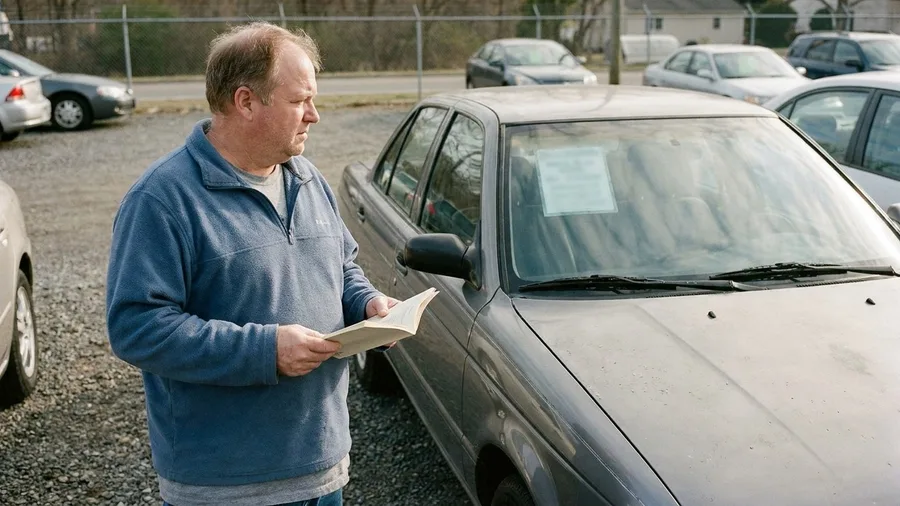
Write down the total of every payment before you sign anything at the lot. A $5,900 car with $1,900 down and $310 a month for 30 months is $11,200 by the last payment. The same driver with $4,100 cash buys a $3,200 car, puts $900 aside for first-year repairs, and owns it outright.
The expensive version keeps charging you after the car quits. When the transmission goes in month 20 and the trade-in is worth less than the payoff, you still owe the $310 and you cannot walk away without cash you do not have. That is the part the monthly figure hides.
If there is no savings and the commute is long, the answer is a cheaper car on a shorter term, not no car. Make the total the question you ask, not the monthly.
Do this before your next payment: pull the loan paperwork, add every remaining payment to what you have already paid, and write that one number on a sticky note. That total is the price of the car, not the $310.
💡 Tip: At the lot, ask for the total of all payments, not the monthly. Write it down next to the cash price of a used car you could buy outright.
| Purchase | The version in the example | What it costs over a year | The cheaper version |
|---|---|---|---|
| Car | Financed at $310/month for 30 months | $11,200 total | $3,200 car + $900 repairs = $4,100 |
| Bank account | $12 monthly fee + $35 overdrafts | $144 + fees | No-fee credit union account |
| Paycheck cashing | 3% on a $1,400 paycheck | $504 | $0 at a bank or credit union |
| Lottery tickets | $20/week tickets + $10/week scratch-offs | $1,560 | Two $2 tickets a week = $208 |
| Cigarettes | $9.50/pack, half pack a day | $1,730 | Quitting frees $144/month |
| Convenience food | $3.50 water + $6 snacks daily | $280/month | Bulk version about $90/month |
| Rent-to-own | $39.99/week for 18 months | $3,120 | Used set $600 cash |
| Storage unit | $145/month for 10×10 | $1,740 | Replace or release the contents |
| Phone | $999 handset at $28/month for 36 months plus $12 protection | $1,440 over three years | $300 refurbished handset + $60 battery |
2. Overdraft fees buy nothing and repeat monthly
$12 a month is $144 a year before you bounce a single thing. That is the quiet charge, an access fee on money that was already yours. Then each overdraft item runs about $35, and the fee covers a shortfall. It buys nothing you keep, and it comes back next month with the same shortfall in front of it.
A no-fee credit union account costs nothing to hold, and a $500 buffer in it absorbs the timing errors that turn a $4 gap into a $35 charge. The expensive account leaves you with no product at all at the end of the year; the cheap one leaves the $500 intact.
If you are already in a no-fee account, switching again gains nothing. The next move is automating the buffer, a set transfer on payday, so the cushion is there before the month gets a chance to test it.
pull three months of statements, circle every fee with the word monthly or overdraft beside it, and add it up. Then look at the lowest balance you hit in those months. If it dipped under $200, the buffer is the thing to automate.
Run the same review once a year, or the week a fee shows up. Two numbers matter: the annual total of fees, and how often your balance dipped below $500. Move one, and the other tends to follow.
3. Cashing a paycheck costs more than a bank account
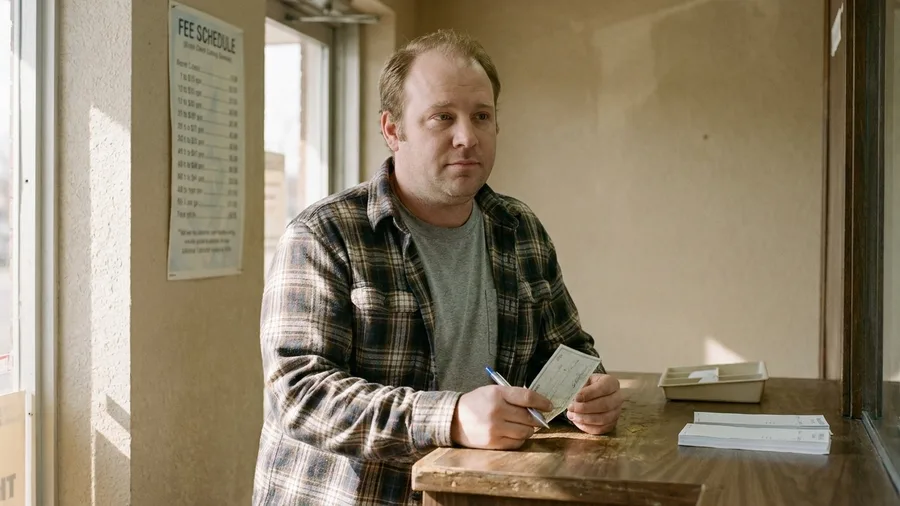
A $45 fee to borrow $300 for two weeks is not the cheaper option once you roll it. Roll that loan six times and you have paid $270 and still owe the $300. The account version leaves the paycheck whole.
Cashing a $1,400 paycheck at 3% costs $42 a month, $504 a year; a bank or credit union account costs $0. The mistake is paying a percentage for access to your own wages.
One loan paid on time is not the enemy; rolling it is. And if the choice is a $45 fee or a shut-off notice or a tow, the fee can genuinely be the cheaper bill. Your state regulator publishes the actual payday rules, so check there rather than trust a quoted rate.
⚠️ COMMON MISTAKE
Don't roll it – ever
Rolling a payday loan six times turns a $45 fee into $270 while the original $300 stays owed. If you can't repay it on time, talk to a nonprofit credit counselor before you roll.
Daily habits with receipts: the small spends that add up
These are the ones you don't notice because each purchase is small. But they're weekly, sometimes daily, and the annual total tells the real story.
The fix isn't to cut all of them – it's to see which one is big enough to matter and small enough to change without wrecking your week.
4. Lottery tickets are a weekly bill with no delivery

If you are worried this is a lecture about your Saturday scratch-off, put that down. Nothing here is about willpower or character. The question is narrower and a lot more useful: how much does the habit leave the account over a year, and how does that compare with the same money used a different way?
Tickets and scratch-offs do not arrive as a bill. There is no due date, no autopay notice, no line item on a statement that catches your eye. That is exactly why they slip past every budget review you sit down to do. You look at the fixed charges and the habit never shows up, because a $20 bill at the counter does not announce itself the way a $20 subscription does.
Run the arithmetic honestly and the shape gets clearer. Twenty dollars a week in draw tickets works out to $1,040 across a year. Ten a week in scratch-offs adds another $520. Put both together and that is $1,560 a year leaving in small, forgettable pieces. None of it is a catastrophe in any single week. The catastrophe, or the absence of one, is all in the annual total.
That $1,560 is not an abstraction. It is enough to buy a $3,200 cash car in about two years of setting the same money aside, and it is a full month of rent for a lot of households. The tickets leave you with nothing you can spend, sell, or draw on in a bad week. The money a different way leaves a car or a covered month. Same outlay, two very different rooms at the end.
This is where the timing matters more than the amount. A habit you keep meaning to trim next month keeps compounding in the wrong direction. Every week it stays put is another $30 you will not have when the transmission finally goes. Cut it this week and the difference shows up inside the first month, when the freed cash can go to work instead of evaporating again.
Two $2 tickets a week is $208 a year, and for a lot of people that is entertainment, not a leak. The math only bites hard once you are near $30 a week, where the annual figure passes $1,500 without any single purchase looking big. Work out what you actually spend across a typical week before you decide which side of that line you are on.
The move this week is not to quit anything. It is to open the last three months of statements or your banking app and add up every ticket, scratch-off, and draw purchase with the annual total written beside it. Now the number has a face. You can keep the habit or redirect it, but it is a choice instead of a slow bleed you never priced.
5. Cigarettes cost a car payment every year
Not the lecture answer, the real number. Take a pack at $9.50 and half a pack a day, which is right around $1,730 a year, or roughly $144 a month. That is the figure worth sitting with, because $144 a month is the size of a car payment, a security deposit, or the first solid chunk of a cash buffer.
The obvious substitute is not much of a fix. Vape pods run about $1,200 a year, which saves the breathing but barely moves the budget. Racing to a cheaper delivery of the same habit just trims the total. If the goal is cash that shows up in the account, the number has to fall to near zero before it changes what you can afford.
Where this gets personal is that a pack a week is a different story. That is $494 a year, and for a light smoker the budget argument is the weakest it gets. The health argument is real and it is not what this is about. The point here is narrower: the monthly hit only matters if the weekly rhythm is heavy enough to build a monthly figure worth redirecting.
If the number is close to $144, the next step needs your own paperwork, not a general rule. A fee-only financial planner or a nonprofit credit counselor can look at your income, your fixed costs, and the one figure that matters and tell you where the freed cash should land first. That is a conversation for your real numbers, not for an article that cannot see your account. The cheap version of this habit leaves a payment, a deposit, or a buffer in its place. The habit itself leaves ash.
Where the habit breaks even
🚬 Packs per week to hit $144/mo
Above about 3.5 packs
📉 At a pack a week
Only $41/mo – below a bill
💨 The vape swap cuts
About $44/mo, not the habit
📋 First step if it's near $144
Add up 4 weeks of receipts
🚗 What the saved cash buys
A car payment, deposit, or buffer
The cut that counts
Trimming from $144 to $100 frees $44 a month. Dropping to $0 frees $144 and changes what you can afford – that is the whole difference.
6. Single servings and delivery cost three times as much

There is a small sting in noticing this one, because it is not a splurge. It is a Tuesday. A $32 delivered order is easier to justify than a fancy dinner, and that is exactly why it stays invisible. The gap between what you spend and what the same food costs at the store sits quietly inside the same calories.
The premium is roughly three times the supermarket version. A $3.50 water plus $6 in single-serve snacks runs about $280 a month against $90 in bulk. A delivered order three nights a week is $384 against $72 cooked at home. The fix that takes willpower out is a $30 rice cooker, one supermarket run a week, and an automatic grocery budget set on payday with the delivery apps left alone.
If two jobs and no kitchen are the reality, buying time is not laziness. But even then the fix is a single weekly run and a cheap appliance, not a meal-prep plan. Set the grocery card up once and leave it. Pick two dinners that survive a microwave. The premium buys time; when time is not the binding thing, it buys nothing you can hold.
💡 Tip: Keep a refillable water bottle on the counter where you see it. The $3.50 bottles stop being a habit when the free version is already in front of you.
The convenience spending pyramid
What to cut first when you're buying time
Buying on someone else's terms: when the payment outlives the thing
The last three items are the ones where you don't own what you're paying for until the final payment clears. These are the purchases that keep you locked in.
Each one has a cheaper version that ends the payment sooner or avoids it entirely – but the trick is knowing when the expensive version is actually the right call.
7. Rent-to-own triples the price of a washer and dryer

The belief is that rent-to-own is the only door when there is no cash in hand: the set gets delivered Saturday, a small weekly payment covers it, and ownership arrives somewhere down the line. Read the price tag before you sign the ticket and a different picture shows up. At $39.99 a week for 18 months, a $1,100 washer-dryer set costs $3,120 by the time the agreement ends. That is nearly triple. A used set runs $600 in cash, and then it is yours the moment it is in the truck.
Nothing is owned until the last payment clears. Miss a week in month nine and the truck comes back for the machines, and the payments already made toward the set are just gone. Here is the move that reframes the whole decision: before signing anything, write one sentence on paper that answers what do I own if payments stop halfway. Rent-to-own answers that with nothing. A $600 used pair answers it with two working machines.
Sometimes the fast terms are the only realistic choice. A refrigerator dies on a Thursday, there is $40 in the account, and the kids need milk that night. Renting it beats a week of spoiled food. But set up the exit before that happens, not after: put $200 into a repair fund a little at a time, so the next breakdown has an option besides the weekly payment.
There is a version of this that genuinely wins. A short term that actually ends, on something the household would cost more to live without, is not the trap. The trap is 18 months of payments on a $1,100 set. The $3,120 total is the number to look at before the salesman says monthly.
Rent-to-own vs. buying used
Rent-to-own
- $39.99/week for 18 months = $3,120
- You own nothing until the last payment
- Miss a payment and the item goes back
- $3,120 total on a $1,100 set – $2,020 of pure cost-over-value
Buy used with cash
- $600 for a used washer-dryer set
- You own it immediately
- No payment to miss
- Set aside a $200 repair fund for when it breaks
8. Storage units charge rent on things you don't use

I stood in a 10×10 unit last spring, looking at a couch I hadn't sat on in fourteen months, paying $145 a month to keep it dry. That is $1,740 a year, and the couch was worth maybe $150. The unit was the most expensive thing in it.
That is the move worth making this week, and it takes one afternoon. Walk the unit with a notepad and price what is actually in there, item by item, the way you would if you were buying it back at a yard sale. Rent-to-own ties up money in a thing you get to keep only at the end; storage ties up money in things you already own and aren't touching. If the contents add up to less than four or five months of rent, you are paying more to store them than they would cost to replace.
Then set a date, one month out, and clear it. Replacing it is cheaper, releasing it is cheaper, and either one beats $1,740 a year for a room you visit on Sundays.
There are correct uses, and they are time-boxed. Two months between homes while a lease starts, or a work truck's tools that earn their keep, both justify the rent. The break-even test is your own numbers: a year of storage usually costs more than what is inside it. The cheap version is replace or release, and the $1,740 stays put.
9. The phone payment outlives the phone itself

Take the free phone on the plan and set a reminder for month 34, because that is when the real cost of the deal is easiest to see. A handset priced at $999 runs $28 a month for 36 months, and the $12 monthly protection on top brings it to $1,440 over three years. The payment plan outlives the phone's useful life. Protection is the first line to cut.
Start with the smallest possible fix: buy a $300 refurbished handset outright, then budget $60 for a battery swap in year two. Even paying the full installments can be worth it when a carrier credit drops the handset to $0 on a plan you would keep anyway. A flagship camera needed for work is not waste.
If the whole switcheroo feels like too much this month, just cancel the protection. That is $12 back in the account, and it is not a failure to start there.
💡 PRO TIP
The test for any payment
Ask: what do I own if I stop paying? If the answer is nothing, that's the line to cut.
Frequently Asked Questions
Is it too late to change my spending habits?
No. The items on this list are all structural – fees, financing, single servings – and you can change any of them this week. Start with the one that costs the most annually and go from there.
Should I pay off debt or save first?
Build a small buffer first – even $500 – so you don't go back into debt the next time the car breaks. Then focus on the highest-interest debt. The exact order depends on your numbers, so run it against your own budget.
How much should I have in my emergency fund?
Start with one month of bare expenses – rent, food, utilities, minimums. For a lot of households that's $2,000 to $3,500. Then keep going toward three months.
Is a payday loan ever the cheaper option?
It can be cheaper than a shut-off notice or a tow, but only if you repay it on time. Rolling it six times turns a $45 fee into $270, and the original loan is still owed. Check with your state regulator for the specific rules where you live.
How do I know which cut will free up the most money?
Write down every recurring charge with its annual total beside it. The biggest number that you can actually change this month is your first cut. For most people, that's either the car payment or the bank fees.
Price the leak, pick the cut, keep the math honest
Three items free up cash fastest. If a car payment is in your life, that's $310 a month. If not, the food gap is $312 a month from delivery alone, the storage unit is $145 a month, and banking fees are $47 a month but the cleanest place to start when no car payment exists.
So match the first cut to your situation: with a car payment, start with the car and ask the lot for the total of all payments. With no car payment, start with the $35 overdraft and $12 monthly fee, and automate a $500 buffer at a no-fee credit union.
This week, list small monthly charges that add up with its annual total beside it: $1,740 storage, $1,440 phone, $1,560 lottery, $1,730 tobacco. This is cash-flow math, not a comment on your character. The same $10 ticket, pack a week, work phone, or short storage stretch can be worth keeping. But the money vanishing before payday has a receipt, and cutting one line changes the month.
Start with one line on a piece of paper
Pick one recurring charge from this list, write down its annual total, and find the cheaper version today. That's the whole first step.
