
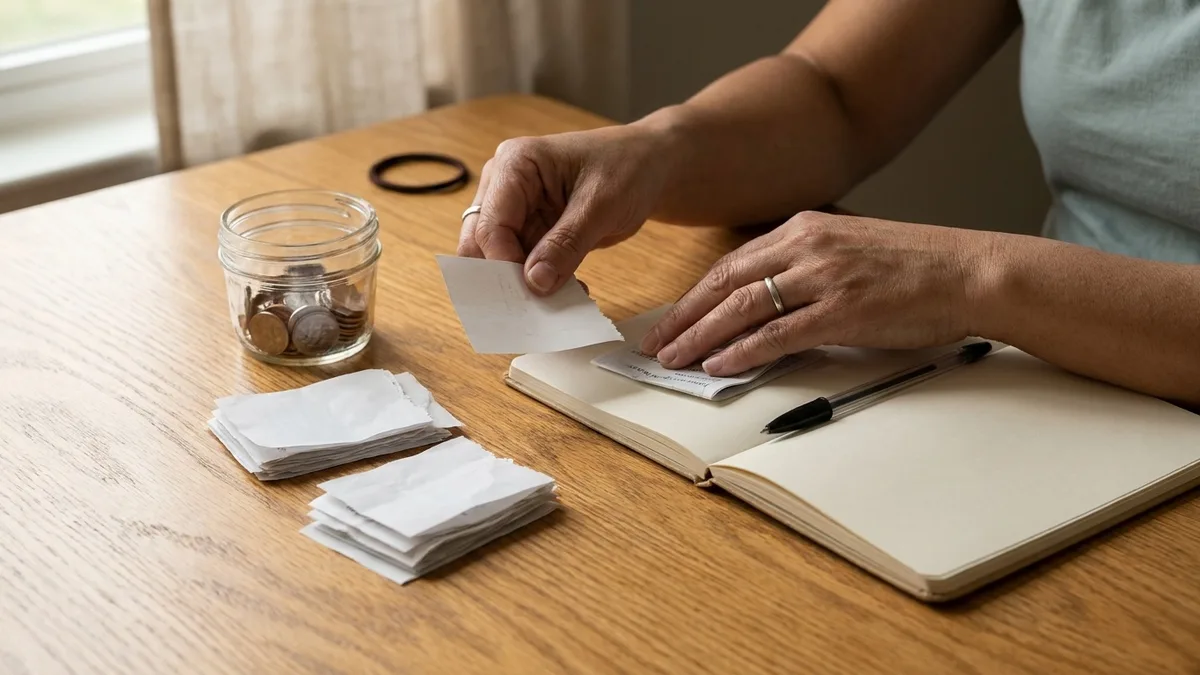
I was 34, a marketing coordinator in Columbus, Ohio, with an okay salary and a checking balance that always looked the same at the end of the month, and everyone I followed online seemed to be on a boat in Greece.
So I opened a spreadsheet and tracked every recurring purchase for 18 months. Not to feel bad about it. To see what was actually happening.
The leak was never rent, and it was never one big splurge. It was five repeat charges: $40 of bottled water, $12 workday lunches, $35 of hardcovers, $63 of streaming, $75 of Amazon deals. Together they came to $5,112 a year.
I didn't ban any of them. I replaced each one and moved the difference into a separate savings account, which is why the change showed up as a balance and not as a good intention.
You don't have to copy all five. Open last month's statement, find one recurring charge, price it for a year, and deal with it today.
Quick Tips Before You Start
Track one month first
Before you cut anything, look at last month's bank statement and highlight every recurring charge. You can't fix what you can't see.
Price it yearly
A $12 lunch feels small. Multiply it by 20 workdays and it's $240 a month, $2,880 a year. Always do the yearly math.
Swap, don't just stop
Every cut in this list has a replacement. Banning something creates friction; replacing it creates a new routine that sticks.
Move the savings out
Open a separate savings account and set the difference to transfer on payday. If it stays in checking, it gets spent.
Wait three days
For any online deal, add it to your cart and set a reminder for 72 hours later. Buy only if you still need it when the reminder fires.
1. Bottled water cost $480 a year for nothing

I found the water line by accident, scrolling my spreadsheet late one night and noticing four straight months of $40 charges for cases and singles. That's $480 a year on something that comes out of my faucet.
The fix was a $28 filter pitcher and a refillable bottle I already owned. I fill the bottle before I leave the house and drink the same amount of water I always did. The swap changes where the water comes from, not how much I drink or when. If one swap feels small, there is a longer list of household products you can stop buying entirely and never miss. What I missed was the cold bottle from the vending machine at 3 p.m., so now I pour from the pitcher before I get thirsty. The choice is made before the craving shows up.
This one suits you if you already drink tap water at home and buy bottles when you're out. If tap water tastes wrong to you, filter it first and see. Start with the bottle you own and the pitcher; the $28 is the whole cost.
💡 Tip: If you already drink tap water at home, this swap changes the source, not the habit. Keep the out-of-house bottle ritual — just bring your own.
| What I stopped buying | Monthly spend before | Yearly savings | What I do instead |
|---|---|---|---|
| Bottled water | $40 | $480 | Filter pitcher ($28 one-time) + refillable bottle |
| Workday takeout lunch | $240 | $2,880 | Sunday batch cooking, ~$3.50 per serving |
| New hardcover books | $35 | $420 | Library holds and used-book trade-ins |
| Four streaming services | $63 | $432 | Kept two, rotate one; now $27/month |
| Impulse Amazon deals | $75 | $900 | 72-hour wait rule before buying |
2. Daily takeout lunch was a $2,880 line item
Replacing water without changing the routine was the easy test. Lunch was the same idea with a much bigger number attached.
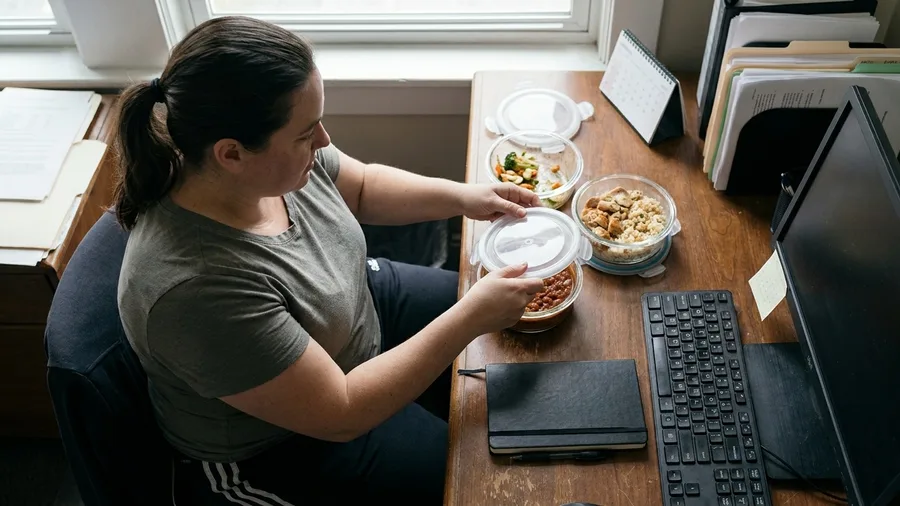
I was spending $12 a day, five days a week, which is $240 a month and $2,880 a year. That was the largest single line of the five, and I had been treating it as the cost of having a job. Every paycheck had a quiet $60 pulled out before I ever saw it.
So I gave up one Sunday afternoon. One pot of chili, one tray of chicken-and-rice bowls, portioned into five containers, about $3.50 a serving. I reheated them at my desk and ate them without complaint. What I did not do was try to cover every workday: I still buy lunch out on Friday, on purpose, and that $12 is the trade I made with myself. It keeps batch cooking from feeling like a diet I'll quit.
That one deliberate lunch out is what made the other four days stick. If you have a fridge and a microwave at work, this is the version that holds. If you don't, the same plan needs a thermos and a different lunch. Start with two containers this week before you commit to five.
💡 Tip: This plan needs a microwave and a fridge at work. If you don't have both, a thermos and a different lunch strategy are the better move.
🍲 How I Set Up the Sunday Batch Cook
Pick two base recipes
One pot of chili and one tray of chicken-and-rice bowls — both reheat well and cost about $3.50 a serving.
Shop once on Saturday
Buy ingredients for both recipes in one trip so you're not making extra store runs during the week.
Cook and portion on Sunday
Spend about 90 minutes cooking, then divide everything into five containers before it cools.
Label and stack
Write the day on each lid with a marker so you grab the oldest one first.
Take one out each morning
Grab a container on your way out the door and reheat it at work — no decisions, no spending.
3. Hardcover books cost $420 a year I didn't need

The fear here is that giving up new releases means giving up the books themselves, and that is not what happened. For eighteen months my spreadsheet logged $35 a month on hardcovers, about $420 a year, because I bought whatever came out that Tuesday the week it dropped. The swap is free to try: I put new releases on library holds, and the hardcovers I did not need to own went to the used bookstore, where finished books turned into credit toward the next one.
The real price was waiting. A hot title landed a few weeks after release instead of on my shelf that day, and by the time it arrived I read it the same, cover to cover.
once a month, look at your library holds and the used-book credit, not your old release-day spending. If the wait starts to bother you, used is the middle ground before you give up new books entirely. One reader note, honestly: this does not suit someone who needs to annotate and keep the book, and that is a real line, not a failure.
⚠️ COMMON MISTAKE
Don't cancel everything at once
The biggest mistake I made early on was trying to cut all five at the same time. By week two I was resentful and bought a $14 smoothie out of spite. Pick one cut, run it for a full month, then add the next. The savings stack either way.
4. Four streaming services cost $756 a year to watch nothing
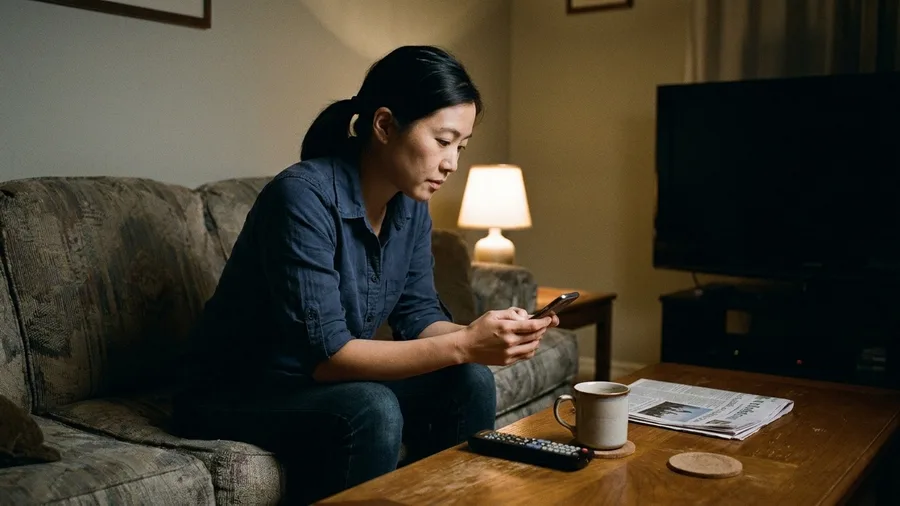
For me the honest count was two, and I was being billed for four, which is the strange math of paying rent on rooms you never walk into.
This is the same ownership question the books raised, only rented by the month. A hardcover sat on my shelf unread and a streaming app sat in my phone unwatched, and both of them charged me anyway – one at the register, one quietly on the twelfth of every month.
My card carried four separate charges that added up to $63 a month, $756 over a year. I had built them up the way most people do: a free trial I forgot to end, a bundle I split with a roommate and kept after they moved out, a service I signed up for during one show's season and never cancelled once it wrapped.
What I believed was that cancelling meant giving up television. What was actually true was that I was watching two services and financing four, so the shift was smaller than it felt: I kept the two I opened without thinking, dropped the other two, and left one slot open to rotate toward whatever specific series I wanted to see next.
The bill settled at $27 a month. That is $432 back over a year that I did not have to earn twice, and it stays low because the slot has a rule: it turns on for a named show and turns off the week that show ends, not the week I remember.
The tradeoff is real and I felt it. I watch fewer new shows in the same week everyone around me does, and the Monday conversation about last night's episode happens before I get there. The shows keep; the release-week chatter is the thing that goes.
This one suits anyone paying for more services than they open in a normal week, which I suspect is most of us. Pull up your card statement, list every recurring charge with a streaming name on it, and count how many you touched in the last seven days. The number you watch weekly is the number you keep.
💡 Tip: Check your watch history before you cancel anything. Keep the two you actually open weekly, not the two you feel like you should use.
5. Impulse Amazon deals were $900 a year of clutter

The deals that get me are never the ones I planned. They are the ones that show up in a notification at 9 p.m. with a countdown timer, and the way they work is simple: they make the buying feel like catching something rather than choosing it.
The nasty part is that this leak has nothing to cancel. A subscription leaves a line on your statement you can find and stop, but a deal purchase is a one-time charge that slips past every audit I had built – mine ran around $75 a month, about $900 across a year, on things I had never set out to buy.
So I stopped trying to block the store and put a gap between seeing and paying instead. Anything that is not on a list goes in the cart, and I set a reminder for 72 hours out; when it fires, I buy only what I still want, which turns out to be a replacement charging cable and a gift I had already meant to buy.
What fell away was the deal I wanted only because it was a deal, and the honest cost is that I miss some genuine discounts while I wait. That is worth it for me, because the money I kept beat the money I saved on things I did not need. It is a fix for boredom shopping, not a ban on buying, and someone who already shops from a strict list probably does not need it.
The part that actually changed things

Saving $5,112 a year sounds great on paper. But the first two months I cut things, the money just sat in checking and slowly got absorbed by everything else. I had not actually changed my finances. I had changed my habits.
The shift came when I opened a separate savings account and set up a transfer for the difference on payday. The cut money left my checking account before I could see it. That is the whole trick. The money has to move before your brain gets a vote. Understanding the impulse purchase brain explains why that vote arrives so late and how to pause before checkout.
Now I review the five cuts once a month, on the first Sunday, with coffee. I look at three things: what I spent on the cut categories last month, whether the replacement habit is still working, and whether a new recurring charge showed up that I should look at.
I also look at the savings balance. Watching it grow is the reward that keeps the cuts in place. It is easier to say no to a $12 lunch when you can see a $1,200 balance that used to be nothing.
Three things I got wrong
Frequently Asked Questions
Can I really save $5,000 a year by cutting small things?
That was my total across five specific cuts, not a guarantee for anyone else. Some of my cuts might not apply to you, and some might cost more or less depending on where you live. The point is to look at your own recurring charges and do the yearly math.
Do I have to cut all five at once to see a difference?
No. In fact, I recommend starting with one. Pick the easiest swap for you — for most people that's the 72-hour wait rule, because it costs nothing and doesn't require changing your routine. Then add the next one after a month.
What if I don't have a microwave at work?
The batch-cooking lunch plan assumes a microwave and a fridge. If you don't have both, a thermos or a different lunch strategy (like cold grain bowls or sandwiches) can still work. The goal is to replace the $12 takeout habit with something you'll actually do.
Is it worth switching to a filter pitcher if my tap water tastes bad?
For me, yes — the $28 pitcher paid for itself in the first month. But if your tap water is genuinely unpleasant, a filter might not be enough. Look for a pitcher with a carbon filter that removes the taste issues, or consider a faucet-mounted filter. The point is to stop paying per bottle.
How do I cancel a streaming service I'm not using if I'm on someone else's family plan?
If you're on a shared plan, check who's actually paying before you cancel anything. That might be a conversation with the account holder. If you're paying, log into the account and cancel before the next billing date — most services let you cancel online in a few clicks.
Does the 72-hour wait rule work for everything?
It works best for impulse purchases tied to deals or boredom shopping. It's less useful for things you actually need, like a replacement phone charger. The rule is a gap between seeing and paying, not a ban. Use it where you notice yourself buying things you didn't plan for.
Start with the one that costs nothing
none of these five cuts needed a bigger income. The $5,112 was already leaving my account, in increments from $28 for a filter pitcher to $2,880 for a year of lunches. Redirecting it into a separate savings account is what made the change visible instead of theoretical.
The spreadsheet still exists. Eighteen months in, the rows barely matter. The column I check now is the transfer out.
If you want the easiest one to copy first, take the 72-hour wait rule. It costs nothing, needs one reminder on your phone, and asks for no cancellation, no prep, no library hold.
Then do the first step today: scan last month's statement for one recurring purchase, price it for a year, and cancel or replace it. Start with the $40 water or the $63 streaming if that is what is on the page. The yearly figure is what funds the account.
Find your $480
Open your bank app right now and look for one recurring charge you'd forgotten about. Multiply it by 12. That's the number you're starting with.
