

You open your phone to save three dollars on household supplies, and forty minutes later you have checked out with a cart full of things you never planned to buy.
It feels like a personal failure, but the app was built precisely to pull that trigger.
Here is the truth: digital coupon tools are designed to change your behavior, not your balance.
Let us look at how the mechanics work and how to take back control without giving up every discount.
Quick Tips Before You Start
Delete Unused Apps
Remove any store app you have not opened in the last thirty days.
Stop Saving First
Never browse deals before you make your grocery or shopping list.
Calculate Real Savings
Ask yourself if you would buy the item at full price right now.
1. The Illusion of Saving Money

I stared at a checkout screen flashing a twenty percent discount on a $150 jacket I never planned to own.
It felt like making $30 out of thin air, but my bank account still dropped by $120. Retailers use these percentage-off banners to trigger a psychological win, making spending feel like thriftiness. The hard mechanism here is simple cash flow subtraction: you are never richer after buying something you did not budget for.
New belief: saving is keeping cash, not spending less of it. This week, close the tab the second a discount banner pops up.
2. Falling for Minimum Spend Traps

Spend $50 to get $10 off sounds like a brilliant deal until you realize you only actually wanted $30 worth of goods in your cart.
Adding $20 of random items just to hit that spending threshold means you spent $10 extra cash simply to feel clever. The mechanism exploits your aversion to leaving a discount on the table.
Never stretch your order to meet a threshold. If you would not buy it at full price without the coupon, leave it behind.
⚠️ COMMON MISTAKE
The Threshold Fallacy
Adding items to reach a free shipping or discount minimum always costs more than paying the base fee.
3. The Three-Bucket Spending Rule

Divide your monthly income into three distinct categories the exact morning your paycheck lands in your account.
We use a straightforward framework split into fixed bills, debt minimums, and flexible cash. The first bucket holds your rent, utilities, and insurance; the second covers your scheduled loan payments; and the third handles groceries and extras with a strict weekly limit of around $150. When that flexible cash runs out for the week, the shopping apps stay closed until next Monday.
This completely removes the exhausting daily mental negotiation over whether you can afford a small extra purchase. Instead of stressing out and constantly guessing your balance, you just look at the remaining number in that specific category and let the structure do the work.
The honest trade-off is that it takes a slightly annoying afternoon to configure and requires actually checking your limits before buying. It also means accepting that some weeks will feel tight while you adjust to the new boundaries, but that discomfort is just awareness in action.
Do it this week.
4. Understanding the Urgency Window

It is completely normal to feel your heart rate spike when a bright red banner claims an exclusive discount vanishes in exactly seventeen minutes. You are not weak-willed for feeling the pull.
Time-sensitive alerts are engineered by design to create a false panic that temporarily shuts down your rational financial judgment. A notification telling you a coupon expires in two hours pushes you into a snap decision before you can evaluate whether you actually need or want the item in your daily life.
Retailers track user behavior closely, timing these push notifications for late evenings or boring Sunday afternoons when you are most likely to be tired, vulnerable, and scrolling out of habit.
I used to fall for this constantly, buying clearance items I never wore simply because a countdown clock made me feel like I was letting a rare opportunity slip through my fingers forever.
The psychological pressure feels intensely real, but the expiration date itself is almost always entirely arbitrary. Most online stores run the exact same promotional discount or free shipping offer again within seven days.
Step away from the screen for at least ten minutes whenever an alert makes your chest tighten or your thumb hover anxiously over the checkout button.
If you still genuinely want the item after that timer runs out and your head is clear, you can reconsider it against your actual monthly cash flow and priorities.
Most fake retail emergencies can easily wait ten minutes.
5. Giving Yourself Permission to Do Less

Do you actually need to optimize every single dollar to make financial progress? The honest answer is a flat no, and trying to track every single transaction is usually what burns people out before the quarter even ends.
Chasing every twenty-cent coupon and comparing unit prices across five different grocery apps creates massive decision fatigue. When your brain is constantly making micro-choices about trivial amounts of money, you run out of mental bandwidth for the bigger financial moves that actually shift your cash flow, like negotiating your internet bill or setting up automatic savings.
Perfectionism in personal finance is rarely true discipline; it is usually just anxiety disguised as productivity, keeping you trapped in the weeds while missing the broader picture.
Pick just two specific spending categories to watch closely this month, and give yourself explicit, guilt-free permission to completely ignore the rest of your variable tracking lines.
Consistency beats microscopic perfection every time.
6. The Real Cost of Digital Convenience

Having your credit card details saved inside every shopping app is harmless convenience, or at least that is what we are all told.
That single tap checkout removes the friction that normally makes you hesitate before spending money, letting purchases happen almost by accident.
I used to buy clothes I did not need simply because my shipping address and payment details were already stored and ready to go.
The mechanism here relies entirely on behavioral psychology: when buying something takes zero effort, your brain skips the critical evaluation step completely.
Removing your saved credit card numbers from these apps forces you to physically get your wallet every time you want to make a purchase.
That thirty second pause gives your brain enough time to ask whether you actually need the item in front of you.
The trade-off is genuinely annoying because typing out a sixteen digit card number is tedious, but that exact tedium is what protects your checking account from accidental spending.
Try deleting at least three saved payment methods today and watch how fast your online cart sizes drop.
7. My Own Balance Slip Wake-Up Call

It feels almost harmless at first when a notification pops up telling you that a ten-dollar cash reward is just waiting for you if you spend a little more.
You tell yourself you are being clever because you are getting money back on purchases you were probably going to make eventually anyway.
I spent three hundred dollars on household goods I did not need simply because a cash-back app dangled a ten-dollar reward right in front of me.
The mechanism behind those apps relies entirely on tricking your brain into chasing percentages while ignoring the much larger total leaving your account.
That realization hit me hard on a Tuesday afternoon, and it was the exact moment I deleted every single retail app from my phone.
This week, go into your settings and delete at least two retail or reward apps that tempt you to browse when you are bored.
8. Knowing When to Get Professional Guidance

If your spending habits feel completely out of your control, a financial counselor can help untangle the emotions behind the purchases.
There is no shame in getting outside perspective when your own budget starts to feel like a maze you cannot navigate alone. A qualified professional, such as a fee-only fiduciary or a nonprofit credit counselor, looks at your actual numbers for around $150 to $250 an hour to help build a custom roadmap. This step costs real money upfront, but it often saves hundreds in interest and fees over twelve months.
Next week: search for one local accredited financial counselor and book a thirty-minute introductory call.
9. Starting Small With Cash Only
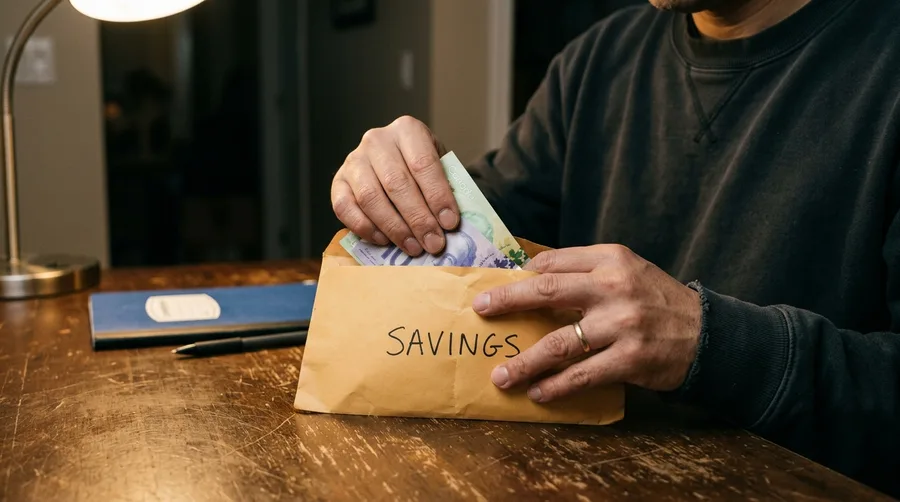
It is easy to feel like starting small is pointless when you are trying to change your financial life.
You might worry that putting aside just twenty dollars a week will not make a dent in your actual habits.
The truth is that physical cash engages a completely different part of your brain than swiping a piece of plastic or tapping a phone screen.
Handing over twenty physical paper dollars hurts in a way digital numbers simply do not, creating an immediate psychological pause before a discretionary purchase.
This simple friction changes your relationship with spending without requiring rigid discipline or a complicated spreadsheet.
Take twenty dollars out of your next ATM run, slide it into a designated envelope in your kitchen, and leave the plastic at home for one grocery trip this week.
10. Reviewing Your Subscription Stack

People assume that if a monthly subscription was important, they would certainly remember paying for it every single week.
That is rarely how convenience charges work in practice, because small digital expenses slip past our notice by design while accounts quietly auto-renew.
Pull up your bank statements once a month and look specifically for recurring charges from apps you forgot you downloaded, then cancel anything you have not opened in the last sixty days to instantly free up $35 to $60 of breathing room.
11. Automating Your Savings Transfers

Set up an automatic transfer for the morning your paycheck arrives.
End-of-month saving means you save whatever survived, and what survives is usually nothing.
Payday saving means the number is decided before the month gets a vote, completely shifting your cash flow dynamic.
I spent years watching my checking account drift down to zero because I kept waiting until the end of the month to manually move money, only to find that grocery runs and casual dinners had already eaten the buffer.
The mechanism here is purely behavioral rather than magical.
When you move $50 or $100 out of your checking account on the exact day it lands, your brain quietly adjusts to living on the remaining balance without feeling like you are actively punishing yourself.
It takes about four minutes in your bank mobile app, and once you schedule that recurring transfer, you literally never have to think about it again.
This is a timing fix, not a discipline fix, and it removes the daily willpower battle entirely.
12. Delete Store Apps

Delete every single retail and coupon app from your phone right now.
If you need a coupon, search for it on a browser when you are already at the store.
13. Talk to a Fee-Only Fiduciary

When debt or spending patterns block your long-term goals, consult an independent professional who charges by the hour.
Get advice without product sales pitches.
14. Build a Simple Cash Cushion

Can you actually build a safety net when you have almost nothing left over?
Even twenty-five dollars a month transferred automatically builds a safety net over time through the quiet, compounding power of consistency. You do not need a massive lump sum, a raise, or a complicated spreadsheet to start protecting yourself from the unexpected car repairs and medical bills that usually turn into high-interest debt. The mechanism is purely behavioural: by removing the decision-making process on payday, you stop relying on fleeting discipline.
I used to think saving was a waste of time unless I could lock away hundreds of dollars at once, which meant I saved precisely zero for years.
Consistency matters much more than starting with a massive lump sum, because habits outlast motivation every single time.
Open your banking app before the week is out and set up a recurring $25 transfer. It feels minor, but letting it run quietly in the background creates a cushion without requiring painful lifestyle cuts.
15. Reframe Your Money Mindset

You are not bad with money just because you fell for digital marketing traps in the past.
Recognize the system is designed to catch you, and change your environment to win.
Frequently Asked Questions
Are all coupon apps bad for your budget?
Not all apps are harmful, but those that send constant push notifications and personalized flash sales are designed to encourage impulse buying. Use tools only when you search for a specific item you already planned to purchase.
How can I stop impulse buying online?
Remove your saved credit card information from every shopping app and browser. Requiring yourself to manually type your card details adds enough friction to make you reconsider unnecessary purchases.
Should I pay off debt or save money first?
Build a small starter cushion of a few hundred dollars for emergencies first, then tackle high-interest debt aggressively. This stops new debt from forming while you pay down existing balances.
Is it okay to use cash-back rewards?
Cash-back programs are fine if you only buy things you already budgeted for. If cash-back incentives cause you to buy items you do not need, the reward costs you more than it returns.
Start With This One
Take a deep breath and delete your most-used shopping app right now.
You do not need to fix everything today, but removing one temptation makes tomorrow easier.