

A kid from small-town Eastern Canada had cycled through jail and rehab by 17. By his late twenties, a famous investor had put money into his company and he'd spent a week with a billionaire. Nothing about that gap makes sense until you hear the one word he credits: relationships.
The old line goes that your network is your net worth. Almost nobody shows you how to build one without feeling like a walking business card. That's the gap this covers: why the right relationships can move your life faster than almost anything else, the invisible mistakes that quietly kill your chances, and the exact system for reaching people way out of your league — without the cringe.
You'll finish with a target list, a first-message template, and a follow-up rule that stops you from becoming the person who over-messages. The first step is small enough to do today, before you close this tab.
The Fastest Fix Is a Person Who Already Solved It

Because the people who move fastest stopped asking how to solve things and started asking who already did. That flip is the whole game. It changes where your energy goes, and it changes what you get back for it.
Trial and error is slow. Brutally slow. The person who's already done the thing has made the thousands of mistakes you're about to make, and their shortcuts are worth years of your life. You can spend eighteen months learning what a two-hour conversation would have handed you.
Here's the proof that this works at any starting point. A small-town kid was in jail and rehab by 17. Same kid ends up with a famous investor backing his company and a week with a billionaire. Nothing about the starting line changed. The people around him did.
So before your next problem, take a page. Write the problem at the top in plain words. Not 'grow my business' – something tighter, like 'I can't get a single client to pay me more than $2,150.'
Then write one name beside it. A person who has lived the solution, not just read about it. Someone whose actual life is the answer to your question.
That's your first move. One problem, one name. Do it now while it's simple, because the list you're about to build depends on it.
Move to Where Your Industry Already Gathers

Proximity is power, and the shortcut is to go where your industry already gathers. Coders head to San Francisco. Media folks are heading to Austin. Music folks go to Nashville. Finance folks go to New York City. That's not a coincidence. It's where the work, the money and the gossip all show up in the same few rooms.
One person made that move at 28. The reason wasn't business cards. It was to be around people living bigger lives, so the ceiling of what felt normal would move up a few notches. You see someone run a company, raise a round, ship a project, and suddenly your own little problems start to look solvable.
Because the solution to most problems is caught, not taught. Somebody mentions over drinks how they got their first ten customers, or how they handled a co-founder fight, and you file it away in ten minutes. A cold DM asking that same question usually gets a polite paragraph back. Being in the room does work a message can't.
There's a catch worth saying out loud: moving isn't a magic switch. You can land in the right city and still spend every night alone in your apartment. The move only pays off when you actually show up to the rooms, which is the part most people skip.
And if moving isn't on the table, don't panic. Remote work, Slack groups, Discord servers and local meetups put plenty of industry energy within reach. The next sections and the volunteer play later on cover the no-travel version, so keep reading before you start packing.
Write Your Goals, Then a Real Name Beside Each

Write five specific goals and put a real human's name next to each one. That's the whole exercise, and it takes about two minutes.
Be concrete. Health, money, relationships, a hobby like wake surfing, and content or media. Specific enough that you'd know if you hit them. 'Get healthier' doesn't count. 'Wake surf without falling on the first turn by August' does.
Now the part people skip. Next to each goal, write an actual person who has done it or is living it. Not a category, not 'someone in real estate.' A name. If you don't know anyone yet, search YouTube, Instagram, or TikTok for people teaching that exact topic and follow them. They're findable.
And start with people closer to you rather than the very top of the game. The minimum bar is simple: they've done it or they're living it. That's it. Your neighbor who built a $400,000 business beats a celebrity founder you'll never reach.
Keep this list to the side. You'll use it again at the end of the system, and it'll make more sense then.
| Showstopper | What it looks like | The fix |
|---|---|---|
| Flaking | Saying you'll be there and not showing up, or arriving late | Only commit when you're 100% sure; if you can't make it, text them |
| Neediness | Leaning in, standing too close, treating them like they have magic fairy dust | Arm's length, lean back, stand to their side, act like a peer |
| Instant ask | Asking for a favor before you've given anything | Give first: edit the video and send it instead of asking if they want it |
| Transactional | Keeping score, doing things only to get something back | Be intentional about how you show up for them, not what they can give you |
Flaking Once Kills Trust Before the Relationship Starts

One no-show, and they quietly move on. That's the invisible thing that ends more opportunities than any bad message ever will.
Picture it. A man in a full suit runs across a gym mid-workout to introduce himself. Bold, memorable, and honestly kind of great. He gets invited to the Tuesday founders hike. He says he'll be there.
Guess who didn't show up. Not that Tuesday, not any Tuesday for three months.
The hike is deliberately a filter. About 98% of people who say 'I'll be there' don't show up. That's not a guess at human nature, that's what the organizer sees week after week, and it's why the invitation is so cheap to give and so hard to earn back.
Here's the honest catch: one no-show is hard to overlook later, even if you meet again somewhere down the road. It sits there. People remember the gap between what you said and what you did, because talk is free and calendars aren't.
The fix is blunt. Only commit when you're 100% sure. Not 80, not 'probably.' If life happens and you genuinely can't make it, text them and let them know. A heads-up costs you ten seconds and protects the whole relationship.
⚠️ COMMON MISTAKE
The gym story is a warning
Interrupting someone mid-workout in a suit is not the problem. Saying you'll show up and then vanishing is. The first impression is set before you ever ask for anything.
Neediness Makes Successful People Back Away

You avoid it by treating them like a peer instead of a fan with a wish. That's the difference, and it's mostly physical before it's verbal.
Don't get in their personal space. Keep a comfortable distance, angle away, and don't square up to them. If they're sitting at a bar, take the stool next to them, not the one turned toward them like you're interviewing them for a job.
Top people want this because the opposite makes them uncomfortable. When someone leans in and hangs on every word, the room gets tight. The person being leaned into starts looking for an exit, and they'll take it.
The reason runs deeper than manners. Neediness signals you want something before a relationship even exists. It's a stink you can't wash off, because it isn't about what you say next, it's about what your body said first.
Now the fix, and it's a small physical shift that changes the whole dynamic. Calm, side-by-side posture instead of leaning in. You're not performing admiration. You're just another person in the room who happens to be curious. Nothing gets asked, nothing gets owed, and somehow that's when people stay.
Asking Before Giving Gets an Instant No
Because a request lands before you've earned a reason to ask, and the person feels the ask without feeling any value yet. So the answer comes back quick and flat. The worst part isn't the no. It's that you've made the next yes harder.
Here's the mistake almost everyone makes: they offer to help instead of helping. Think about the difference. Saying 'do you want me to edit a video?' puts another task on their plate. Now they have to reply, decide, coordinate, and follow up.
Nobody has time for that.
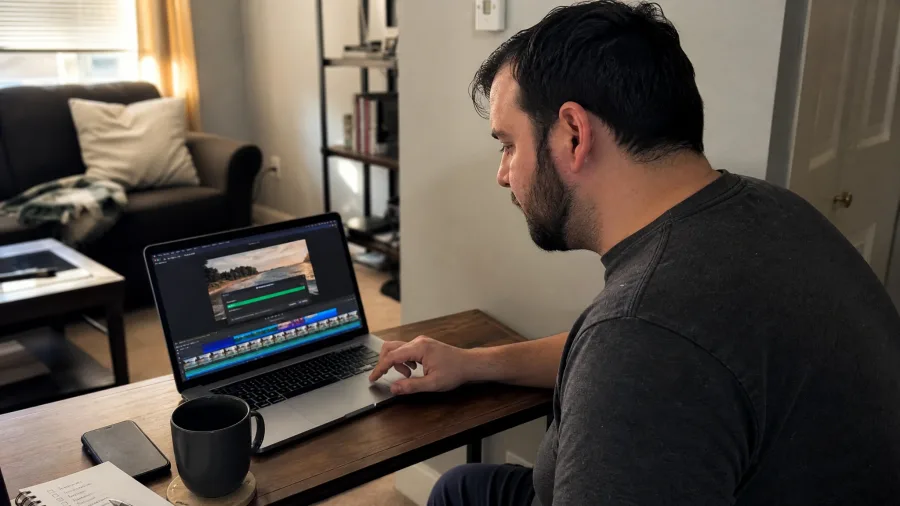
So just do the work and hand it over. Not a pitch. Not a sample of what you could do. The actual finished thing, done, with no strings. That's the gap between offering help and delivering help, and it's the whole difference between someone filing you under 'another person who wants something' and remembering your name.
Give first. It's the simplest rule in the whole system and the one most people skip, because it asks you to spend effort before you have any proof it'll pay off. Do it anyway.
Scorekeeping Signals You're Transactional

Because the other person can feel the ledger, even when you never say a word about it. People who run their relationships on 'do this for me and I'll do this for you' struggle to build anything real, and they usually can't tell why.
There was a guy – call him Bobby – who lost a partnership he never saw coming. He'd never treated the decision-maker badly. But a mutual friend mentioned that Bobby constantly gossips about others, and that one sentence ended it. He never found out why.
That's the trap. The behavior you think nobody sees is the exact thing that travels.
Treat people like investments with a visible return and it leaks out in a hundred small ways: the pause before you help, the mental tally you keep, the way you go quiet when someone stops being useful. So flip it. Be intentional with your actions instead of keeping score, and ask how you show up for them before you ever ask what they can give you.
'Who Am I to Take Their Time?' Is a Lie

Because they're not a different species – they're you a few years further down the same road. Think of it as chapters in a book. They're on chapter 27. You're on chapter 2. That's it. That's the whole gap.
The lie is that your worth tracks your achievements. It doesn't. Your identity and your track record are completely separate things. Take someone with 70,000 followers and the same person at 12 million – same human, same flaws, same Tuesday nights.
Here's the part that surprises people. What impresses them isn't your resume. They've seen a thousand resumes. What actually lands is hearing about other people's challenges – what someone else is fighting through, what it cost them. That's the bar you're being measured against, and you can hit it without a single credential.
So stop auditing yourself before you speak. Ask your question as a peer, not as a fan asking for a blessing. The conversation changes before you even open your mouth.
You Always Have Value — Cheering Costs Nothing

Plenty – and the most underrated thing costs you nothing. Start with this: everyone has spent a long stretch of their life on something they've gotten good at. Find that thing and you've found your opening.
But the cheapest value of all is being someone's biggest cheerleader. Not fake hype. Just being the person who genuinely notices and celebrates.
Here's why it matters more than it sounds. When people start winning, most others quietly stop celebrating. They assume it's no big deal now, that success is just what this person does. So the wins land in silence, which is lonelier than it looks from the outside.
One friendship lasted years for exactly this reason. One person was always there to celebrate the wins, no matter how much success came, no matter how many other people drifted off. That was the whole job. No money, no favors, no clever strategy.
Can you do that for someone this month? Pick one person whose work you actually admire and say something specific when they win.
The numbers behind the system
What the math actually says about follow-through
Successful People Are Ordinary, Just Further Along

– and the proof is the bathroom test. Celebrities all go to the bathroom like everyone else. That's not a joke, it's the reframe: they're ordinary humans who made different decisions for longer, not a separate class of being.
So be kind, interesting, and curious. That's it. That's the posture that works, and it's the one most people abandon the second they spot a name they recognize.
The pedestal is where this goes wrong. Put someone up there and the behavior follows: you get needy, you shrink into fan-like posture, you laugh too hard at jokes that aren't funny. It's the same mistake you keep making, just wearing a different costume.
Notice that this connects straight back to the chapter idea. If they're just further along, there's no pedestal to build. They made decisions earlier, more of them, for longer – and you're making yours now.
Here's the test before your next conversation. Would you say this sentence to a friend? If not, don't say it to them. Treat them as a peer and the whole exchange changes before you even speak.
Being a Public Fan Sends Energy That Comes Back

Support people in public, on purpose, and it starts paying you back before you ever need anything. That's the whole trick. Not fandom. A practice.
Buy their book the day it comes out. Not next month, not when it goes on sale. Release day. Order the hardcover, post the cover, tag them. It costs you $28 and thirty seconds and they see it, because release day is the day authors refresh their feed like a nervous teenager.
Be first to comment on your friends' posts, too. The ones building something. Share what they're building with your own audience, even if that audience is 400 people and half of them are your cousins. The size of your megaphone doesn't matter. The fact that you pointed it at them does.
Some people refuse to be anyone's fan because they think it's uncool. They'll repost a rival's meme but never a friend's launch. That's a strange way to live, honestly. Coolness is a terrible thing to trade a relationship for.
Here's the part people miss: this is a practice, not a one-time grand gesture. One retweet of a launch announcement doesn't make you the person who celebrates. A hundred small cheerleading acts over two years does.
Run it as a routine. Ten minutes each morning: comment on three people's stuff, share one thing someone is building, buy one thing someone made this month. That's it. That's the practice.
And the energy you put out genuinely comes back. Show up as the person who celebrates loudly and people remember you when it matters – when they're hiring, when they're making introductions, when someone asks them who's worth knowing.
The scoreboard doesn't update daily. It updates eventually.
The Right Rooms Put You Near the Right People

Get physically into rooms where the people you want to meet already gather. That's the short answer. And half the time the door opens with one polite email.
Events happen all year, in various places, and the people who fly in aren't random. They come from the audience – people who've already decided relationships are worth paying for and traveling to. You're not fighting for attention in a cold inbox. You're standing in a room full of people who chose to be in that room.
So instead of cold-DMing from outside the room, get into the room first. The person who's met you is a colleague. The person who's only seen your DM is a stranger with a pitch.
Not sure which room? Email the organizers. Ask what's coming up and which event fits your industry. Be specific: 'I work in dental software, do you have a session or a mixer that skews toward healthcare ops?' Organizers love that question and they'll usually reply. A $200 ticket that puts you in the same hallway as twenty of your people is the cheapest marketing you'll ever do.
Proximity does the introducing. The room does work a message can't: a shared lunch line, a bad panel question, a coffee between sessions. Small moments turn strangers into acquaintances in minutes.
Want more than attendee status? Ask about volunteering at the event. Volunteers get a name tag, a job, and an excuse to talk to everyone.
Aim at Results, Not the Top of the Game

Aim at anyone who has the results you want – not just the famous names at the top. Pull out that goal list and add names beside each goal, and the bar is simple: they've done the thing or they're living it now. Not famous. Doing.
The top of the game is hard to reach and it burns energy you need elsewhere. Chasing six figures from a billionaire before you've closed your first deal doesn't build a relationship, it builds a fantasy. Meanwhile somebody five years ahead of you, running the business you want to run at a scale you can actually picture, would answer your email this week.
And the relationship question has to be 'how do I show up for them?' not 'what can they give me?' That flips the whole thing. You're not auditioning for a favor. You're figuring out how to be useful or at least pleasant to be around.
The people closer to your level are often the ones who actually reply. They're not drowning, they remember being where you are, and they're building their own network too. Sometimes they're the ones who later make the introduction.
Also, aim at results, not titles. A founder with $40,000 in monthly revenue is a better target than a celebrity with a team of assistants and zero minutes.
Get the reps in with reachable people. Reps are the whole point.
You Don't Need Any One Person to Say Yes

Nothing breaks. No single individual is required for your success. The trick is hearing 'any one' and 'anyone' as two different words, because most people collapse them and hand one stranger the keys to their whole future.
Notice the sentence in your head: 'I need this person to invest,' or 'I need her to reply,' or 'I need him on my podcast.' That's someone becoming a gatekeeper of your dreams. Give them a name badge and a key, and you've told yourself the story is over if they say nothing.
Make a list of a dozen. Better, a hundred. Real names, same bar as before: they've done it or they're living it. If person number four never replies, person number nine might, and person number nineteen probably will. You can't hit one target forever when there are a hundred in reach.
The same thing applies outside business. Nobody has to change for you, pick you, or approve of you for you to win. That's not a platitude, it's a strategy. A wider lens keeps you from starving on one person's silence.
Sit down tonight and write out ten names instead of the one you've been refreshing your inbox for. Do it until the one you were obsessed with is just one line on a list.
That's the reframe. Then the silence stops feeling like rejection and starts feeling like data.
Showing Up Is the Investment That Counts

It looks like showing up, on time, in person. Not a clever text, not a bottle of wine with a note. Showing up.
Here's the picture. A first book event at a local bookstore. Twelve folding chairs, a wobbly sign, a stack of hardcovers on a table near the door. One person in the back row had flown 2,000 miles for it. He stood in line after the reading, bought the book at the register, and got it signed.
Nobody asked him to. There was no guest list and no VIP table to impress. He just wanted to be in the room on that specific Tuesday night, on record, for a friend.
Why does that relationship endure? Because he just shows up. That's the whole mechanism. Not charm, not elaborate gifts, not some considerate follow-up call three weeks later. Presence.
The same friend wrote a book on community himself. If you want to pay that forward, buy it, and treat it as a next step rather than an obligation. There's something almost funny about a man writing a whole book about the thing he already gets points for.
Showing up beats clever gestures. Every time. The clever gesture is remembered for a week, the flight is remembered forever.
So find the next thing someone you care about is putting on. The reading, the launch, the small panel with fifty seats. Go. Sit in a chair. Buy the thing.
That's the investment.
Build a Platform So People Can Be Invited Onto It

You build value for people above your level by giving them something to be invited onto, which means making a thing and then hosting it. A newsletter, an email list, a podcast, an event, a dinner table. That list is longer than you think and the cheapest option is at the bottom of it.
A platform sounds expensive. It isn't. A Sunday email where you write down what you learned that week costs you a domain and an hour. A podcast with a borrowed mic and a free recorder app is the same money. The point is never the production quality. The point is that the thing exists, so when you meet someone interesting you can say come on and talk to my people, instead of asking them for something.
Then start smaller than that. Smaller than you're comfortable with, actually. Invite three people to dinner. Three is the number because three can all talk to each other at once.
Pick them so they don't all know each other, and pick them so they complement each other. If you know nothing about law, invite the law firm owner. If your money situation is a mess, invite the accounting firm owner. You are not the smartest person at that table, and that is the entire design. Introduce them, say what each one does, and let them find the overlap. Then, over the main course, ask each of them about the project they're most excited about right now. Watch what happens.
Here's the bonus, and it matters if you're the quiet type. A shy host can send the email, book the table, do the introductions, ask one good question, and then mostly let guests talk to each other. You'll still walk out looking like a master networker, because you were the one who made it happen.
Do it once. Do it again next month with three different people. By the fourth dinner you are the person in your town who knows everyone, and nobody had to move to San Francisco for it.
Do this, not that
The networker who gets replies
- Only commits when 100% sure
- Gives first — edits the video and sends it
- Shows up to the hike on Tuesday
- Asks a specific question they can't Google
- Celebrates wins loudly and quickly
The one who gets filtered out
- Says 'I'll be there' and vanishes
- Asks 'can we collab?' before giving anything
- Leans in and treats them like a celebrity
- Pitches their company in the first message
- Keeps score and goes quiet when it's not returned
Prune Your Feed to the People Who Matter
Your feed matters because it decides what you notice, and what you notice is what you act on. If the person who runs the local founder meetup posts that tickets opened, you want that post landing in front of your face, not buried under forty reposts.
So split everyone you follow into two piles. The first pile is people next to your goals. Not the famous ones at the top of the game, the ones a step or two ahead of where you are right now. Find them on YouTube or Instagram, or notice the people inside your own community who actually make things and talk about them. Follow those people and pay attention.
The second pile is everyone else. The grade 8 classmate you haven't spoken to in twelve years. The account that posts nothing but complaining. Mute them. If they're genuinely nasty, not just boring, block them. You're not being mean, you're clearing space.
Because here's what happens when you don't. Somebody posts a baby announcement, or a new business, or that they're speaking at a small event in your city, and you never see it. Your feed was too full of noise to show you the one thing that mattered. That missed post isn't a small thing. It's a whole relationship you didn't get to start.
The rule that sorts all of it in about three seconds: if you'd pretend not to know them at the mall, don't follow them. That's it. If you'd duck behind a plant rather than say hi, they don't belong in your feed either. Sitting next to someone in grade 8 English was never a reason.
Go through your following list tonight. Unfollow ten. Follow five people next to your goals. Then check your feed in a week and see what it's showing you.
Goodwill Comes From Giving More Than You Take

The principle behind all of this is simple: goodwill comes from giving more than you take, and goodwill is the only currency that actually gets people to pick up the phone for you. Everything else in here is a tactic built on top of that one idea.
More given leads to more received. Not because the universe is keeping a tally, but because people remember who was useful to them when there was nothing in it for that person. That's the whole engine.
And here's the test. Goodwill only exists when you give more than you take off the table. If the exchange is even, it's a transaction. If you're ahead, it's a debt. Neither one is a relationship. The person on the other end can feel which one they're in, usually within about two messages.
Most people build a network by accident. They meet whoever their job puts in front of them, they add whoever happens to be in the room, and they call that a network. Do it deliberately instead, because the upside here is enormous. One good relationship, started on purpose, can change what your next five years look like.
So tie it back to everything you've already fixed. Give first, before you need anything and before there's any chance of it looking like a trade. Don't keep score, because the moment you're counting you've told the other person the giving was fake. And show up when you say you will, every time, because goodwill that arrives with a no-show attached is worse than no goodwill at all.
Ask yourself once a week: who did I give something to this week, with no expectation of getting anything back? If the answer is nobody, your network is standing still.
Do the Homework Before You Reach Out

Before you message someone, you should know enough about them that your first question isn't something you could have found in ten seconds of searching. Read their book if they wrote one. Watch their talks. Watch the interviews where they keep repeating the same story, because that story tells you what they care about. Get inside their world before you try to knock on the door.
Never freestyle on this. That's the whole rule.
Nothing is more insulting than asking someone a question that is their most publicly available fact. If the first line of their website says what they do, and you ask what they do, you've just told them you did no work. They will reply politely, if they reply at all, and that's the end of it. You don't get a second first impression.
So do the reading and then write things down. A notebook or a notes app, doesn't matter. You're collecting details you genuinely share. My dad was a pilot and yours was too. We both moved to this city with no plan. You left your job in March, I did the same thing in October. Those are uncommon commonalities, the odd little overlaps that make someone look twice at your name.
And then the part everyone skips: information without action is just entertainment. You can read every article and watch every interview and study their whole public life, and none of it counts until you use it. Which means you do the obvious thing.
Write the message before you close the tab. Right then, while the details are fresh and you still remember which story stuck with you. If you're saving it for a better moment, you're not planning, you're stalling.
Comment in Their World and Clean Up Your Profile
You get on their radar before you DM them by showing up in their world first and making sure your own profile doesn't look like a stranger. Both halves matter, and most people only get the first one right. Or neither.
Start with their world. Follow them on social media and actually comment. Not a fire emoji. Not 'great post.' A real comment, on a real post, that proves you read the thing and thought about it. Do that a handful of times over a few weeks and your name will start looking familiar before you ever send a message.
This is the same principle you'll use everywhere else: give something in their world before you ask for anything in return. Comments cost you thirty seconds and they build a tiny deposit of recognition with every single one.
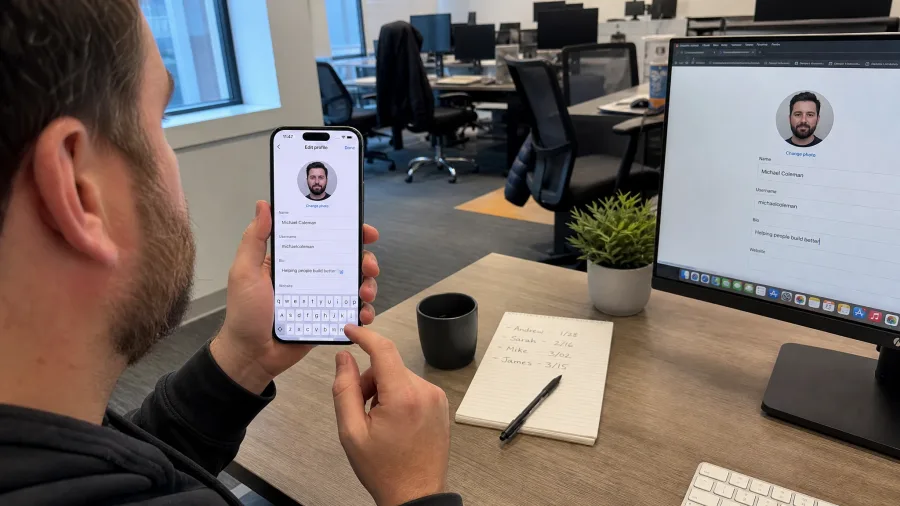
Now go look at your own profile the way they would see it. If it looks like a random first name plus a string of numbers, that's a bad look. So is a dark landscape photo from 2014 and bio field left empty. It reads as a bot, or worse, as someone with nothing going on.
Fix it in five minutes. Real name. Clear photo of your actual face. A short line about what you do, even if what you do right now is a desk job and a side project you're building at nights. That's fine. It's honest, and it's specific, and it's the difference between looking like a bot and looking like a person worth replying to.
Do both this week. Leave three real comments on someone's posts. Then fix your profile so that when they click on your name, they find somebody.
A Short, Specific, No-Pitch Message Gets Read
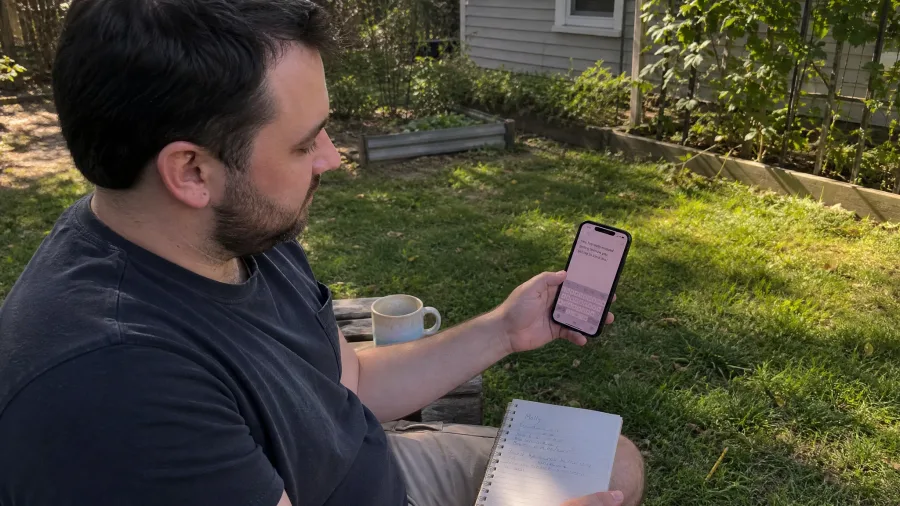
A good first message reads like it could only have come from you, because it mentions something a stranger with a search bar would never know, and it asks for nothing.
Open with their actual name, spelled right. Not "hey there" and not "dear founder." Their name says I know exactly who you are and I'm not blasting this to forty people.
Then drop one very specific detail that proves you did the work. Not "I love your content" – that's noise every person in their inbox writes. Something like a line from a talk they gave two years ago, a decision they made that you disagreed with at first, or the exact number they quoted in a post. If you can't think of a detail that specific, you haven't done the research yet, and that's the real problem.
If you share a mutual connection, name them in one clause. "Priya from the Tuesday hike said you two built the first version together" does more work than a whole paragraph of flattery.
Here's what to leave out: no pitch. Not your company, not your idea, not your deck. The moment they smell a sale, the message gets skimmed and closed.
And don't let AI write it. People read hundreds of these a week and the polished, mid-sentence-balanced tone gives itself away. Your slightly messy, real voice beats a perfect generated one every time.
Keep it under a hundred words. Short says I respect your time. Long says I need something and I'm working up to it.
Try this shape: their name, one specific detail, the mutual connection if there is one, one honest line about why you're reaching out, then your number. Five sentences. Send it and move to the next name on your list.
Ask About a Specific Choice You Can't Google

The question that gets a reply is one where you're asking for advice on a specific decision you're actively facing, and where the answer could only come from them.
"How do I start an AI company?" is the worst version. If they've made thirteen videos about exactly that, you just told them you watched none of them. It's asking them to redo work they already did, for free, for someone who couldn't be bothered to look.
The better version is narrower. "I watched your videos and I'm deciding between two AI tools for a small project – which would you recommend, and why?" Now they're being asked to weigh in on a real choice, and the reply is about two sentences for them. That's a gift, not a chore.
The key is showing effort. A good question says I've already done most of the thinking; I just need your judgment on one fork in the road. That's flattering without being sycophantic, and it's fast to answer.
The ones that get filtered out are easy to spot. "Want to team up?" "Promote my product?" "Put money in?" Those read as take, take, take. Even when there's nothing wrong with the ask in principle, a first message is the wrong place for it.
Save the pitch for when you've earned it. The first message is only ever about earning a reply – and a question only they can answer is the cheapest, cleanest way to do it. Be specific, be humble, do the homework first, then ask the one thing you actually need.
✉️ The first-message sequence
Do the homework
Read their book or watch their videos and note one specific detail.
Send the first message
Their name, the detail, one advice question, no pitch, your cell number.
Bump once after 5–7 days
Add one new detail you learned since then — don't just nudge.
Bump once more after two weeks
One more short message, then stop and keep the list moving.
Thank them fast
When they reply, say what you did with the advice and how it went.
Make It Easy by Putting Your Number in the Message
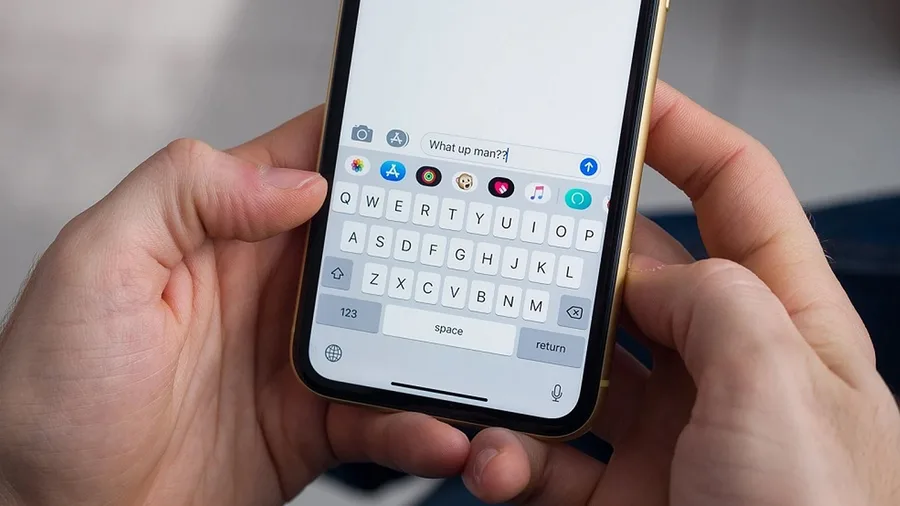
You make it easy to respond by putting your cell number right in the message and telling them they can just text you.
Think about where they're reading it. They're on a phone, probably between meetings, maybe in the car. They finish your message, agree with it, and now they have to reply, wait for you to reply back, arrange a time, trade emails, schedule a call three steps later. Every one of those steps is a place where it dies.
Now flip it. Your number is sitting in the text. They tap it and call while it's still on their mind, or they fire off a two-line text and you're talking in ten minutes. That's the move – remove every reason for the reply to get postponed.
Don't make them dig. Don't say "reach out on LinkedIn" and leave the rest to them. Don't point at a website contact form. Don't propose a fifteen-minute call that has to be booked through a booking tool. All of those are friction, and friction is what kills first contact.
It's an invitation, not pressure, so phrase it that way. "If it's easier, my cell is 555-0134 – happy to text." That's it. If they want to use it, great. If they reply by email instead, also great.
The number is the fastest door into their contacts. Make it effortless to walk through and more replies will actually come back.
Thank Them Fast and Report What You Did

When they reply, thank them the same day and tell them exactly what you did with what they gave you.
That's the whole move, and almost nobody does it. Something like: "I'd never heard of that tool – I tried it, rewrote the whole backend, and the app shipped this week. Thank you." It takes thirty seconds to write and it does two things at once. It tells them their time was well spent, and it makes them feel like they actually moved your life forward, because they did.
People who give advice rarely find out what happened next. Being the one who closes the loop makes you memorable in a way a thank-you card never will.
Then look for a chance to give back. Not immediately, and not as a transaction. If they're launching a book, join the community around it and be useful there. If they run an event, offer to help. If they post something, comment like a real human.
Keep it short and specific. Long gushing emails after a two-line reply feel like work. One or two sentences that show impact are the right size.
This is the step that turns a reply into a relationship instead of a dead thread – and it starts before the next request ever appears.
💡 PRO TIP
The volunteer shortcut
Reaching out to top people on someone else's behalf gives you permission and a reason to talk. You're adding value before you ask for anything.
Volunteering Gets You Into Rooms You Can't Buy Into

Offer to do the unglamorous work that puts you in the room, because volunteering is the one ticket that doesn't depend on knowing somebody today.
Picture the version of this that actually happened. Someone moved to San Francisco with no contacts at all and reached out to Cassie, who owned the biggest events company in the city. Not to ask for a job, not to ask for an introduction – to offer to recruit and reach out to speakers for her events. She said yes and handed over her hit list.
That single yes changed everything. Contacting top entrepreneurs on her behalf gave permission to reach out. There was a reason to send the message: I'm helping Cassie and she asked me to reach out to you. That's a conversation starter that doesn't need anything in return, and it builds a relationship before you ever ask for a thing.
One honest note: this happened after selling a company and already being a multi-millionaire. The money didn't make the move work – the move is the move. You can do exactly the same thing with an event organizer in your city who needs hands, or a small conference that needs someone to chase down speakers.
Find the person organizing the thing you want to be near. Write them one message offering to do the work nobody wants to do. That's how a stranger becomes a room.
Keep Celebrating Wins and Anticipate Their Problems

You keep it alive by making yourself the person who shows up in their corner before anyone else does. One friend of mine crossed a million followers on Instagram. Another crossed a million on YouTube. Both times, the first comment under the post was mine, and both times I texted a screenshot of the number like a proud dad. It costs nothing and it means everything, because nobody notices who said it third.
The harder half is anticipation. Follow what they are working on closely enough that you see the problem coming before they announce it. Read their posts about the project, notice the launch date, and ask yourself what will break first. Then say it out loud: 'You mentioned the rollout is next month. Is the support side sorted?' That one question puts you a step ahead of everyone who only congratulates, and it proves you were paying attention.
'Your editor mentioned the backlog. I know someone who clears those fast, want the intro?' An introduction that fixes a teammate's headache often lands better than one aimed at the boss, because it reaches them as relief rather than as another unwelcome email.
So set a rhythm. When a win drops, be first. When a deadline gets close, ask what is likely to go wrong. Ten minutes a week, and the relationship never goes cold.
The Payoff Is a Person for Every Problem
What you get is a person for every problem. Not a bank account – a person. A problem with money, you've got a guy. A problem with people, you've got a guy. Need to hire, you have a person. Slowly, that list stops being a list and starts being a map of your own life.
That's what 'rich relationships' actually means. Rich in quality, not in money. The grocery-money crowd and the billionaire crowd want the same thing: someone they can call when it matters.
Look at what each of your five names gives you. The wake-surfing name isn't going to fix your money problem. But the money name might know the exact person who can fix your people problem, and one hop across gets you there.
Here's the part you don't feel until it happens. This stuff pulls you up when you're down. Not in a motivational-poster way – in the way where a text from someone who's been through it lands in your worst week and you remember you're not alone in it.
For a content creator it goes further. Knowing you can reach the best person on any topic makes you feel invincible. Doesn't matter whether they say yes. You just know the door exists. That confidence shows up in the work, and the work gets sharper because of it.
So stop counting what this is worth in dollars. Count the problems you now have a human for.
Find the Email, Then Follow Up Twice and Stop

You find the email by looking where they've already left it. Their website contact page, the show notes on their podcast, the footer of their newsletter, or their LinkedIn. If none of that works, ask a mutual connection for a warm introduction. What you don't do is buy a sketchy email list, ever. That's an instant reputation hit and a fast track to the spam folder.
If there's no mutual connection, use the public contact route and make the first message even shorter than you planned. Two sentences. Who you are, one specific detail, one question. Done.
Then you follow up once after five to seven days, and here's the key: bring one new thing you learned. A detail you noticed in a recent post, a tidbit from a podcast, a small win you saw them post about. Never just 'bumping this.' A follow-up without something new in it is a follow-up nobody reads.
If the silence continues, send one more after two weeks, then stop. Full stop. Keep the list moving instead.
And don't spiral. No reply is not a rejection. It's just one name on a list that should be wide enough that any single person doesn't matter. You want the list so wide that when one door's quiet, you barely notice because you're already knocking on the next three.
Frequently Asked Questions
What if they never reply to my first message?
Look on their website, podcast show notes, newsletter, or LinkedIn, or ask a mutual connection. Follow up once after 5–7 days with one new detail, then once more after two weeks, then stop. No reply is not a rejection — go wide and keep the list moving.
How do I find someone's email without buying a list?
Check their website contact page, podcast show notes, newsletter archives, or LinkedIn, or ask a mutual connection. Never buy a sketchy email list. If there's no mutual connection, use the public contact route and keep the first message even shorter.
Can I use AI to write my outreach?
No. Use it for inspiration if you want, but write the actual message yourself. The whole point is a specific detail only a human would know — the message has to sound like you, not a bot.
Do I need to move to San Francisco to make this work?
No. Moving to an industry hub is one way to get proximity, but the volunteer play, small dinners, and free local or online communities cover the no-travel version. The room matters more than the city.
Pick One Goal, One Name, One Message This Week
The whole system narrows to this: pick one goal, write one real name beside it, and send one short, specific, no-pitch message this week. Then report back — to them or to yourself — what you did with any reply.
You don't need a hundred names to start. You need one and the guts to press send. The rest is follow-through.
Start with one name
Write the goal, write the person, send the message. Then follow up once after 5–7 days with one new detail.