

Two scores pulled in the same week came back 40 points apart – same borrower, same $4,500 balance, same $320-a-month auto loan.
That gap is not bad luck. It is the price of believing the wrong things, and the myths sound harmless because the people repeating them mean well.
Picture the file behind those scores: two cards with $5,000 limits, $4,500 on one and $0 on the other, a $320-a-month auto loan, and a $22,000 used-car quote in hand. The absorbed advice says close the empty card to look tidy and leave a balance riding so the bureaus can see the card in use. On the same five-year loan, the best and worst offers quoted in one week were $2,100 apart in total payments.
So treat each of the eight beliefs below as a price tag rather than a matter of etiquette. Every one of them costs dollars in this example, and every one has a replacement – a statement closing date, a free report pull, a written dispute filed before the application goes in. Read them ranked by what they cost, run the three that apply to you this week, and if there is no balance to pay down, you can set most of this aside entirely.
The Pre-Application Order of Operations
Pull all three, same day
Free once every 12 months at AnnualCreditReport.com. Pull all three the same afternoon so you are comparing the same week, not a stale file against a fresh one.
Pay down 21 days before closing date
To move the $4,500 card to $1,500 and report at 30%, the payment has to post and clear 21 days before the statement closing date. The due date does nothing for your score.
Nothing new in the 90 days before
No new cards, no closed accounts, no balance transfers inside 90 days of the loan application. A 40-point swing costs more than any sign-up bonus is worth.
One letter per error, per bureau
Write to the bureau that holds the error, not all three. The $412 item came off free; a $1,200 repair quote removed nothing accurate.
Match every account to a statement
Line up each balance on the report against the statement that closed most recently. If an unfamiliar $412 account is on there, dispute it before the loan application, not after.
Cards, balances and the utilization math
Utilization is the balance-to-limit ratio the bureaus see, and it is the fastest-moving number on your file. It is also where the cheapest fixes live because it does not require paying off a single account.
In this example the borrower has two cards, each with a $5,000 limit, and $4,500 sitting on one of them. That is a 45% overall utilization, which is high. Paying down to $1,500 on that card moves it to 30% and the overall figure to 15% — the sweet spot most scoring models reward.
1. Myth: Closing an unused card helps your score

You are not about to wreck your score by tidying up. That is the fear, and it is worth putting down first. Closing a card is not a sin; it is just a move with math attached, and the math only bites in a specific situation.
Picture the two cards side by side: $4,500 on one, $0 on the other, both with $5,000 limits. The empty card feels like dead weight. Close it and the same $4,500 now sits against a single $5,000 limit. That is straight from 45% overall utilization to 90%, with not one dollar of debt changed. Utilization just means how much of your available credit you are using; it is the balance-to-limit ratio the bureaus read as a risk signal.
The hit comes twice. The card's $5,000 limit of available credit leaves the file, so the same balance looks larger. The account's age leaves too, which shortens your length of history. Same debt, worse picture, on two counts.
Where this needs a real look is your own report and your own application date. If you have balances and a loan coming, keep that empty card open until after you close. If you carry nothing and are not applying for anything soon, the same close can simplify your life with no utilization penalty to worry about. The CFPB's own explainers on credit reports and scores are the free, official place to check how bureaus treat available credit and account age, rather than taking a relative's word for it.
Pull the report, read the limits, and make the call against your numbers, not the tidy-up instinct.
💡 Tip: If you don't want the temptation, put the card in a drawer or freeze it in a block of ice. Don't close it.
| The myth | What it cost in this example | What to do instead |
|---|---|---|
| Closing an unused card helps | Utilization goes from 45% to 90% on the same $4,500 | Keep the $0-balance card open |
| You must carry a balance | About $840 in interest over 12 months | Pay before the statement closing date |
| You have to be debt-free | $2,100 spread on the used-car offers | Get overall utilization to 15% |
| Income drives your score | A raise changes nothing on the report | Pay the card down to $1,500 |
| Checking your score hurts it | The $412 error sat for four months | Pull your own reports free |
| Shopping wrecks your score | $2,100 more in total payments | Shop inside one short window |
| Paying a collection erases it | Item stays after payment | Dispute it if it's wrong |
| A repair firm can wipe it | $1,200 quoted, nothing removed | File the dispute yourself for free |
2. Myth: You need to carry a balance to build credit

Somewhere along the way you picked up the idea that a card with a zero balance every month looks unused, and that a small balance left to ride proves to the bureaus you can handle credit. So you leave $40, $80, $150 on the statement and pay the rest, feeling vaguely responsible about it. Here is the thing nobody sat you down and said: a payment reported on time reads exactly the same whether you cleared the whole statement or carried a chunk of it. The balance sitting there earns you nothing on the score. It only earns the issuer interest.
So the move costs you, and the cost is bigger than it feels when it's spread across a statement. Take the $4,500 sitting on the card in this example, carried month to month instead of cleared. Run the interest on that over twelve months and you're looking at roughly $840 gone. Not gone to your credit history, gone to the lender. That's a decent used-car down payment or a few months of the auto loan, handed over for a belief that the bureaus don't even reward.
The part that trips almost everyone is the vocabulary. There are two dates on your card and they are not the same one. The due date is when the payment has to land to avoid a late mark. The statement closing date is when the issuer tallies the balance and reports it to the bureaus. If you pay it all off a few days before the due date, you're technically on time and technically cleared, and the statement may still have gone out with the balance on it. Pay before the closing date and the number the bureaus see is the low one.
This is the trade-off, said plainly: paying in full takes more cash up front, and it takes you actually knowing your closing date instead of just your due date. It costs you a calendar reminder and a couple of minutes to find the date on the statement. What it buys back is the $840 and a cleaner reported balance, which is what the next lender is looking at anyway. Free money is rare. This is close to it.
The honest exception is worth naming, because it's the one case where carrying a balance genuinely doesn't hurt. If you have a card on a 0% promotional offer, and you've parked the cash in savings and circled the payoff date on the calendar before the promo ends, the interest cost in that window is zero. The balance can sit. Just be ruthless about the end date, because that's when the rate snaps back and the whole math flips.
For the reader with a real application coming, the takeaway is specific. Pull the card's last statement, find the closing date, and set a payment to clear the balance a few days before it. That's the whole move.
What the Example Borrower Pays for Those Two Myths
Illustrative figures for one example borrower, not a quote or a guarantee.
3. Myth: You have to be debt-free for a great score

Before you convince yourself you can't apply until every card and loan is at a zero balance, open your last statement and look at the ratio, not the total. Check the balance on each card against its limit, then add them together. That percentage is the number that carries the weight with lenders. Debt freedom isn't the bar. A low balance-to-limit ratio is, and they are not the same thing, however much it feels like they should be.
Run this example through it. A borrower carrying a $320-a-month auto loan, not paid off, not debt-free, walked in at 15% overall utilization. The best and worst quotes on that $22,000 used-car loan, same week, came $2,100 apart in total payments. That's the spread the low ratio bought, and it was available with a manageable car payment still on the books. A paid-off mortgage and a loan paid exactly as agreed don't disqualify you. They show a history of handling debt, which is the whole point of the file.
The check-in part is what to do in the weeks before you apply. Look at three things: the utilization on each card, whether any account got opened or closed in the last month, and whether anything on the report moved. Stillness matters. Opening or closing an account right before you apply adds a hard pull and shuffles your averages, and a lender reading a fresh, busy file has a reason to be cautious.
If the balances are too big to wipe out completely, a partial paydown still beats sitting on zero. Knock the $4,500 down to something manageable and the picture improves, but do it before you hand in the application, not after. The lender reads the file as it stands on the day, not the day you mean to fix it. Fix first, apply second, keep the report quiet in between.
How Much Each Myth Costs (Low to Severe)
Ranked by dollars in the example borrower's file — lower is cheaper
- Checking your own score: $0 — the only cost is delay
- Opening a limit increase too late: Adds an inquiry right before an application
- Closing an unused card: 45% utilization jumps to 90% with no new debt
- Carrying the $4,500 on purpose: About $840 in interest over 12 months
- Skipping the loan shop: $2,100 gap in total payments
What the score actually looks at
Half of the myths on this list come from not knowing what sits inside the score. Income doesn't. Your job title doesn't. Your checking account balance doesn't.
What does: payment history, how much of your available credit you're using, how long you've had credit, and how often you're applying for new credit. That's basically it.
4. Myth: Your income counts toward your credit score

$4,500. That is the only number in this equation the borrower can push around before applying, because a salary can double and the score will not move a point.
Income and job title get typed into the application form, but nothing about either one lands on the credit report or feeds the scoring model; a raise changes the number the lender sees for affordability, not the number that sets the interest rate. The structure that actually gets copied is a two-line sheet: on the left, the balances and limits from the report; on the right, take-home pay and rent. The left column is the score. The right column is what the lender weighs alongside it. Paying the $4,500 down changes the left column; a promotion only touches the right.
A higher limit on the same balance lowers utilization without a dollar changing hands, but the request can pull a hard inquiry, so time it months ahead of an application, never in the weeks before. If you only keep one habit from this, keep the sheet: balances and limits, updated the day the statement closes, so the line you can move is the one you are watching.
💡 Tip: Ask for a limit increase on your oldest card with the best payment history, and only if you aren't applying for a loan in the next 90 days.
5. Myth: Checking your own score lowers it

I checked my own score on a Tuesday, then spent the rest of the week half-convinced I had just cost myself points, which tells you how deep that one goes.
A pull you make yourself is a soft inquiry, and it does not touch the number; the hard inquiry is what a lender runs when you ask for new credit. The cost was the four-month delay. That $412 collection sat on the report that whole time, and it was an error that came off after one written dispute. The check was never the problem. The not-checking was.
All three reports come free at AnnualCreditReport.com, one per bureau. Pull them staggered across the year and each passes its own clock between checks, so an error that lands on one bureau does not wait twelve months for its turn. It is okay to start with one and set a calendar reminder for the next. If you are unsure what counts as hard versus soft, the CFPB spells it out; read the official page rather than a comment thread, which is where most of this folklore began.
⚠️ COMMON MISTAKE
Don't pull all three on the same day and stop
Pulling all three reports the same afternoon feels thorough, but it means every bureau's error snapshot is dated the same day. Pull one free every four months instead so you get three chances a year to catch a new problem.
6. Myth: Shopping around for one loan wrecks your score

The belief says one loan application means one inquiry, so five lenders means five hits to the score and five reasons to stay put with the first offer. For a single auto or mortgage loan it does not work that way.
Inquiries from one shopping window are grouped and treated as a single inquiry, so the same loan priced at several lenders does not multiply the damage the way separate new-account applications spread over months would. The price of believing otherwise is measurable: the same borrower, the same week, quoting a $22,000 used-car loan over five years, saw the best and worst offers differ by $2,100 in total payments. There is no utilization left to trim, no collection to dispute, no balance to pay down before the statement closes. There are phone calls.
Here is the permission, and it is real. You do not have to call eight lenders. Three is enough to see the spread, and if two of those are within a short drive of each other, do them on the same afternoon. Shopping-window lengths get revised, so check the current one with the bureau or the CFPB before you rely on it; the rule is stable in shape, not fixed in days.
The one case for skipping: a single pre-approved offer from your own bank and no time to compare. Outside that, sitting still costs $2,100 in this example. That is an expensive kind of peace.
📋 The Week Before You Apply
Pull all three reports
Get Equifax, Experian and TransUnion at AnnualCreditReport.com and read every line.
Check the utilization math
Add up all limits and all balances. Target a ratio of 15% or lower.
Pay the big card down
Get the $4,500 card to $1,500 before the statement closing date, not the due date.
File any written dispute
An actual error comes off after one letter filed directly with the bureau.
Freeze new applications
Open nothing new and close nothing for 30 days before the application.
Shop all your loan quotes
Get at least three offers inside a short window — they count as one inquiry.
Fixes that don't fix anything
This is the part where people spend the most money and get the least movement. Both myths below feel like action and neither one changes an accurate record.
The short version: paying a collection doesn't erase it, and a repair firm can't wipe it either. What does move an error is a written dispute filed by you, which costs nothing.
7. Myth: Paying a collection erases it from your report
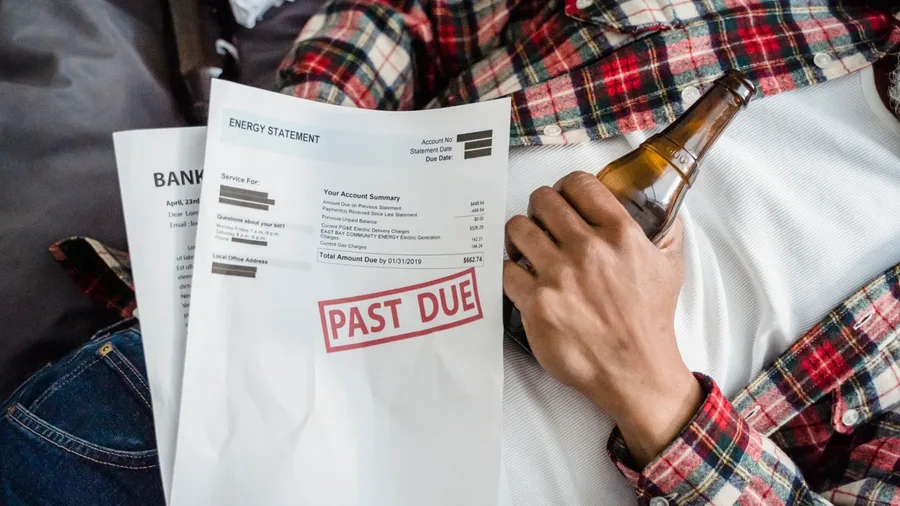
The move is this: before a dollar goes out the door to a collection agency, get their promise about how the account will be reported in writing, then decide whether to pay at all.
An accurate collection is reported as-is whether you settle it or not. The late mark and the collection entry keep their original dates and stay put, because the bureau's record is a history of what happened, not a balance sheet. What actually changes when you pay is the amount owed. The derogatory line goes nowhere until it ages off, which takes seven years from the date of first delinquency in most cases. If the old mark still shows a balance owed, it can keep pulling the score down even after your check clears.
So the honest order is: ask the collector to put in writing exactly how they will report the account once paid, wait for that letter, and then pay. If they won't put it in writing, don't send the money. Set a calendar reminder to recheck the report 30 to 60 days after the payment clears, because the way they report it is what you are buying. You should not have to chase them by phone every week to get a written confirmation.
Now the other case. If the collection is not yours, the pay-and-wait approach is the wrong one. The $412 account on this file looked unfamiliar, and it was an error. A single written dispute filed directly with the bureau took it off at no cost, without a dollar changing hands and without an agency getting involved. It sat there for four months because nobody had pulled the report to see it.
The CFPB is the plainest source for dispute rights and what a collector is and is not allowed to promise. Read that page before you agree to anything on the phone, and before you pay a firm to paraphrase it for you.
8. Myth: A repair firm can wipe your bad marks

Mostly no, and the part it can do is the part you can do yourself for free. Here is the flat version: anyone offering to remove accurate history is selling you something that cannot be delivered.
The $1,200 quote in this example bought a round of blanket dispute letters aimed at nearly everything on the file. Nothing accurate came off. Nothing could, because a dispute challenges whether an item is correct, not whether you would like it gone. The same borrower's $412 error, which was genuinely wrong, came off through one written dispute they filed themselves, at zero cost. The expensive round did less than the free one.
That is the whole reason to start small instead of signing a contract. You do not need a $1,200 package to send a letter. You need a report, a pen, and one genuinely wrong item.
Start with a single $0 pull of all three reports at AnnualCreditReport.com. Circle the one line you can prove is wrong, write a short dispute to that bureau, and mail it. That is the whole first move, and it costs the price of a stamp.
Small still works here because the mechanism is narrow: each dispute has to point at a specific inaccuracy on a specific account. Fifty disputes against fifty accurate items do not compound into a fix. One honest dispute against one wrong item does its job in about 30 days.
The catch is time. Bureau responses typically take weeks, and if you have an application date, two weeks out is too late to start. Pull the report first, give the dispute room to run, and only then apply.
There is a real case where a firm earns its fee: a report so long and messy that it would take you days to work through, and no time to learn it. Even then, what you are buying is accurate paperwork done faster, not a removal of your history.
💡 Tip: If you do hire someone, ask for their written agreement and read the section on how disputes actually get filed. Anything promising removal of accurate items is a red flag.
What Actually Moves the Score vs. What Feels Like It Does
Moves the number
- Paying the $4,500 card down to $1,500 before the statement closing date
- Pulling all three reports free and disputing the $412 error
- Keeping the $0-balance card open for the available limit
- Shopping all your loan offers inside one short window
Feels productive, changes nothing
- Closing an unused card to 'tidy up'
- Carrying a balance on purpose to look active
- Handing a repair firm $1,200 for blanket dispute letters
- Paying a collection without getting the reporting terms in writing first
Frequently Asked Questions
How much should I pay down before applying for a car loan?
Aim for overall utilization of 15% or lower. In the example, that means getting the $4,500 card down to $1,500, which takes the ratio from 45% to 15%. Do it before the statement closing date so the lower balance is what gets reported.
Is it too late to fix my score before my application?
Not necessarily. Utilization changes within a billing cycle or two, which is the fastest lever you have. Disputes take longer, typically several weeks. If your application is inside 30 days, focus on paying balances down and pulling your reports — the rest can wait.
Should I close a card I never use?
Most of the time, no. If you carry any balance anywhere, closing that card removes its limit from the ratio and can push utilization up sharply. Put it in a drawer or freeze it and keep the account open, unless you're carrying zero balances and not applying for anything soon.
Does checking my own score hurt it?
No. Your own pulls are soft inquiries, and lenders never see them. Only a hard inquiry, like applying for a new card or loan, shows up on the report. Pull all three free reports at AnnualCreditReport.com and stagger them across the year.
Can a credit repair company remove accurate items?
No. Accurate negative items stay for the reporting period regardless of who files the dispute. A dispute removes errors, not facts. If an item is genuinely wrong, file the dispute yourself with the bureau; it costs nothing and works.
Does my income affect my credit score?
Not directly. Your income goes on the application, but it isn't in the credit report or the score. Your limits and balances are what count. A raise helps with affordability and loan approval but doesn't move the score itself.
The One Myth Worth Closing Today
Ranked by dollars in this example, two sit at the top. Closing the empty card turns 45% overall utilization into 90% against the same $4,500 – a worse picture at identical debt – and carrying that balance instead of paying it in full cost about $840 over 12 months. Not shopping around leaves up to $2,100 on the table; not checking your own report let a $412 error sit for four months; paying an accurate collection spends cash and leaves the record; waiting for debt-free costs better offers when 15% utilization would have done; and chasing a higher income moves the score not at all. At the bottom, a $1,200 repair-letter quote removed nothing that the free written dispute did not.
Three moves this week. Pull all three reports free at AnnualCreditReport.com. Pay the $4,500 card down to $1,500 before the statement closing date – 90% to 30% on that card, 45% to 15% overall. Dispute only the $412 item, in writing, directly with the bureau.
And skip all of it if there is nothing to pay down: protect on-time payments, open no new accounts before applying, no repair letters and no closing accounts. Return to that $22,000 used-car loan and the 40-point gap from the same week. The dollars live in the balance, the date, the free report and the written dispute – most of the fix costs nothing and takes one statement cycle.
Pull your three free reports today
AnnualCreditReport.com gives you Equifax, Experian and TransUnion at no cost. Read every line and check the utilization math before your next application.