
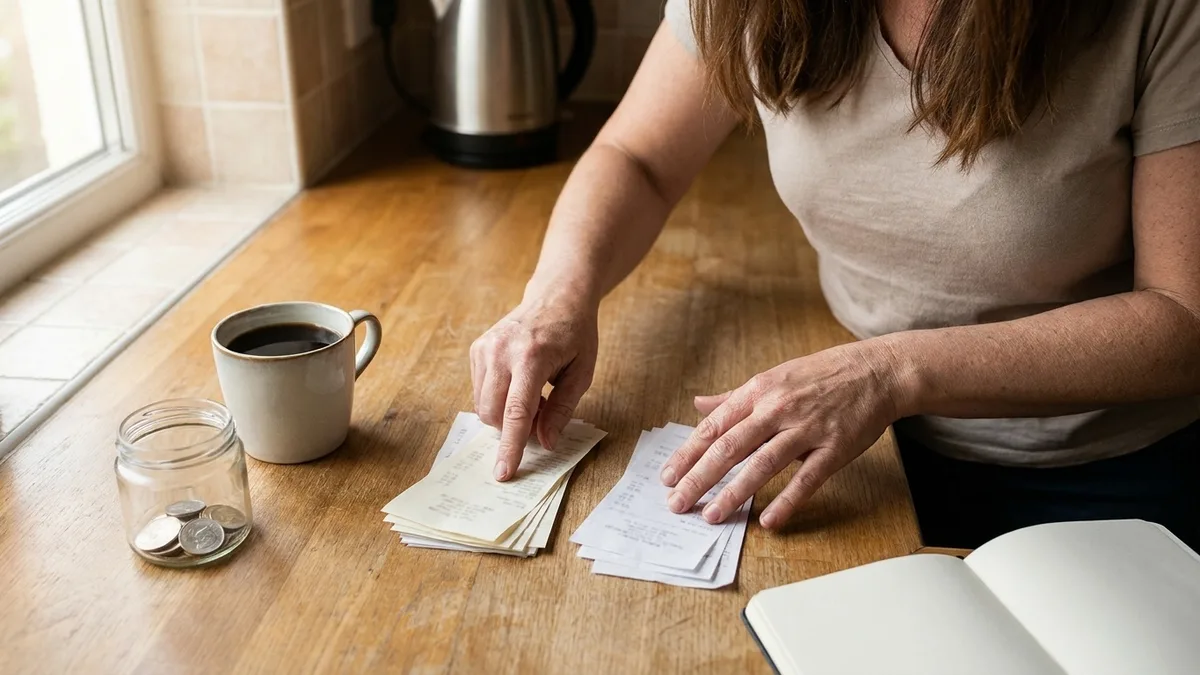
For two years I paid for a gym membership I could not have told you the address of. It renewed on the second of the month, under everything else, and the day I finally looked at the statement list I felt less stupid than I expected to. So look at this honestly: some of your money is leaving before 9 a.m., and it is not one purchase you can point at.
The paycheck goes and there is nothing big to show for it. What sits there instead is coffee, the add-on at the counter, three subscriptions, the commute, lunch, and the AC running in an empty place.
No single villain here. On the kind of example this piece works through, six ordinary morning moves add up to roughly $8,900 a year. The largest line is a scheduling habit, not a purchase.
So every move gets the same test: what it costs across a year against what changing it actually costs you, in money, time, or usefulness. Some are worth killing. A couple are worth keeping on purpose.
By the end you will have the order to work in, the two cuts that cost you nothing this week, and the one thing to do before the next workday starts.
Quick Tips Before You Start
Track one week first
Before changing anything, log every morning purchase for seven days so you see the pattern.
Annualize every habit
Multiply the daily cost by 20 workdays, then by 12 months—the yearly number makes the decision clearer.
Weigh the trade-off
Some morning habits buy you time or focus. Cutting them can cost more than the money you save.
Start with zero-friction cuts
Cancel forgotten subscriptions and set up pre-order for the counter add-on—no daily willpower needed.
1. The daily café latte costs about $1,500 a year

Do the math once before you decide anything. A $6.25 cup on 20 workday mornings is $125 a month and $1,500 a year, and that annual number is big enough to make a deliberate choice about instead of a guilt trip you keep failing. The drink was never the problem. Five of them a week is.
people either pretend the $1,500 is nothing or try to shame themselves into never buying coffee again, and neither one survives a real week. Some of those café visits are doing a job the kitchen can't, a work call, a client meeting, twenty minutes away from a crowded house, and cutting them can cost more in lost work and household friction than the $1,500 ever did. If that's what the cup is for, keep it and name the job.
For the rest, set a fixed number of counter mornings a week, two is a workable version, and make the others at home. The rule decides in the kitchen instead of the queue. Redirected, that same $1,500 is a cushion in an emergency fund, which is one plain use, not a return you're counting on. Keep the café only if it does something a home kitchen can't; otherwise the $1,500 is a purchase you chose, not a leak you never saw.
💡 Tip: Keep the café only if it does a job your home kitchen can't. Otherwise the $1,500 is a deliberate purchase, not an invisible leak.
⚠️ COMMON MISTAKE
Don't cut the coffee without a replacement plan
If you cancel the café run but don't set up a home alternative you actually like, you'll be back in line by Thursday and feel worse about it. Decide what you'll drink instead before you cancel.
2. The counter add-on quietly doubles the coffee run

The coffee run has a second charge on it that almost nobody tallies separately. Order while you're hungry with the pastry case at eye level and the $4.50 add-on becomes the default: 20 mornings of it is $90 a month and $1,080 a year sitting right on top of the drink. Same counter, same minute, nearly double the annual total.
Take the decision out of the room. Pre-order and pay in the app so the case never enters the loop, or eat breakfast before you leave the house so you're not arriving hungry. If you already eat at home, this doesn't apply to you at all, skip it.
What you leave alone is the morning itself. No new ritual, no extra stop, just an order placed when the case was nowhere in sight and a hunger that got handled before it got expensive. The $1,080 buys no meeting and no ritual, so it's the easiest cut on the list, fixed by changing either the hunger or the channel you order through.
💡 Tip: Keep a protein bar or a piece of fruit in your bag or car so the hungry version of you has an option that isn't the pastry case.
Do / Don't for the morning coffee and counter run
Do
- Set a fixed number of café mornings per week (e.g., two).
- Pre-order or use the app so the display case is out of sight.
- Eat breakfast at home or bring a snack to avoid hunger-driven add-ons.
- Redirect the saved money to an emergency fund automatically.
Don't
- Don't cut the café run without a home alternative you like.
- Don't rely on willpower at the counter—change the ordering channel.
- Don't skip breakfast and expect to resist the pastry case.
- Don't feel guilty; just make it a deliberate choice.
3. Three forgotten subscriptions renew while you scroll
For most of us, it's the subscriptions that renew in the first days of the month, before you've opened the app that charges them.
I went looking through mine on a Sunday, phone in hand, and the lineup was $15.99 for streaming, $11.99 for cloud storage, and $9.99 for a fitness app I'd opened maybe twice since the free trial rolled into a charge. A full cash flow audit of every purchase for a few months tends to surface the same kind of quiet leak. That's $37.97 a month, $456 a year, leaving in an automatic payment while I scrolled past the thing I was paying for.
The $456 is the real figure. Read it as a year of your own money spent on nothing you'd defend out loud.
The fix took ten minutes. Pull up the subscription list in your phone's app store, both iPhone and Android have one, and it shows every recurring charge tied to your account in a single scroll. That's the part I got wrong for a long time: I kept hunting for cancel buttons on each company's site, wrestling with retention screens, when the actual switch was sitting in one menu the whole time.
Cancel from the app store list, not the individual websites. One screen, every charge, a tap each.
The target is the ones you'd have to check the date to name. Two subscriptions I use every single day, the streaming and the storage, stay exactly where they are; killing those costs me more in convenience than the $456 came to.
So the true zero-friction cut is this: cancel the forgotten ones, keep the two you actually touch daily, and you've saved most of $456 a year with no morning ritual lost. You didn't give anything up you were using. You gave up paying for ghosts.
💡 Tip: Set a calendar reminder to review subscriptions every three months—new ones sneak in with free trials.
| Morning habit | Cost each time | Per month | Per year |
|---|---|---|---|
| Café latte | $6.25 | $125 | $1,500 |
| Counter add-on | $4.50 | $90 | $1,080 |
| Three subscriptions | — | $37.97 | $456 |
| Commute by car vs bus | $13 more | $260 | $3,120 |
| Bought lunch vs packed | $10 more | $200 | $2,400 |
| Lights and AC left on | — | $28 | $336 |
4. Snoozing into a drive costs $13 more each day
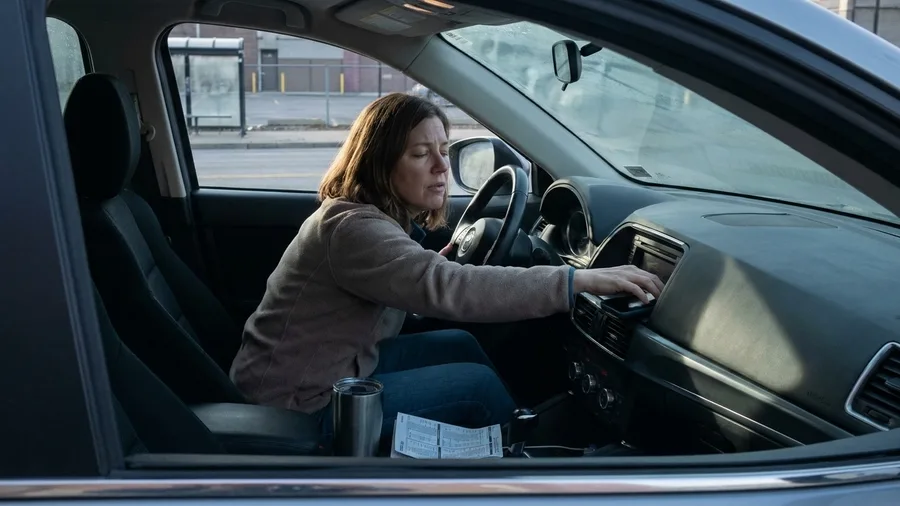
$18.50. That is the drive: $15 for parking, $3.50 for gas, one workday. The bus round trip is $5.50, so the car costs $13 more every day you take it.
Over 20 weekdays that gap is $260 a month and $3,120 a year. It is the largest line in this whole morning, and here is the part that stings: the snooze button usually decides it. Hit snooze twice and the bus pulls away without you, and the day is suddenly an $18.50 day.
So build a morning that commits to the bus before you are awake enough to argue with it. Move the alarm 15 minutes earlier and stop treating the bus as a race to reach the stop on time. People who made the switch did the alarm, not a new attempt to leave on time, because the leaving-on-time plan fails on the first slow morning. The earlier alarm fails on almost nothing.
It does not apply to every reader, and that matters. No bus route, a childcare drop-off, free parking at work, or a car you need at midday all change the math, and the $13 gap is not real for you. Run your weekdays against your own route before you build the new schedule, and keep the car where the morning genuinely depends on it.
Where a bus does exist and the only thing between you and it is the snooze, this is the first project. Set the alarm tonight, walk to the stop once tomorrow, and count the $13 the day you save.
⏰ Your 15-Minute Morning Money Reset
Set the alarm 15 minutes earlier
This single change makes the bus the default and skips the $18.50 drive.
Pre-order coffee or make it at home
Decide the number of café mornings per week and use the app to skip the pastry case.
Audit subscriptions
Spend 10 minutes cancelling forgotten subscriptions in your app store settings.
Pack lunch the night before
A 10-minute action saves $10 compared to buying lunch out.
Set the thermostat schedule
Program a setback for when the house is empty and switch off the power strip at the door.
5. Buying lunch costs $10 more than packing it

The clock reads 7:45, you are late again, and the packed lunch you meant to make is still a plan. By 12:30 you are at the counter, $14 for a sandwich and a drink, and the morning has collected its second fee.
Lunch bought out runs about $14. A packed lunch runs about $4. On the 20 weekdays in the example month that gap comes to $10 a day, $200 a month, $2,400 a year, the second-largest line after the commute.
The move is small and it happens the night before, not in the morning. You need roughly 10 minutes to put a lunch together the evening before, not an hour of meal prep, and 10 minutes at night is a decision the 12:30 version of you cannot undo. Packing at 7:45 is a rushed, already-losing morning; packing at 9 p.m. is a calm one.
For the nights you do not pack, keep something at the desk, a jar of peanut butter, a box of crackers, a few pieces of fruit. The hungry 12:30 version gets a cheap option instead of a $14 one.
It does not apply to team lunches that are part of the job, client meals, or a cafeteria that feeds you for under $6. Where it does apply, the night-before shelf is the whole fix, and it costs $10 a day.
💡 Tip: Keep a stash of shelf-stable snacks at your desk—nuts, crackers, or a protein bar—so you're not forced to buy lunch when you forget.
💡 PRO TIP
The $10 decision happens at 12:30, but the fix is at 7:45
You're not going to make a smart lunch choice when you're hungry and rushed. The reliable move is to pack something the night before, even if it's just leftovers and a piece of fruit.
6. Lights and AC left running add $28 a month
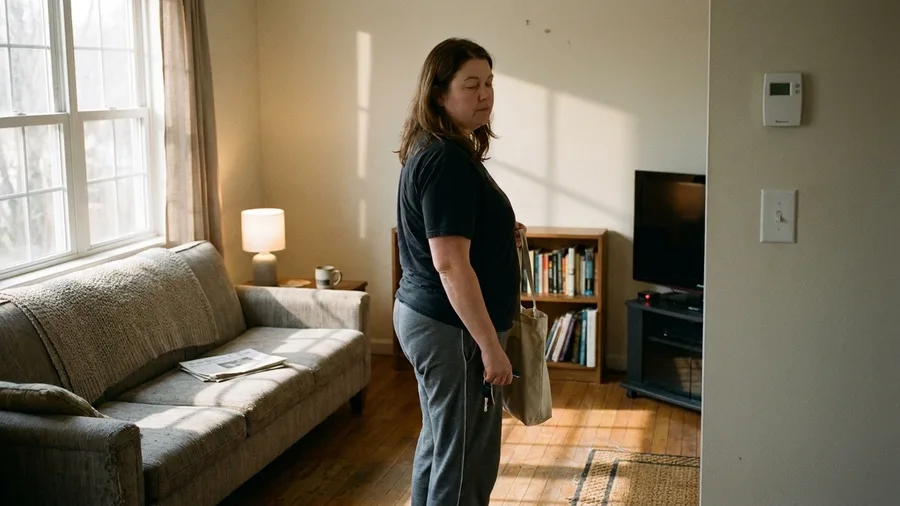
The belief is that the small home stuff is where the real savings live, so you buy a smart thermostat, a few smart plugs, maybe a power strip timer. Now do the review on what those two problems actually cost. A typical month of lights left on, the TV humming on standby, and the AC holding 68 degrees in an empty place runs about $28, which is $336 across a year.
Before you spend a few hundred on gadgets to chase that few hundred, check whether the payback is shorter than the habit you are trying to break. Two free actions, done once: set a thermostat setback schedule so the system idles while you are out, and switch a power strip off at the door on the way to work.
Review it at the change of season, when the AC first comes on and again when the heat does, and look at two things only: the thermostat schedule still matching your actual hours, and whether the strip is still getting flipped. Then rank it honestly. Against the $3,120 commute, the $2,400 lunch gap, the $1,500 coffee run, the $1,080 counter add-on and the $456 in subscriptions, $336 is the smallest line in the leak. This one is worth tidying, not worth leading with.
💡 Tip: Skip the smart thermostat unless you'll actually use the schedule feature. A $25 programmable thermostat does the same job.
Frequently Asked Questions
Does buying coffee really add up to anything?
Yes. At $6.25 a cup, five mornings a week is $125 a month, $1,500 a year. The drink isn't the problem—the frequency is. Decide how many café mornings a week you want, and make the rest at home.
Am I spending more at the counter than I think?
Probably. A $4.50 pastry or breakfast sandwich on 20 mornings is $90 a month, $1,080 a year, on top of the coffee. The display case makes it a default; pre-order or eat breakfast before you leave to avoid it.
What's charging me that I never look at?
Subscriptions renewing in the first days of the month—streaming, cloud storage, fitness apps—can total $37.97 a month, $456 a year. Do a 10-minute audit in your phone's subscription settings and cancel the ones you'd have to check the date to name.
Is my commute really costing me more than the bus?
If you drive and pay $15 parking plus $3.50 gas, that's $18.50 a day against $5.50 on the bus—$13 more a day, $3,120 a year. It's worth changing when a bus route exists and the only barrier is the snooze button.
How much is buying lunch actually costing me?
A $14 bought lunch against about $4 packed is $10 more a day, $200 a month, $2,400 a year. Packing takes about 10 minutes the night before; that's the reliable fix, not morning willpower.
Do the little things at home even matter?
They add up to about $28 a month, $336 a year. That's real, but it's the smallest line on this list. Start with the bigger ones first: commute, lunch, coffee, add-on, subscriptions.
Rank the leak, then cut in order this week
Rank, then cut. The commute is the largest line at $3,120 a year, and it is worth changing only if a bus route exists and the snooze button, not childcare, free parking, or a midday car need, is what stands in the way. After it: lunch at $2,400, coffee at $1,500, the counter add-on at $1,080, subscriptions at $456, utilities at $336. Guilt does not appear anywhere in that order.
The two zero-friction cuts this week are the forgotten subscriptions and the counter add-on. Ten minutes in your phone's subscription list gets $456 back, and pre-ordering on the app or eating before you leave gets the $1,080, neither one costing you a new morning ritual. Before the next workday starts, if the bus is viable, set the alarm 15 minutes earlier. That is the single action that turns the biggest line from autopilot into a choice.
Then go back and name the subscription you were paying for and could not have placed. You can place it now.
Cancel one forgotten subscription today
Open your phone's subscription settings and cancel a charge you'd have to check the date to name. That's the zero-friction cut worth $456 a year.