

You are not bad with money. You are paying for defaults nobody chose.
Pull last month's card statement and count the recurring charges. Seven of them on this household's, $96 a month, and three had not been opened once in the last 60 days. That is $34 a month, $408 a year, for services that renewed themselves while nobody was deciding anything.
The rest is the same shape. Four postpaid lines at $185. A rented modem at $15. A $14.95 maintenance fee. A $49 gym with four visits in six months. A $980 grocery bill where the label is the only difference.
Twelve line items on this household add up to about $350 a month, roughly $4,200 a year, and not one of them is the coffee, the streaming or the workouts. Each is a bigger price for the same thing. Tonight, run the twenty-minute audit; the other eleven have an order. If your household is already lean, two or three of them can be skipped without guilt.
Quick Tips Before You Start
Gather statements first
Pull the last two months of bank and card statements into one folder so you can see every recurring charge in one place.
Check your app store
Open your phone's subscription settings. Some charges bill through the app store and never show up on a card statement.
Timebox each cut
Set a 20-minute timer per task. Most of these are done in less time than it takes to watch an episode.
Cancel in writing
Use the service's own account page or send an email with a read receipt. A phone call to a call center is not proof of cancellation.
Mark the switch date
When you change a bill, note the first month the new amount hits. That is your confirmation the cut actually stuck.
1. The subscription audit you can do in twenty minutes

I opened the card statement on a Tuesday night with a pen and a cold mug of tea, and that is when I found it.
Seven charges that came back every single month added up to $96. Three of those services – $34 between them, $408 across a year – had not been opened in 60 days. One was a photo storage tier from a phone I replaced before the pandemic. Another was a workout app I downloaded, tried once, and forgot about before the free trial even ended. The third, I still cannot tell you what it did.
Here is the mistake almost everyone makes, and it cost me years. Most people cancel by replying to a retention email, or they call and sit on hold while a recorded voice promises them a discount they never asked for, or they 'pause' the plan assuming a pause is a cancel. None of that is a cancel. A pause keeps the billing date alive and the charge comes back. The only cancel that actually works happens on the service's own account page, logged into your account, clicking the button labeled cancel, and screenshotting the confirmation because it is easy to believe you did it when you did not.
So the real question is which charges to look at. Two places hold them. The first is the card statement – scan the last three months for any merchant whose name appears once a month, same amount, same week. The second is the subscription list buried in your phone's app-store settings, and that one matters because some plans bill straight to the phone and never touch a card line at all. I missed a $9.99 app on my first pass for exactly that reason.
Now the part that stops you from cancelling everything in a panic: leave the ones you actually use alone. In my own audit that meant four services stayed, including a $54 software plan and $35 of cloud storage. The shows, the music, the files – all identical tomorrow. The test before you click cancel is whether you can remember the last time you opened it. If nothing comes, that charge was never a decision you made; it was a default that renewed itself.
The other thing nobody warns you about is the dip. You cancel three plans, feel the small rush, and then the next month's statement looks almost the same because you missed two of them. That is not failure. That is why the calendar reminder matters – once every three months, same twenty minutes, statement open, phone settings open. If you want to know where spending has quietly grown, take the lifestyle creep test before your next review.
The bill that is identical tomorrow is the point. Three dead charges stop, and $34 of the $350 this whole list is chasing is banked before a single other line gets touched. The week looks the same – same apps opening, same screens lighting up – only quieter by $34.
💡 Tip: Search your card statement for the word 'trial' and for any merchant that charges the same amount every month. Those are your candidates.
| Cut | Saves a month | Saves a year | Time today |
|---|---|---|---|
| Subscription audit | $34 | $408 | 20 minutes |
| Prepaid phone plan | $85 | $1,020 | 1 hour |
| Store-brand staples | $45 | $540 | 1 shopping trip |
| Auto insurance re-shop | $20 | $240 | 30 minutes |
| No-fee checking account | $29 | $350 | 1 branch visit |
| Utility audit and fixes | $28 | $336 | 1 visit + 1 hour |
| Parks classes vs gym | $17 | $204 | 15 minutes |
| Annual billing | $14 | $170 | 10 minutes |
| Own modem | $15 | $180 | 20 minutes + $70 |
| Library card | $15 | $180 | 1 visit |
| Generic prescription | $22 | $264 | 2 phone calls |
| Bulk staples | $26 | $312 | 1 shopping trip |
2. Four phone lines on a prepaid plan

Four phone lines are the bill most families are afraid to touch, because phones feel different from subscriptions. You cannot cancel them and go without; the kids need them, the workday needs them. So the fear is that 'cheaper' means 'worse,' and that whatever you switch to will drop calls or run out of data halfway through a car trip.
That fear is real, and it is worth naming. But this is not a cancel. It is a move. The same four handsets carry the same four numbers, with the same data allowance per line, to a prepaid carrier quoting $100 a month instead of the $185 on the postpaid plan. The family stops noticing the difference within a week, because there is no difference. The $85 that comes back every month – $1,020 a year, the biggest single line on this whole list – is the price of the same airtime under a different company's name.
Three checks happen before you switch. First, coverage at the two addresses that matter most: home and work. Second, the data allowance on each line, because a cheaper plan with half the data is not the same plan. Third, whether the phones are paid off – a device payment plan keeps the old carrier attached, and you cannot take a phone you still owe money on anywhere. Pull the last bill, look for a device charge, then compare.
The switch has a cost that lands first. New SIM kits plus a first month near $100 go out before the old carrier's final bill credits back, so put that $100 aside a month before the move and the switch costs nothing out of pocket. Set up autopay with the new carrier on day one so nobody has to think about it again – that part is the whole trick.
Then leave it alone. Do not check the account weekly for signs of trouble. The phones work or they do not – if a line fails, that is a coverage question, answered by a single call. Nothing else changes except the name on the bill.
Phone Plan Myths, Corrected
3. Store-brand swaps on the twelve staples you always buy

$980 a month is what the grocery run costs, and about $45 of that is nothing but the label on the package. Moving twelve staples, pasta and oats and butter and cleaning spray among them, to store brands takes roughly $45 off the same meals across a month, which is $540 a year. It is the same test the phone bill passed: identical service, different name on the box. The same quiet drain shows up in cash sitting still, which is why keeping cash in checking deserves a look too.
This is a label swap on the list you already have. Not a new menu, not a cheaper cut of meat, not fewer snacks, not a second store across town. The same twelve items, the same recipes, the same quantity in the cart, with the store's name where the brand's used to be.
Two or three of those twelve will genuinely disappoint, and you probably already know which ones. Those stay branded. Keeping them costs a few dollars out of the $45, not the cut itself.
The method that decides it is a two-week test, not a list someone handed you: buy the staples branded one week, store-brand the next, cook the same meals both weeks, and keep the winners permanently. The verdict comes from the aisle and the kitchen.
Then check back in once a month, on a regular shop, and look at three things. Whether the twelve are still the twelve, or your cooking has drifted from them. Whether the unit price on the store brand has crept up. And whether the two or three disappointments are still worth the few dollars, or the store has since fixed them.
Do that check on a normal trip and it costs nothing. The plate on the table is the same plate, and $45 a month comes off the package, never off the dinner.
💡 Tip: Start with the items where the store brand is the same product in a different box: butter, oats, pasta, and cleaning spray. Meat and coffee are where brand loyalty earns its keep.
4. A ten-minute re-shop of your auto insurance
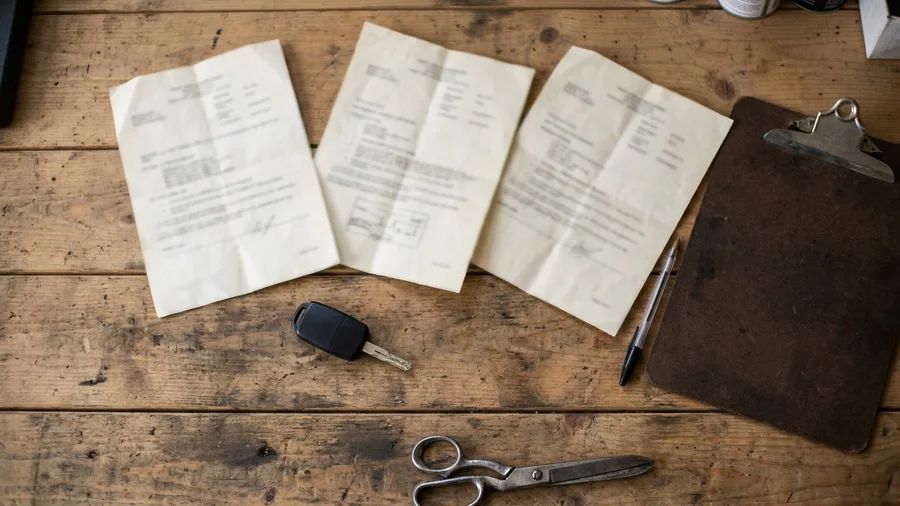
Here's how I found out I was: my policy ran $1,340 a year, so I pulled the declarations page and emailed it to three insurers asking for a quote on that exact policy. The quotes came back at $1,100, $1,180 and $1,240 — the cheapest was $240 a year less, about $20 a month.
The catch is that the comparison is only fair if every number on the page matches. Same deductible, same coverage lines, same limits — you are shopping for a lower price on identical protection, not a thinner policy that looks cheaper. Get one detail wrong and the savings are fake.
💡 PRO TIP
The declarations page is the whole game
Three quotes only compare if the deductible, coverage lines, and limits are identical. Change any one of them and you are shopping for a different policy, not a better price.
5. A no-fee checking account at a local credit union

Moving a checking account sounds like the kind of task that bounces a rent payment and costs a late fee, so it gets put off for a year. It does not have to be done in one afternoon. Insurance re-shops a product the household needs; the checking account is the one charge with nothing behind it at all, and the version two miles away costs nothing to hold the same cash.
The numbers are $14.95 a month in maintenance plus three out-of-network ATM swipes at $4.95, roughly $29 a month and $350 a year. If this week only stretches to opening the new account, that is the step: photo ID, a small deposit, done. Leave the old account open with a little balance for a full month, move the paycheck and the two automatic bills over in your own time, and close it once everything lands.
The debit card, the ATM network and the app all still work. The rent clears, the paycheck arrives, the card taps. Do this one slowly rather than skipping it.
6. The free utility audit and three settings it changes
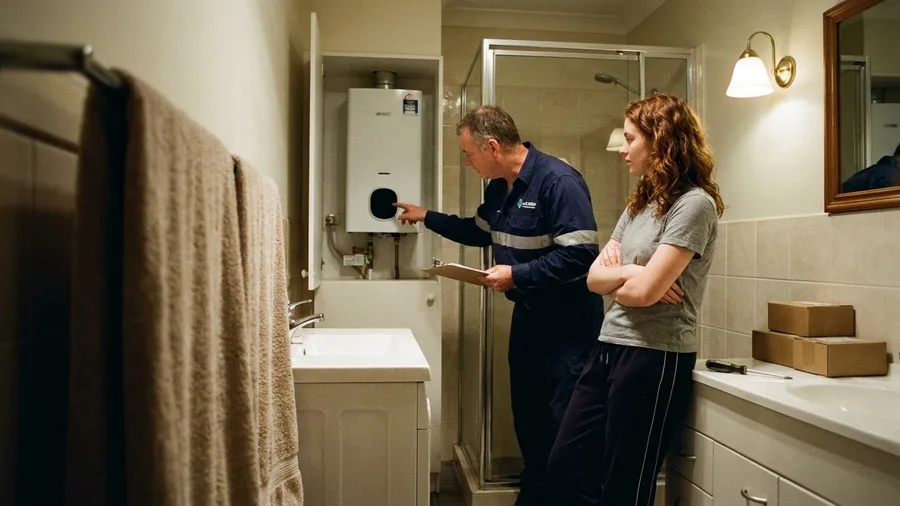
The belief worth knocking down first: that shaving a few dollars off a utility bill is not worth the appointment, so households live with a $210 electricity bill and assume that is just what the house costs. The free walkthrough the utility itself sends out found $28 a month sitting in the house already, $336 a year, in waste that was going straight through the walls and out the vents.
Twenty-eight dollars a month is small enough to sound like nothing. It is also watertight. Every other cut on this list depends on a habit holding, a store brand tasting acceptable, a switch staying switched. Heat leaving through a gap or a filter caked solid does not care whether the household is disciplined or distracted, because nobody is being asked to reach for a willpower muscle.
That is why waste is worth fixing this small. The thermostat setting does not move; the room stays as warm on a January night as it was before anyone signed up. So the fix is not a lower temperature and a cardigan, it is the same temperature for less money.
Three changes come out of it: seal the drafts the auditor points to, set the water heater to 120 degrees Fahrenheit, and swap a $12 filter every three months. None moves a piece of furniture or says no to a hot shower. The house runs exactly as before, minus the leaks.
The audit costs $0 and books through the utility. Have the account number, a year of bills, and a few minutes of access to the attic, the basement and the water heater, because those are where the auditor needs to look.
Start even smaller. Set the water heater to 120 tonight, before any appointment, and put three filters on a calendar for the year; that alone is a few of the $28 and takes ten minutes with a screwdriver.
If draft sealing is not on this month's budget, book the free audit anyway. The utility does the locating, the findings keep, and the sealing can happen a paycheck or three later.
💡 Tip: Take a photo of your water heater's dial before you adjust it. You will want to know where it started if you ever sell the house.
A Week of Small Fixes
7. Parks-department classes instead of the unused gym

The parks department runs exercise classes for $8 a session, and the gym down the road is charging $49 a month for a keycard that gets used about as often as the treadmill's service light.
Four visits in six months is the number that settles it. On the membership that works out to roughly $12 a visit across the half year, and every one of those visits could have been a class; four classes at $8 come to $32 in total, so the year runs about $17 a month cheaper and $204 lighter on the annual column. The routine lands in the same place it was before: the same number of sessions per week, the same kind of class with a different instructor, and a parking lot five minutes farther from the house. Nothing on the calendar moves, only the address where it happens.
The part that needs a proper look is the contract. The gyms that sign people up over the phone tend to bury a term of 12 months, a notice period of 30 days and a $50 exit fee somewhere in the fine print, and that paperwork is what decides when the cancellation actually takes effect. Before anything else, check the term, the notice requirement and any fee on the current agreement.
Then send the cancellation in writing, today if possible: either an email with a read receipt or a printed letter that goes registered, so there is a date on file for the day the notice went in. The gym is not out to cheat anybody, but a phone call at the desk leaves no real proof of anything.
This route is not for the reader who honestly trains three times a week, because that person already uses the membership and gets their money back in full. Leave it alone, move on, no guilt. For everyone else, the classes keep the workouts going at the same frequency, and the $17 is on the list only because the visits stopped, not because exercise should.
Cancelling the Gym — The Numbers the Prose Left Out
💳 Cost per visit
$12 across 6 mo
🏛️ 4 parks classes
$32 vs $49 keycard
💰 Annual saving
$204
📝 Notice + exit fee
30 days, $50
🏋️ What to keep
Same weekly count
Skip this cut if
You train three times a week — the fee is already earning itself back, and no cancellation beats that.
8. Annual billing on the two plans you keep

Switch to annual billing this month on whichever of your plans you are certain you will keep for another 12 months, because the discount only pays off when the same plan is likely to still be open next spring.
On the two plans the household actually uses, both give a discount for the yearly payment: the annual price works out at around ten months' worth of the monthly charges, so the year comes in roughly $14 a month cheaper, about $170 across all twelve months, without any change to what shows up on the screen. Everything else was cancelled earlier, so this applies only to the two that survived. There is a catch on timing: both yearly amounts land on the card in one go, around $540 and $350, leaving your account the day you make the switch rather than being spread out, so the month you do it has to be able to take the hit. If the current month is already tight, hold this cut for next pay cycle.
Then the product itself is unchanged. The editor loads with the same license, and every folder in storage sits exactly where it always sat with the same sign-in and the same files. Only the billing period on the receipt has changed.
9. Your own modem instead of the rental
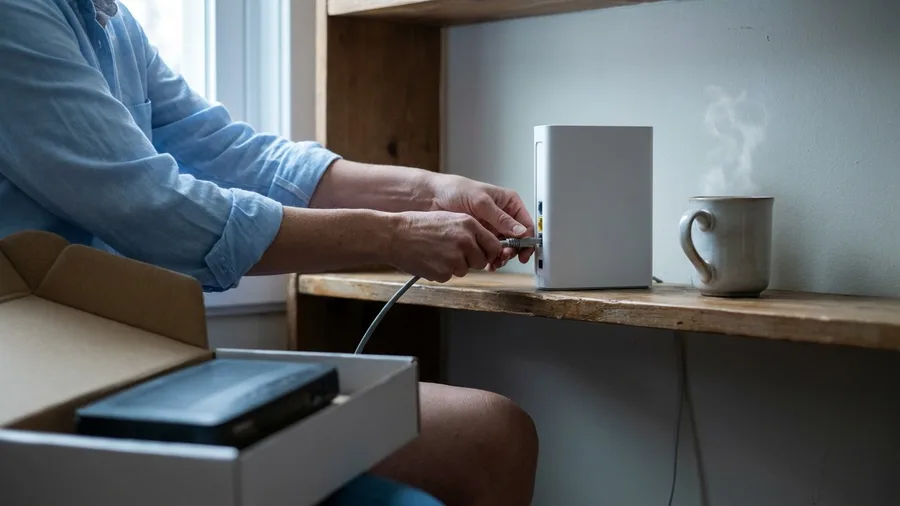
Five months is the whole payback: the $70 modem covers itself in under half a year, and after that $180 a year drops off the internet bill.
It is the same trade as paying once for a year of a service you will use, just in hardware. The internet company has been charging $15 a month to rent a router that has sat in the same corner of the room since the account opened, and after 60 months of that the household has handed over $900 for a box that retails at $70.
Two checks before placing the order: the model has to be on the provider's list of supported hardware, which is a short search on the account page or a quick call with an agent, and the old box has to go back with a receipt in hand. Skip the return and the $15 keeps showing up next month on top of the $70 already gone.
Then the physical swap is deliberately dull. The new router sits in the same spot, broadcasts the same network name with the same password, and every device in the house reconnects without anything being reset; the streams still load in HD and the kids' tablets still work.
The $70 leaves the account once, and the $15 stops on the next statement cycle after the return, so the household stops renting a box it could have bought back in month one.
Rent or Buy the Modem?
Keep renting
- Pay $15 a month forever
- The provider replaces it if it fails
- No upfront cost
- You never own the box
Buy your own
- Pay $70 once
- Break-even in five months
- Save $180 a year after that
- Check the supported model list first
10. A library card for audiobooks and ebooks

Cancel the paid audiobook app, join the library, and use the waitlist instead of your card. Membership is free, you sign up at the branch desk with a piece of mail and your photo ID, and the lending app runs on the same phone you are holding now.
the titles you want on release week sit behind a queue, and sometimes that hold takes a few weeks to come up. That is the whole price.
If one specific book truly cannot wait, pay for one month of the old service, finish it, and cancel the rest. Everything else continues unchanged: the same earbuds, the same commute, the same author in your ear.
11. The generic version of a brand prescription

There is a flinch at the pharmacy counter when someone suggests a different version of a medication you have taken for years.
Get past it, because the cheaper alternative is chemically the same drug at the same strength, at a fraction of what the brand costs. The brand fills at $34 for 90 days. The generic comes in at $12. That gap is $22 a month, $264 a year, for the identical medicine.
The stuck belief is that cheaper means a lesser drug, or a change in your treatment. Neither is true. A generic is the same active ingredient, the same dose, the same schedule. You are not switching to something else. You are paying the same molecule at a lower price, and keeping your routine exactly as it is.
Two people confirm it. Ask the pharmacist behind the counter whether a generic exists at your dose, then check the label with the prescriber who wrote it. If the script says brand-only, one call to that office gets you a new one that permits the substitution.
One call, one counter conversation, and the pill in the bottle is the same pill. That is all this cut costs.
12. Bulk-buying the six household staples you always use

For most households, six are: paper towels, detergent, rice, coffee, trash bags and toothpaste. Bought in bulk at the unit price already paid, those six take $26 off the monthly total, $312 across a year.
Run the math in the aisle, not on the shelf tag. Price per sheet, per load, per pound. The bigger package sometimes loses, and paying $26 less a month means nothing if the rice spoils before you finish it or the toothpaste case outlasts a decade for one person.
So keep only what you will finish and only what you can store. The garage shelf, the basement corner, the top of the closet. If six cases have nowhere to live, skip that staple and buy the rest. The same coffee pours from the same mug. Nothing in the wash changes.
⏱️ Your First Afternoon: The 20-Minute Subscription Audit
Open your card statement
Pull the last two months and search for merchants that repeat every month.
Check your app store
Open the subscription list in your phone's settings to catch charges that never hit the card.
Mark the 60-day rule
Anything not opened in 60 days gets cancelled on the spot.
Cancel on the service page
Use the account page, not email or a phone call, so you have a record.
Note the savings
Write down the monthly amount you freed up. That is your first win.
Frequently Asked Questions
How much can I realistically save without changing my daily routine?
In the example household, the twelve cuts come to about $350 a month, or roughly $4,200 a year. That number depends on your bills, but the principle holds: most of it comes from defaults you never chose, not from things you enjoy. Start with the subscription audit and the phone plan, which together are $119 a month in the example.
Will switching to a prepaid phone plan really keep the same coverage?
Prepaid plans run on the same towers as postpaid, so coverage is usually identical. Check the coverage map for your home and work addresses, confirm the data allowance per line, and make sure your phones are paid off before you switch. The number ports over as a standard request.
What if my gym has a cancellation fee?
Check the contract for the term and notice period first. Some gyms charge a fee or require 30 days' notice. Even with a $50 fee, cancelling a $49 monthly membership you do not use saves money within two months. Send written notice so you have proof.
Is it worth buying a modem if I might move soon?
The break-even is about five months at $15 a month. If you are moving within a year, check whether the modem works with your new provider's supported list. If it does, it still pays. If not, the $70 may not earn back before you move.
Can I ask my doctor for a generic if the prescription says brand-only?
Yes. Call the prescriber's office and ask whether a generic exists and for a new script that allows substitution. The pharmacist can also tell you whether a generic is available at the same dose. It is the same drug, and the conversation is routine.
Start with the twenty-minute audit, then work down the list
The first move is the subscription audit. It costs twenty minutes, it requires no phone call, and it frees up $34 a month immediately in the example household. Do that one today before you touch anything else.
Then work down the list in order. The phone plan and the grocery swap are the two biggest lines and the easiest to bank. The insurance call, the credit union visit, and the utility audit need a document or a branch trip, so save them for a day when you have an hour. The modem, the library card, and the bulk staples need cash out or a shopping trip, which is why they sit at the end.
If your household is already lean, you can skip the gym cut and the bulk-buying cut without guilt. Those two only pay if the membership is unused and the storage exists. The rest of the $350 is still there. You are not bad with money. You were paying defaults nobody chose, and now you are choosing.
Do the twenty-minute audit now
Open your card statement, find the three subscriptions you have not touched in 60 days, and cancel them on the service page. That is $34 a month before you finish your coffee.
