

Everyone else's savings app sweeps on Friday, their card earns cash back, their dashboard has four colors. Your balance sits there unchanged anyway. That gap is not a character flaw.
You already do the responsible list. Transfers set to automatic, cash back on everything, every dollar tracked in an app, the warehouse run, the side income on nights and weekends. Then the month ends and the number at the bottom of the account looks exactly like last month's number.
Here is the turn. Each habit has an activity line you can see and a cost line you cannot, and only one of them touches the balance. Five moves get a dollar figure here, so you can finally see what the effort returns.
You will be able to rank all five by what they cost a year, cut the $204 app stack this week, keep the two that genuinely fit, and do one thing tonight: put your card's interest line next to the FDIC national rates page. Pick one. The other four can wait.
Quick Tips Before You Start
Pull one statement
Open last month's card statement and find the interest line before you read anything else.
Count the subscriptions
List every recurring charge under $10 a month on one page. The total is usually the surprise.
Look up the FDIC page
Check the national rates table for savings accounts so you know what your cash could be earning.
Read the unit price, not the shelf price
Compare cost per ounce or per pound against what your household actually finishes.
Divide the hustle by all its hours
Gross pay divided by hours including admin, prep and travel is the only rate that matters.
1. Round-up apps charge a fee to save your own money

You watch $35 land in savings every Friday and wonder why the number at the bottom barely twitches. The answer is not in the transfers. It is in the small monthly charge behind them and in the rate on the account they land in, and neither of those is a line you have ever sat down and read.
Auto-saver apps usually charge for the sweep, not the savings. A typical one runs $2.99 a month, which is $35.88 across a year, and it moves roughly $35 a week for you – about $1,820 over those twelve months.
Set the fee against the money it moves and it comes out near 2%. That is the price of the automation, and it is charged whether or not the destination account is any good.
Here is the part worth checking. The app has no opinion about where the money lands, and most users never form one either – the account sits wherever it was opened on day one, paying whatever it pays. The FDIC publishes a national rates page that lists what competitive savings accounts are paying right now. The app never puts that page next to your account. That comparison is the whole job, and it takes one evening.
It can genuinely be worth the $35.88. If the honest answer is that nothing would be saved without the app tugging a little each week, then the fee buys a behavior – and $1,820 a year that would otherwise be spent is a real win over a bare bank transfer you never get around to setting up.
The friction is the product. That is worth paying for when it works.
The check that settles it has three pieces. Pull one month of app fees and multiply by twelve so you see the yearly number. Look up the destination account's current rate against the best rate on the FDIC page. Then note whether that weekly $35 could leave your paycheck by scheduled transfer instead – most banks set one up for free in about ten minutes, and a direct deposit makes it easy. If the fee is buying you savings you would not otherwise make, keep it and move the destination to a better-paying account. If you could schedule the transfer yourself, the $35.88 is paying for a wrapper you already own.
💡 Tip: Check whether the app rounds up transfers on top of your weekly sweep. Double transfers on the same paycheck is how a $35 habit becomes a $70 one.
| Habit | What it feels like it's doing | Typical yearly cost | What to do instead |
|---|---|---|---|
| Round-up savings app | Saving automatically every week | $35.88 in fees on $1,820 moved | Schedule the same weekly transfer at your own bank for $0 |
| 2% rewards card | Earning free money on everything | $288 in rewards, cancelled by any interest line over $24/month | Pay in full monthly, or check the interest line before celebrating |
| Paid app stack | Managing your money properly | About $204 across three subscriptions | Spreadsheet, bank spending breakdown, free credit report |
| Warehouse membership | Cheaper per unit on everything | $65 membership plus roughly $70 of spoiled food per trip | Smaller packs of staples you will actually finish |
| Side hustle | A real second income | Effective rate near $13/hour before the Schedule SE set-aside | Compare against overtime or a rate negotiation first |
2. Rewards cards only pay if the balance clears

The rewards balance ticks up every month and it feels like the card is paying you. That feeling is the whole problem: it is the most persuasive line on the statement and the least relevant one to your account balance.
Do the math on a normal month. Card spending around $1,200 at 2% comes back as $24 in rewards, which is $288 over a year if you never carry a dime. That is real money. It is also small enough to vanish the moment interest shows up on the same page. The number that decides whether the card helped you is not the rewards line at all. It is the interest line, and every statement prints both right next to each other.
If you carry a $3,000 balance month to month and the card states an APR, the interest charged on that balance is what you set against the $24. When the interest comes out higher, the card is a net cost and the cash back is a rebate on spending, not a return on saving. Spending more to earn more makes it worse, not better: $100 of extra spending earns $2 back and can cost you interest on the whole hundred.
pay in full once this month, even if it means cutting something else to do it. One cleared statement is the smallest version of the habit that actually reaches your balance, and it proves the card can pay you instead of the other way around.
If your balance makes the payoff order unclear, run the interest figure and your budget past a nonprofit credit counsellor before deciding. They will not sell you anything, and they can see the numbers you have not written down.
3. A paid app stack is not a plan
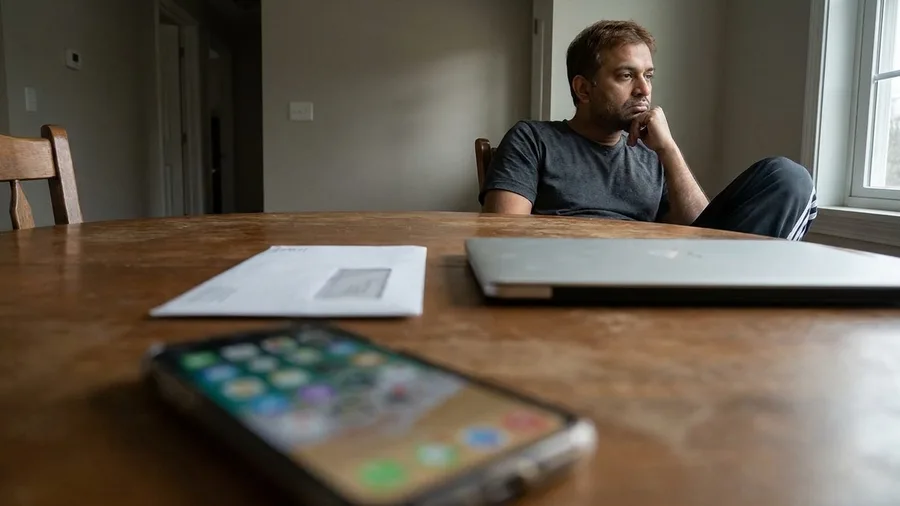
I once paid for a budgeting app, a credit-score monitor and an investing app at the same time. The monthly charges were $8.99, $4.99 and $3.00. I felt organised in a way I had not felt before, and the account balance was exactly what it had been a year earlier. My charts had never looked better, and I had $16.98 less each month to show for them.
That is roughly $204 a year. And here is the honest trade-off: the $204 did buy something. It bought a daily habit of looking, and looking is not nothing, because people who avoid their numbers stay stuck longer. The downside is that a chart of last month's spending does not cut a category, raise a transfer or change a card payment. The figure is the cost, and it is also the lesson.
Before you cancel anything, name the job each tool does. Tracking records decisions; it does not make them. The same spending at a cleaner chart is still the same spending. If you have irregular income or several accounts, one dashboard can genuinely save time and catch a cash flow gap, and that one tool can earn its fee. The other two still need a reason. A spreadsheet covers a budget, your bank already breaks down spending by category, and the annual credit report you are entitled to is free.
The trade-off is real: cancelling means rebuilding the view yourself, and that takes an afternoon. But the balance only moves when a category gets cut, a transfer gets raised or a card payment gets made. A free tool leaves $204 in the account each year to put toward one of those, and that is reason enough.
💡 PRO TIP
The 3-Second Test
Before any money habit earns a place in your month, ask one question: does this move a dollar into my balance, or does it just move a dollar? If the answer is the second one, the habit is costing you something to feel organized.
4. Bulk buying costs more when half of it spoils

Buying in bulk is cheaper per ounce, and that is exactly the trick. A $240 warehouse run where the yogurt cups, the bread and half the produce go soft in the fridge is not a saving. That is $70 thrown out, on top of $65 for the membership to walk in the door. That is $135 before anything in the cart has saved you a dime.
The unit price is real, but it only counts on the items a household actually finishes. The membership is a fixed cost that recovers nothing if the food turns. So the comparison is not shelf price per ounce. It is what you paid against what got eaten.
Bulk can work with freezer space, a full house, a meal plan and a short list of things you consume before they turn. For two people, the same staples in smaller packs at normal prices beat a $240 run with waste. Households this small can see the bulk buying math behind oversized packs before the next warehouse trip. Skip the membership, take the short list with you, and price what gets eaten.
💡 Tip: Freeze half the bread and portion the meat the day you get home. The $70 usually disappears in the first 48 hours, before anything looks spoiled.
🔎 The Week You Find Out What's Actually Leaking
Pull the statement
Open last month's card statement and find the interest line before anything else.
List the subscriptions
Write every recurring charge under $10 a month on one page and total them.
Check the savings rate
Compare what your savings account pays against the FDIC national rates page.
Audit the last warehouse run
Estimate what spoiled and divide it by what you actually ate.
Divide the hustle
Take gross pay and divide by every hour worked, admin and travel included.
Cut one thing
Cancel the single habit with the clearest fee and the least behavior change.
5. A side hustle at $13 an hour is not a raise
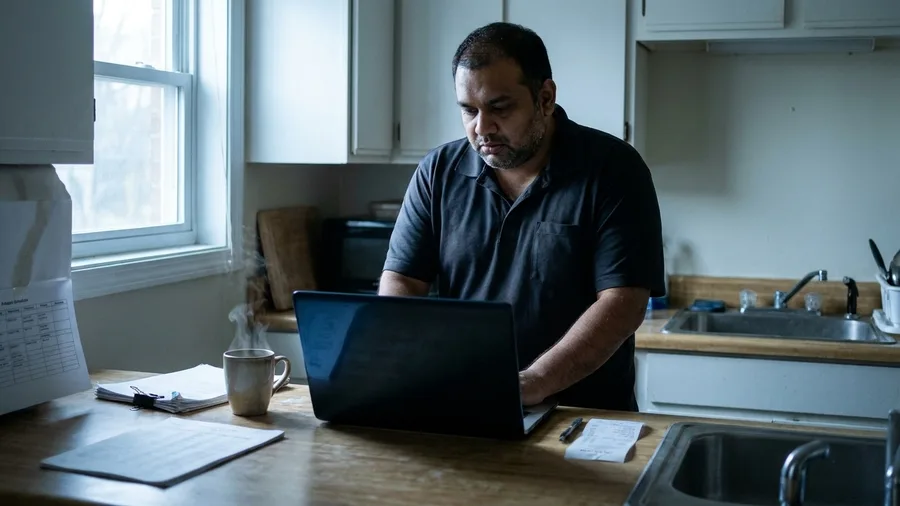
Ten hours a week on the side sounds like money. Add up what it actually pays. At $18 an hour that is $720 a month gross, minus about $60 in supplies and mileage, across roughly 43 hours once admin is in. That lands near $13 an hour, before the self-employment tax set-aside the IRS requires on Schedule SE.
That is the number to sit with. The balance does not see $18 an hour. It sees $13, and less once tax is put aside. So if the nights feel endless and nothing is left, the hours are earning less than they look.
Whether it works comes down to your own rates and costs, so put them on paper. A hustle earns its place when supplies are low, the hourly beats your day-job rate, and the hours do not eat the week.
If the numbers do not clear, the same effort in overtime, a raise negotiation, or dropping a $65 membership and a $204 app stack keeps about $269 a year with no extra hours.
Frequently Asked Questions
Are round-up savings apps ever worth the fee?
Yes, for one specific person: someone who would otherwise save nothing at all. The fee buys a behavior a bare bank transfer can't produce. If you already have direct deposit and a bank that schedules free transfers, you can do the same $35 a week for nothing — and you should check whether the destination account pays a competitive rate first.
How do I know if my rewards card is actually costing me money?
Read the interest line on a statement where you carried a balance, and compare it to the rewards you earned that month. At 2% back on $1,200 of spending you earn about $24. If the interest line is higher, the card is a net cost. The card only works when you pay in full and the interest line reads zero.
Is it okay to cancel all my finance apps at once?
Cancel one this week, not all three. The $204 a year is real, but the habit of looking at your own numbers is worth keeping. Replace the cancelled tool with a free substitute — a spreadsheet, your bank's spending breakdown, or the free annual credit report — then decide about the next one.
How much does bulk shopping really save?
It saves on the items your household finishes before they turn. On a $240 trip where $70 of food spoils, plus the $65 membership, you've committed $335 to save on part of the run. Bulk pays off with freezer space, a larger household and a list of things you actually eat.
Should I quit my side hustle if it only pays $13 an hour?
Only if those hours would earn more elsewhere. Compare the effective rate — gross pay divided by all hours including admin and travel — against your day-job hourly and against simply cutting the paid app stack and the membership. If it clears the bar, keep it; if it doesn't, you now have the number to decide with.
What is one thing I can check tonight?
Pull up the interest line on your card statement and the FDIC national rates page side by side. One tells you what your debt is costing you, the other tells you what your savings should be earning. Those two numbers decide more than any app subscription will.
Cut the $204 This Week, Then Compare Two Numbers
Rank the five by the figure attached to each, largest avoidable number first. The app stack goes this week: $8.99 for budgeting, $4.99 for the credit-score monitor, $3.00 for investing, $204 a year, and not one decision changes when it does. The round-up app is next at $35.88 if your own bank can schedule the same transfer.
Keep the rewards card only if you clear it in full every month, because a $24 monthly reward means nothing beside an interest line on a carried balance. Keep the side hustle only if the $13 an hour it really pays clears your day-job hourly and the hours do not eat your week. If your income is irregular or your money lives in several accounts, keep one app tool, not three.
Then do the one thing tonight. Open the interest line on your card statement and the FDIC national rates page in two tabs, side by side, and put your $8,000 in big-bank savings against the top yield published there. Understanding what idle checking cash really costs makes that side-by-side comparison land harder. Same effort as before, only now you can see what it costs. Auto-saving, cash back, apps, bulk buying, the side income: the balance was flat because the cost lines went unchecked, not because you did not try. One comparison, and the five sort themselves.
Open the statement tonight
Pull up the interest line on your card and the FDIC national rates page in two tabs. Two numbers, one evening, and a clear place to start.