

Everyone else bought at the right time, and you bought at the top. That gap is smaller than it looks, and one fact closes it: the peak price was shared. In June 2006 a buyer in Phoenix paid $285,000 for a 1,450-square-foot three-bed, two-bath ranch, and plenty of neighbors paid the same. By 2011 that same floor plan appraised at $165,000, a 42% drop.
The price fell, but it stayed a paper loss. A fixed $1,621 payment, $12,000 in reserves, a spare room renting for $600 a month, no home-equity debt, and an 18-year hold kept the sale from being forced. A peak purchase is survivable when the deal is built to be held, and that build is what separates paper loss from permanent loss.
Before you sign, run three holding-power tests: is the payment fixed, do reserves cover at least six months, and is your horizon long enough to wait out a drop. Clear all three and time stops being the thing that decides for you.
| Factor | Marcus: stayed and sold in 2024 | Comparison buyer: sold in 2011 |
|---|---|---|
| Purchase price | $285,000 in June 2006 | Comparable price, same peak |
| Down payment | 10% ($28,500) | 5% |
| Loan type | 30-year fixed mortgage | Adjustable-rate mortgage |
| Monthly payment | $1,621 principal and interest, unchanged | Reset from $1,540 to $1,980 in 2009 |
| Cash reserves | $12,000 emergency fund | None |
| Rental income | $600/month for a spare bedroom, 2009-2012 | None |
| Home-equity debt | None | $30,000 line taken in 2007, still owed at sale |
| Sale | $430,000 in May 2024, 6% costs, $155,000 payoff | $170,000 in 2011, 6% costs, $232,000 payoff |
| Cash at closing | About $249,000 net | About $60,000 brought to closing |
A Fixed Payment He Could Sleep On

His loan protected him because the payment never moved. A 30-year fixed mortgage locks the principal and interest for the life of the loan, so whatever the market did to the home's value in 2008 and 2009, the amount leaving Marcus's account each month stayed the same: $1,621, on a $285,000 purchase with 10% down ($28,500) — and one extra mortgage payment each year attacks interest the same way.
That predictability is the whole point at a peak.
The comparison buyer took the other road. Five percent down and an adjustable-rate mortgage meant the payment reset to $1,980 in 2009, up from $1,540 – a $440 jump in a month when the house next door was worth less than the year before. Payment shock like that forces sales. And a forced sale is what turns a price drop into a real, cash-out-of-pocket loss, because you sell on the market's schedule instead of your own.
Fixed payment extends holding power; an adjustable one removes it, often right when you need it most. If you're buying near a top, read the loan terms before you fall in love with the kitchen.
What each structure lets you survive
Fixed 30-year
- Payment can't spike in a downturn
- You control when you sell, not the reset
- Rate locked for the full 30-year term
- Lender can't force a sale via payment shock
Adjustable-rate
- Rate can rise at each reset date
- Higher payment can force a sale
- You lose timing control if values drop
- Teaser rate is temporary, not permanent
The Crash Took 42% Off His Home

It got bad: the same 1,450-square-foot floor plan that cost $285,000 in June 2006 appraised at $165,000 in 2011, a 42% drop over five years. Marcus was underwater on paper, owing more than the house was worth.
Here is the part that decides everything. A paper loss is not a cash loss until you sell, and the difference is whether anything is forcing your hand. Marcus's loss was real in value but never realized in cash, because he kept the keys and kept paying.
The comparison buyer was just as underwater – and sold in 2011, locking the loss in at the bottom. Same market, same crash, different outcome. A price drop turns fatal only when it meets a forced sale. Holding power is the ability to keep a paper loss on paper instead of turning it into cash due at closing.
So the next time a headline says home values fell, ask the harder question: did the owner have to sell?
How bad a peak purchase can get, and when it turns fatal
Position on the scale shows how close the buyer is to a forced sale
- Paper loss only, payments current: Home value drops, you keep paying, nothing is realized
- Underwater, reserves still covering shortfall: Owe more than it is worth, but months of cushion remain
- Equity borrowed out, second payment added: Now two obligations on a falling asset
- Forced sale while underwater: Cash due at closing with no asset left to recover with
Ten Percent Down Bought Him Time

Two things kept him from being forced out: a smaller loan and a real cash cushion. The 10% down ($28,500) meant Marcus borrowed less than the comparison buyer, who put 5% down. That extra equity is a buffer – it's the difference between being slightly underwater and being deeply so when prices fall.
The second piece was the $12,000 in emergency savings. Against a $1,621 payment, that covered about seven months of housing costs. Seven months is time to find work, take charge of your finances, or simply wait out a bad stretch without missing a payment.
The comparison buyer had no reserves. When the payment reset to $1,980 in 2009, it wasn't a squeeze he could ride out – it was an immediate crisis with no cushion to land on.
Down payment and savings are holding-power tools. They buy months of choice and keep a price drop from setting the date you have to sell.
⚠️ COMMON MISTAKE
Five percent down is not the mistake
Putting 5% down on a fixed-rate loan with six months of reserves is safer than 10% down with nothing left over. The mistake is thin equity plus no cushion plus a payment that can move. Fix any two and the third matters far less.
A Spare Bedroom Covered the Gap
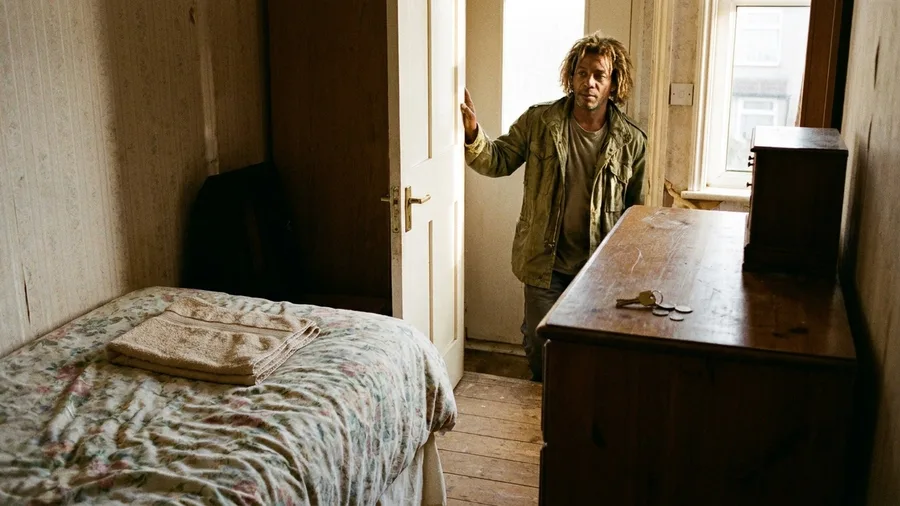
Cash flow can come from more than a savings balance. From 2009 through 2012, Marcus rented one spare bedroom of the Phoenix ranch for $600 a month, a figure that trimmed what the house actually pulled out of his account each month while the appraised value was still falling.
Set against the $1,621 principal-and-interest payment, that rent erased a little over a third of the monthly obligation, every month, for roughly three years. A steady tenant turned one bedroom into breathing room, and the rest of the mortgage stayed his to cover.
The comparison buyer, five percent down and facing a payment that reset from $1,540 to $1,980, had no renter and no spare room to offer. With no outside cash coming in, the higher payment landed straight on a budget that had nothing else to draw from.
Rental income and reserves do different jobs in a downturn. The savings account sets a floor under the monthly payment; the rent drops the payment itself, so fewer of those reserve dollars get spent and the cushion lasts longer.
Not every house has a rentable room, and not every owner wants a stranger in the hall. The point is the principle: some holding power can be earned rather than saved.
The month a renter changes the math
The point is not the $600. It is that the reserves never had to be spent.
He Did Not Treat the House as a Bank

Marcus kept one mortgage through the whole cycle and never borrowed against what little equity the house still held.
He did not take a home-equity line and he did not run a cash-out refinance. Same loan, same $1,621 payment, paid on schedule.
The comparison buyer did the opposite in 2007. A $30,000 home-equity line, drawn while prices were still high, and it was still owed when the house sold in 2011. That line added a second payment to a house whose value was falling, so a price drop and a cash-flow squeeze arrived in the same month.
The math of why this matters is not subtle: every dollar pulled out of a home is a dollar of new debt secured against it. That debt does not shrink when the price does – the loan balance stays at $232,000 in the comparison buyer's case while the house sells for $170,000. Now the borrower owes two lenders instead of one and has to bring cash to closing twice over.
This is easier said from outside the situation. Equity sitting idle looks like wasted money, and in 2007 the lender was often the one placing the paperwork in front of you. Skipping it is still what protected the ability to wait.
Before you buy or hold at a high price, decide in advance that this house is not a checking account.
He Kept Paying on Schedule

He paid the $1,621 every month from 2008 through 2011, during the worst of it, and did not sell.
That is the whole answer, and it is unglamorous. No timing the bottom, no waiting for a signal, no guessing when the floor arrived. Just the payment, on schedule, month after month while the appraised value sat well below what he paid.
The comparison buyer sold in 2011. That is the year the loss stopped being a number on paper and became $60,000 in cash due at closing, because the sale price was $170,000 and the loan balance was $232,000.
Holding power, in the end, is monthly execution rather than a forecast. You cannot control the appraisal, the news cycle, or what the house next door lists for. You can control whether the payment clears, and clearing it is what keeps the option to wait alive.
Pay attention to what that word actually means, because it is easy to get wrong. Being unable to pay is not a market problem; it is a cash-flow problem, and it is solved before it arrives with a fixed payment and a funded reserve.
Whatever the value says this quarter, keep the payment current. That is the move that keeps the loss on paper.
He Had a Reason to Stay Put

A reason to stay is what turns a monthly payment into a holding strategy, because a planned keep makes the drop survivable where a pending move makes everything urgent. Marcus had a 3-bedroom ranch that he wanted to keep: 1,450 square feet, a floor plan that worked, a neighborhood he liked. That mattered more than any forecast. A homeowner who plans to be there through a downturn can look at a 42% paper drop and do nothing, but a homeowner already halfway out the door has to sell whatever the market says the house is worth.
The stay lasted 18 years, from June 2006 to May 2024, which was time enough for the Phoenix market to come back and then some. Nobody schedules a recovery, and 18 years is longer than most people picture when they sign a mortgage, but that is the window that actually let the loss stay on paper.
The comparison buyer moved for a job, and that move is what forced the 2011 sale. A career change is not a money failure, and it is worth saying plainly: if a job takes you elsewhere, the house has to be sold or rented, and a sale in a down market is the mechanism that turns a paper loss into cash due at closing. The move came first; the loss followed from it.
So the life horizon belongs in the purchase math, not bolted on afterward. Before you buy, ask how long you realistically expect to stay and how likely a move is in the next three to five years. If the honest answer is that your job or your family could pull you somewhere else soon, a peak price carries more risk for you than it did for Marcus, and that is a fact about your horizon, not about your judgment. This is exactly the kind of timing question to work through against your own situation with a fee-only fiduciary before you decide, since they can see your numbers and I cannot.
The Sale Price Was Only Half the Story

He really netted about $249,000, and that number came from subtraction, not from the sale price. In May 2024 the house sold for $430,000. Selling costs at 6% took $25,800, and the mortgage payoff was about $155,000, which left roughly $249,000 in cash before counting the original $28,500 down payment and 18 years of monthly payments. The $430,000 was the headline. The $249,000 was the check.
The gap between those two numbers is where most people lose track of a home sale. Selling costs and loan balance set your actual cash at closing, and neither one shows up in the listing price.
The fixed loan did quiet work here too. Marcus paid the same $1,621 for 18 years and paid down principal the whole time, so the balance at sale was small enough that the proceeds cleared both the loan and the costs with room to spare. On an adjustable mortgage that reset upward in 2009, some of the payment would have gone to interest instead of principal, or worse, to a shortfall during the years he could least afford it.
That is what holding power bought: a long hold so the market could recover, and a fixed loan so the payoff was low enough for the math to come out positive. Run the same three numbers on your own potential sale before you assume a rise in price means a profit – the sale price is the first line of the calculation, not the last.
What the $249,000 check was made of
🏷️ Down payment left in the deal
$28,500 (10%)
📉 Total payments made
$350,136 (216 x $1,621)
🏦 Cash back at closing if you never sold
Never – payoff came from proceeds
💰 Rental income 2009-2012
$28,800 (48 x $600)
🗓️ Raising the down payment to 20% would have
Cut the balance by $28,500 and added $28,500 to closing cash
Run the check on your own sale
Take the last mortgage statement: payoff balance, not original loan, is the number that decides whether your 6% costs leave cash or a shortfall.
The Buyer Who Sold at the Bottom Lost Cash
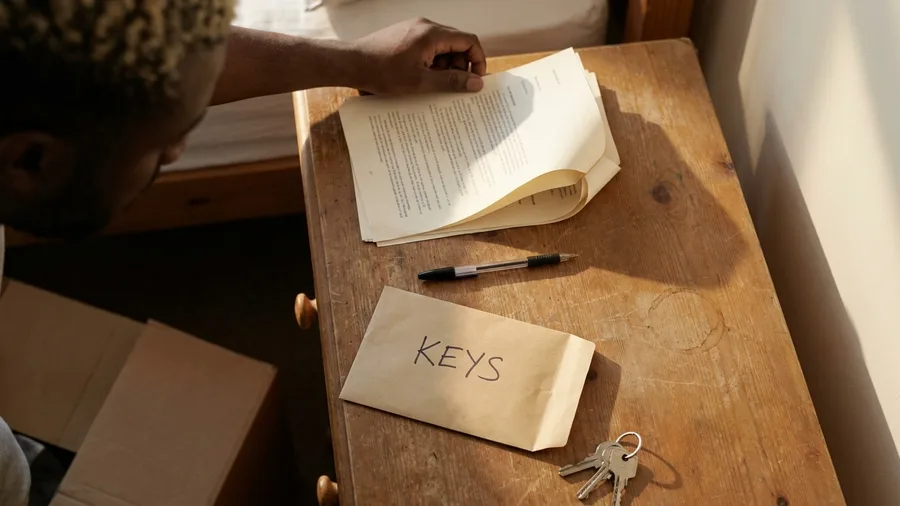
If you sell while underwater, you write a check at closing and walk away with nothing to recover with. The comparison buyer sold in 2011 for $170,000. Selling costs at 6% were $10,200, and the loan balance was $232,000. That is not a wash and not a small loss; the buyer had to bring about $60,000 to the closing table, and the $30,000 home-equity line from 2007 was still owed on top of it.
That is the machine turning. A paper loss becomes cash due at closing, and once the house is gone there is no asset left to climb back with when the market does recover. The $60,000 did not buy a smaller house. It only bought the exit.
This buyer did not have any of the four things that would have bought time: not a fixed payment, not reserves, not rental income, not a mortgage without the extra home-equity debt stacked on it. The adjustable payment had already reset from $1,540 to $1,980 in 2009, and with no cash cushion and no spare bedroom to rent, the sale was the only door. The sale is what made the loss permanent.
The lesson is not that this buyer was careless. It is that a forced sale is the mechanism that converts a temporary drop into a permanent one, and every one of those four conditions pushes the forced-sale date further out.
Before you buy near a top, check these five
Fixed rate first
Lock a payment you can cover on one income before you consider an adjustable.
Six months minimum
Keep enough cash to cover the mortgage for at least six months after closing.
Price the spare room
Know what a room would rent for; it is your second line of defense.
No cash-out
Do not take a home-equity line or cash-out refinance in the first years.
Seven-year horizon
Only buy if you could realistically stay seven years or more.
The Difference Is Holding Power, Not Luck

Copy the terms that bought Marcus time, not his address or his timing. He and the comparison buyer paid the same kind of peak price in the same kind of market; what separated them was everything written into the deal before the crash arrived. Fixed payment, seven months of reserves, a rented bedroom, no home-equity debt, and eighteen years of keeping the payment current. None of that is luck. All of it is copyable.
The distinction matters because it is the whole reason one seller netted about $249,000 in 2024 and the other brought roughly $60,000 to a 2011 closing. Perfect timing was never on the table for either of them. The ability to wait, and to keep the payments current while waiting, was.
Now the part that talks you out of copying it, because more people should hear it. If your job may move you in three to five years, or you could not cover a drop in income without selling, this approach is not for you. You are not the Marcus of this story.
You are the comparison buyer, and the honest move is to wait to buy, or buy smaller, or rent until the cushion exists.
So the decision in front of you, whether you are eyeing a purchase at a peak or deciding whether to hold through one: verify the payment is fixed, not adjustable; verify your reserves cover at least six months of the full payment; verify your horizon is long enough to wait out a real drop. Three checks, run against your own numbers before you sign. If all three clear, a peak price can stay a paper loss.
💡 PRO TIP
The three-question holding-power test
Fixed payment? Six months of reserves? A horizon long enough to wait out a 40% drop? Answer all three yes and you can buy at a peak. Answer any no and you are the comparison buyer until you fix it.
Frequently Asked Questions
Is it really possible to come out ahead after buying at the peak?
It is, but only if you can keep the property long enough for the market to recover and keep payments current the whole time. Marcus held eighteen years and sold for $430,000 after buying at $285,000. The peak price hurt; the holding power is what made it survivable.
How much should I keep in reserves after buying a house?
At least six months of the mortgage payment, and more if the payment could move or your income is uneven. Marcus kept $12,000 against a $1,621 payment, which is about seven months. That is the minimum, not the ideal.
Is an adjustable-rate mortgage ever a good idea near a market top?
Only if you can absorb the maximum reset and still pay. The comparison buyer's payment jumped $440 in 2009, and that jump forced the sale. If a reset would squeeze you, take the fixed rate and give up whatever the adjustable was saving you.
Should I rent out a room to help cover the mortgage?
If you have a spare bedroom or a basement, price what it would rent for before you buy. Marcus rented a room for $600 a month from 2009 to 2012, which covered about 37% of his payment during the worst years. It is not for everyone, but it is real income that does not touch your reserves.
What happens if I sell my house while underwater?
You bring cash to closing. The comparison buyer sold for $170,000, paid $10,200 in selling costs, and had a $232,000 loan balance, so about $60,000 was due at closing. That is what makes a paper loss permanent.
Should I take a home-equity line if the value of my home has gone up?
Only if you can repay it from income within twelve months, and not at all if you bought near a peak and the value could fall again. The comparison buyer took $30,000 in 2007 and still owed it at the 2011 sale, which added to the shortfall at closing.
Three questions decide it. Is the payment fixed rather than adjustable? Do your reserves cover at least six months of the full payment? And is your horizon long enough to sit through a drop of 40% and keep paying? All three clear, and a peak price stays a paper loss. Any one missing, and you are the comparison buyer until you fix it.
Because buying at a peak is survivable only if the payment is fixed, reserves cover at least six months, and your time horizon outlasts the drop. Marcus had all three: June 2006, $285,000, the same floor plan at $165,000 in 2011, a 42% drop, and still roughly $249,000 in his pocket in 2024.
Which brings you back to that listing and that queasy math. The market set the peak. Your terms decide whether the peak is temporary or permanent, so run the three questions before you sign, not after.
Run the three-question test before you sign
Answer fixed payment, six months of reserves, and a long enough horizon honestly. If any answer is no, fix it before the peak becomes your problem.
