

Most people measure their estate planning against whoever seems least prepared – no will, no documents, nothing written down – and feel reasonably ahead. The couple at 52 and 49, wills signed and a healthcare directive in the drawer, are doing better than most. They are also one document short of a plan that actually works.
That missing document is not a will. A will does nothing while its owner is alive. A stroke, a hospitalization, a dementia diagnosis – any of these can lock every account, stop every bill, and hand control to a judge before the family has processed what is happening. A spouse does not automatically gain access. An adult child cannot step in without a court order. The will sits in the drawer, irrelevant.
A financial durable power of attorney is what changes that. It names a specific person to manage money during incapacity – and it must be signed before any question of capacity arises, because the moment it arises, the option to sign is gone.
By the end of this article, the gap will be specific: what a DPOA does that a will cannot, what skipping it actually costs a family in dollars and months, and what a single appointment this week puts to rest.
| With a durable power of attorney | Without one: court guardianship |
|---|---|
| Agent named by you, in advance | Agent appointed by a judge |
| Takes effect immediately when needed | Requires filing, hearings, and several months |
| Typical cost: $200–$350 (standalone) | Typical legal cost: $3,000–$8,000 |
| Private family matter | Public court record |
| No ongoing court oversight | Annual accountings often required by the court |
| Agent authority ends at death; will activates | Court supervision may continue throughout incapacity |
A will only speaks after you die
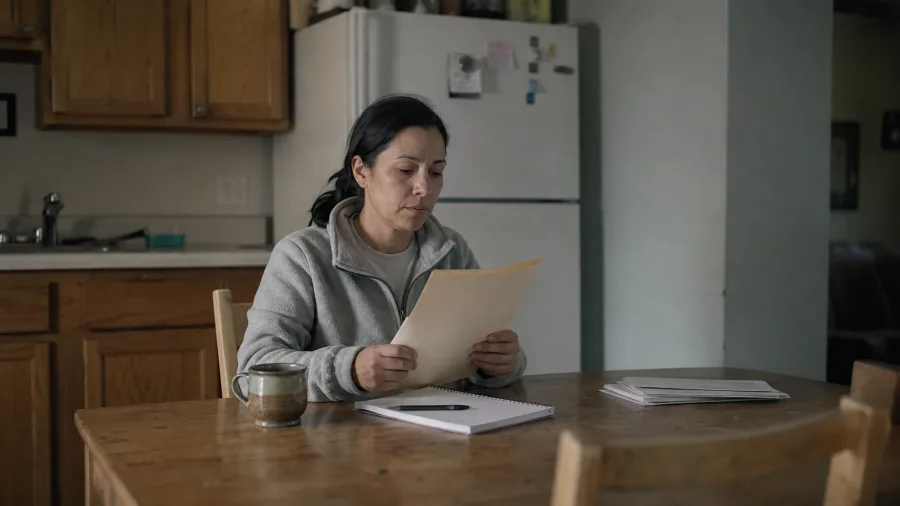
A will does exactly one thing: it speaks at death, and not a moment before.
During a hospitalization, a stroke recovery, or a years-long dementia decline, a will has no legal effect at all. Every financial decision in that period – paying the mortgage, managing a brokerage account, filing a tax return – happens completely outside it. The will is waiting in a drawer, legally inert, while bills pile up and accounts sit frozen.
A standard power of attorney has its own problem: it lapses the instant the person who signed it loses mental capacity. That is precisely the moment a family needs it most, and precisely when it stops working. The word 'durable' is not a formality – it means the document was drafted specifically to survive that loss, to stay in force throughout a period of incapacity, however long that lasts.
Without a durable version in place, no one has legal authority over a living person's finances. Not a spouse. Not an adult child. Not anyone listed in the will.
The couple at 52 and 49 – will signed, healthcare directive in the drawer – have addressed what happens when one of them dies and what happens if a medical team needs direction. What they have not addressed is the financial middle: the weeks, months, or years of incapacity that can come before death arrives. That gap is where the durable power of attorney for finances lives, and right now nothing is filling it.
Estate Planning — The Terms Worth Knowing
Without an agent named, a judge decides

The vacuum left by a missing DPOA does not stay neutral – a court fills it, on its own schedule, by its own rules.
If someone becomes incapacitated and no financial power of attorney exists, a family member has no legal access to a single account. Not the checking account, not the brokerage, not anything. To get that access, someone must file for guardianship or conservatorship – a formal court process that requires legal filings, scheduled hearings, and months of waiting while regular bills still come due.
That process typically costs $3,000 to $8,000 in legal fees. And it does not guarantee the outcome the family expected. A judge decides who is appointed and what authority they hold – not the person who is now incapacitated, not the family, not anyone named in the will.
The proceeding is public record. The family's full financial picture becomes visible to anyone who looks at the courthouse file, at exactly the moment the family is already under the most stress they have ever faced.
Even after the court appoints someone, the oversight does not stop. The newly appointed guardian is often required to file annual financial accountings with the court – a recurring legal cost, paid year after year, for as long as the incapacity continues. The DPOA was designed to make all of that unnecessary. Without it, the family pays the court's price instead.
Incapacity closes the window to sign
The deadline is not a date on a calendar – it is the moment mental capacity ends, and that moment can arrive without a warning call.
Every state sets its own legal standard for what 'capacity' means when a DPOA is signed. Some states require the ability to understand the nature and consequences of the document; others frame it differently. A licensed estate attorney or a state bar referral line can tell the reader exactly what the standard is in their jurisdiction – and whether a diagnosis already in the picture has crossed that line.
A stroke that happens at 6 a.m. on a Tuesday, a dementia assessment that comes back positive at a neurologist's appointment, an admission to the ICU after a fall – any of these events can be the thing that closes the option permanently. Not theoretically. The attorney a family calls on Wednesday cannot draft a document the principal no longer has the legal standing to sign.
That is the trap the couple at 52 and 49 need to see clearly. Both are healthy today. No diagnosis, no hospitalization, no reason to think next week looks any different. That is exactly what being inside the window feels like – which is why so many families miss it.
Waiting for a warning sign feels logical, but the warning and the deadline often arrive at the same time. By the time something looks wrong enough to act on, the legal option can already be gone.
⚠️ COMMON MISTAKE
Waiting for a health scare is already too late
A durable power of attorney cannot be signed after a principal loses legal mental capacity — and a formal diagnosis or critical care admission often marks exactly that line. If the document is not signed before a crisis begins, the only path left is a court proceeding.
Your agent can act across all your finances

A well-drafted financial DPOA hands the named agent the full range of financial authority the principal holds personally – paying bills and managing checking accounts, directing brokerage and investment accounts, handling real estate transactions, filing federal and state tax returns, dealing with insurance policies, and managing any business interests.
That list is broader than most people expect.
The document does have a firm boundary, though: it covers money, not medicine. Decisions about treatment, surgery, or end-of-life care require a separate healthcare proxy or advance directive – which the couple in this example already has in place. The financial DPOA and the healthcare directive are two distinct documents designed to run alongside each other, each handling the domain the other cannot touch.
The agent's authority also has a clear end date, even if no one sets it in advance. The moment the principal dies, the DPOA goes dark. At that point the will activates, the executor named in it steps in, and financial control transfers cleanly. The two documents are built to hand off to each other – neither overlaps the other's job.
One more thing worth saying plainly: the DPOA gives the agent access, not ownership. Every action the agent takes must serve the principal's interests – that is the legal standard a fiduciary is held to. The document is a tool for managing someone else's money on their behalf, and the agent is accountable for how they use it.
Durable Power of Attorney for Finances — At a Glance
💰 Standalone attorney cost
$200–$350
📦 Full estate plan bundle
$1,000–$2,000
⚖️ Court guardianship cost
$3,000–$8,000
⏱️ When it takes effect
Upon incapacity (or immediately, if specified)
🛑 When authority ends
At the principal's death
📝 What it does NOT cover
Medical decisions (separate healthcare directive needed)
Bottom line
For a couple who already have a will and healthcare directive, a standalone DPOA is the one remaining gap — and at $200–$350, it costs less than one month of court filing fees.
Vague documents get turned away at the bank

All of that authority – banking, brokerage accounts, real estate, tax filings – only delivers if the institution on the other side of the counter agrees to honor the document the agent hands them.
Banks are legally permitted to reject a DPOA they consider too vague, improperly executed, or simply too old, and when that happens the agent has no lever to pull on the spot. There is no appeals process at the teller window. The only path forward is returning to court to obtain what the document should have provided in the first place.
Wording matters more than most families expect. Powers like making gifts in the principal's name, changing a beneficiary designation, or amending a trust do not come along automatically with a broadly worded grant – each one has to be spelled out explicitly, in language that matches what the relevant statute actually requires. A document that says 'all financial matters' and nothing more will be read narrowly.
A template built to function in all fifty states is, by definition, calibrated to none of them. An attorney drafting for a specific state writes to that state's current statutes and to the standards that the large financial institutions operating in that state routinely apply – language that sailed through a bank's legal review in one state may get flagged the same afternoon in another.
The real test is not whether the document was signed and notarized. It is whether a bank compliance officer and a title company accept it on the day the agent actually needs it. That day, with a parent in the hospital and bills running, is the worst possible moment to discover the document fails.
Agent choice matters more than the wording
The person named as agent carries as much weight as any clause in the document – a DPOA that clears every legal hurdle still falls apart if the wrong person is holding it.
Four things have to be true about the agent at the same time: they handle money honestly, they can physically get to a bank or title company when needed, they are willing to take the job, and they have no financial stake in the estate that could pull their decisions away from the principal's interest. A gap in any single one of those creates real exposure.
Name a successor agent too.
If the primary agent has died, is unreachable, or simply refuses to act when the DPOA is called on, and no backup is written into the document, the family is back in front of a judge – the same court proceeding the DPOA was drafted to prevent.
For families where no obvious candidate clears all four criteria – a situation that is more common than people assume – a professional fiduciary or a bank trust department can be named directly in the document. That is a recognized, practical arrangement, not a last resort for complicated estates.
Whoever is named needs three things before any health crisis arrives: the knowledge that they are named, the location of the original document, and a certified copy of their own. An agent who learns of their role the day a family member is admitted to the hospital is already a step behind every institution they will have to call.
Online Legal Service vs. Estate Attorney for Your DPOA
Online Template
- Lower upfront cost, typically $30–$100
- Generic language drafted for all 50 states
- May miss state-specific execution requirements
- Specific powers (gifts, beneficiary changes) often excluded
- Banks may reject as too vague or non-compliant
Estate Attorney
- Standalone DPOA typically $200–$350
- Language calibrated to your state's statutes
- Execution requirements verified at signing
- Specific powers named explicitly and correctly
- Drafted to meet the standards local banks apply
Attorney fees are a fraction of a court fight

Getting the document drafted by an estate attorney typically runs $200 to $350 for a standalone DPOA. For the couple at 52 and 49 – who already have a will and a healthcare directive – that is the number they are looking at, because the attorney is adding one document to a plan that is otherwise complete, not building from scratch.
The alternative comparison is not between an attorney and an online form. It is between $200 to $350 now and $3,000 to $8,000 in court later.
That is what a guardianship or conservatorship proceeding typically costs in legal fees, and that figure buys delay – several months of it – not a guaranteed result. A judge decides who is appointed and what powers they receive. The family does not get to choose, and the proceeding is public record, which means the family's financial situation becomes visible to anyone who looks at court filings at exactly the moment they are already under pressure.
Online legal services are cheaper, and the savings are real. The trade-off is standardized language built to work across every state at once, which means it is calibrated to none of them specifically. A bank's legal team or a state statute can reject that language on the day the agent needs to act – which is the worst possible moment to discover the document does not hold up.
The fee for a properly drafted, attorney-reviewed DPOA is not the expensive choice. It is the cheaper one, measured against what skipping it actually costs.
The Real Cost of Skipping the DPOA
Based on typical legal fees; actual costs vary by state, attorney, and court complexity
Fee ranges are illustrative; get a quote from a licensed estate attorney in your state.
One missed signature step voids the document

Getting the wording right and paying an attorney to draft it does not finish the job – the signing ceremony itself has to meet a specific legal standard, and that standard varies by state.
Some states require two disinterested witnesses; others require one witness and a notary; a handful require both. The exact rules for your state come from a licensed estate attorney or your state bar association, not from a general guide or a template website.
Three errors show up repeatedly and each one is fatal. First: the named agent signs as one of the required witnesses, which is a conflict most states prohibit outright. Second: the wrong number of witnesses is present at the table – one short invalidates the execution. Third: a notary who is on the phone or in the next office signs off without being physically present in the room when the principal signs. Any one of these defects means the document has no legal force.
That last point is the hard part.
A defectively executed DPOA still looks like a valid document. It sits in a fireproof drawer for years. The named agent carries a copy assuming everything is covered. Then a bank examiner or a court looks at the execution block and the document fails – at the exact moment the family needed it to work.
The signed original should be kept in a fireproof location at home. Certified copies go to the named agent and to each financial institution now, not when a crisis is already under way – some institutions require a copy on file before they will honor one at all.
Old documents get refused when families need them most

A document that was properly executed can still be turned away years later, because financial institutions are permitted to treat any DPOA they consider outdated as unacceptable.
There is no universal rule about how old is too old. One bank might have an internal policy that anything over five years triggers a review. Another may accept a document from 2009 without question. The only way to know is to call each institution directly and ask what its current standard is – not once, but whenever a significant life change happens.
Moving to a different state is a hard trigger for re-execution. A DPOA written under the laws of one state may use language or follow execution standards that a new state does not recognize. The couple at 52 and 49 who drafted their documents in Ohio and later moved to Florida are not covered by the Ohio version the way they assume they are.
Other events that warrant a fresh look: a divorce, a significant shift in assets or business interests, or any change in the named agent's situation – death, a falling-out, or the agent's own incapacity. A successor agent named in the document solves some of this, but not all of it.
Some banks go further.
A handful of major institutions maintain a preferred POA form and will default to rejecting any other version, no matter how cleanly it was drafted and executed. Calling each institution before the agent ever needs to act – confirming the document is on file and acceptable – is the step that turns a signed paper into a tool that actually functions on the day it is needed.
📋 Getting Your Financial DPOA Done This Week
List every financial account
Write down every bank account, brokerage account, retirement account, and property you own — this is what your agent will need authority over.
Choose your agent and successor
Identify one primary agent who is trustworthy, reachable, and free of financial conflicts, then name a backup in case they cannot serve.
Contact a licensed estate attorney
Call your state bar association's referral line or a local estate attorney to schedule a consultation — a standalone DPOA appointment typically runs under an hour.
Review and execute the document correctly
Confirm the witness count and notarization requirements for your state, and make sure the named agent does not sign as a witness.
Deliver certified copies before they are needed
Give the original to a fireproof location, and deliver certified copies to your agent and to each financial institution while everyone is calm.
Tell your agent where everything is
The agent should know the document exists, where the original is kept, and which institutions already have a copy on file.
Frequently Asked Questions
Do I need a durable power of attorney if I am married and my spouse is on all the accounts?
Joint accounts give your spouse access to those specific accounts, but nothing more. They cannot file your tax return, manage a retirement account in your name only, handle real estate titled solely to you, or deal with insurance policies you own individually. A financial DPOA covers all of that — joint titling covers a slice of it. The two are not interchangeable.
Can I write my own durable power of attorney without an attorney?
Technically, many states allow a self-drafted DPOA if it meets the state's execution requirements. In practice, a self-drafted document is the most common source of the language gaps that get a DPOA rejected at the bank — missing explicit authority for gifts, beneficiary changes, or trust amendments. At $200–$350 for a properly drafted document, the attorney fee is inexpensive insurance against a document that looks valid and then fails.
What is the difference between a durable power of attorney and a living will?
A living will (also called an advance healthcare directive) covers medical decisions — what treatments you want or do not want if you cannot speak for yourself. A financial DPOA covers money: accounts, bills, taxes, property, investments. They handle different aspects of incapacity and neither one replaces the other. A complete plan has both.
How often should a durable power of attorney be updated?
Review it any time you move to a new state, go through a divorce, see a significant change in assets, or see a change in your agent's situation — their death, incapacity, or a serious change in your relationship with them. Beyond those triggers, call each financial institution every few years to confirm they will accept the version you have. Some institutions refuse documents over a certain age regardless of their technical validity.
Can a family member override the agent named in a DPOA?
Not without going to court. Once a valid DPOA is in force, the named agent has legal authority to act. A family member who disagrees with the agent's decisions would need to petition a court to challenge those actions — a significant, expensive undertaking. Choosing the right agent and naming a clear successor matters enormously, because the document itself makes that choice binding.
Is a durable power of attorney the same thing everywhere in the US?
The concept is consistent, but the requirements for valid execution — number of witnesses, notarization, specific language for certain powers — differ by state. A DPOA drafted in one state may not satisfy another state's requirements after a move. Always have the document reviewed or re-executed by a licensed attorney in the state where you currently live.
The One Appointment That Closes the Gap a Will Left Open
Call an estate attorney or your state bar association's referral line this week. Bring a complete list of every financial account – every bank account, every brokerage, every retirement account, every property – and come with the name of the person you would trust most to manage your money if you could not manage it yourself. That one appointment produces a properly drafted, properly executed DPOA that covers everything this article has described.
The couple at 52 and 49, wills signed and healthcare directive in place, are one document short of an estate plan that holds together when a crisis actually arrives. The window to sign is open right now – it does not stay open until the need becomes obvious.
Most families measure their preparedness against whoever seems least ready. That comparison misses the one document that matters most while the person is still alive. A will is not enough, and the gap it leaves is not theoretical – it is the first thing a health crisis finds.
Know Exactly What to Bring to Your Attorney
The timeline section above walks through every step — from listing your accounts to delivering certified copies — so you can arrive at your appointment ready to get it signed and done.
