

Twenty-seven dollars became thirty-nine in the time it takes to read a banner. That is twelve dollars you did not choose, from a cart you had already finished building.
Put the two receipts side by side. A $27 cart plus $7.95 shipping comes to $34.95. Add the $12 filler that clears the $35 free-shipping threshold and you pay $39, worse by $4.05 and holding an item you never wanted. The gap is a cue, not a character flaw.
The same setup repeats everywhere: a saved card that turns $9.99 into one tap, a seven-day trial that wants the number up front, a pre-ticked box at checkout, a '2 left' badge with fifteen minutes on it. Each one skips the step where you would have weighed the purchase.
Five triggers, then, and five exact counter-moves for the moment each one fires. Not more restraint promised. The cue spotted before the tap. Below, work out which trigger gets you first, and run its counter-move today.
The rest can wait a week. Ten minutes on a Sunday, statement open, is enough to catch what slipped through.
Quick Tips Before You Start
Complete the cart first
Finish adding what you actually need, then check if a trigger appears.
Delete saved cards
Remove stored payment methods from shopping apps and browsers.
Calendar the cancel date
The day you sign up for a trial, put the cancel reminder on your calendar.
No add-ons at checkout
Make it a flat rule: nothing extra at the register, ever.
Wait 24 hours
Close the tab and return tomorrow. Scarcity is often a prompt, not a fact.
Screenshot the price
Capture the item and price, then decide without the timer running.
1. Free-Shipping Gaps Turn a $27 Cart Into $39

There was a cart sitting open on my laptop at 11pm once, $27 of things I actually needed, and a banner in green letters telling me I was $8 away from free shipping.
Here is where the arithmetic gets done for you, and it is worth walking through slowly because the numbers are smaller than they feel. The store wants $7.95 to ship a $27 order. To skip that fee you need to reach $35, so you add a $12 filler item you did not plan on. Now you are paying $39 instead of $34.95. You saved $7.95 in shipping and spent $12 to do it, which is $4.05 more out of your account than if you had just paid the postage and walked away.
The banner never shows you that last number. It shows you the $8 gap, because $8 sounds like almost nothing, and almost nothing is exactly the price at which people stop checking.
This catches anyone who reads a threshold as a target instead of a limit. Your cart was finished at $27. The moment it was finished is the moment a new question got installed in place of the old one. Instead of asking do I need this, you are asking am I close, and am I close has a much easier answer, because the fix is right there in the banner.
The move is to buy the $27 cart and eat the $7.95 shipping. If that feels like losing, remember you are $4.05 ahead of the person who filled the gap, and you do not own a $12 item you never wanted. If the filler is something you genuinely use, bookmark it and buy it the next time you actually run out, on its own order, at its own price.
One practical habit that costs nothing: before you check out, read the item list out loud and ask which lines were on the list before you opened the site. Anything that showed up after the shipping banner is not a purchase, it is a reaction to a prompt.
The fee feels like the enemy. The filler is the thing that actually leaves your account larger than it needed to, and it is the only line on that screen you can delete in one click.
💡 Tip: Keep a running list of items you almost bought as fillers. Revisit it in 30 days. Most will look like clutter.
| Trigger | Where it catches you | Illustrative cost | Counter-move |
|---|---|---|---|
| Free-shipping gap | Cart checkout when you're $8 from the $35 threshold | $12 filler turns a $27 cart into $39 | Pay the $7.95 shipping or bookmark the filler |
| Saved card | In-app one-tap purchase with card and CVV on file | $9.99 add-on in under five seconds | Remove saved cards; re-enter only for planned buys |
| Free trial | Signup page requiring a card for 7 days free | $14.99/month charged on day 8 | Calendar the cancel date or use a virtual card |
| Checkout add-ons | Pre-ticked box or shelf by the register | $6.50 candy bar and $12 cable | Flat 'no add-ons' rule; buy cable only when old one fails |
| Countdown timer | Product page with '2 left' and 15-minute clock | $68 jacket bought before the timer ends | Screenshot and return in 24 hours |
2. Saved Cards Make One Tap Feel Like No Money
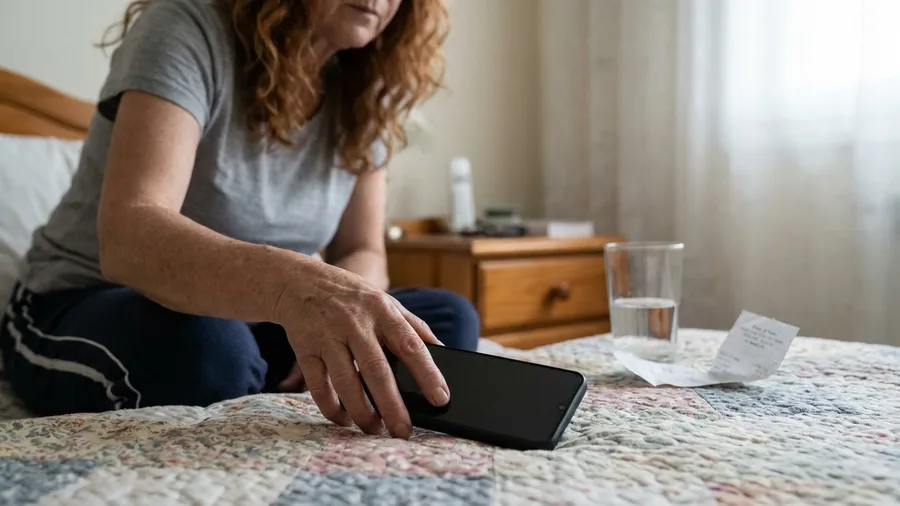
Start with the action, then decide how far to take it: open the shopping apps on your phone and delete the stored card from each one. Not every app at once if that is too much today. One app, the one you open most, is a real start.
The threshold at the cart is one pause gone at the order level. The stored card is the same trick as coupon apps that drive up spending at the payment step, where the cart is already accepted and the only thing left is a single tap. A $9.99 in-app add-on goes through in under five seconds with no number to type and no CVV to squint at, and five seconds is not long enough to notice you never decided.
If deleting every card feels drastic, scale it. Remove the card from the two apps you buy from on impulse and leave it in the one you use for planned purchases like groceries or the pharmacy. Re-entering sixteen digits is not a punishment, it is a nine-second pause, and nine seconds is often all the gap you need to ask whether you wanted the thing before the app offered it.
You do not have to become a cash-only person or cancel anything. Leave the subscriptions that earn their keep, leave the card saved where you actually plan, and take the card out of the places where tapping is the whole purchase.
Do one app today. The next time you go to buy something there, the number will be missing, and that small friction is the entire point.
⏳ The Free-Trial Clock: What Happens Day by Day
Day 1: You sign up
Card required, 'free for 7 days, then $14.99 a month.'
Day 3: The trial feels normal
You've used it a couple of times; it's part of your routine.
Day 7: Last chance to cancel
If you don't cancel by today, the paid subscription starts.
Day 8: The charge hits
$14.99 posts to your card, often before any reminder email.
Day 9: You notice the charge
Now you have to dispute or cancel and wait for a refund.
3. Free Trials Convert Quietly on Day Eight
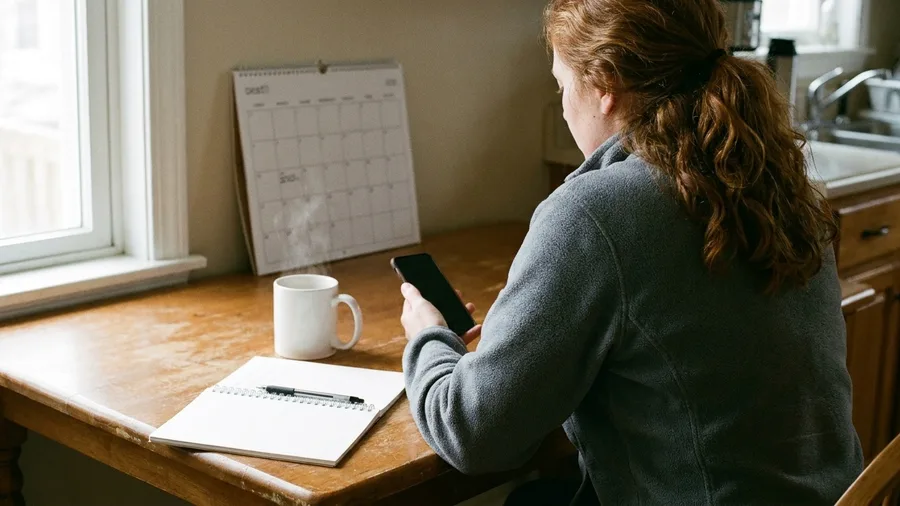
Free feels like winning, and that is exactly the point. A saved card gets one extra past you in the moment of paying. A trial just moves the same bypassed decision into next week, when nobody is looking.
Seven days of access costs zero to start. The screen asks for a card anyway, and somewhere in the fine print sits the number that matters: $14.99 a month once the week runs out. You tap through, because nothing is being taken yet, and a charge that lands on day eight does not feel like a purchase on day one.
Then day eight arrives. The money leaves your account for something you have already stopped using, and the trial stopped feeling like a decision around day three. This is the part worth knowing: the reminder email you are counting on is usually sent the morning the card gets hit, so it reports the charge rather than giving you a chance to head it off.
The fix takes about thirty seconds, and the fastest version is a calendar entry. At signup, before you close the tab, put the cancel date on day seven with an alert, and note the $14.99 next to it so future you knows what the reminder is protecting. If the site takes a virtual card – a temporary number you can freeze or delete – use that, then freeze it the moment the trial is underway.
Once a month, open your statement and scan the line items for any recurring charge under about $15 that showed up out of nowhere. Two minutes. Any hit you cannot name is a trial that converted, and cancelling it now beats the same $14.99 quietly renewing all year.
⚠️ COMMON MISTAKE
Don't trust the reminder email
The trial reminder often lands after the charge. Set your own calendar alert for day six, before the paid period starts.
4. Checkout-Aisle Items Slip Under the Decision Threshold
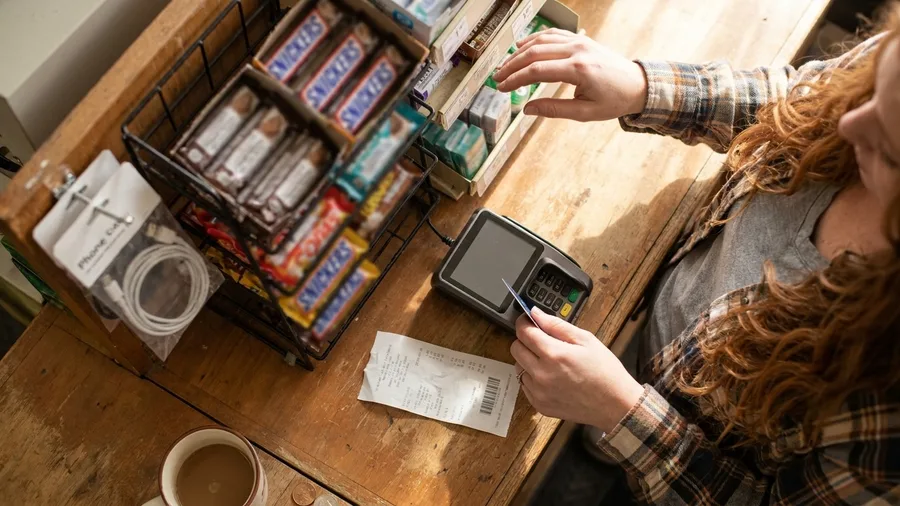
Why does a $6.50 candy bar at the register never feel like spending? Because it arrives already on the receipt. A pre-ticked add-on box, or the shelf of small items sitting beside the card slot, pushes the extra through while you are busy finishing a purchase you already decided on.
The prices are chosen to sit under the level where you would stop and think. A $6.50 add-on twice a week is about $56 a month, and a $12 phone cable rides along on the same trip without ever becoming the thing being decided. Your attention is on the checkout, not the shelf.
So take willpower out of it. Set one flat rule and leave it alone: no add-ons at checkout, ever, without a second trip. The cable gets bought separately, only when the old one actually fails. Nothing to resist in the aisle, because the rule was decided before you walked in.
5. Countdown Timers Force the Decision Before You Can Think

The cheapest move here costs nothing and takes about a day: close the tab on the $68 jacket and come back tomorrow.
A countdown does its work by clipping out the part where you would have asked yourself why you want the thing. Add-on items and urgency cues are two versions of the same gap. A '2 left' badge under a 15-minute clock on a jacket you had not been looking for turns waiting from patient into painful, so the purchase goes through before any reason exists to check.
Screenshot the page with the price showing. Buy only if you would still pay that number with no clock running. And if it is gone after 24 hours, the scarcity was a prompt, not a stock count. That single day is the whole method; start with one paused purchase this week and skip the rest.
Frequently Asked Questions
Is it really worth paying shipping to avoid a filler item?
Yes, if the filler costs more than the shipping. In the example, paying $7.95 shipping on a $27 cart costs less than adding a $12 filler to hit the $35 threshold. Run the two totals before you decide.
How do I stop one-tap purchases without deleting all my accounts?
Remove saved cards from the apps you use most. You can keep accounts open; just re-enter payment details manually for planned purchases. The extra step is enough to interrupt the reflex.
What if I miss the free-trial cancellation deadline?
Cancel as soon as you notice and ask for a refund. Many services will refund the first charge if you haven't used the paid feature. Then set a calendar reminder for the next trial.
Are checkout add-ons always a bad deal?
Not always, but they're designed to bypass your decision. A $6.50 candy bar twice a week adds up to about $56 a month. Buy the item separately only when you actually need it.
Do countdown timers ever reflect real scarcity?
Sometimes, but you can't tell in the moment. Screenshot the item and return in 24 hours. If it's still available at the same price, the timer was a prompt, not a fact.
Two Questions to Pick Your First Trigger
The verdict is simple: $27 turned into $39 because one pause got removed, and every trigger in this piece is a variation on that removal. The counter-move is always the same shape, putting the pause back at the exact cue.
Two questions sort you. First: does the leak come back every month, card required at signup? That is subscriptions, so start with free trials, cancel or calendar day seven before the $14.99 lands. Second: does it show up as one-off extras at checkout or inside an app? That is add-ons, so start with a flat no-add-ons rule covering the $6.50 candy bar and the $12 cable.
Today, whatever your answer, delete every saved card from your shopping apps and your browser. Then take ten minutes a week: scan the statement for new recurring charges, trial conversions, shipping fillers, checkout add-ons, and cards that quietly got saved again. Cancel or calendar the subscriptions, strip the saved cards, clear the fillers.
That is how the other four stay gone. And it is how a $27 cart stays $27.
Pick one trigger and neutralize it today
Remove a saved card or calendar a trial cancel date. One small move now saves you from the next unplanned charge.