
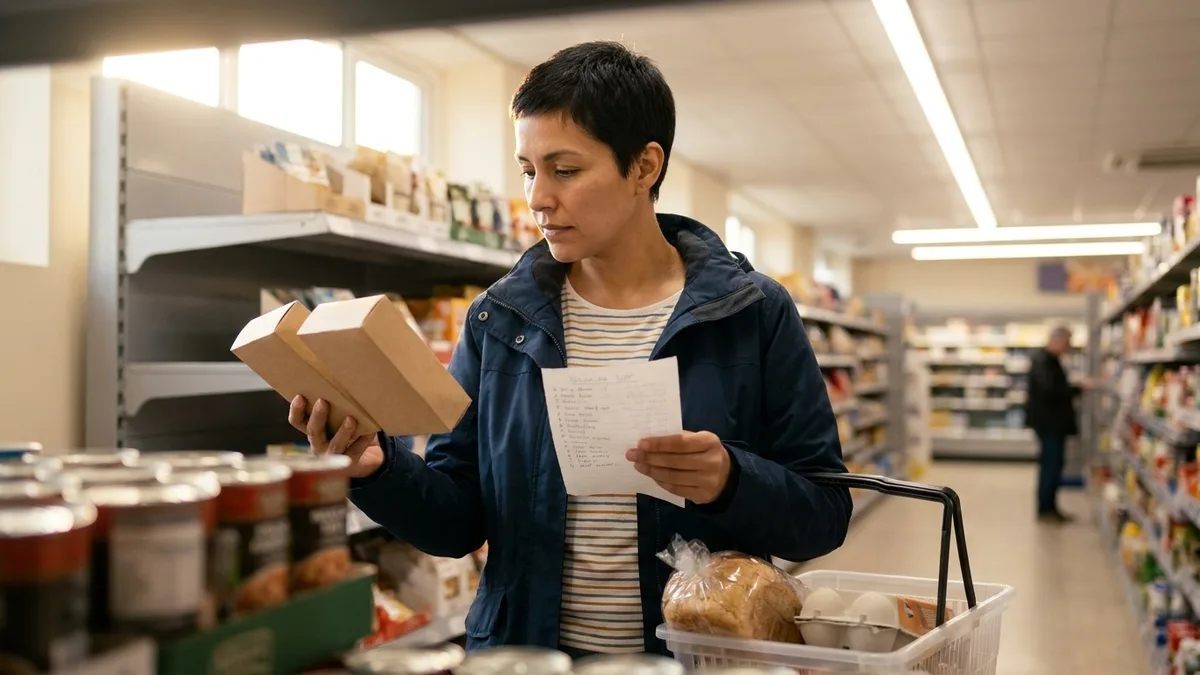
Forty-five dollars is the gap between a $150 grocery trip and a $195 one, and it is almost never one big purchase. It is thirty-five items for a household of four, plus nine small permissions you did not consciously grant.
The forced lap to the rear adds $8. Endcaps add $7, eye-level shelves $5, samples $6, bulk packages $4, music and lighting $3, checkout $4, sale signs $4, and cart size $4. That is the whole 30%, paid in pieces too small to notice.
So the useful question is not whether one item is a good deal. It is where each tactic puts its dollars into the basket, and which counter-move pulls them back out.
It takes no coupon binder and no new personality. A list written in aisle order, a $150 cap, a meal before you leave, and one rule for anything outside the list. That routine keeps the same trip at $150.
Quick Tips Before You Start
List in aisle order
Write your list in the order you'll walk the store, not the order you thought of things at home.
Set a hard cap
Pick a number before you leave — $150 for a family of four is a realistic weekly target.
Eat first
Shopping hungry reliably adds unplanned items; a snack before you leave is cheaper than the extras.
Walk the back first
Head straight to the rear for milk, eggs, and bread before you let yourself browse anything else.
Keep a price note
Track three staple prices you buy weekly so you can spot a fake sale.
Set a timer
A 25-minute cap on the trip keeps you moving past displays designed to slow you down.
The forced route and the shelves
The first three tactics live in the layout itself — the path you are pushed to walk, the displays that line it, and the shelf height where your hand naturally lands.
Each one adds a small slice to that $150 trip. Together they account for $20 of the $45.
1. Essentials at the back stretch your route
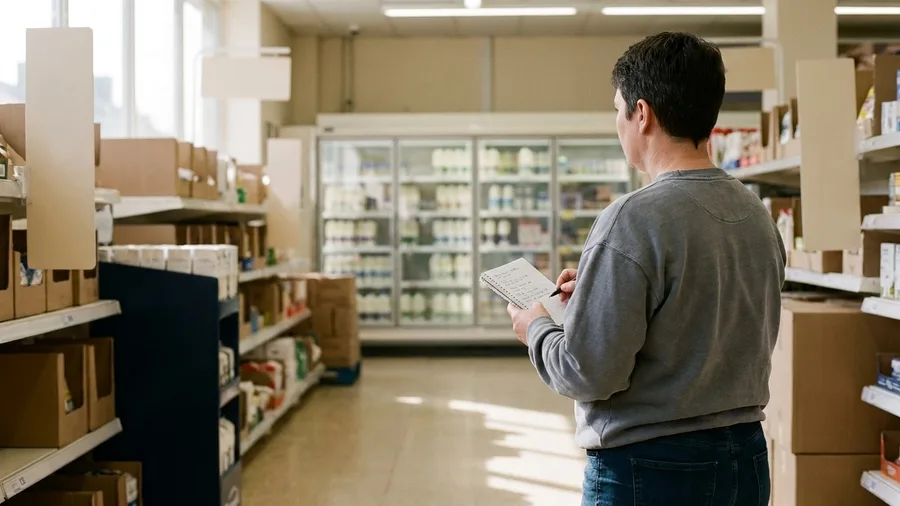
I used to walk in with four items in my head and come out with a full cart, and the first time I actually traced the walk I saw why: the milk cooler sits at the far back wall, and getting to it means passing every front and middle aisle on the way.
That design is not an accident. Staples like milk, eggs, and bread are parked at the rear because they are the items you cannot skip, and the store knows the shortest path to them runs through everything else it wants you to notice. A quick run for a gallon of milk turns into a full lap before you have picked up anything you planned. The endcaps. The seasonal table. The display of whatever is being pushed this week, all of it in the thirty seconds it takes to walk to the back and back again. Store layouts that drive spending break down the same geography, showing how the route itself acts on your wallet.
On a $150 trip for a household of four, working from roughly a 35-item list, that forced lap quietly adds about $8 in items nobody wrote down. Eight dollars does not sound like much until you see it sitting there as the first slice of a $45 overrun, the piece that opens the door for the rest.
The fix is a list written in aisle order before you leave the house, then one direct walk to the back for what you came for, and only the listed aisles on the way out. No wandering. No browsing the middle unless the list sends you there. The $8 stays in your pocket because you never gave the lap a chance to spend it.
💡 Tip: Take the perimeter first for produce, dairy, and meat, then hit only the center aisles your list names.
| Trick | Where it hits | Example added spend | Counter-move |
|---|---|---|---|
| Essentials at the back | Forced route past endcaps | $8 | Walk straight to the rear, then only listed aisles |
| Endcap displays | Every other aisle | $7 | Compare unit price before it goes in the cart |
| Eye-level shelves | Premium brands at hand height | $5 | Scan top and bottom shelves first |
| Free samples | Demo tables near high-margin items | $6 | Only sample what's already on the list |
| Slow music and warm light | Extended browsing time | $3 | Timer or headphones to keep your pace |
| Oversized packages | Family-size packs | $4 | Buy bulk only when unit price wins |
| Sale signs | Yellow tags hiding regular price | $4 | Note your baseline prices for staples |
| Checkout shelves | Candy at arm's reach | $4 | Decide before the queue: nothing added |
| Big carts | Room for unplanned extras | $4 | Hand basket for quick trips |
2. Endcaps are bought display space, not deals
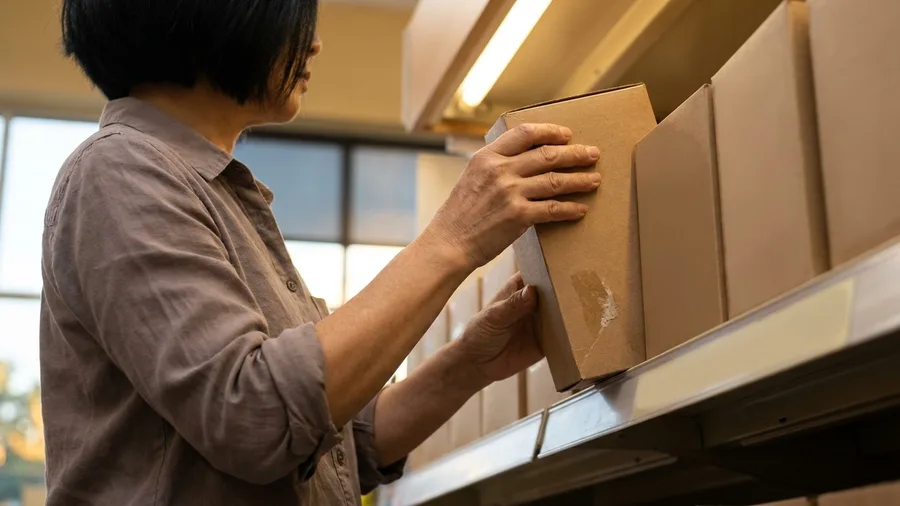
It is easy to feel like you are missing something when a display looks like a deal, so start with the shelf tag, not the display. Those endcaps are mostly rented space, paid for by the manufacturer to put a product in your line of sight. That is a placement fee, not a price cut. The box on the end of the aisle is often just the item with the best margin or the newest launch, set where the walk to the back drags you past it.
On your next trip, check three things before anything goes in the cart: the shelf tag price against what you would normally pay, the unit price printed on that tag, and whether the item is even on your list. If it duplicates something already listed or loses on unit price, it stays on the shelf. The crackers may be $4.29 and look harmless, but two endcap grabs is roughly $7 folded into a basket that was supposed to stay at $150.
Do this check for two or three weeks and the pattern shows up fast: the same rented displays, the same high-margin products, the same dollars leaking in on a walk you had to make anyway.
Endcap vs. shelf: which one is actually the deal
Endcap pickup
- Rented by a manufacturer, not a store discount
- Sits on the forced walking route
- Often new or high-margin items
- Reachable without thinking
Home-aisle check
- Compare unit price against the shelf tag
- Store brand usually sits lower
- Check top and bottom shelves too
- Only add if it was already on the list
3. Eye-level shelves carry the priciest versions
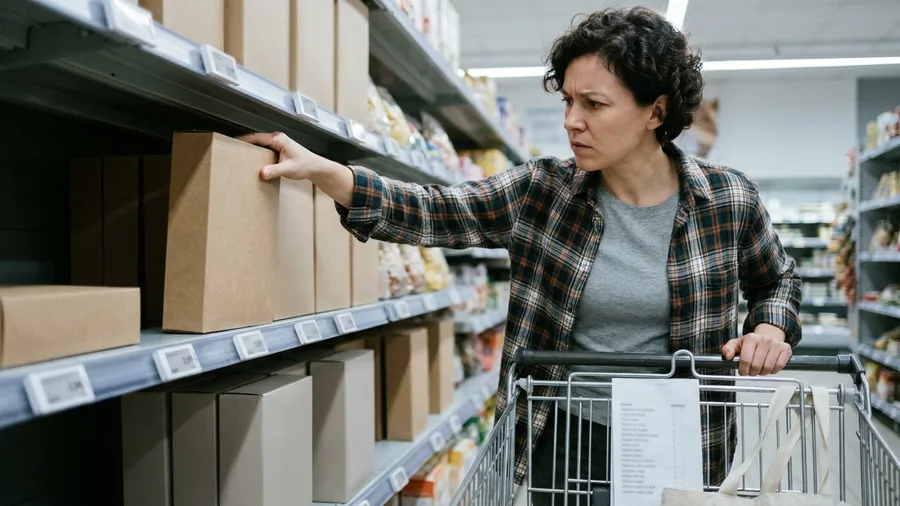
Five dollars is what two swaps are worth on this trip, which is small enough to ignore and steady enough to matter over a year.
A manufacturer buys the shelf at eye level because it is the easiest reach in the store. Your hand goes there without a decision being made. Premium brands pay for that position; store brands and the bigger bulk sizes get pushed to the top and bottom rows, out of the default path your arm travels. So the cereal you grab first is frequently the priciest version of the thing on that shelf.
Which means the choice is often already made before you consciously pick anything up. You are not comparing three boxes; you are reaching for the one at chest height and moving on.
The move is to look up, then look down, before you settle on anything. Scan the top shelf. Scan the bottom shelf. Compare whatever you find there on unit price, the cost per ounce printed small on the tag, against the eye-level version you were about to take. Two swaps of that kind on a single trip is around $5, and that $5 is one of the nine slices that make a $150 list ring up at $195.
This is the point where your own numbers matter more than any rule I can hand you. Your store brand may not beat the national brand on every item, and it may beat it badly on others. Run the comparison on the five or six products you buy every single week and let that short list decide for you. If it feels like a lot to track, pick one aisle this trip and do it there.
One honest note: store brands are not automatically better, and top-shelf bulk only wins when you will actually finish the package. The counter-move is not cheaper at any cost. It is check the unit price on the row your hand does not reach by default, and only then decide. If your household has real dietary needs or a brand that genuinely works, a fee-only professional is not the answer here; your own receipt from last month is. Read the unit prices on the ten things you bought most, and you will know exactly where the $5 is hiding for you.
💡 Tip: The cheapest option per ounce is almost never at eye level. Look up, then look down.
💡 PRO TIP
The two-second unit-price habit
Before any package goes in the cart, flip it over and find the price-per-ounce line on the shelf tag. It is the only number that tells you which package is actually cheaper.
The sensory stops that slow you down
The next two tactics are not on the shelf — they are in the air around you. Warm light, slow music, and a small paper cup of something free work together to stretch a 25-minute trip into 35.
Extra minutes mean extra aisles seen, which means extra dollars in the basket. Together these two add $9 to the $45.
4. Free samples turn browsing into buying
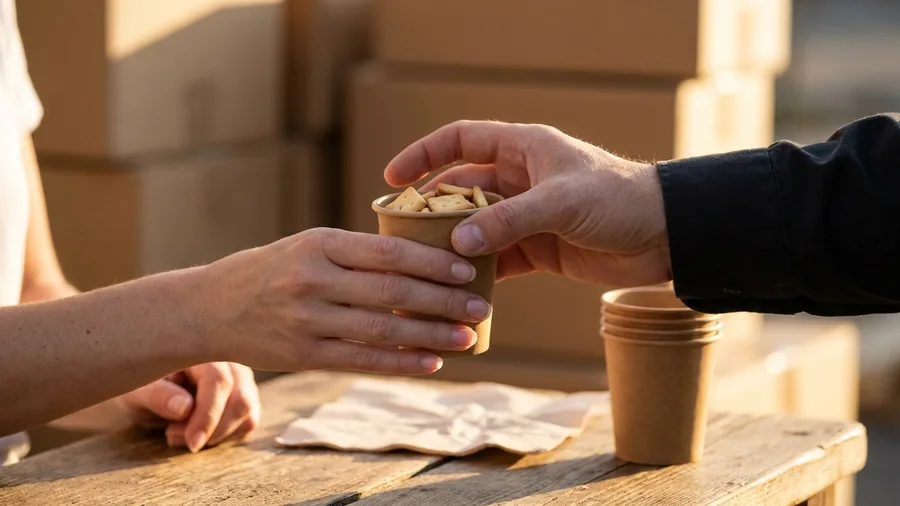
A free sample is a gift, which is why the purchase that follows feels like a fair trade rather than a decision. But the table is not set up where it is by accident; it stands beside the item the store most wants to move, and the taste in your hand does the selling a shelf tag never could. The cracker or the cheese bite lands first, and the item becomes yours before the price is ever checked.
The stop is not just a mouthful. Five to ten minutes go into the trip at that table, and in this example the samples add about $6 in items that were never on the list. That is the gap between wanting something and having already tasted it.
You do not have to skip the table to protect the basket. Take a sample only when the item is already on your list; an unlisted taste stays outside the cart, and the sample stays a sample.
The eye-level swap — the numbers
💰 Typical added spend
$5 per trip
📦 Where store brands sit
Top and bottom shelves
📉 Usual gap per ounce
20–30% cheaper
⏱️ Time to check
About 10 seconds per item
✅ Best candidates to swap
Cereal, pasta, yogurt
Worth doing
Swap two frequently-bought items first, then decide if the swap is worth extending.
5. Slow music and warm light stretch the visit
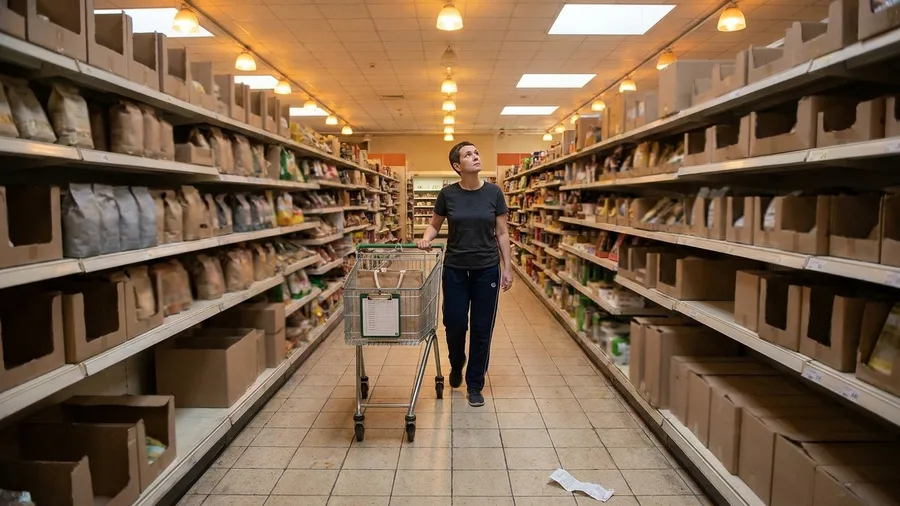
Because the store is setting the pace, and it isn't your pace. After a sample stop has already added a few minutes, the tempo of the music and the warmth of the lighting take over the rest of the walk. The tempo on the speakers is slower than the one in your head, and slow tempo tends to slow the shopper.
A trip planned for 25 minutes can run to 35 with a sample stop and slow music behind it, so ten extra minutes get spent moving past shelves you already walked. Nothing in that stretch feels like a decision. That is the whole point of the environment: comfortable shoppers keep looking, and looking turns into reaching. In a typical example the extra browsing adds about $3 to the $150 basket, roughly the price of one unplanned item that rode in on the mood.
The mistake is treating the mood as harmless, something you can enjoy and still walk out on plan, when the minutes themselves are the product being sold. Nothing about it is a character flaw. Soft light works on almost everyone.
The counter-move is to carry your own clock. Set a timer before you walk in, keep earbuds in with your own music, and move at the speed you arrived with. When the timer goes off, head for the register, not the next aisle.
Those bought minutes are the cheapest thing to take back, because cutting them removes the $3 without giving up a single item on the list.
💡 Tip: A 25-minute timer on your phone beats willpower when the music is slow and the aisles are warm.
The price and package traps
The next two tactics are the ones that look like savings but are not. A big package and a yellow tag are both comparison prompts, not proof that you are getting a deal.
Both are settled with the same tool — the unit price on the shelf tag — and together they add $8 to the $45.
6. Big packages only save when unit price drops
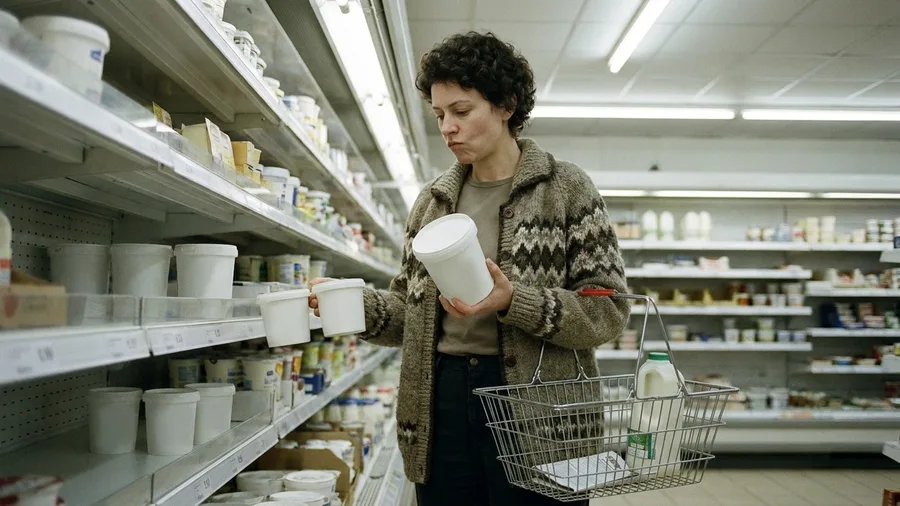
The move is to decide by the printed unit price before the package goes in the cart, not by how big it looks, because once the music has stretched the visit the next call is made on the label. The family-size tub can carry a higher cost per ounce than the smaller ones beside it, and the shelf tag tells you which without any arithmetic.
Line up one 32 oz yogurt at $6.99 against two 16 oz tubs at $5.98 and the big one costs $1.01 more for the same 32 ounces. Bulk deals that cost more collect the same trap across shelves, so you can compare without trusting the packaging. In this example that oversized pick adds about $4 across the trip, and whatever isn't eaten before the date goes stale, which is the cost the tag never shows.
Set one rule and stop deciding in the aisle: bulk goes in the cart only when the unit price is lower than the smaller size and the household will finish it. That single check leaves the shelf to do the arguing.
Grocery inflation by the numbers
Where the extra spend comes from in a typical $150 basket
7. Sale signs can hide a higher regular price
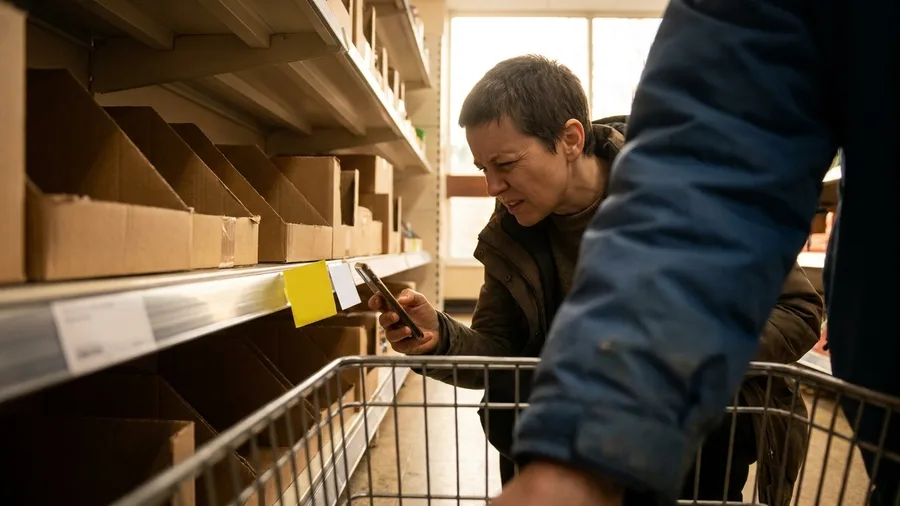
That yellow tag is doing something to your brain before you have read a word of it. The color says cheaper, and the brain stops there, so the shopper grabs it and moves on without ever checking what the number used to be.
A sale sign is a prompt to compare, not proof of a discount. The reference point is the regular price printed small beside the sale price, and most of us never look at it, because the tag already did our thinking. Take cereal at $4.99 from $5.49: that saves 50 cents, not the 30% the yellow seems to promise. Run the same check on the unit price per ounce, not just the total, and some tags turn out to save almost nothing.
on the $150 trip it is a $4 entry in the extra spend, and checking the tag against the regular price can hand most of it back.
The cheap fix is a phone note. Keep the regular price of three staples you buy every week, like milk, eggs and cereal, so you have a baseline to hold each yellow tag against, total and per ounce. That takes five minutes once and turns every sale sign after it into a fast yes or no.
It is worth the ten seconds. Not because you will catch every inflated tag, but because the sign stops working on you the moment you know what the normal price is.
💡 Tip: Fair warning: sale tags cycle. If a staple is on "sale" every week, the tag is decoration.
The final catch
You made it to the register. This is where defenses are lowest, the line is slow, and two small tactics add about $8 to the basket — candy within arm's reach and a cart that gave the rest room to grow.
Both are easy to counter once you know they are there.
8. Checkout shelves catch you tired and rushed
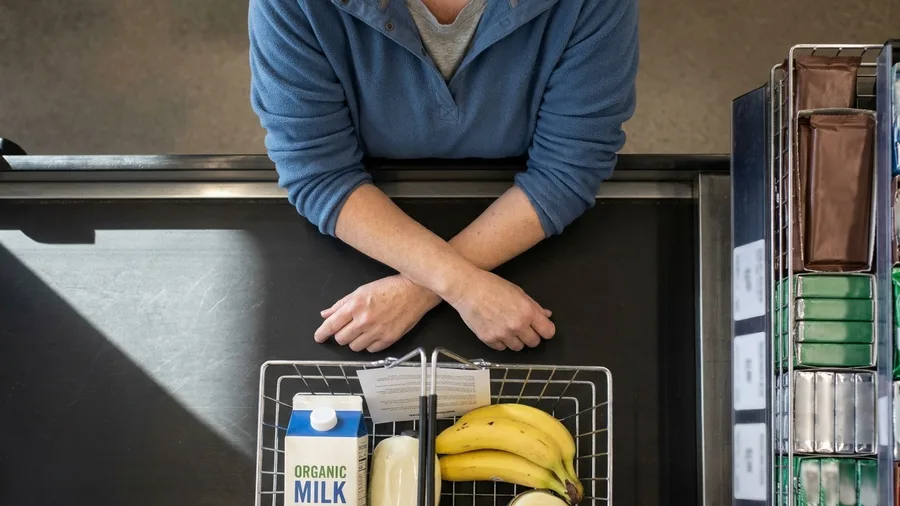
Make one decision before you join the queue: nothing joins the cart at the register. Not a snack bar, not a magazine, not a pack of gum from the rack within arm's reach. The checkout is the one spot in the store that offers no unit price and no regular price side by side, just small, high-margin items at eye level while you stand still. It's the last point after all that label reading, and the only one that skips the comparison entirely.
So build a rule you can repeat without thinking. Before you leave the house, add one line to the list: checkout is closed. That's the whole system. You need no willpower in the line, because the decision is already made and the answer is already no.
Waiting is where the rule earns its keep. A slow line feels like spare time, and the candy is at hand height, so a last-minute add-on slides in for about $4 in this example. That $4 is not planned money, it's a small permission granted at the moment defenses are lowest, and a rule made in advance removes the moment.
One more thing: keep the line out of the basket, not just out of the list. If an unlisted item comes home anyway, put it back in the car and let the rule hold next trip. The habit is the point, not a perfect record.
⏱️ The 25-minute grocery run, in order
Before you leave
Write the list in aisle order and set a $150 cap.
Walk in
Head straight to the back for milk, eggs, and bread.
Only listed aisles on the way out
Skip endcaps unless the item is already on your list.
Shelf check
Scan top and bottom shelves and compare unit price before choosing.
Skip samples
Take only a sample of something already on the list.
Register rule
Nothing from checkout joins the cart.
Out the door
Timer ends at 25 minutes; a basket beats a full cart for a quick run.
9. Big carts invite bigger baskets than you need
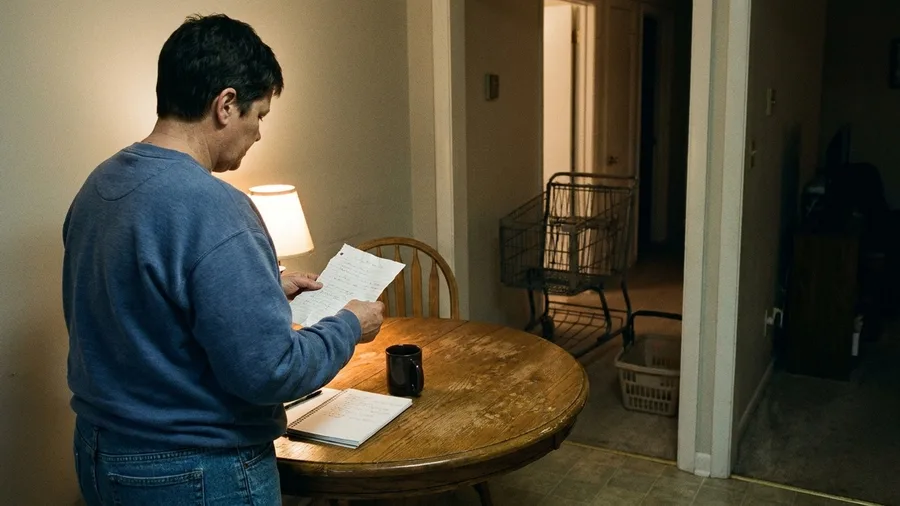
A bigger cart doesn't make you buy more. That's the belief, and it gets knocked down every week: the container sets how full the shop is supposed to look, and the same $150 list can end up filling a $195 cart in this example, with the size effect adding about $4 on top of everything the route and the displays already pulled in. A short list rattling around in a huge cart feels incomplete, so the extras fill the space.
Checkout was the last small add-on, but the cart has been setting what feels normal since you walked in. Use a hand basket for short trips, or clip the list where you can see it, so the basket stops deciding what's "enough."
Frequently Asked Questions
Is the 30% figure real, or just a scare number?
The 30% is an illustrative example of what nine common tactics add to a $150, 35-item weekly basket in a typical US supermarket — about $45. The exact number will depend on your store and your habits, but the pattern is consistent: each tactic adds a few dollars, and stacked together they add up.
Do store brands always save money?
No, but they usually do. The eye-level brand is prime selling space and often carries a premium; the store-brand version on the lower shelf is often 20–30% cheaper per ounce for the same basic product. Compare the unit price once for the items you buy most and decide for yourself.
How do I know if a sale tag is actually a deal?
Check the regular price beside the sale price, and check the unit price. A $4.99 tag from $5.49 saves 50 cents, not 30% — real, but small. If you keep three staple prices in your phone, you can tell a real discount from a revolving one.
Is the family-size package always cheaper?
Not always. A 32-ounce tub at $6.99 versus two 16-ounce tubs at $5.98 means the big tub costs $1.01 more for the same amount. Buy the large size only when the unit price actually wins and you will finish the package before it goes stale.
What if I shop with kids and can't do a 25-minute timer trip?
Do the two cheapest, easiest parts: write the list in aisle order and decide nothing joins at checkout. Those two remove most of the forced-route and impulse extras without changing the pace of the trip.
Do I need to change my whole grocery routine?
No. Pick two or three of these tricks that match your worst habits and start there. Each one saves a few dollars a week on its own, and the full routine can come later.
The $45 you can keep by writing a list in aisle order
The verdict is simple: the nine tactics are nine separate doors the $45 walks in through, and one routine closes all of them. Write the list in aisle order, set the $150 cap, eat before you go, and treat every endcap, sample, and checkout item as outside the list.
Same household of four. Same thirty-five items. The trip ends at $150 instead of $195, and the 30% stays on the shelf where it started.
The store is built to turn small exposures into small permissions, and the routine removes the permissions. At that point the route and the warm light are just background. You walk in with a list, and you walk out with exactly what was on it.
Write your next list in aisle order
Set the $150 cap, eat before you leave, and treat endcaps, samples, and checkout as outside the list. The $45 stays where it belongs — with you.