

Is the boring car in the driveway an actual strategy, or just something people say to feel better about not keeping up? Here is what settles it: the car and the house get billed twice, and the second bill is the one nobody prices.
Chances are you have already run the comparison in a school pickup line. The neighbor in the $50,000 SUV, the colleague in the $800,000 house, and neither seems to be drowning – so staying put starts to feel less like discipline and more like falling behind.
It is worth being exact about the word. Millionaire here means $1M to $3M in invested assets outside the home, which means the house is not the scoreboard and the leased SUV is usually not the thing behind the number. The 12-year-old sedan often is.
The sale price is the small half of the deal. Insurance, property tax, upkeep, and interest come back every year after, and quiet wealth is mostly what is left over when that annual bill stays modest and the money keeps working.
What follows is a way to run your own car and house through the same test: price the yearly bill, check the reserve, and get a real decision rule for which upgrades to fund and in what order.
Income is not the same as wealth

A big salary and a big net worth are two different things, and the second one is what this article means by wealth. Picture two people in the same office, both bringing home $250,000 a year. The first spends about $90,000 and puts the $160,000 difference to work; the second spends $240,000 and keeps the lifestyle. Same paycheck on the stub, opposite direction on the balance sheet.
Run the numbers: it is a gap that does the building. Millionaire here means somewhere between $1M and $3M in invested assets held outside the home. That means a $450,000 house, paid off and fully owned, does not get counted, since a roof is shelter before it is a portfolio. A modest house with $1.2M in accounts clears the line. An $800,000 house with nothing invested does not.
Punch line: the deed on the house is not the same as the money in the accounts. The second spender's wealth is real, but mostly in things that don't pay out: a $50,000 car, an $800,000 house, and the payments that tricycle around both. Every monthly bill eats into the exact money that would otherwise be buying assets that grow.
Worth saying: inheritance or a chunk of founders' stock can make someone a millionaire without the salary or the frugal habits, so the gap is one route, not the only one. It is, though, the part within your reach. And it invites one follow-up: how much of that gap can a routine upgrade consume?
| Item | Regular choice | Upgrade choice | Difference to keep or absorb |
|---|---|---|---|
| Car | $35,000 used | $50,000 new | $15,000 upfront, plus higher insurance and registration |
| House | $450,000 | $800,000 | $350,000 tied up, plus higher tax, insurance and upkeep |
| Total difference | — | — | $365,000 committed instead of investable |
| Emergency reserve target | $35,000–$120,000 (6–12 months on $70k–$120k spending) | Same spending, same target | The reserve the difference competes with |
Every dollar spent is an option sold

It is the size of the gap that does the work, and a single upgrade can take a big bite out of it. A $50,000 new car against a $35,000 used one leaves $15,000 on the table. An $800,000 house instead of a $450,000 one ties up $350,000 more. Together that is $365,000 sitting in two objects instead of two accounts, where it would otherwise earn, compound, and wait for the day you need it.
Then translate it into something with a date. Against a $70,000 to $120,000 annual budget, $15,000 is roughly one and a half to two and a half months of ordinary living. The $365,000 is more than three times the top of a 6 to 12 month reserve, and the rest should be in long-term investments. In everyday terms: this is not a rounding error; it is a substantial chunk of a financial cushion you have chosen not to have.
An honest qualifier, though: not every premium is waste. If the car is what clients see in the driveway, if the neighborhood is meaningfully safer, if the commute drops an hour a day and buys back time you use to earn or rest, the premium can be defending something more valuable than it costs. These figures show one household's setup and don't claim what most millionaires drive or own; that would need a named, linked study, not a guess.
The real question for the $15,000 and the $350,000 is what they could be doing instead, not whether they vanish.
Fixed costs keep rising after purchase

That $15,000 and that $350,000 don't leave with the signature; they come back around every year, in the insurance statement and the tax bill. The bigger car costs more to cover, its registration and title fees run off its value, its tires and wheels are larger, and any bodywork is priced to the more expensive vehicle. The bigger house follows the same logic, priced by assessment, rebuild cost, square footage, and the systems that fill it, at a rate set by the county.
The point that matters: the $350,000 jump is a recurring charge, not a one-time one. It lands on the insurance declaration page and the tax bill whether anything goes wrong or not, before you have fixed a single shingle. The car works the same way; its premium is higher every month, whether you drive it or not.
So cheaper isn't always better, and that's worth being honest about. A $35,000 used car with a full service history and a solid warranty can beat a $25,000 car with 120,000 miles nursing a transmission problem. A newer house can mean fewer emergency repairs and fewer lost weekends waiting on a roofer.
What you can do with this: call your insurer, look up your county tax assessor, and read the CFPB's mortgage and loan guides. Figures vary by region, value, and loan term, so any single rate here would be a made-up number.
⚠️ COMMON MISTAKE
The sticker price is the down payment on the real cost
Buyers budget for the purchase and forget the annual bill attached to it. Before you sign, add up insurance, property tax, registration, utilities and maintenance at the new level — that number is what you are actually agreeing to pay every year.
Boring assets compound without attention

Those premiums, taxes, and upkeep bills come out of the same account that would otherwise still be growing. Leave the $15k and the $350k where they are and they keep producing something year after year, silently, while you go to work.
The new car takes the opposite path. It sheds value the moment it leaves the lot, the custom finishes look a decade old by year eight, and neither one has to send you an invoice for the growth it never earned. The loss just sits there, quiet and untraceable, which is exactly why it is easy to ignore.
That is the whole mechanism, and it is why none of this depends on picking anything clever. It is the same case for boring plans over years rather than any clever shortcut. Money in a broad index fund, or parked in a savings account, earns while you are asleep and while you are not thinking about it. No particular return is assumed here, because returns move around and some years run negative, and Investor.gov covers the basics if you have never opened an account before.
Cash is the cautious version, but caution has a price too. Held for years, it can lag rising prices, and today's savings rates belong on the official pages rather than in this paragraph. What matters for now is that the choice exists: keep the gap earning somewhere sensible instead of letting the upgrade spend it.
None of this means letting the used car fall apart. The $25k to $45k sedan still needs its oil changes and a set of tires every few years, and the $350k to $700k house needs insurance that actually rebuilds it and a maintenance fund for the roof nobody plans for.
The saving sits in what you paid and what it charges you each year to keep. It was never in skipping the upkeep.
Worked this way, the money's job is to keep producing quietly in the background, and nobody outside your household ever sees it doing that. That is not the compromise in this arrangement. It is the entire point.
How hard each upgrade bills you after purchase
Where the annual carrying cost lands on a low-to-high scale
- Used car, 8–12 year hold: One purchase, then ordinary maintenance and standard insurance.
- $50k car vs $35k used: Higher insurance, value-based fees, bigger tires, repairs priced to the car.
- $450k house: Standard systems, standard parts, known problems, predictable upkeep.
- $800k house vs $450k: Tax assessed on the higher value, insurance on the larger structure, utilities on the extra square footage.
- Custom finishes and specialty maintenance: Imported parts, specialist trades, and the time cost of chasing both.
Illustrative positions on the carrying cost of each choice, not measured rates.
Quiet wealth avoids the comparison trap

A modest block quietly lowers the bar you have to clear, because the reference point you measure yourself against every day is your street and your office lot, not a magazine ranking of the wealthiest people alive.
Park a $70k car in front of a $450k house and watch what happens over a season. It gets a comment at the mailbox, then somebody two doors down trades up, and suddenly the block has a new floor. The next purchase everyone makes is measured against that floor, and the person who set it is now carrying the standard for the whole street.
None of that shows up on a window sticker. It shows up later, in the quiet sense that your current car no longer reads as quite enough, and in the extra money that feeling eventually pulls out of you. The second bill for an upgrade is partly the standard it sets for everyone around it, including you.
There is a real exception, and it is worth saying plainly. If the car is part of how you earn, in sales, in entertainment, in client-facing work where the driveway is in the pitch, the visibility can pay for itself. The point is to know that you are making that trade on purpose,
rather than absorbing it by accident. The purchase sets the bar, and the next upgrade is part of what the first one costs you to keep.
Visible success can attract requests
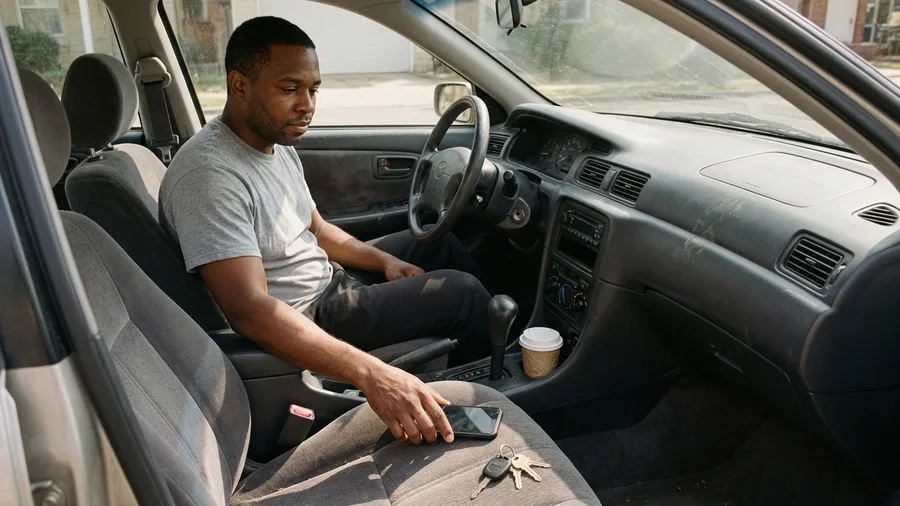
A house and a car that people notice quietly enroll you in obligations nobody invoices you for. Relatives who know roughly how things are going ask for a loan. Friends start pricing the group dinner and the weekend away to a level you can apparently cover.
The house on the nicer street and the car in the driveway raise the security side of the ledger too: more to insure, more to lock, more to replace if something goes wrong. That goes on the premium, not on a budget sheet.
Here is how it usually lands. A bonus gets mentioned once at a family dinner, and within a week there is a request for a bridge loan, framed as small and temporary. The group chat plans the summer trip on the assumption that the house with the extra bedrooms is hosting and covering the food. None of it is malicious. All of it comes out of the same pool.
Generosity and standing in your community are worth real money, and nobody should pretend otherwise. The move is to decide that amount in advance as its own line, so it is chosen rather than extracted. A request is a cost of being visible, the same way the premium is.
Boring purchases reduce decision fatigue

The quieter choice keeps charging you less long after it is paid for, and the recurring charge is attention.
On a schedule, the difference is stark. The $25k-$45k used car bought and held 8-12 years is one decision, then oil changes, tires, a battery, and a timing belt. The lease is a fresh negotiation every three years – the mileage math, the residual, the next trim level, whether the buyout price is worth it.
Houses bill the same way. A $350k-$700k home with standard systems means standard parts. The water heater is a water heater. The plumber has seen the layout before. Offset that against custom finishes, where you spend a weekend picking tile, and then the imported fixture ships from three time zones away and one plumber refuses the job and you wait.
A car held a decade buys about three fewer decisions than a lease cycle, not one.
Is this upgrade standard, or is it a project?
They buy time, not display

What they get, line by line, is months.
Picture a household living on $90k a year – a paid-off $450k house, a $35k car, no payments left on either. Their fixed costs are insurance, taxes, utilities, maintenance, groceries. That number is small enough that a job loss is a gap they cover, not a fire they put out.
A 6-12 month reserve against $90k is $45k-$90k in cash. That reserve is the buffer that makes a layoff a nuisance and a health scare a Sunday-night problem rather than a Monday-morning scramble.
Now put a $120k household with two car payments into the same event. Their fixed nut is higher, their reserve is thinner, and the same layoff means renegotiating the lease and pulling the kids out of something within a week or two. Both families earn, but only one has room to say no.
Here is where honesty cuts the other way. If the work is a calling, or the house is a place you are genuinely happy to walk into every evening, spending on it can be worth more than an earlier exit. That trade is real in both directions, and you should not feel bad for making it.
The question is whether the upgrade is buying you time or costing it, and the answer is usually on the reserve line.
The Same Layoff, Days 1 Through 90
The quiet household
- Fixed costs run roughly $3,000-$4,000 a month, not $6,500
- Reserve covers 11-22 months at that nut; job search has no clock
- Can turn down a lowball offer and wait for the right fit
- Worst case: draw the reserve, cut discretionary, nothing gets sold in a hurry
The upgraded household
- Fixed costs run roughly $6,000-$6,500 a month before the lost check
- Reserve runs dry in 2-4 months at that nut, sooner with the car note
- Must take the first workable offer, or borrow to bridge
- A second hit in the same year – car repair, medical bill – forces a sale or a card
Lifestyle creep is hard to reverse

The upgrade is easy in the year you make it and expensive in every year after, because the baseline resets the month you move in. Going from a $450k house to an $800k one adds $350k of equity and simultaneously raises the property tax, the insurance to rebuild the larger structure, and the upkeep that scales with square footage. The pattern starts quietly in your savings rate, which is where lifestyle creep does its real damage. None of that waits for a convenient date to renegotiate. It simply becomes the new normal by the second mortgage payment.
Then the roots set.
Schools, routines, and neighbors harden around the house within a year or two. The family calendar gets built on the assumption of that address: the carpool route, the commute, the friends within biking distance. Downgrading is harder than upgrading not because the money is gone but because everything else has organized itself around the money being spent.
The $350k move is not routinely reversible in a bad year. Selling costs come off the top, the market may be slow exactly when you need it to be fast, and a child mid-year in a school is not a variable you get to optimize. Stack those together and the exit from the bigger house can cost more than the entry did.
Which is why the timing question matters more than the size one. The smaller house in the stronger school district can be the better family trade-off – the task is choosing the trade deliberately, before the roots set, rather than maximizing square footage and discovering the decision has already been made for you.
The cost to keep something includes the cost of undoing it. For the house, that is the highest line on the page.
🧮 Price the upgrade in this order
Fund the reserve first
Get six to twelve months of spending — $35,000–$120,000 on a $70k–$120k budget — into cash or near-cash before any upgrade.
Quote the annual bill
Call your insurer and pull the tax assessor's record so you know the recurring cost at the new level, not the old one.
Check the reserve math
Ask whether the upgrade leaves you still above six months if income stopped for a quarter.
Compare the committed money
Write down what the $15,000 or the $350,000 would be doing instead if you invested it.
Decide on the return
Allow the upgrade only if it supports income, health, safety, or a genuine joy you will use.
Get loan costs in writing
Use the CFPB's loan resources to compare the actual financing before you commit to anything.
Liquidity matters more than appearance
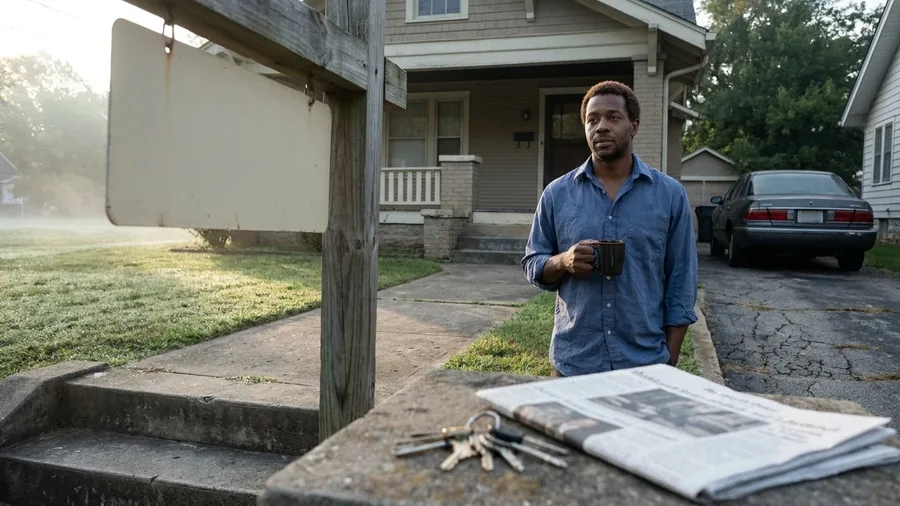
The money that decides whether a bad year is survivable is the money you can reach this week, not the money printed on a statement.
A reserve covering 6 to 12 months against $70k to $120k of annual spending is $35k to $120k sitting in cash or something you can cash out in a day or two. That is the figure that covers the gap when the paycheck stops, the furnace quits in January, or the hospital bill beats the insurance check by a few thousand dollars.
Home equity looks like the same thing written in a bigger font. It isn't. Getting at it usually means a lender, an application, closing costs, and weeks of waiting. The Consumer Financial Protection Bureau lays out the mortgage side of that plainly, and the sequence is the point: the value is real, the access is not immediate.
Now price the upgrades in the same currency. A $50k car, the week you need it to be money, becomes a wholesale trade-in offer, often thousands under what a private sale would bring. An $800k house becomes a listing, a showing schedule, a closing, and months where you are still paying the taxes and insurance regardless of what happens next.
None of that makes the house a bad holding. A large paid-off home is a genuine store of value across decades, and both facts sit together without contradiction: it can make you wealthy on paper and still leave you unable to cover a $6,000 month with it.
Which means the final test of any upgrade is not what it looks like in the driveway or on the listing. It is how much of your position you could turn into grocery money by Friday.
The smaller house and the older car leave more of that reachable cash in place, and reachable cash is what lets a household say no to a bad job offer and yes to a good one.
Frequently Asked Questions
Do most millionaires actually drive boring cars?
No one can answer that honestly without a named study behind it, and this article does not pretend otherwise. What we can do is show the arithmetic: the money not spent on an upgrade stays available, and investment accounts are where it tends to end up. Whether most people at that level actually live this way is a separate question from whether the math works.
Isn't a bigger house a good investment?
It is a store of value, not a liquid one, and it costs more to keep every year. Property tax, insurance, utilities and maintenance all rise with the higher value. The gain you eventually see has to clear those annual costs and selling fees before it counts as a win.
Should I pay off my car before investing more?
Compare the interest rate you are paying on the loan with what the money could reasonably earn, and factor in the guarantee. Paying off a 20% loan is a guaranteed return of 20%, which is hard to beat. Paying off a 3% loan is less urgent. Run the numbers against your own budget before deciding.
How big should my emergency fund be before I upgrade anything?
Six to twelve months of spending, which on $70,000–$120,000 of annual spending is $35,000–$120,000 in cash or near-cash. That range exists because job markets and households differ. If your field is volatile or you are the only earner, stay closer to the top.
When is it okay to spend on something visible?
When it supports income, health, safety, or a genuine joy you will actually use. A car a client sees, a safer street, a shorter commute, or a hobby you love all qualify. The point is choosing it deliberately and pricing the annual bill first, not avoiding nice things forever.
Is it too late to change the pattern if I have already upgraded?
It is harder because the baseline is set, but not impossible. Before any downgrade, get quotes on insurance, tax and loan costs, and talk to a fee-only fiduciary or a CPA about the tax and timing consequences. That is a decision that needs your actual numbers.
Fund the reserve, then decide what the upgrade buys you
Here is the rule, stated flatly. Fund six to twelve months of spending first – $35,000 to $120,000 against a $70,000 to $120,000 budget – in cash you can reach this week. Then allow the upgrades that support income, health, safety, or a joy you will actually use. Everything past that is status spending, and skipping it is a legitimate choice.
The playbook does not fit everyone. If you are client-facing and the car is part of the pitch, or the car and house genuinely are the hobby, pay for them as deliberate budget lines instead of apologizing. The first move before any signature: get an insurance quote on both versions, the assessor's tax record, and loan terms from the CFPB's resources – three numbers before you commit.
Two houses on the same street, same taste, different outcome. The gap is the second bill, and the household that kept it small kept the options. The boring car and the regular house were never the goal – just what the balance sheet looks like when the money is left alone to work.
Run the two-question test tonight
Pull up one upgrade you are considering and price what it costs to keep for a year — insurance, tax, upkeep, and the reserve it competes with. That one number tells you more than any comparison with the neighbors.
