

I signed a same-as-cash slip on a couch once and paid the minimum, and the backdated interest on that mistake cost more than the delivery fee. Nobody in that story was reckless. The offer really did say same as cash.
The offer in front of you this week is priced as a favour: 12 months same as cash, four easy payments, 90 days with nothing due, a check advance for a week. Each one asks for a signature now.
None of these is decided by the monthly figure on the card. Each is decided by one clause, whether a payoff size, a printed date, or a default term, and that clause hands the whole cost back the moment it gets missed.
Clear the figure before the date and the offer costs nothing. Pay only what is asked and it costs a great deal.
So the seven below are sorted into usable with a fixed payoff plan and refuse outright, and for each one you get the single line of paperwork to read first. You can pick two and leave the rest for another week.
Quick Tips Before You Start
Find the printed end date
Circle the promotional deadline on the statement before you sign, not after.
Set the payment to the payoff
Divide the full balance by the months available and pay that, never the minimum.
Leave the card alone
New purchases on a transferred card usually sit outside the promotional rate.
Ask for two words
Deferred interest or true 0%: the account terms say which one you are being offered.
Diarise a month early
Put the reminder before month 11, so a missed payment still has room to be fixed.
Financing that looks free
Two of the seven hide their cost in the same place: a date you did not set, printed on paperwork you skimmed at a counter.
This first group runs from a $1,200 couch to a $4,800 transfer. The money at stake is modest, which is exactly why people sign without reading the paragraph that decides it.
1. Same-as-cash financing can charge you from day one

The clock on a same-as-cash plan starts the day the couch is delivered, not the day the first bill lands.
Two very different plans hide behind that one friendly phrase, and the difference only matters if you miss. A true 0% plan charges nothing from the purchase until the deadline, so a dollar of interest never exists to forgive. A deferred-interest plan runs interest from day one, quietly, and wipes it out only when the balance reaches exactly zero by the printed cutoff. The account terms say which one you got before you ever sit on the cushion.
The tell is a short phrase and a short paragraph. Hunt for the words deferred interest in the fine print, then find the line that says interest is calculated from the date of purchase. If both live in your agreement, you are on the deferred version, and the whole year is one long countdown with your name on it. Neither phrase tends to appear on the receipt taped to the box.
Run the couch. A $1,200 purchase on 12 months same as cash clears cleanly at $100 a month, twelve payments, zero owed on month twelve. Pay the store's $60 minimum instead and the math turns on you: $720 moves across the year, and $480 is still standing when the clock quits. Twelve months of on-time payments, and the balance still isn't gone. Not because you were careless, because the payment was sized to the minimum instead of the figure.
💡 Tip: If the agreement says deferred interest, treat the purchase as if it earns interest from today and pay it off first.
| The offer | What you actually commit to | Clause to check before signing |
|---|---|---|
| 12-month same as cash | A payoff figure that must hit zero by a printed date | Whether it says deferred interest, calculated from the date of purchase |
| Balance transfer | The moved amount plus a day-one fee | The promotional end date and the rate on new purchases |
| 90-day payment holiday | A balance that waits, not a discount | What is due on day 91 and whether interest accrues from day one |
| Four easy payments | An automatic draft every two weeks until it clears | The missed-draft fee and the refund route on a return |
| Rent-to-own | Weekly payments until the final one transfers ownership | Early-payoff terms and the missed-payment reinstatement clause |
| Paycheck advance | The next check, arriving early and smaller | The written fee schedule and your state's rollover rules |
| Home equity consolidation | The house standing behind the balance | The total cost including fees, and whether the cards get closed |
2. A balance transfer fee is charged before you save
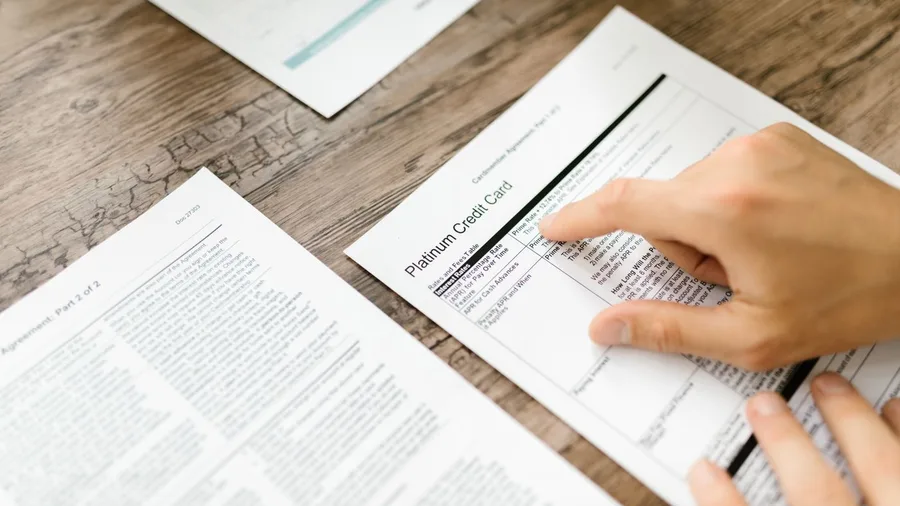
A transfer fee is not a reason to walk away, and it is not shameful to be surprised by one. The fear underneath the move is real: that rolling a balance onto a new card is a magic trick that hits you with a charge later.
The charge is real, but it is small next to what you are avoiding. Day one, a percentage of the amount moved gets added to the new balance, so $4,800 arrives on the statement as $4,800 plus the fee – which means the figure you must clear is larger than the figure you moved.
The reframe: a transfer fee is the price of a printed deadline, and it can be worth paying. What matters is the balance transfer promo window closing on the date shown on your statement – the balance is still $4,800 that day unless your payments have cleared it. If you want the move to be worth it, keep the card out of use until that date, because new purchases sit outside the promo rate and start costing the moment they post.
💡 Tip: Do the sum before you transfer: the fee plus the payoff schedule must fit inside the printed window.
⚠️ COMMON MISTAKE
Read the month, not the number
Most people check the minimum payment and stop. The clause that decides the deal is the end date and whether interest was accruing all along. Look for those two lines before the minimum payment.
3. A 90-day payment holiday leaves the balance untouched

A payment holiday is widely read as free money. It is not. The balance sits untouched – a $2,300 dental bill with nothing due for 90 days is still $2,300 on day 91.
So give yourself permission to do less than clear it. The small version still works: move roughly $766 a month into savings from the day you sign, and you meet the bill on day 91 without a loan. Park it somewhere you cannot spend it, because a $2,300 bill left in the current account tends to get absorbed and is gone by day 91.
The scaling-down version asks you to read the holiday as a savings schedule and treat day 91 as a date already in your calendar. Where the plan goes wrong is treating skipped payments as a discount and taking on a second commitment during the 90 days, so day 91 arrives with the dental bill and the new payment landing on the same income. If you can only set aside $400 a month, set that – just keep it out of the current account and keep the date in front of you.
Small payments that never end
The next two offers are decided by a pattern rather than a rate. Each payment is small enough to feel harmless, and the total is what nobody adds up.
Four plans at $56.25 look like pocket change. Add them together and you are carrying a second rent payment made of small pieces.
4. Four easy payments quietly stack across purchases

The worry is never the $56.25 itself. It is that four little drafts feel weightless in the moment, so nothing tells you to stop at one.
Here is what the check-in has to look at, and it is not the size of any single plan. A $225 pair of boots split four ways drafts $56.25 every two weeks, on a schedule set the day you tap agree, taken whether or not the money is sitting there that Thursday. Miss one and a fee lands on top while the plan keeps running underneath it. So the number to review is the count, not the amount.
Open your banking app once a month and add up every active plan running off the same two-week paycheck. Four of them at $56.25 pull $225 out before rent or food or the card minimum is touched. Each one looked trivial on its own. Together they are a second bill you never agreed to as a whole.
Two other things worth a glance. If you return something mid-plan, the refund goes back to the lender to cancel the remaining instalments, not to your card, so check the draft schedule against the refund date before you assume cash is coming back. And keep the working rule where you can see it: only split something you would have paid in full today.
💡 Tip: A return on a running plan goes back to the lender to cancel the remaining instalments, not into your card. Ask for it in writing.
5. Rent-to-own: you own nothing until the last payment

Read the ownership clause before you admire the delivery date.
Every rent-to-own agreement you will be handed names the exact moment the washer-dryer, the sofa, the laptop stops being the store's property and becomes yours, and in nearly all of them that moment is the final scheduled payment, not the day the truck pulls into your driveway. Which means the same-day delivery, the cheerful weekly figure, and the fast setup are all really a rental with an option attached, and the machine sitting in your laundry room for the next year and a half belongs to somebody else until the last installment clears.
Run the arithmetic on a $1,400 washer-dryer set quoted at $50 a week. That schedule usually runs about 78 weeks, which lands near $3,900 in total, so roughly $2,500 of the price tag is the cost of splitting it up. The same $1,400 paid outright for a used set gets you a working machine with nothing owed, and if cash is short, setting aside that same $50 for eight weeks builds $400 toward one.
The clause that decides whether this is a fair rental or a trap is buried in the default and reinstatement paragraph. A missed payment late in the term can take back the item and keep every dollar already paid, because what you have handed over is rent, not equity, and that single sentence is the one to read before signing. The early-payoff terms matter too, since they change what those 78 weeks actually cost if you clear the balance sooner.
None of this is an argument that rent-to-own is never the right call. If the fridge dies on a Tuesday, the kids need clean clothes, and no cash and no credit are available, it may be the only working option on the table, and that is a real situation, not a character flaw. Just go in knowing you are renting, not buying, and that the $2,500 premium is the price of the delivery truck.
💡 Tip: Ask for the cash price of the same item in writing. The gap against the rent-to-own total is the real cost of the weekly figure.
Four easy payments are not debt you can see. Four at once are a bill you have to pay.
— What every checkout screen leaves out
Count the active plans before adding another.
Debt that reaches your paycheck or your house
The last two offers reach past your budget. One takes your next paycheck before you earn it, the other puts your house behind the balance.
By this point the amounts have moved from a $1,200 couch to a $340,000 house. The stakes rise with each one.
6. The paycheck advance comes due on the next payday

I have watched a $500 advance taken on a Friday turn a two-week problem into a two-month one, and the fee was the smallest part of it.
The full $500 plus the disclosed fee comes out of the next payday, so the check lands already smaller than the one before it. That is not income arriving, it is next month's pay showing up early and short. The second advance is where it bites, because the shortfall reopens at the size of the check and the fee gets paid again on the same $500. Before you sign, try the cheaper moves: ask the biller for a payment plan, shift the due date to land after payday, sell something small. Fees and rollover terms vary by state, and the lender's written fee schedule is yours to read before you commit.
💡 Tip: If you need it twice in a row, you are in a cycle. Call the biller and ask for a payment plan before you take another.
The line between a deal and a loan
Truly free if you clear it
- Full amount already in savings on signing day
- Payment set at balance divided by months
- End date circled and reminder a month early
- Card left untouched until the window shuts
- Fixed plan whose last payment lands inside the date
Works for the lender, not you
- Paying the printed minimum every month
- Cleared cards left open and immediately re-run
- Second balance taken on during a payment holiday
- Weekly term run to the end with no early-payoff intent
- A home used as collateral for card spending
7. Consolidating cards onto the house makes the house collateral
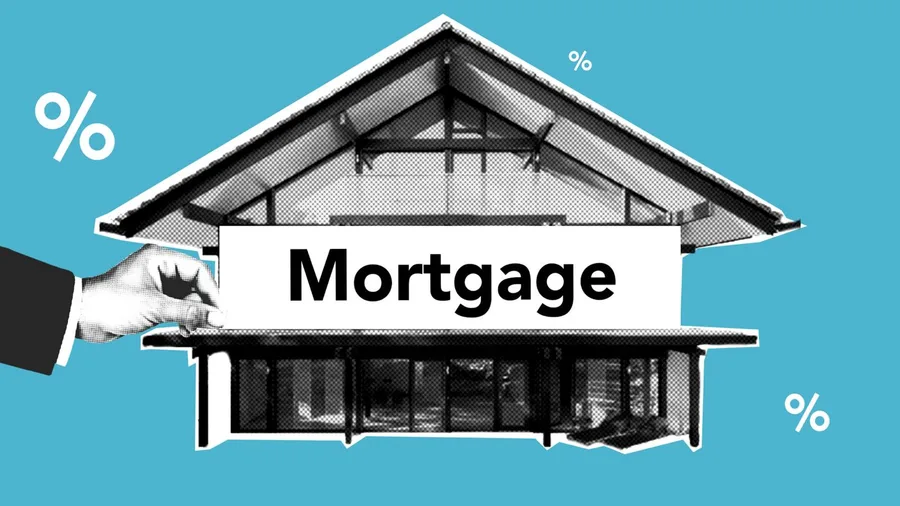
$340,000 is the number to hold in your head here, because it is the asset standing behind the offer. Roll $18,000 of card balances into a $30,000 line of credit secured by that house and the pitch writes itself: one payment instead of four, a rate below what the cards charge. What changed is not the interest rate. It is that the roof is now written into the contract as collateral, and a home is the largest thing most people will ever put on a signature.
Sit with the difference for a second, because it is the whole entry. Unsecured card debt is a number you can negotiate, settle, or fall behind on, and the damage lands on your credit score. Secured debt puts the $340,000 house on the table for an $18,000 spending balance, and a default follows the house instead of the score.
The smaller start that costs you nothing tonight: before you draw a single dollar on that line, ask your card issuers to close the accounts and set the limits to zero. That is a phone call and maybe a letter, done this week, and it is the version of this move a person can actually start small with. The reason it works is arithmetic, not virtue: a cleared card with its full limit still open is an invitation, and the line itself leaves $12,000 of unused room, so borrowing capacity climbs rather than falls. Close the cards first and your options only shrink downward.
If the cards stay open, the next round of balances gets run up with the house sitting behind them too, and each new charge quietly re-prices your home as security for spending you have not done yet.
Who this can suit: someone with stable income, the accounts shut before the line is drawn rather than after, and the total cost including fees weighed honestly against what the cards ask each month. That last weighing is where a fee-only fiduciary earns their keep, because it turns on your own numbers and your own tax picture. Get those three in place and this is one of the few deals on this list that can genuinely help. Skip the closing step and you have borrowed against your home to keep a habit running.
📋 The four-minute check before you sign
Find the clause
Look for the end date, the payoff figure, or the default term in the agreement.
Divide the balance
Take the full amount and divide it by the months available to get your payment.
Set the payment
Set it at the divided figure, not the minimum the store asks for.
Diarise the date
Put a reminder before the deadline, not on it, and check the account monthly.
Leave the card alone
Keep the account out of use until the promotional window has closed.
Frequently Asked Questions
If I clear it before the year is up, is it actually free?
Only if the agreement says true 0%, not deferred interest. With deferred interest, the charge is forgiven at zero balance, and if you miss the deadline by a day it lands backdated. Check the terms, set the payment to clear the full amount, and put the reminder a month early.
Does moving a balance actually save me money?
Often, if the fee plus the payoff schedule fits inside the promotional window. The fee is charged on day one and added to the balance, so your real target is the fee plus the amount moved. If your last payment lands after the printed end date, the transfer usually costs you more than the cards you left.
What happens when the 90 days run out?
The full balance comes due again, plus any interest that accrued. A holiday on an interest-free bill buys you time to set money aside, not a discount. Park the monthly amount in savings during the holiday so day 91 is a payout, not a scramble.
What is the harm in splitting one purchase into four?
Individually, very little. The harm is in the count. Four plans at $56.25 every two weeks take $225 out of the same paycheck before rent and food, and a missed draft adds a fee. Only split a purchase you would have paid in full today, and count every plan already running.
Isn't renting to own just a way to spread the cost?
Spreading the cost yes, owning no. A $1,400 set at $50 a week for 78 weeks comes to about $3,900, and ownership transfers only after the last payment. A missed payment late in the term can cost you the item and everything already paid. Compare the cash price of the same item first.
Should I consolidate my cards into my home?
For some people with stable income it lowers the rate and simplifies the payment. For most, the problem is not the rate, it is the open cards and the extra room on the line. Close the cards before you draw the line, and run the decision past a fee-only fiduciary.
Two piles, one first move
Two piles. The genuinely free ones: same-as-cash with the $1,200 already saved and $100 a month set to clear it, a $4,800 transfer whose schedule lands inside the printed window with the card kept out of use, a holiday with $766 a month parked and day 91 circled, and the four-payment split drawn only on money already in the account.
The other pile works for the lender: rent-to-own at about $3,900 for a $1,400 set, the paycheck advance that spends the next check before it arrives, and card balances rolled onto the house. Hold the $60 a month, the $56.25 every two weeks, the $50 a week, the nothing until spring. The figure that decides the deal is not printed on any of those cards, which is why it gets missed.
So before you sign anything, find the promo end date or the payoff figure in the paperwork and set the payment to clear it. Then read the slip one more time with a pen in your hand. That is the move that turns a friendly offer back into what it is.
Find the date before you sign
Grab the agreement and circle the end date or payoff figure. Then set the payment to clear it, a month early, today.