

The mortgage statement lands on the first and the card bill three days later, and both say the same thing: money out. The wallet already holds card balances, a car note, maybe a mortgage or a student loan, and the next signature is coming up fast.
Somewhere along the way you picked up the rule that all borrowing is bad. Two loans can share that word and share nothing else. A $320,000 mortgage at 6.5% sits on a $400,000 house. A $500 payday loan sits on the next paycheck, at a 391% annual rate.
So sort the next offer three ways: is there collateral behind it, does the payment bend if your income drops, and does what it buys outlast the payments. Yes across the board puts it in the build pile. Any no sends it to the ruin pile.
That means refusing the payday loan outright, and clearing the 24.9% card before you sign anything new. Same act of borrowing, two very different outcomes, and the label was never the test.
Quick Tips Before You Start
Check for collateral
Ask yourself: if I stop paying, can the lender take something physical? A house or car secures the loan; a credit card does not.
Test the payment flexibility
Federal student loans bend with income; most other debts do not. Know which type you are signing up for.
Match the life of the purchase to the loan
If what you buy will be gone or worthless before the final payment, the debt is the ruining kind.
Avoid rolling negative equity
Folding an old car loan into a new one turns an ordinary note into a trap. Pay down the difference first.
Read the deferred interest clause
Store cards often charge retroactive interest on the full original balance if you miss the window by one day.
1. A mortgage builds equity; a payday loan eats it

The mortgage and the payday loan both hit the same account, they both say money out on the same day, and standing in a branch office those two feels like one problem wearing two hats. It is not the same problem, and you can start sorting them for the price of a calculator.
Run the numbers on both. A $320,000 loan at 6.5% fixed over 30 years costs $2,023 a month, and a $400,000 house stands behind it. A $500 advance costs $75 in 14 days, and if you roll it over three times you have paid $225 in fees and own nothing at the end of the month. The gap is not the amount. It is what is riding behind the paper.
If cash is tight before Friday's deposit, do not feel bad about doing the smallest thing that buys you a week: even $25 set aside from the next paycheck starts the habit. Cancel the next signature on the payday form. That one debt is the one to refuse; you have the mortgage backing you with a sellable asset, and here you have only a paycheck that is already spent.
| Debt | The version that builds wealth | The version that ruins you | What separates them |
|---|---|---|---|
| Mortgage vs. payday loan | $320,000 at 6.5% fixed over 30 years — $2,023/month; property secures it. | $500 for 14 days at $15 per $100 — $75 fee, 391% APR; rolled three times costs $225 in fees. | Collateral: the house can be sold; the payday loan has only your next paycheck. |
| Federal student loan vs. credit card | $30,000 at 6.5% with income-driven payment near $180/month; forgiveness after 20 years. | $6,000 at 24.9% APR paying $150/month — roughly $9,900 interest and 24 years to clear. | Payment flexibility and an end date: federal loans bend; cards don't. |
| SBA business loan vs. store card | $75,000 at 9.5% over 10 years — $970/month; backed by equipment and receivables. | $2,400 furniture at 29.9%; missing the 12-month window applies about $718 interest to the full balance. | Durability: equipment earns income after the loan; furniture is consumed while you pay. |
| 5-year auto loan vs. 7-year auto loan | $24,000 at 7.9% over 60 months — $485/month; above water by year two. | $38,000 at 9.4% over 84 months with $4,000 negative equity — $614/month; underwater until year five. | Term length: shorter terms keep the car sellable and the payment escapable. |
| HELOC for renovation vs. home equity loan for cards | $45,000 HELOC at 8.5% variable for a kitchen that adds resale value. | $45,000 fixed home equity loan at 9% over 15 years ($456/month) to clear card balances. | Asset behind the lien: the kitchen adds value; old spending does not. |
⚠️ COMMON MISTAKE
The rollover trap
Rolling a payday loan even once turns a $75 fee into a debt that can outlast the original loan. If you cannot repay the full balance on the due date, do not roll it. Ask the lender for a payment plan or borrow from a friend instead.
2. Federal student loans bend with income; cards don't
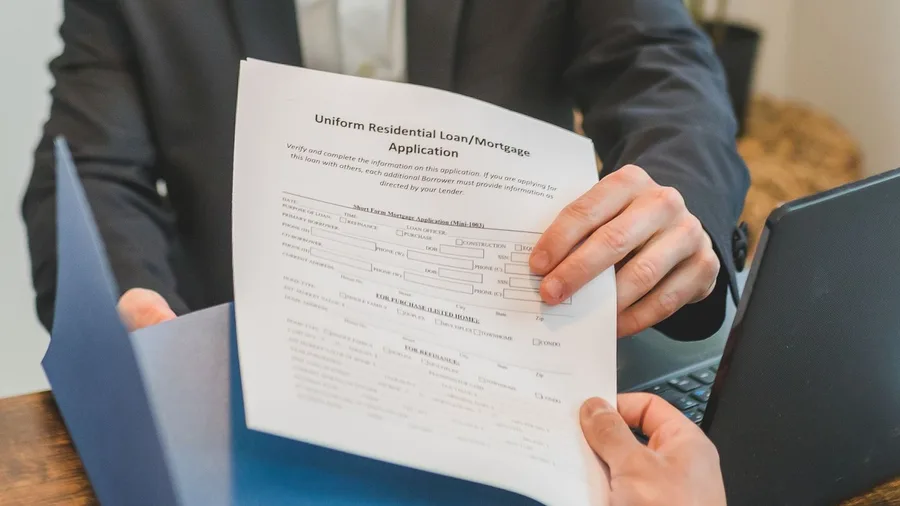
Nothing about student loans is going to surprise you on a Monday morning. But it is worth knowing one difference before you pick which balance to attack this month. A $30,000 federal loan at 6.5% can sit on a payment near $180 under an income-driven plan: if your earnings drop, the payment drops with them, and the remaining balance can be forgiven after 20 years of qualifying payments.
Now line up the card. A $6,000 balance at 24.9% paid at $150 a month takes about 24 years to clear and costs around $9,900 in interest; paying the minimum, set by the lender, can stretch on past that forever. That is the reason to hit the card first: its rate has no end date.
One honest catch, and it matters here sooner than later. The forgiveness clock only counts if the loan is federal and the program is finished; a private loan or a degree you walked away from offers no bending payment at all. Run the card math against your own budget before the next minimum comes out.
📋 The Three-Question Test Before You Sign
Check for collateral
Does the lender have a physical asset to seize if you stop paying? A house or car secures the loan; a credit card does not.
Test payment flexibility
Will the payment shrink if your income drops? Federal student loans adjust; most other debts do not.
Match the life of the purchase
Will what you buy still exist or earn income after the final payment? If not, the debt is the ruining kind.
Decide: sign or walk
If the loan passes all three, it can build wealth. If it fails even one, treat it as a warning sign.
3. Business debt buys equipment; store cards buy furniture

Seventy-five thousand dollars at 9.5% over 10 years is about $970 a month, and whether that number is good or bad has nothing to do with the rate. It has to do with what is still in the room when the last payment clears.
An SBA loan like that one is backed by equipment and receivables, and the interest is deductible against the income that equipment generates. On paper it is borrowing, but the machine is earning while it is being paid off. Compare a $2,400 furniture purchase on a 29.9% store card with deferred interest: miss the 12-month window by a single day and roughly $718 of interest lands on the full original balance, not the remaining one. The sofa is worth less the moment it is delivered, and the debt attached to it is worth more.
Here is the structure I use on any purchase where financing is offered, and you can copy it on the back of an envelope. Draw three columns.
Column one: what the item is worth at the final payment. Column two: what it will have earned or saved you by then. Column three: the total of every payment, fees included. If column two does not clearly beat column three, the answer is no, whatever the promotional language says.
The test is simple in words and brutal in practice. Borrowing builds something only when the purchase still exists or still earns after the last payment. It tears down when the purchase is consumed while the balance is still running – the dining set is scratched and ordinary, the card is not paid.
The counterweight matters, though. An equipment loan is only good debt with the income attached, and plenty of businesses sign the $970 payment without a signed customer base or a year of revenue to cover it. Then it is a fixed cost with no matching income – the same trap as the furniture, just with a nicer name. If the earnings aren't there yet, wait a year.
Run the three columns before you sign anything. The store's financing offer tells you how to buy it, never whether the thing will still be worth having when it is paid for.
💡 Tip: If you cannot document how the purchase will generate income, treat the loan as consumption debt, not business debt.
4. A five-year car loan versus a seven-year one

I sat in the dealership finance office watching a friend sign paperwork on a car he was already behind on, and the number that stuck with me was $4,000 – the negative equity from his trade-in, folded straight into the new loan. That is the moment a car note stops being ordinary and becomes the ruining kind. When the thing you bought is a car, the durability question turns into a clock: does the loan end before the car is worth less than what you still owe on it?
Run the terms side by side and the trap shows up in the water line. Twenty-four thousand at 7.9% over 60 months is $485 a month, and by year two you owe less than the car is worth – you are above water, which means you could sell it and walk away clean. Thirty-eight thousand at 9.4% stretched over 84 months is $614 a month and you stay underwater until year five. The payment looks friendlier per month. It is not friendlier.
you cannot sell the car to end the payment, because the sale won't cover the loan, and a total loss leaves a gap your insurance may not fill. The same car, the same buyer, and the term alone decides whether you can get out.
So my line, and I have held it for years, is 60 months or under with money down. That is it – keep the term short enough that the car outruns the balance from the start. Both loans buy the same vehicle. The length of the note decides whether it can be sold and the payment ended, and that is the difference between a car loan you live with and one you're stuck under.
💡 PRO TIP
The 60-month rule
Never finance a car for more than 60 months unless the interest rate is 0% and you plan to keep it until the wheels fall off. A shorter term keeps you above water and gives you an exit.
5. A HELOC for a kitchen, not for old cards

Physically, yes. A lender will hand you a $45,000 fixed loan at 9% for 15 years, about $456 a month, and in one afternoon your card balances vanish. Both versions of this put your house on the hook, which is the fact you have to sit with before you sign anything.
Take the kitchen first. A $45,000 HELOC at 8.5% variable, and you are pulling out money for a project that shows up in the appraisal when you sell. That is the version that passes the collateral test: the thing you borrowed for still exists, still adds resale value, and the house keeps its value behind the lien.
Now the other one. Same lien, same house, but the money goes to a card that is settled, discharged or negotiated in ways a mortgage never is. Unsecured debt is soft. A home-equity lien is not: miss a few payments and the lender takes the house. You also pay closing costs to arrange the loan, and if rates climb, a variable line gets more expensive while your cards stay paid off.
Here is the part that stings. The card at 24.9% was the only thing actually slowing the spending down, because it hurt. Move it onto the house and the balance sits quietly against something you need to survive. The cards are empty and the same habits fill them back up, now on the house.
Frequently Asked Questions
Is all debt bad?
No. Debt can be a tool when it has collateral, a payment that adjusts to your income, and buys something that outlasts the loan. The danger is when it lacks those features.
Should I pay off my credit card or my student loan first?
Prioritize the credit card. Its high interest rate and lack of an income-driven escape make it the bigger threat. Federal student loans have flexible payments and forgiveness options.
Is a car loan ever a good idea?
Yes, if the term is 60 months or less and you put money down. A shorter term keeps you above water so you can sell the car and end the payment if needed.
Can I use a home equity loan to pay off credit cards?
You can, but be careful. You are swapping unsecured debt for debt secured by your home. If the card balance came from spending rather than a one-time emergency, you may just be putting your house at risk.
What is the biggest red flag in a loan?
No collateral combined with a payment that does not adjust to your income. That describes payday loans and credit cards, the two most dangerous types of debt.
The three-question test that sorts any loan
Before you sign, ask three questions. Is there collateral behind it? Does the payment bend if your income drops? Will what it buys outlast the payments? Earning more isn't a plan on its own. Three yes answers put the loan in the build pile; any no sends it to the ruin pile.
Walk away from five: the payday loan, the card balance you carry at 24.9%, the store card with deferred interest, the 84-month car loan with negative equity rolled in, and the home equity loan that clears spending you have not fixed. One order of operations holds above all: clear that card before taking on any new loan.
All debt is bad was always too blunt. The mortgage and the payday loan settle it. Open the same inbox tomorrow and answer the three questions before you sign, not after.
Run the three-question test before you sign
Next time a loan offer lands in front of you, pull up this article and check collateral, flexibility, and durability. It takes two minutes and can save you years.